
How to Unclog a Toilet: Complete Guide

A toilet clog is cleared most effectively with a toilet-specific flange plunger using a firm down-thrust and partial pull-back technique, creating 25–35 PSI of hydraulic pressure at the drain entrance. If the plunger fails within 60 seconds, a closet auger inserted at a 45-degree angle breaks up or retrieves the obstruction within 2–3 rotations. For recurring clogs caused by organic buildup, enzymatic drain cleaners digest the blockage over 6–12 hours without bleach or heat damage to wax seals.
What You Need Before You Start
Before attempting to unclog a toilet, gather the correct tools. Using the wrong plunger type — or no plunger at all — is the single most common reason failed unclogging attempts leave homeowners reaching for the phone to call a plumber. Every item below serves a specific mechanical or safety purpose during the unclogging process.
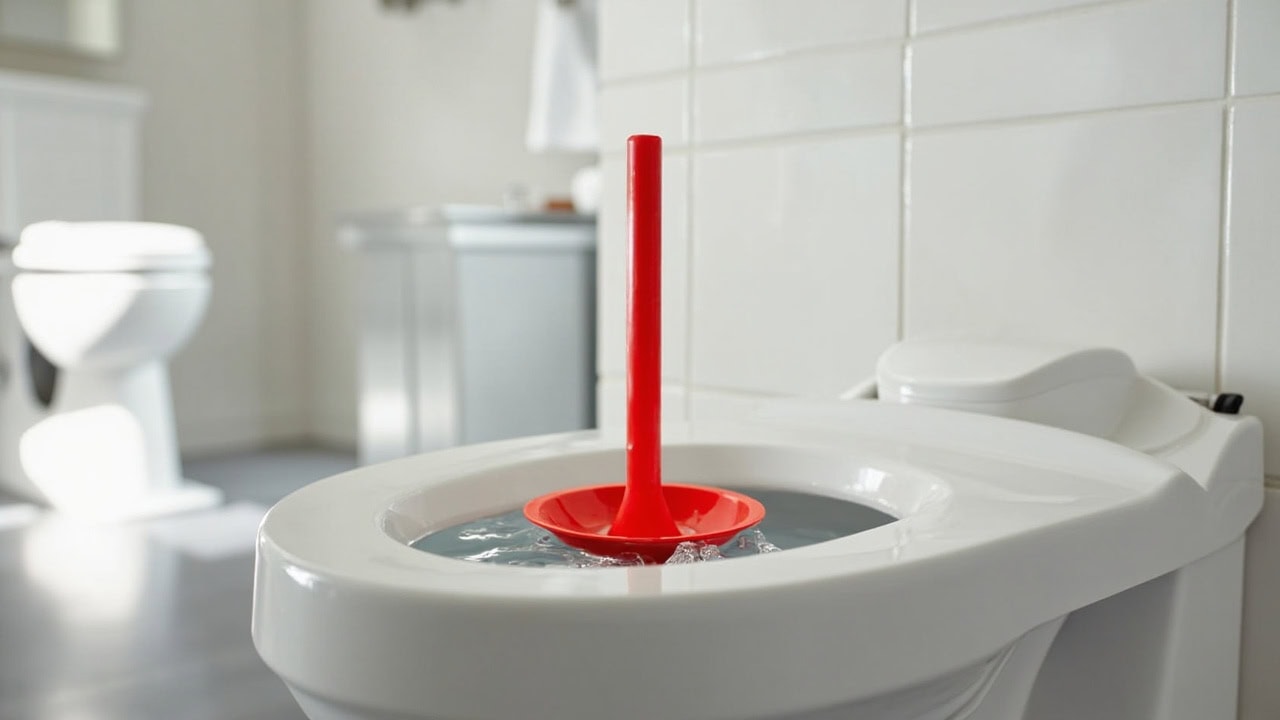
- Toilet plunger (flange style): The bell-shaped plunger with an inner rubber flap is specifically designed for toilet bowls. The flange folds inside the drain opening to create an airtight seal — a flat-rim sink plunger cannot form this seal on the curved surface of a toilet bowl and will not generate sufficient pressure to dislodge most clogs.
- Toilet auger (closet auger): A 3-foot flexible steel cable with a corkscrew tip and a protective rubber sleeve that prevents porcelain scratching when the cable reaches the flange. Augers are the next tool after a plunger fails and can reach obstructions up to 4 feet into the drain line.
- Rubber gloves: Heavy-duty household gloves rated for bathroom cleaning, not thin dishwashing gloves. Toilet water contains bacteria including E. coli and coliform — proper gloves protect against direct skin contact with contaminated water.
- Old towels or rags: Placed around the base of the toilet to absorb water if overflow occurs during plunging. A single plunging cycle can displace enough water to flood 2–3 square feet of bathroom floor.
- Baking soda and white vinegar (optional): For a natural pre-treatment before mechanical unclogging. The sodium bicarbonate and acetic acid reaction generates carbon dioxide bubbles that help break up loose organic material.
- Enzymatic drain cleaner (optional): For slow-draining toilets caused by organic buildup rather than solid obstructions. Products containing protease, lipase, and amylase enzymes digest toilet paper and human waste without generating heat or corrosive byproducts.
Step-by-Step: Using a Plunger Correctly
The correct plunging technique for toilets uses a down-thrust followed by a partial pull-back — not the aggressive up-and-down pumping motion most people instinctively use. This two-directional technique creates alternating positive and negative hydraulic pressure that dislodges the clog rather than compressing it deeper into the drainpipe. A standard flange plunger generates 25–35 PSI of water pressure at the drain entrance when used with the proper seal and rhythm.
- Position the plunger so the inner rubber flap is fully inserted into the toilet drain opening and the outer bell creates a complete seal against the bowl bottom. The flange must fold inward to sit inside the drain — if it is folded outward, flip it inside-out before inserting.
- Ensure the water level is high enough to cover the entire rubber bell — at least 3 inches above the drain opening. If the bowl water is too low, add water from a bucket rather than flushing, since flushing adds water to an already blocked drain and risks overflow.
- Push down firmly until the plunger compresses fully against the bowl, then pull back approximately 6 inches — this constitutes one thrust cycle. The down-stroke forces water toward the clog; the pull-back creates suction that pulls the obstruction back toward the bowl.
- Repeat 15–20 thrust cycles without breaking the seal, maintaining a steady rhythm of 2–3 seconds per cycle. Consistent pressure is more effective than forceful individual thrusts — the repeated hydraulic pulses fatigue and break apart the clog material.
- On the final thrust, pull the plunger free rapidly to break the air seal. The sudden release creates a final pressure differential that can dislodge remaining debris.
- If water begins to drain immediately, flush once to confirm the clog is fully cleared. If it drains slowly, repeat the plunging process 2–3 more times before testing again — some clogs require multiple rounds of hydraulic pressure to fully break apart.
When to Use a Toilet Auger
A toilet auger becomes necessary when plunging fails to clear the clog after 3–4 attempts, or when the toilet is completely blocked and water is rising toward the rim. Augers reach 3–4 feet into the drain line — the zone where most toilet clogs occur at the first bend in the drainpipe, known as the toilet trap. The trap’s S-shaped curve traps water to prevent sewer gases from entering the bathroom, but this same curve is where paper and waste most frequently accumulate and form blockages.
A standard closet auger features a 3-foot flexible steel cable housed inside a rigid outer tube with a hand crank. The cable tip has a corkscrew or hook shape designed to either break apart obstructions or snag them for retrieval. The rubber sleeve at the cable exit point prevents the metal from scratching the porcelain inside the bowl.
- Insert the auger cable at a 45-degree angle into the drain opening. This angle matches the natural slope of the toilet trap and allows the cable to navigate the first bend without binding against the porcelain wall.
- Turn the handle clockwise while applying gentle forward pressure. Resistance increases significantly when the cable reaches the clog — this is expected and indicates contact with the obstruction.
- When resistance peaks, continue cranking 2–3 full rotations to either break up the obstruction or snag it on the retrieval hook at the cable tip. Avoid forcing the cable through — excessive torque can damage older pipes or crack fragile porcelain.
- Pull the cable back slowly without reversing the rotation direction. Debris attached to the hook tip comes out with the cable. Have a bucket or trash bag ready for any retrieved material.
- Flush the toilet 2–3 times with a full bucket of water poured directly into the bowl to confirm the drain is completely clear. Using a bucket rather than the flush valve lets you control the water volume and avoids overflow if the clog persists.
Natural and Chemical Alternatives
For minor clogs or slow-draining toilets that are not completely blocked, several methods provide an alternative to mechanical unclogging. These approaches work best on soft organic blockages — they will not clear solid objects, tree roots, or mineral deposits.
Baking Soda and Vinegar Method
Pour 1 cup of baking soda (sodium bicarbonate) directly into the drain, followed by 2 cups of white vinegar (5% acetic acid solution). The resulting chemical reaction produces carbon dioxide gas and sodium acetate — the fizzy carbon dioxide bubbles create mechanical agitation that helps break up loose organic material in the trap. Allow the mixture to sit for 30 minutes, then flush with hot (not boiling) water. Water temperature should not exceed 140°F, as boiling water poured into a cold porcelain bowl can cause thermal shock cracking.
Enzymatic Drain Cleaners
Enzymatic drain cleaners use naturally occurring bacteria-produced enzymes — primarily protease (breaks down proteins), lipase (breaks down fats and oils), and amylase (breaks down starches and carbohydrates) — to digest organic matter including toilet paper and human waste. These products work over 6–12 hours and are safe for all plumbing types including PVC, copper, cast iron, and septic systems. Unlike chemical drain cleaners, enzymatic products produce no heat, no toxic fumes, and no corrosive byproducts. They are particularly effective as a monthly preventive maintenance treatment for toilets that drain slowly due to gradual organic buildup in the trap and drain line.
What NOT to Use
Chemical drain cleaners containing sodium hydroxide (lye) or sulfuric acid are ineffective for toilet clogs and actively dangerous to plumbing. These products rely on exothermic chemical reactions that generate heat to dissolve organic matter — but in a toilet, the chemical solution sits above the water line in the trap and cannot reach the clog located feet away in the drainpipe. The heat they generate can crack porcelain bowls, melt PVC drain fittings, and destroy the wax seal between the toilet base and the floor flange. A compromised wax seal allows sewer gases to leak into the bathroom and requires removing the entire toilet to replace — a repair that costs significantly more than the original clog.
What Causes Toilet Clogs
Understanding why toilets clog helps prevent future occurrences. Most toilet clogs fall into three categories based on the obstruction location and type. The toilet trap — the S-shaped channel inside the porcelain that holds water to block sewer gases — is the most common clog location because its narrow bends restrict the passage of bulky material. Clogs that form farther down the drain line or in the main sewer line typically require professional equipment to diagnose and clear.
| Clog Type | Location | Common Cause | Prevention |
|---|---|---|---|
| Trap clog | First bend in toilet trap | Excessive toilet paper, non-flushable wipes | Use 4–6 squares per wipe, flush twice if needed |
| Drain line clog | 3–6 feet from toilet | Accumulated organic matter, mineral deposits | Monthly enzymatic treatment |
| Sewer line clog | Main line shared with other drains | Tree root intrusion, collapsed pipe | Annual professional inspection |
According to the EPA, the average household uses approximately 20–30 gallons of water per person per day for toilet flushing alone, and improper flushing of non-degradable materials is a leading cause of residential plumbing backups. The agency specifically advises against flushing products labeled “flushable” — including wipes, feminine hygiene products, and cleaning pads — because these items do not break down in water the way toilet paper does and frequently accumulate in drain lines to form blockages.
Common Mistakes to Avoid
These errors prolong clogs, cause damage, or create larger plumbing problems that cost significantly more to fix than the original blockage.
- Using a flat-rim sink plunger: A cup-style sink plunger creates an incomplete seal on the curved interior surface of a toilet bowl and cannot generate sufficient hydraulic pressure to dislodge most clogs. A toilet flange plunger costs the same but is designed specifically for the drain geometry of a toilet.
- Flushing repeatedly to test: Each flush adds 1.6–3.5 gallons of water (depending on toilet age and model) to a bowl that cannot drain. After 3–4 flushes on a fully blocked toilet, water overflows onto the bathroom floor — potentially causing water damage to subflooring, baseboards, and any ceiling below.
- Using chemical drain cleaners: Sodium hydroxide and sulfuric acid products cannot reach toilet clogs because they sit above the water line in the trap. They generate exothermic heat that cracks porcelain, melts PVC drain connections, and destroys the wax ring seal beneath the toilet base. Plunging too aggressively: Excess downward force can crack the toilet bowl at its weakest points — the bolt holes and the trap entrance — and can dislodge the wax seal beneath the base, creating a hidden sewage leak that damages the subfloor over weeks or months before it becomes visible.
- Ignoring slow drains: A toilet that drains slowly is the early warning sign of a developing clog. Organic material accumulates progressively in the trap and drain line — addressing a slow drain with enzymatic treatment or a single plunging session is far easier than clearing a complete blockage that requires an auger or professional intervention.
How to Prevent Future Toilet Clogs
Preventive maintenance reduces the frequency of toilet clogs and extends the life of your bathroom plumbing. Most clogs are preventable through changes in flushing habits and simple monthly maintenance routines. For more comprehensive toilet care guidance, see our bathroom cleaning hub, which covers toilet cleaning, maintenance schedules, and troubleshooting common issues like a toilet that runs continuously.
- Limit toilet paper to 4–6 sheets per use, folded rather than bunched. Balled-up toilet paper creates dense, slow-dissolving masses that lodge in the trap bend. Folding allows water to penetrate and break down the paper more quickly during the flush cycle.
- Never flush so-called “flushable” wipes, feminine products, cotton balls, or dental floss. Even products explicitly labeled “flushable” by manufacturers do not break down in water at the same rate as toilet paper. The National Association of Clean Water Agencies reports that flushable wipes are a leading cause of residential pipe blockages and municipal sewer system clogs.
- For households with children, install a lock on the toilet lid. Toys, action figures, and small household objects are a frequent cause of toilet clogs in homes with young children. A lid lock prevents objects from being dropped into the bowl unsupervised.
- Use a monthly enzymatic drain treatment to digest organic buildup before it solidifies into a complete obstruction. Pour the recommended dose (typically 2–4 ounces) directly into the toilet bowl before bed and allow it to sit overnight — the enzymes work during the 6–8 hours the toilet is unused.
- If your toilet requires multiple flushes for paper waste, the problem may not be a clog — it may indicate insufficient water volume per flush, a partially blocked rim feed, or a drain line that needs professional cleaning. See our guide on cleaning toilet bowl stains for instructions on clearing mineral deposits from the rim holes that distribute water during flushing.
If you encounter drain clogs in other household fixtures, our kitchen cleaning guide covers sink drain maintenance, and the cleaning glossary provides detailed definitions of technical terms like plunger, auger, drain line, wax seal, enzymatic cleaner, trap, and sewer line.
Frequently Asked Questions
Q: Can hot water unclog a toilet?
A: Hot (not boiling) water can help dissolve minor organic clogs when combined with dish soap — pour 1/2 cup of dish soap into the bowl, followed by a bucket of hot water poured from waist height after 15 minutes. The dish soap acts as a lubricant that helps break the bond between the clog material and the pipe walls, while the hot water softens organic matter. This method works for slow drains but is unlikely to clear a complete blockage where water cannot flow past the obstruction at all.
Q: Should I use a plumbing snake or a toilet auger?
A: A toilet auger (closet auger) is specifically designed for toilets with a rubber protective sleeve that prevents porcelain damage and a cable length calibrated for the toilet trap. A standard plumbing snake has a bare metal tip that can scratch or chip porcelain, and its longer, stiffer cable does not navigate the toilet trap as effectively. For toilet clogs, always use a closet auger rather than a general plumbing snake.
Q: How do I know if the clog is in the toilet trap or the main sewer line?
A: If only the toilet is affected and other drains in the home work normally, the clog is in the toilet trap or the toilet’s drain line connection. If multiple drains are slow or backing up simultaneously — for example, the bathroom sink gurgles when the toilet flushes, or the shower drain backs up — the main sewer line is clogged and requires professional hydro-jetting or rooter service to clear.
Q: When should I call a plumber instead of unclogging myself?
A: Call a plumber if plunging and augering both fail after 3 attempts, if the toilet is repeatedly clogging at the same interval (indicating a deeper drain line issue), if you hear gurgling in other drains when the toilet flushes (suggesting a main sewer line blockage), or if water is leaking from beneath the toilet base (indicating a broken wax seal that requires toilet removal to replace).
References
- U.S. Environmental Protection Agency. (2024). Types of Septic Systems. EPA.gov.
- Vila, B. (2024). How to Unclog a Toilet: 7 Ways to Get Things Moving. Bob Vila.
- National Association of Clean Water Agencies. (2024). Flushable Wipes and Collection System Impacts. NACWA.org.
- American Society of Plumbing Engineers. (2023). Plumbing Engineering Design Handbook. ASPE.


