
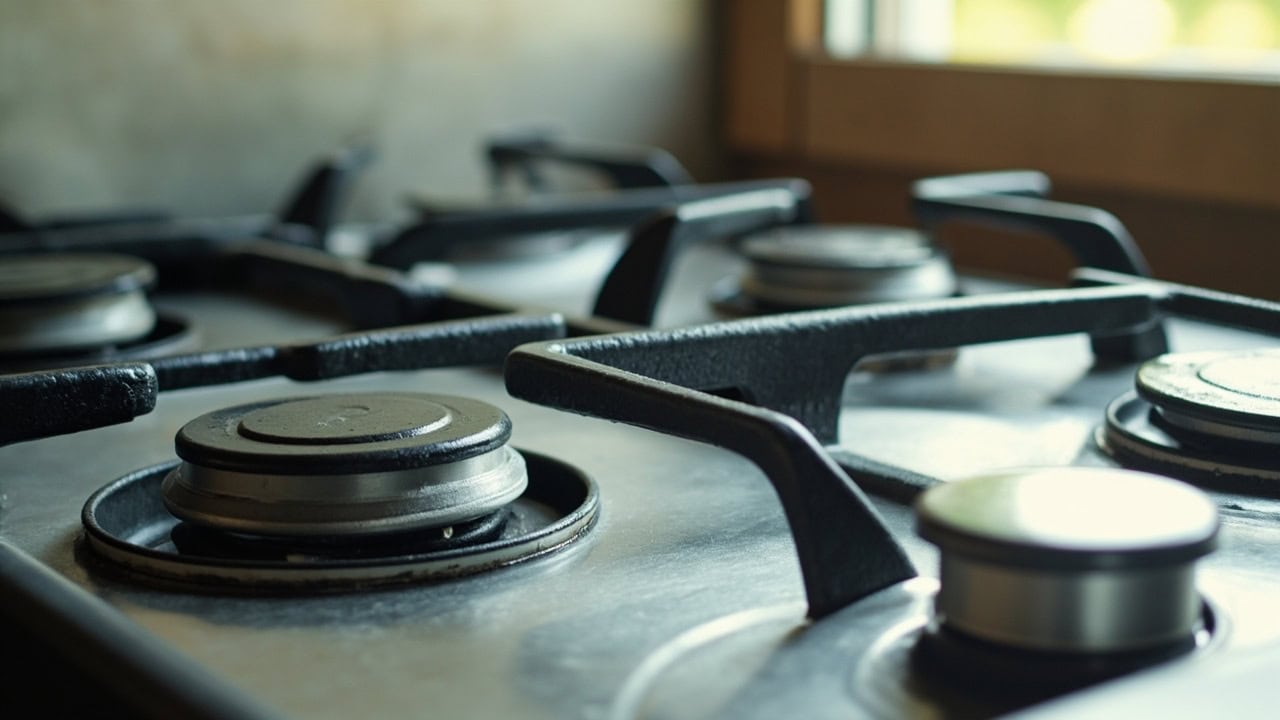
How to Clean a Stove Top: Every Type (Gas, Electric, Induction)

A stove top must be cleaned after every use with a degreaser at a 1:10 dilution ratio and a non-abrasive scrub pad to prevent carbonized food buildup that bonds permanently to metal surfaces at temperatures above 500°F. Gas stove tops require removing grates and burner caps for a 10-minute soak in hot soapy water, electric coil burners need careful wiping with a barely-damp cloth around the heating elements, and induction glass surfaces demand pH-neutral cleaners applied with a soft microfiber cloth to prevent scratching. Following the correct method for your specific stove type prevents surface damage, extends appliance life, and keeps your kitchen cleaning routine efficient and safe.
What You Need Before You Start
Cleaning agents: Dish soap as a degreaser, baking soda, white vinegar (5% acetic acid, pH 2.5), a commercial stovetop cleaner rated for your surface type, and a dedicated pH-neutral induction cleaner for glass-ceramic surfaces. For a deeper look at how cleaning chemistry works on different soils and surfaces, see our cleaning chemistry guide.
Tools: Non-abrasive scrub pad or soft nylon brush, microfiber cloths (at least three — one for washing, one for rinsing, one for drying), a soft sponge, an old toothbrush for crevices and burner ports, and a basin large enough to hold removable parts during soaking.
Dilution ratios: Dish soap at 1:10 with warm water for daily cleaning; baking soda paste at 3:1 (water to baking soda) for stuck-on food; white vinegar at 1:1 with water for a streak-free rinse on stainless steel surfaces.
Safety: Always let the stove cool completely before cleaning — the surface temperature must drop below 100°F (38°C) to prevent burns and to avoid cleaner residue baking onto hot metal, which creates a hardened film that is far more difficult to remove than the original soil.
Step-by-Step: How to Clean a Gas Stove Top
- Remove all removable parts. Lift off burner grates, burner caps, and any decorative knobs. Place them in a sink or basin filled with hot soapy water (1:10 dish soap to warm water). Removing these parts gives you unobstructed access to the cooktop surface and allows each component to soak individually.
- Soak for 10 minutes. Allow burner grates and caps to remain submerged in the dish soap solution for a full 10 minutes. This soak time loosens carbonized food and grease that has polymerized onto cast iron and steel surfaces, reducing the force needed during scrubbing and protecting the metal finish.
- Wipe the cooktop surface. Use a damp microfiber cloth with a few drops of dish soap to wipe the exposed stovetop, working from back to front. This direction prevents debris from spreading onto areas you have already cleaned. Pay attention to the area around each burner base where grease accumulates most heavily.
- Scrub stubborn spots. Apply baking soda paste (3:1 water to baking soda) directly to burnt-on food residue. Let the paste sit for 5 minutes — this dwell time allows the mild alkalinity of the baking soda (pH 8.3) to break down acidic food bonds. Scrub gently with a soft nylon brush in small circular motions.
- Clean burner ports. Use an old toothbrush or a straight pin to clear each burner port on the gas jets. Clogged ports cause uneven flames and incomplete combustion, which can produce carbon monoxide. Never submerge the gas valves or allow liquid to pool inside the burner bases, as this prevents proper ignition.
- Rinse and dry removable parts. After the soak, scrub each grate and cap with a non-abrasive pad. Rinse each piece thoroughly under warm running water to remove all soap residue, which can attract dirt if left behind. Dry each part completely with a clean cloth — moisture left on cast iron grates promotes rust formation.
- Reassemble and polish. Return all burner components to their correct positions, ensuring each cap sits flush on its base. Polish the stovetop surface with a dry microfiber cloth. For stainless steel surfaces, wipe in the direction of the grain to maintain the factory finish. Our guide on cleaning stainless steel appliances covers this technique in greater detail.
Step-by-Step: How to Clean an Electric Coil Stove Top
- Allow full cooling. Electric coil burners retain heat significantly longer than gas or induction surfaces due to the thermal mass of the metal coils. Wait at least 15 minutes after turning off the burner before beginning any cleaning. Touch the coil cautiously with the back of your hand to confirm it has cooled below 100°F.
- Remove coil burners carefully. Grip each coil burner near its base and pull straight up from the receptacle. Do not twist or bend the coil during removal — the metal terminals that plug into the receptacle can become misaligned, causing poor electrical contact and uneven heating after reassembly.
- Wipe the drip pans. Remove the drip pans (bowls) beneath each coil. Wash them in hot soapy water using a sponge or non-abrasive pad. For stubborn baked-on stains, sprinkle dry baking soda directly onto the stain, add a few drops of water to form a paste, and let it sit for 5 minutes before scrubbing. Rinse and dry thoroughly.
- Clean the cooktop surface. With the coils and drip pans removed, use a damp microfiber cloth with mild dish soap to wipe the entire cooktop surface. Clean around and beneath each coil receptacle opening, where crumbs and grease tend to collect. Avoid letting excess water pool in the receptacle holes.
- Clean the coil burners. Wipe each coil with a barely-damp cloth — never submerge electric coils in water. The internal heating elements are not sealed, and water intrusion causes electrical shorts and corrosion. For stubborn carbon buildup on the coil surface, use a commercial coil cleaner formulated for electric burners and follow the product label directions.
- Dry completely. Verify that every receptacle opening, coil terminal, and drip pan is bone dry before reassembly. Even small amounts of moisture in the electrical connections can cause sparking, tripped breakers, or corrosion over time. Use a dry microfiber cloth to wipe each connection point individually.
- Replace and test. Reinsert each coil burner by pressing it firmly into its receptacle until you feel it seat fully. The terminal should slide in without resistance — if it feels forced, realign the terminal. Once all coils are in place, turn each burner to low heat for 30 seconds to verify proper function and evaporate any residual moisture.
Step-by-Step: How to Clean an Induction Cooktop
- Wipe while warm (not hot). Induction cooktops cool faster than gas or electric coil stoves because the glass surface itself does not generate heat — only the cookware does. Wipe the surface when it is still slightly warm but below 100°F. The residual warmth softens food residue, making it easier to lift without aggressive scrubbing.
- Use induction-specific cleaner. Apply a pH-neutral induction cooktop cleaner or a 1:1 white vinegar and water solution directly to the glass surface. The neutral pH (between 6.5 and 7.5) protects the ceramic coating from chemical degradation. Avoid acidic or alkaline cleaners, which strip the protective layer over repeated use.
- Clean in circular motions. Using a soft microfiber cloth, work the cleaner across the surface in gentle circular motions. Avoid pressing hard or using back-and-forth scrubbing, which can leave visible directional marks on the glass. A light, consistent pressure with circular movement lifts residue evenly without marking the surface.
- Remove stuck-on food. For food particles that do not lift with the cleaner alone, use a ceramic cooktop razor scraper held at a 45° angle. Position the blade flat against the glass and push the debris forward in one smooth motion. Never use the scraper at a steep angle — the blade tip can scratch the ceramic surface.
- Polish dry. Once all residue is removed, buff the entire surface with a dry microfiber cloth to a streak-free shine. Any remaining cleaner film attracts dust and creates a cloudy appearance over time. Work in overlapping circular passes until the glass reflects clearly with no visible haze.
- Clean surrounding areas. Wipe the control panel, touch-sensitive buttons, edge trim, and any ventilation slots with a damp cloth. Avoid spraying cleaner directly onto the control panel — apply it to the cloth first to prevent liquid from seeping behind the glass and damaging the electronics underneath.
Stove Top-Specific Considerations: What to Avoid
| Surface Type | Avoid | Why |
|---|---|---|
| Gas cast iron grates | Harsh abrasives, dishwasher | Damages seasoning, causes rust on porous cast iron |
| Gas chrome burner caps | Abrasive scrubbers | Scratches the polished chrome finish, traps food debris |
| Electric coils | Submersion in water | Water enters unsealed internal elements, causing electrical damage |
| Induction glass | Abrasive pads, ammonia cleaners | Scratches the ceramic surface and strips the protective coating |
| All surfaces | Bleach on hot surfaces | Chlorine gas is released when bleach contacts heated metal |
Drying and Finishing Your Stove Top
Gas stove tops: Ensure every component — grates, caps, knobs, and the cooktop surface — is completely dry before reassembling. Moisture on gas valves leads to rust formation and can interfere with the piezo ignition system, causing clicking without a spark. If your grates are cast iron and appear dull after washing, rub them lightly with a paper towel dampened with cooking oil to restore the seasoning layer.
Electric coil stove tops: Verify that every coil terminal and receptacle is completely dry before plugging the coils back in. After reassembly, turn each burner to low heat for 30 seconds — this evaporates any residual moisture hidden in the connection points. Skipping this step risks electrical arcing, which damages the receptacle contacts over time.
Induction cooktops: Buff the glass surface to a streak-free shine using a dry microfiber cloth. No rinsing is needed when using a proper induction-specific cleaner — simply polish until the surface is clear. If streaks persist, lightly dampen the cloth with water and buff again. For more glass-cleaning techniques that apply across kitchen and bathroom surfaces, our bathroom cleaning guide covers similar principles for mirrors and glass enclosures.
Common Mistakes When Cleaning a Stove Top
Cleaning a hot surface. Applying cleaner to a surface above 100°F causes the liquid to evaporate almost instantly, leaving concentrated residue that bakes into the metal or glass. This creates permanent stains that require aggressive abrasive removal — the very thing proper cleaning technique is designed to avoid. Always wait for the surface to cool completely before applying any cleaning product.
Using steel wool on any surface. Steel wool sheds microscopic steel fragments that embed in the cooking surface. On stainless steel and cast iron, these fragments rust within hours of exposure to moisture, leaving small orange spots that are difficult to distinguish from food stains. On induction glass, steel wool creates permanent scratches visible in direct light. Use nylon brushes and non-abrasive pads exclusively.
Overlooking burner ports. On gas stoves, each burner cap has dozens of small ports that distribute gas for an even flame. When food spills block these ports, the flame becomes uneven and may burn yellow instead of blue. A yellow flame indicates incomplete combustion, which produces carbon monoxide — a colorless, odorless gas responsible for over 200 deaths per year in the United States according to the Consumer Product Safety Commission. Clear every port with a toothbrush or pin during each deep clean to maintain safe combustion.
Skipping daily wipedowns. A single cooking session leaves a thin film of grease on the stovetop that is invisible to the eye. Within days, this film polymerizes — the grease molecules cross-link into a hard, plastic-like coating that bonds to the surface. Weekly deep cleans cannot reverse months of accumulated polymerized grease. A 30-second wipedown after each use with a damp cloth and a drop of dish soap prevents this buildup entirely. This preventive principle applies across all kitchen appliances — if you are also tackling your oven, our guide to cleaning a gas oven inside and out follows the same approach.
Using the wrong cleaner on induction glass. Acidic cleaners (pH below 6) and abrasive scouring powders strip the transparent protective coating on ceramic glass cooktops. Once this coating is compromised, the glass becomes more susceptible to scratching, staining, and thermal shock cracking. Use only cleaners specifically labeled for induction or ceramic glass cooktops, which are formulated with neutral pH and zero abrasive particles.
Frequently Asked Questions
Q: How often should you clean your stove top?
A: Wipe your stove top after every use with a damp cloth and dish soap to prevent grease accumulation. Perform a deep clean with baking soda and vinegar weekly, or sooner if visible food spills occur. Heavy cooking sessions or spilling sugary liquids require immediate attention — sugar caramelizes at 320°F and bonds to metal surfaces, creating stains that become permanent within hours if left unattended.
Q: Can you use baking soda on a glass induction cooktop?
A: No — baking soda has a Mohs hardness of approximately 2.5, making it mildly abrasive enough to scratch the glass ceramic surface of induction cooktops. Use only pH-neutral induction-specific cleaners or a 1:1 white vinegar and water solution applied with a soft microfiber cloth. For stuck-on food, use a ceramic razor scraper held at a 45° angle to lift debris without contacting the glass with abrasive particles.
Q: Why is my gas stove top still dirty after cleaning?
A: Persistent residue on gas stove tops usually results from three common oversights: skipping the 10-minute soak step for grates and caps, not clearing clogged burner ports, or using an insufficient cleaner dilution ratio. Carbonized grease requires a full 10-minute baking soda paste dwell time before scrubbing to break the polymerized bonds. Also check the underside of burner grates and the interior slots of the burner caps — these hidden surfaces collect as much grease as the tops.
Q: How do you clean a stove top with vinegar and baking soda?
A: For a natural deep clean, sprinkle dry baking soda evenly over the stovetop surface, then spray with white vinegar at a 1:1 dilution with water. The chemical reaction produces carbon dioxide foam that lifts grease from the surface. Let the mixture sit for 5 minutes, scrub gently with a soft nylon brush in circular motions, wipe clean with a damp microfiber cloth, and dry thoroughly with a separate cloth. This method is most effective on stainless steel gas cooktops and works well for regular weekly maintenance. Avoid using this combination on induction glass due to the abrasive nature of baking soda.
References
- U.S. Consumer Product Safety Commission. (2024). Carbon Monoxide Information Center. CPSC.gov.
- Whirlpool Corporation. (2024). How to Clean an Induction Cooktop. Whirlpool.com.
- U.S. Environmental Protection Agency. (2024). Safer Choice: Labeled Products That Are Safer for You and Your Family. EPA.gov.


