
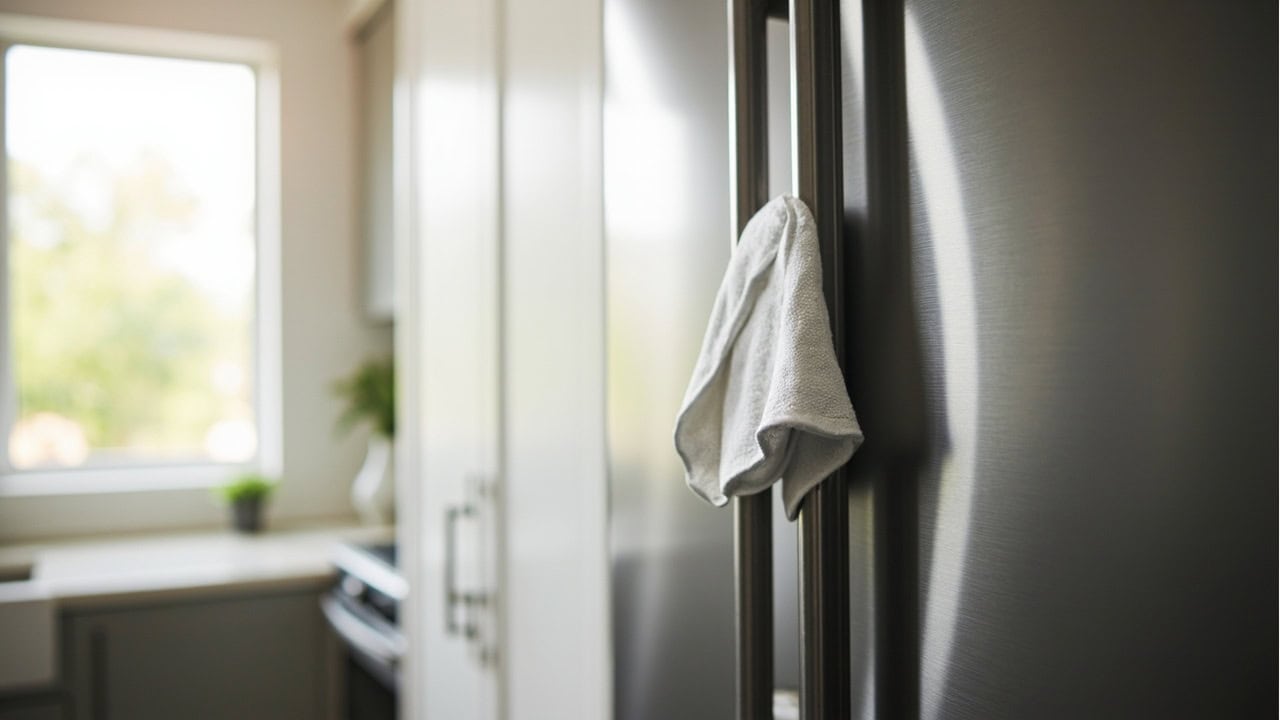
How to Clean Stainless Steel Refrigerator

A stainless steel refrigerator must be cleaned with a pH-neutral cleaner or a mild dish soap solution (1–2 drops per 8 oz of warm water) applied with a soft microfiber cloth using long strokes that follow the grain direction. Abrasive cleaners, bleach-based products, and steel wool cause permanent scratching and pitting that ruins the appliance’s brushed finish. The chromium oxide passivation layer — a thin, self-repairing film that gives stainless steel its corrosion resistance — is sensitive to chlorine, ammonia, and highly acidic or alkaline solutions that strip it away and leave the surface vulnerable to rust.
What You Need Before You Start
Gathering the right supplies before you begin prevents mid-clean scrambling and ensures you never reach for a product that could damage the finish. Stainless steel surfaces require specific cleaning chemistry — the wrong choice can etch the metal or degrade the protective oxide layer in a single application.
Cleaning Agents
- pH-neutral stainless steel cleaner: Formulated specifically for brushed and polished stainless steel surfaces, typically pH 6.5–7.5 to avoid chemical reactions with the chromium oxide layer.
- Mild dish soap (pH 7): A standard neutral-pH dish detergent diluted at 1–2 drops per 8 oz of warm water provides effective cleaning without chemical risk.
- White vinegar (5% acetic acid): Diluted 1:1 with distilled water for removing hard water spots and mineral deposits; not for routine cleaning due to acidity at approximately pH 2.5.
Tools
- Soft microfiber cloths (at least 2–3: one for cleaning, one for rinsing, one for drying)
- Clean cotton towels or a chamois for final buffing
- Spray bottle for mixing and applying dilution ratio solutions
- Soft-bristle brush (a clean toothbrush works) for gaskets, handle crevices, and embossed logos
Products to Avoid
The following products will permanently damage your stainless steel refrigerator’s surface and should never be used:
- Abrasive scrubbers and steel wool — create microscopic scratches that dull the finish
- Bleach-based cleaners (sodium hypochlorite) — cause immediate pitting and etching
- Ammonia-based products — degrade the chromium oxide passivation layer
- Citrus-based or citrus-scented cleaners — citric acid etches stainless steel at high concentrations
- Furniture polish — leaves a film that attracts dust and interferes with the metal’s natural luster
Step-by-Step Cleaning Process
Following a consistent, ordered process ensures every part of the refrigerator exterior gets cleaned without cross-contaminating surfaces or leaving residue. Each step builds on the previous one — skipping steps or changing the order produces streaks and water spots.
- Prepare the workspace. Clear the area in front of and around the refrigerator. Remove magnets, notes, and any items resting on top of the appliance. Ensure the floor is dry to prevent slipping while you work.
- Remove loose debris. Use a dry microfiber cloth to wipe away dust, crumbs, and loose particles from the entire surface. Starting dry prevents you from turning dust into mud when you apply the cleaning solution.
- Apply cleaning solution. Spray the pH-neutral cleaner or diluted soap solution onto the microfiber cloth — not directly onto the appliance. Spraying directly on the surface over-saturates the metal and allows liquid to seep into seams, around handles, and into door gaskets where it can cause corrosion.
- Clean with the grain. Using long, overlapping strokes, wipe the surface following the brushed steel grain direction. Apply firm, even pressure. Stainless steel has a directional brushed finish — visible as faint parallel lines in the metal — and wiping against these lines creates scratches that catch the light and appear as permanent streaks.
- Clean handles and edges. Use a soft-bristle brush dipped in the cleaning solution to scrub around door handles, hinges, embossed logos, and tight corners where finger oils and grime accumulate. These high-contact areas collect the most soil and require more agitation than flat surfaces.
- Rinse if needed. If you used a soap-based solution rather than a dedicated stainless steel cleaner, follow up with a clean microfiber cloth dampened with plain water to remove any soapy residue. Soap film left on stainless steel dries to a cloudy haze that is difficult to remove once set.
- Dry immediately. Buff the surface dry with a clean, dry cotton towel or chamois, working from top to bottom. Allowing the surface to air-dry causes water spots — mineral deposits from evaporated water that bond to the metal surface and require acidic solutions to remove later.
Stainless Steel Refrigerator-Specific Considerations
Stainless steel is not a single material — it is a family of iron-carbon alloys containing a minimum of 10.5% chromium. The chromium reacts with oxygen in the air to form a thin, invisible chromium oxide layer on the surface. This passivation layer is what gives stainless steel its corrosion resistance, and it is self-repairing in the presence of oxygen. However, chlorine (from bleach), ammonia, and highly acidic or alkaline solutions can strip this layer, leaving the underlying metal exposed to rust and etching. Maintaining this protective film is the primary reason pH-neutral cleaners are essential for stainless steel appliance care.
| What to Avoid | Why It Damages Stainless Steel |
|---|---|
| Abrasive pads, steel wool, scrub brushes | Create microscopic scratches that dull the finish and trap dirt in the grooves |
| Bleach, ammonia, citrus cleaners | Cause chemical etching that permanently damages the chromium oxide passivation layer |
| Spraying cleaner directly on surface | Over-saturates the metal, allowing liquid to seep into seams and behind gaskets |
| Wiping against the grain | Creates visible cross-grain scratches and streaking that are difficult to remove |
| Oleophobic coatings | Some refrigerators have a factory-applied protective coating — always check the manufacturer’s instructions before using any cleaner |
Grain direction matters: Stainless steel appliances have a directional brushed finish visible as fine parallel lines running across the surface. Always identify the grain direction before cleaning and wipe parallel to it — never in circular motions. Circular wiping creates a cross-hatch pattern of micro-scratches that becomes visible under kitchen lighting.
Drying and Finishing
The drying and finishing stage determines whether your refrigerator ends up with a showroom-quality shine or a streak-covered surface that looks worse than before you started. Proper technique at this stage prevents water spots and enhances the natural metallic luster of the brushed steel.
- Use a clean, dry cotton towel or chamois to buff the surface immediately after cleaning. Do not allow the surface to air-dry — dissolved minerals in the water deposit onto the steel as the water evaporates, creating visible spots.
- For extra shine, apply a thin layer of food-grade mineral oil or a dedicated stainless steel polish with a soft cloth, following the grain. Buff to remove any excess — a small amount goes a long way, and too much oil leaves a sticky residue that attracts dust.
- Always dry from top to bottom so that any drips or runs fall onto uncleaned areas below rather than onto surfaces you have already finished.
- Inspect the surface at an angle under direct light to catch any remaining streaks, water spots, or missed areas before they dry and set. View the surface from multiple angles — some marks are only visible from specific positions relative to the light source.
Common Mistakes to Avoid
Even experienced cleaners make errors on stainless steel surfaces because the material behaves differently from other kitchen finishes. These are the most frequent mistakes that cause visible, often irreversible damage.
Using Paper Towels
Paper towels leave behind lint and wood fibers that cling to the brushed steel texture, and their rougher fiber structure can cause micro-scratches on polished surfaces. Always use microfiber cloths or soft cotton towels — the ultra-fine synthetic fibers in microfiber lift and trap contaminants rather than dragging them across the surface.
Ignoring Manufacturer Warranty Requirements
Some refrigerator manufacturers specify approved cleaning products in their warranty terms. Using unapproved cleaners — particularly abrasive compounds or chlorine-based products — can void the warranty on the door finish. Check the appliance manual before using any product beyond mild dish soap and water. Major manufacturers including Whirlpool, Samsung, and GE all recommend pH-neutral, non-abrasive cleaners applied with soft cloths in the grain direction.
Overlooking Refrigerator Gaskets
The rubber door seals (gaskets) trap crumbs, moisture, and mold along their folds. Dirty gaskets lose their flexibility and seal integrity, allowing cold air to escape and increasing energy consumption. Clean gaskets monthly using a toothbrush dipped in a mild soap solution, then dry thoroughly to prevent mold growth. This is also a good time to inspect the refrigerator coils, which affect appliance performance when clogged with dust.
Using Chlorine-Based All-Purpose Cleaners
Many common all-purpose household cleaners contain sodium hypochlorite (bleach) at concentrations of 1–5%. Even brief exposure to chlorine at these levels causes immediate pitting and discoloration on stainless steel. The chlorine ions penetrate the chromium oxide layer and initiate localized corrosion cells that appear as tiny rust-colored pits. This damage is permanent and cannot be polished out — the affected area will continue to corrode unless the passivation layer is chemically restored.
Forgetting the Top Surface
Dust, cooking grease, and airborne particles accumulate on top of the refrigerator — an area most people skip during routine cleaning. Over time, this buildup becomes a sticky film that attracts pests and can drip down the sides of the appliance. Wipe the top surface monthly with a degreasing solution, and don’t forget to clean the area behind the refrigerator every three months. For a complete cleaning routine, see our guide on how to clean refrigerator interior spaces including shelves, drawers, and door bins.
Frequently Asked Questions
Q: Can I use vinegar to clean my stainless steel refrigerator?
A: Yes, white vinegar diluted 1:1 with distilled water is safe for stainless steel and effective at removing hard water spots and mild mineral deposits. Vinegar’s acetic acid content (5% in standard white vinegar, yielding a pH of approximately 2.5) dissolves calcium carbonate deposits without attacking the chromium oxide layer at brief exposure times. Always wipe the surface dry immediately after application and follow with a pH-neutral cleaner for best results — vinegar left to air-dry can leave streaks on brushed finishes.
Q: How do I remove fingerprints from stainless steel refrigerator?
A: Fingerprints on stainless steel are caused by natural oils (sebum) from skin that adhere to the metal surface and create visible smudges under light. Remove them using a microfiber cloth dampened with a small amount of isopropyl alcohol (70% concentration) or a pH-neutral stainless steel cleaner, wiping in the direction of the grain. The alcohol dissolves the oils without leaving residue. For stubborn prints that resist alcohol, apply a thin coat of stainless steel polish or food-grade mineral oil — this creates a temporary protective barrier that makes future fingerprints easier to wipe away.
Q: What should I not use to clean a stainless steel refrigerator?
A: Never use abrasive scrubbers, steel wool, bleach, ammonia, citrus-based cleaners, or furniture polish on stainless steel. These products damage the protective chromium oxide layer in different ways: bleach (sodium hypochlorite) causes immediate pitting corrosion; ammonia strips the passivation layer; citric acid in citrus cleaners etches the surface at high concentrations; and abrasive pads create micro-scratches that trap dirt and dull the finish. Always use pH-neutral cleaners specifically formulated for stainless steel, applied with soft microfiber cloths.
Q: How often should I clean my stainless steel refrigerator?
A: Wipe down the exterior surfaces weekly with a dry or lightly dampened microfiber cloth to remove fingerprints and dust before they accumulate. Perform a thorough deep cleaning monthly using a dedicated stainless steel cleaner, and use this opportunity to inspect the door gaskets for cracks or debris. Clean the top of the refrigerator and the condenser coil area behind it every three months — dust buildup on condenser coils reduces cooling efficiency and increases energy consumption by up to 25%, according to the U.S. Department of Energy. For comprehensive kitchen maintenance, consult our kitchen cleaning guide.
References
- Whirlpool Corporation. (2024). How to Clean Stainless Steel Appliances. Whirlpool Blog.
- U.S. Department of Energy. (2023). Energy Saver: Tips for Appliances. Energy.gov.
- Specialty Steel Industry of North America (SSINA). (2023). Cleaning Stainless Steel Surfaces. SSINA.


