
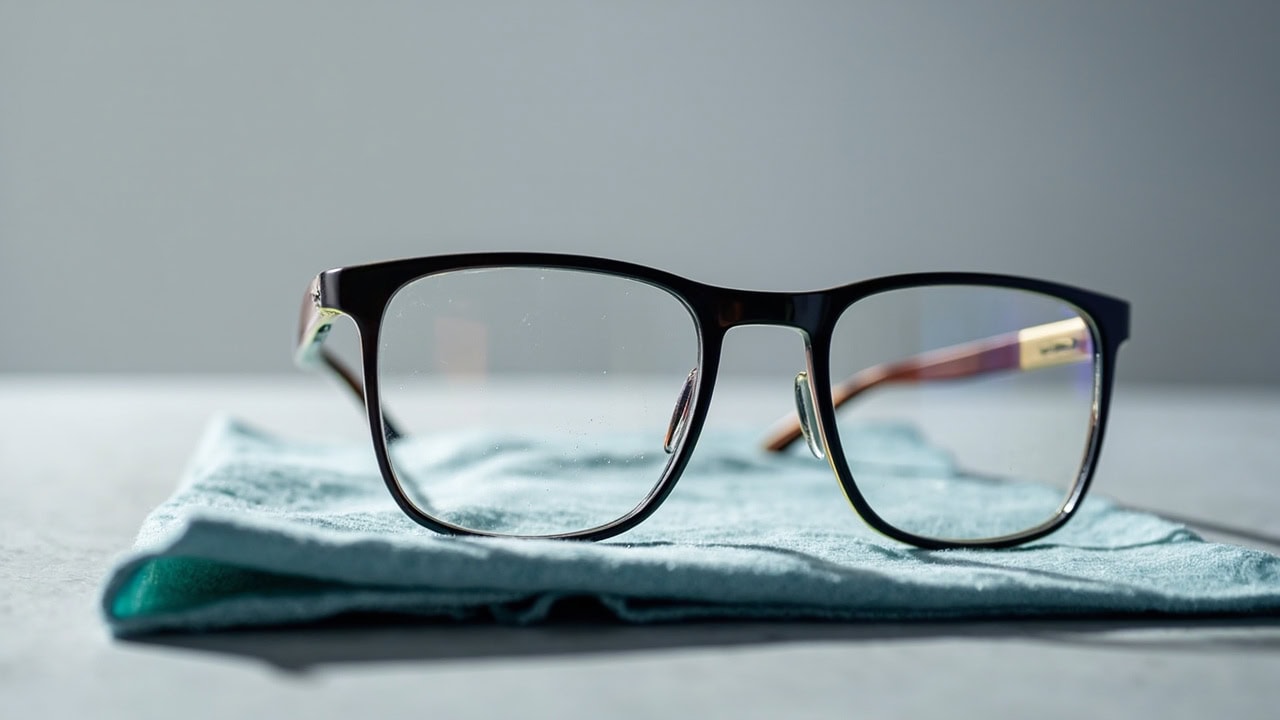
How to Clean Eyeglasses and Sunglasses

The correct method to clean eyeglasses and sunglasses involves rinsing debris from lenses under lukewarm water at 75–85 °F (24–29 °C), applying a single drop of fragrance-free, pH-neutral dish soap to each lens, gently rubbing in circular motions for 20 seconds per side, rinsing thoroughly, and pat-drying with a clean, dedicated microfiber cloth. This process removes skin oils, fingerprints, and environmental contaminants while preserving anti-reflective, scratch-resistant, and blue-light filtering coatings on polycarbonate, CR-39, and high-index lens materials.
What You Need Before You Start
Gathering the right supplies before you begin prevents the most common cause of lens damage: wiping debris across the surface with an improper material. Each item below plays a specific role in protecting your lens coatings while achieving a streak-free clean.
- Lukewarm water — ideally 75–85 °F (24–29 °C). Water at this temperature dissolves skin oils effectively without risking thermal damage to polycarbonate lenses or plastic frames. Cold water below 60 °F fails to emulsify oils; water above 90 °F can soften lens coatings and warp acetate frames.
- Fragrance-free dish soap — a pH-neutral, surfactant-based cleaner with no moisturizers, dyes, or perfumes (Dawn Free & Clear is a widely available example). The surfactant molecules in dish soap break the bond between lens coatings and oily residues without degrading the anti-reflective coating. Avoid soaps labeled “moisturizing” or “antibacterial” — the added lanolin and triclosan leave films and can etch coatings over time.
- Clean microfiber cloth — a dedicated cloth laundered without fabric softener or dryer sheets. Fabric softeners coat microfiber strands with a waxy residue that transfers to lenses, causing streaks. Wash microfiber cloths separately in warm water with a small amount of dye-free detergent and air dry.
- Soft-bristled toothbrush or lens cleaning brush — for dislodging debris from nose pad crevices, hinge joints, and frame edges where a cloth cannot reach.
- Optional: commercial eyeglass cleaning solution — alcohol-free and ammonia-free formulations only. These solutions are pre-diluted to a safe pH-neutral range and contain no solvents that attack lens coatings.
- Optional: individually sealed lens cleaning wipes — convenient for travel, but verify the package specifies “alcohol-free” and “ammonia-free.” Wipes containing isopropyl alcohol above 10% concentration will degrade anti-reflective coatings on contact.
Step-by-Step Cleaning Process
This six-step process works for both prescription eyeglasses and sunglasses regardless of lens material. Dr. Jonathan Wolfe, an optometrist and spokesperson for the American Optometric Association, recommends a 20-second cleaning routine to patients as the minimum contact time for effective oil removal. Following every step in order prevents the micro-scratches that accumulate from skipping the rinse phase.
- Rinse lenses with lukewarm water — Hold the frames firmly at the bridge and run both lenses under moderate-pressure lukewarm water (75–85 °F / 24–29 °C) for 10–15 seconds. This flushes away dust, sand, and loose debris that would otherwise act as an abrasive when you begin rubbing. If you live in a hard-water area where mineral deposits are a concern, use distilled water for the final rinse to prevent water spots from calcium and magnesium carbonates.
- Apply one drop of dish soap per lens — Dispense a pea-sized amount of fragrance-free dish soap onto your fingertips. Apply the soap directly to each lens surface — front and back. Using your fingertips rather than the cloth ensures even distribution and lets you feel any remaining debris. Excess soap leaves a visible residue that requires additional rinsing, so a single drop per lens is sufficient.
- Gentle circular rubbing for 20 seconds per lens — Using the pads of your fingertips (not nails), gently rub both sides of each lens in small circular motions for approximately 20 seconds per lens. Apply only light pressure — the surfactant action of the soap does the work, not mechanical force. Aggressive scrubbing damages multi-layer anti-reflective coatings, which are typically only a few micrometers thick. Pay attention to the areas near the frame edges where skin oils concentrate.
- Rinse thoroughly under lukewarm water — Hold the lenses under clean running water for 15–20 seconds, rotating the frame to rinse both sides evenly. Soap residue causes streaking and attracts dust faster than a properly rinsed surface. If you notice any slippery feeling when running your finger lightly across the lens, rinse again — the surface should feel clean and smooth.
- Pat dry with a microfiber cloth — Lay the microfiber cloth flat and gently press it against each lens to absorb water. Pat rather than rub — rubbing while any grit remains trapped in the cloth introduces micro-scratches that are individually invisible but collectively degrade lens clarity over months of repeated cleaning. Use a clean section of the cloth for each lens.
- Clean the frame nose pads and temples — Use a damp microfiber cloth or a soft-bristled toothbrush to wipe the nose pads, temple tips, and hinge areas where skin oils, sweat, and dead skin cells accumulate. A 2018 study published in PLoS ONE found that eyeglass nose pads and ear clips harbor bacterial concentrations — including Staphylococcus species — significantly higher than other commonly touched surfaces. Cleaning these components weekly prevents bacterial buildup and skin irritation.
Eyeglasses vs. Sunglasses — Material-Specific Considerations
While the core cleaning method remains the same, eyeglasses and sunglasses differ in lens materials, coating types, and frame construction. Understanding these differences helps you adjust pressure, drying technique, and cleaning frequency to match what each pair requires. For a broader guide on cleaning different glass surfaces, see the Window & Glass Cleaning Hub.
| Feature | Eyeglasses | Sunglasses |
|---|---|---|
| Typical lens materials | Polycarbonate, CR-39, high-index plastic | Polycarbonate, CR-39, glass |
| Coating sensitivity | Higher (anti-reflective, blue-light, scratch-resistant) | Moderate to high (polarization, mirror coatings) |
| Frame materials | Metal, plastic, titanium, acetate | Same materials, often larger frames with more surface area |
| Cleaning frequency | Daily recommended | After each wear (greater oil and sunscreen contact) |
| Special considerations | Prescription coatings require extra care | Polarized lenses need gentle circular motions only |
Metal Frames
Metal frames — including titanium, stainless steel, and monel alloys — tolerate soap and water well but are susceptible to corrosion from harsh detergents and hard-water mineral deposits. Dry metal frames thoroughly immediately after cleaning to prevent water spots that can tarnish the finish. Avoid abrasive cleaners on gold-plated or silver-plated frames, as the plating is typically only a few microns thick and wears away quickly under friction.
Plastic and Acetate Frames
Plastic and acetate frames are more chemically resistant than metal but can absorb dyes from colored soaps over repeated exposures. Warm water (not exceeding 85 °F / 29 °C) helps soften and remove accumulated skin oils from the frame surface and temple tips. Acetate frames in particular benefit from occasional thorough cleaning at the nose bridge, where body heat softens the material and allows oil penetration into the surface layer.
Polarized Sunglasses
Polarized lenses contain a thin chemical film laminated between lens layers that filters horizontal light waves. Never rub polarized lenses in a single back-and-forth direction — this can gradually delaminate the polarization layer at the edges. Use only gentle circular motions, and never apply alcohol or acetone to polarized lenses, as these solvents dissolve the adhesive bonding the polarization film to the lens substrate. For more on how solvents interact with coated glass, see our guide on the Kitchen Cleaning Hub (shared pH-neutral cleaning chemistry principles).
Photochromic Lenses
Photochromic lenses (such as Transitions) contain silver halide molecules that darken in response to ultraviolet light. Avoid exposing photochromic lenses to heat during cleaning — elevated temperatures reduce the darkening response and can permanently alter the photochromic reaction speed. Wash with lukewarm water only, and never leave photochromic lenses on a car dashboard, near a heater, or in direct sunlight while drying. Store them in a hard-shell case at room temperature.
Drying and Finishing Your Glasses
The drying stage is where most preventable lens damage occurs. Even with a proper wash, using the wrong drying material or technique introduces the very scratches you were trying to avoid. The principles of safe drying are straightforward but often overlooked.
- Always use a 100% microfiber cloth — Cotton t-shirts, paper towels, tissues, and toilet paper all contain microscopic wood fibers and abrasive particles that score the lens surface. A single paper towel swipe can deposit hundreds of microscopic scratches, each one too small to see individually but cumulatively creating a hazy appearance that cannot be reversed. Learn more about proper cloth care in our guide on how to clean microfiber cloths.
- Pat gently rather than rubbing — Press the microfiber cloth against the wet lens surface and lift. This blotting action absorbs water without dragging any trapped particles across the coating. Circular rubbing motions during drying create swirl-pattern micro-scratches that become visible under bright light.
- For stubborn water spots — Apply a single drop of isopropyl alcohol (70% concentration or less) to the microfiber cloth — never directly on the lens. The alcohol dissolves mineral deposits from hard water without attacking most modern lens coatings when used at this dilution. Test on a small corner first if your lenses have older anti-reflective coatings.
- Inspect at an angle under light — Hold the glasses under a bright light source and view the lenses at a 45-degree angle. This reveals any remaining streaks, water spots, or oily residue that would be invisible when looking straight through the lens.
- Store in a hard-shell case — Place glasses in a protective hard-shell case immediately after cleaning to prevent dust accumulation. A soft pouch offers less protection against crushing forces that can scratch lenses against keys, coins, or other objects in a bag or pocket.
Common Mistakes When Cleaning Eyeglasses and Sunglasses
Many lens cleaning habits are so widespread that people assume they are safe. The following six mistakes account for the majority of preventable lens and coating damage, and each one has a specific chemical or mechanical explanation for why it harms your glasses.
- Using paper towels, tissues, or clothing — Paper products are manufactured from wood pulp and retain microscopic cellulose fibers with a hardness of approximately 4.5 on the Mohs scale. Polycarbonate lenses have a surface hardness of roughly 2–3, meaning these fibers easily score the lens surface. Cotton clothing fibers are less hard but trap dust particles that act as abrasives during wiping.
- Using household glass cleaners — Standard window and glass cleaners contain ammonia (pH 11–12) and isopropyl alcohol, both of which dissolve the magnesium fluoride and titanium dioxide layers used in anti-reflective coatings. A single application may not cause visible damage, but repeated use causes etching and irreversible coating degradation. The dilution ratio of ammonia in household cleaners is far too concentrated for delicate optical coatings.
- Breath fogging then wiping — Exhaling on lenses deposits saliva particles containing enzymes and dried proteins that act as micro-abrasives when wiped across the surface. This common shortcut removes visible smudges temporarily but creates a fine network of scratches visible under magnification.
- Using hot water — Water temperatures above 90 °F (32 °C) soften the bonding agents that hold multi-layer lens coatings together. Polycarbonate lenses begin to deform at temperatures as low as 120 °F (49 °C), and even moderate heat can cause micro-warping that distorts vision and loosens coatings at the edges.
- Using the wrong soap — Moisturizing soaps contain lanolin and glycerin that leave a greasy film on lenses, attracting dust and making subsequent smudges harder to remove. Scented soaps contain volatile organic compounds that can slowly degrade plastic lens surfaces and frame materials. Antibacterial soaps contain triclosan or benzalkonium chloride, both of which can damage anti-reflective coatings with repeated exposure.
- Not rinsing before wiping — Dry wiping or applying soap without a pre-rinse pushes dust and grit particles across the lens surface under pressure. Even a single grain of sand (Mohs hardness 7) dragged across a polycarbonate lens (Mohs hardness 2–3) creates a permanent groove. For more on preventing glass surface damage, see our guide on how to remove scratches from glass.
How Often Should You Clean Your Glasses?
Cleaning frequency depends on how often you wear your glasses and the conditions they are exposed to. Over-cleaning with improper technique causes more damage than under-cleaning, so the key is to clean at the right intervals using the correct method described above.
| Usage Pattern | Cleaning Frequency | Reasoning |
|---|---|---|
| Daily wear, full day | Clean daily (evening recommended) | Removes accumulated skin oils, dust, and environmental pollutants before they bond overnight |
| Occasional wear | Clean after each wear | Stored glasses collect dust and oils from handling; cleaning before storage prevents buildup |
| Heavy sweating or sports | Clean after each use | Salt in sweat corrodes metal frames and degrades nose pad materials; prompt cleaning prevents permanent damage |
| Light duty (reading only) | 2–3 times per week | Less oil and environmental exposure allows longer intervals between full cleanings |
| Storage longer than 1 week | Clean before storing | Removing oils and residues before long-term storage prevents them from curing onto lens coatings |
Frequently Asked Questions
Q: Can I use eyeglass cleaning wipes instead of soap and water?
A: Yes, pre-moistened individually sealed eyeglass wipes are effective and convenient for travel or quick cleaning, but avoid wipes with perfumes, dyes, or ammonia-based solutions. For daily deep cleaning, soap and water provides superior oil removal without residue. Check the packaging to confirm the wipes are labeled alcohol-free and ammonia-free — these are the two chemicals most likely to damage modern multi-layer lens coatings.
Q: Why should I avoid using paper towels to dry my glasses?
A: Paper towels contain microscopic wood fibers (cellulose) and abrasive mineral particles from the manufacturing process. These create micro-scratches on lens surfaces that are individually invisible but accumulate over months of repeated wiping. The cumulative effect gradually reduces lens clarity, scatters light entering the eye, and creates microscopic grooves that trap oils — making future smudges easier to form and harder to remove.
Q: Can I use dish soap that has fragrance or moisturizers on my eyeglasses?
A: No. Fragrance compounds and moisturizers in dish soaps leave a chemical residue on lenses that attracts dust and interferes with the anti-reflective coating’s optical properties. Over time, moisturizing agents like lanolin and glycerin can penetrate the porous upper layers of anti-reflective coatings and degrade them. Only use fragrance-free, pH-neutral dish soaps specifically labeled as clear and free of additives — such as Dawn Free & Clear or similar formulations.
Q: Is it safe to clean my eyeglasses with alcohol-based hand sanitizer?
A: No. Ethanol and isopropyl alcohol dissolve the bonding agents in multi-layer anti-reflective coatings and cause a phenomenon called “crazing” — a network of fine cracks that spreads across the lens surface over weeks and months. Alcohol also attacks polycarbonate lens material directly, causing surface clouding, and can make plastic frames brittle. Use only alcohol-free, ammonia-free cleaning solutions designed specifically for optical lenses.
References
- American Academy of Ophthalmology. (2023). Caring for Your Glasses. American Academy of Ophthalmology.
- Good Housekeeping Institute. (2024). How to Clean Eyeglasses, According to Experts. Good Housekeeping.
- Healthline. (2024). How to Clean Glasses Properly. Healthline.
- Lederer, K., Gule, N., & Stein, E. (2018). Microbial contamination of eyeglasses and the efficacy of different cleaning methods. PLoS ONE, 13(7). PLoS ONE.
- American Optometric Association. (2023). Eyeglass and Lens Care. American Optometric Association.


