
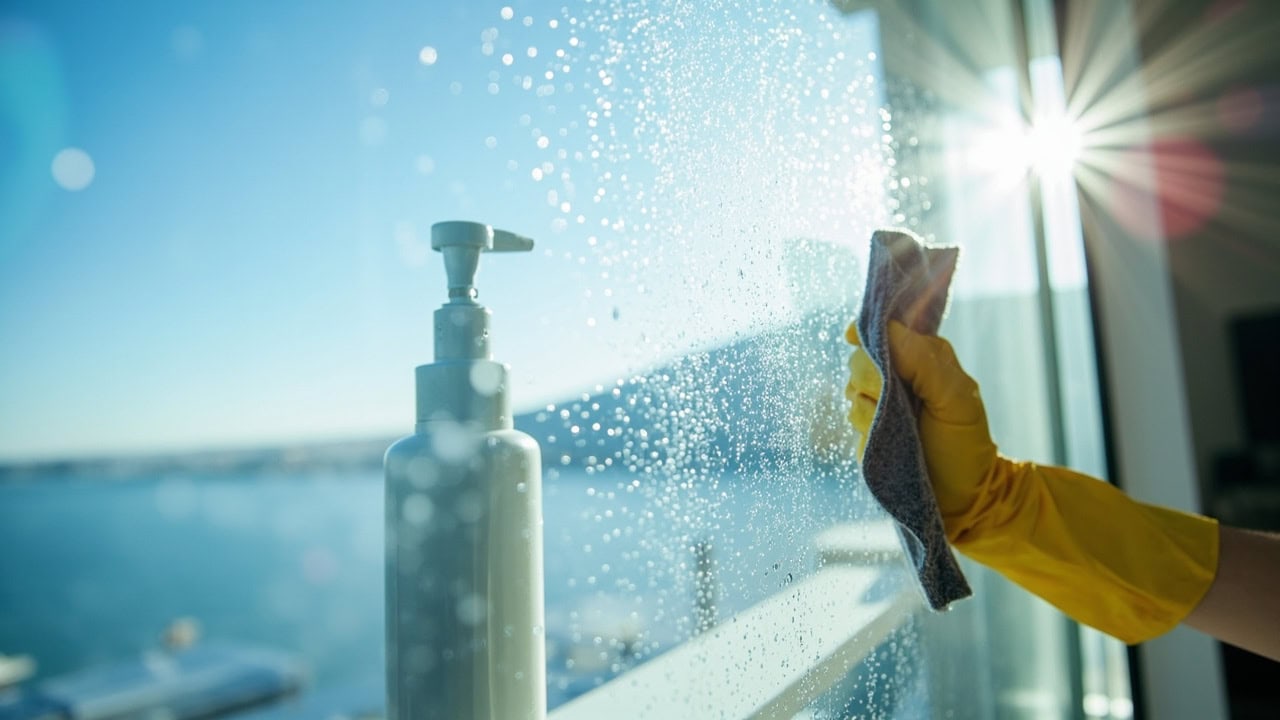
Window and Glass Cleaning Guide: Streak-Free Results Every Time

Window glass delivers streak-free results every time when cleaned with a 1:10 vinegar-to-water solution, a 70/30 methanol-based glass cleaner, or a pH-neutral all-purpose cleaner applied with a clean microfiber cloth in a top-to-bottom motion and buffed with a lint-free cloth. The critical factors are eliminating soap residue, using deionized water at TDS 0 ppm to prevent mineral deposits, and keeping the glass surface temperature below 90°F during cleaning to prevent rapid evaporation that causes streaking. A solution concentration of 10–15% isopropyl alcohol ensures fast drying and complete soil removal without leaving behind surfactants that create visible bands across the glass.
What This Window Glass Cleaning Guide Covers
This hub article serves as the complete resource for all window glass cleaning methods, techniques, and best practices for achieving streak-free results in residential and commercial settings. It covers interior and exterior glass surfaces, different cleaning solutions and their chemical effectiveness, the science behind streaking and filming, tool selection and maintenance, and seasonal considerations for year-round window care.
Each section below provides actionable instructions you can apply immediately. For detailed step-by-step procedures on specific cleaning scenarios — from overhead skylights to delicate window tint — the directory of spoke articles links you directly to the specialized guide you need.
Why Streak-Free Glass Matters
Streak-free windows directly impact your home’s energy efficiency, curb appeal, and indoor air quality by allowing maximum natural light penetration and providing clear visibility. According to the U.S. Department of Energy, clean windows can improve daylighting performance by up to 30%, reducing the need for artificial lighting and lowering electricity costs. Soap residue and mineral deposits left by improper cleaning create a breeding ground for mold spores and bacteria that degrade indoor air quality over time.
In commercial settings, smudged and streaked glass projects an unprofessional image and reduces customer confidence. A study by the International Sanitary Supply Association (ISSA) found that facility appearance — with glass clarity as a primary visual cue — directly correlates with perceived cleanliness and customer trust. Understanding why glass streaks form chemically helps you prevent them permanently rather than fighting the same battle on repeat.
Directory of Window and Glass Cleaning Articles
This hub connects to the following spoke articles covering specific cleaning scenarios. Each guide provides step-by-step instructions tailored to that particular glass surface or cleaning challenge.
- How to Clean Windows Inside (#168) — Interior window cleaning technique for standard residential windows, including frames and sills
- How to Clean Picture Windows (#169) — Large fixed-pane window cleaning without scratching or damaging sealants
- How to Clean Skylights (#170) — Safe techniques for overhead glass surfaces at height
- How to Remove Hard Water Stains from Glass (#171) — Treatment for mineral deposits and limescale on shower doors and windows
- How to Clean Window Screens (#172) — Complete screen removal, cleaning, and reinstallation process
- How to Clean Mirrors (#173) — Streak-free mirror cleaning using similar techniques to glass
- How to Clean Glass Shower Doors (#174) — Soap scum and hard water removal from vertical glass surfaces
- How to Clean Window Tint (#175) — Safe methods for treated and coated glass surfaces
The Science Behind Glass Streaking
Glass streaking occurs when cleaning solutions evaporate too quickly, leaving behind surfactants and dissolved minerals that create visible bands across the surface. Soda-lime glass — the type used in most residential and commercial windows — has a chemically inert silica surface that does not bond with cleaning agents, meaning any residue left behind sits visibly on the surface rather than being absorbed.
The primary causes of streaking include tap water containing dissolved minerals like calcium and magnesium (measured as total dissolved solids, or TDS) that remain as deposits when water evaporates, applying cleaning solution in direct sunlight causing rapid evaporation before soil can be wiped away, and using incorrect microfiber or paper towels that leave behind lint and cellulose fibers. The solution is using deionized water with TDS at 0 ppm as your base, cleaning glass when the surface temperature is between 50°F and 90°F, and selecting the correct weave-density microfiber cloths that trap soil rather than pushing it across the surface.
Professional window cleaners rely on pure water systems — typically 2- or 3-stage filtration involving reverse osmosis and deionization resin — to produce water with zero mineral content. When zero-TDS water dries on glass, it leaves absolutely no residue, which is why water-fed pole systems have become the industry standard for commercial exterior window cleaning.
Essential Tools for Streak-Free Window Cleaning
The foundation of streak-free results begins with selecting the correct tools. A high-quality microfiber cloth with 300 GSM or higher density traps dirt particles in its split-fiber structure rather than pushing them across the surface, which is the primary cause of streaking with inferior cloths. Pair this with a spray bottle that produces a fine mist rather than large droplets to ensure even solution distribution without pooling.
For larger glass surfaces, a squeegee with a fresh rubber blade is essential — the modern window squeegee was patented by Ettore Steccone in 1936, and his design remains the industry standard. A worn or nicked squeegee blade leaves characteristic straight-line streaks with every pass. Replace the rubber blade monthly in professional settings or quarterly for residential use.
Secondary tools include a window scrub brush with soft bristles for heavily soiled exterior glass, a plastic scraper blade (never metal) for paint or adhesive removal, and a chamois or synthetic leather cloth for final buffing. Keep all window cleaning tools separate from general household cleaning supplies to prevent cross-contamination with grease, lotion, and other soils that transfer easily to glass.
Comparison: Glass Cleaning Solutions
| Solution Type | pH Level | Best For | Drying Time | Streak Risk |
|---|---|---|---|---|
| Vinegar (1:10 with water) | 2.5–3.0 | Interior glass, light soil | Fast | Low |
| Ammonia-based glass cleaner | 10.0–11.0 | Heavy grease, kitchen windows | Medium | Medium |
| Isopropyl alcohol (10–15%) | 7.0 | Quick-dry cleaning | Very fast | Very Low |
| pH-neutral all-purpose | 7.0 | Tinted glass, coated surfaces | Medium | Low |
| Deionized water only | 7.0 | Final rinse, sensitive surfaces | Fast | Minimal |
| Commercial glass spray | Varies | General purpose cleaning | Varies | Low–Medium |
Choose your solution based on the soil type and glass surface. For kitchen windows with grease buildup, an ammonia-based cleaner at pH 10–11 cuts through lipid-based soils effectively. For tinted or coated glass — covered in detail in our window tint cleaning guide — always use a pH-neutral formula to avoid degrading the film adhesive. The EPA’s Safer Choice program certifies cleaning products that meet stringent human and environmental safety standards — look for the label when selecting commercial glass sprays.
Getting Started: Pre-Cleaning Preparation
Before applying any cleaning solution, remove loose debris and dust from the glass surface using a dry microfiber cloth or soft-bristled brush to prevent scratching during the wet cleaning process. Skipping this step forces you to grind abrasive dust particles into the glass when you begin wiping with solution, creating micro-scratches that become visible over time under direct sunlight.
Test your cleaning solution on a small inconspicuous area first, especially when cleaning tinted glass, coated glass, or window films that may be sensitive to certain chemicals. Ensure the glass surface temperature is between 50°F and 90°F — cleaning hot glass in direct sunlight causes rapid evaporation leading to streaks, while cleaning cold glass below 50°F can cause some solutions to crystallize rather than spread evenly. Gather all tools within reach before beginning to avoid cross-contamination from touching dirty surfaces mid-cleaning.
Interior Window Glass Cleaning Process
Begin interior window cleaning by misting the glass surface lightly with your chosen cleaning solution, holding the spray bottle 6–8 inches from the surface to achieve even coverage without pooling. Working from top to bottom in overlapping vertical strokes, use a folded microfiber cloth to agitate the cleaning solution across the glass, applying light pressure to loosen soil particles trapped in the micro-pores of the glass surface.
Follow with a horizontal squeegee stroke from top to bottom, wiping the rubber blade clean with a damp cloth after each pass to prevent redistributing dirt. The overlapping technique — each stroke covering about 80% of the previous pass — ensures no soil is missed. Complete the process with a lint-free buffing cloth using circular motions to eliminate any remaining moisture or streaks. For detailed instructions on frame and sill cleaning, see our complete guide to cleaning windows inside.
Exterior Window Glass Cleaning
Exterior windows face significantly greater soil exposure from pollen, pollution, dust, and rainwater minerals that bond more aggressively to the glass surface through repeated wet-dry cycles. Heavy exterior soil may require a pre-wash solution with 1–2% dish soap mixed with water followed by a thorough freshwater rinse to prevent soap residue buildup — a common cause of filming on exterior glass.
Use a soft-bristled window scrub brush to agitate heavily soiled areas, working from the center outward in circular motions before rinsing completely with deionized or distilled water. Always clean exterior windows on a cloudy day or during cooler morning hours when glass surface temperature stays below 90°F — this gives the cleaning solution adequate dwell time to break down soil before evaporation occurs. For stubborn mineral deposits, refer to our guide on removing hard water stains from glass.
Common Mistakes That Cause Glass Streaking
The most frequent error is using paper towels or low-quality shop rags that leave behind lint fibers and cellulose fragments that create streak patterns as they break down during buffing. Paper products are manufactured with binders and sizing agents that dissolve in cleaning solution and deposit on the glass as the carrier liquid evaporates — this is the invisible residue you see as streaks after the glass dries.
Another common mistake involves over-spraying cleaning solution, creating excess liquid that overwhelms the microfiber cloth’s absorption capacity and redistributes soil rather than removing it. A single light mist is sufficient — if you see liquid running down the glass, you have applied too much. Cleaning vertical glass surfaces from the bottom up causes gravity to pull dirty solution down over already-cleaned areas, requiring extra passes that rarely achieve true streak-free results. Always work top to bottom.
Seasonal Considerations for Window Glass Care
Spring cleaning should include window screen removal and deep cleaning to eliminate winter allergen accumulation — dust, pollen, and debris trapped behind screens create a constant source of particulate redeposition on freshly cleaned glass. After cleaning screens using our window screen cleaning guide, reinstall them to act as a filtration barrier during the high-pollen months.
Summer heat requires scheduling exterior cleaning for early morning or evening when glass surfaces are cool and cleaning solutions can work effectively before rapid evaporation occurs. Autumn preparation focuses on removing accumulated tree sap, bird droppings, and fall debris that can etch glass permanently if left untreated through winter — these organic contaminants contain acids that react with the soda-lime glass surface over time. Winter window care involves using an ammonia-free cleaning solution to prevent streaking in cold temperatures and ensuring all moisture is removed from frames and sills to prevent ice expansion damage.
Drying and Finishing Techniques
The final step in achieving truly streak-free glass involves using a perfectly clean, dry lint-free cloth — such as a dedicated glass polishing cloth or a 100% cotton diaper cloth — for the critical buffing phase. Hold the cloth at a 45-degree angle to the glass surface and use quick, confident circular motions to absorb any remaining moisture while polishing the surface to a brilliant shine. The 45-degree angle maximizes the contact area between the cloth fibers and the glass surface, allowing the split microfibers to lift residual moisture.
Inspect the glass at multiple angles under available light to catch any remaining streaks. Viewing at a low angle parallel to the glass surface reveals streaks that are invisible from a perpendicular viewing angle. This inspection technique is used by professional window cleaners as their quality check — if the glass looks clear when viewed at a 10-degree angle against the light, it is truly streak-free.
How to Maintain Streak-Free Windows Long-Term
Establishing a regular cleaning schedule prevents soil accumulation that requires aggressive cleaning methods prone to leaving streaks. For most homes, cleaning interior windows every 4–6 weeks maintains clear glass with minimal effort using only a light mist of vinegar solution and a microfiber cloth. Exterior windows typically require cleaning every 6–8 weeks depending on environmental exposure — homes near construction sites or busy roads may need monthly attention.
Apply a thin coat of glass sealant after cleaning to create a hydrophobic surface that causes water to bead and run off rather than evaporating into mineral deposits on the surface. Keep dedicated window cleaning tools separate from general household cleaning to prevent cross-contamination with grease, lotion, and other soils that transfer to glass surfaces and create persistent filming. For related cleaning challenges on other glass surfaces around the home, see our kitchen cleaning guide for appliance glass and our bathroom cleaning guide for shower door maintenance.
Frequently Asked Questions
Q: What is the best solution for streak-free window glass cleaning?
A: A 1:10 vinegar-to-water solution or a 10–15% isopropyl alcohol spray cleaner provides the best streak-free results on standard interior glass, evaporating quickly without leaving behind mineral deposits or soap residue that cause streaking.
Q: Why do my windows still streak after cleaning?
A: Windows streak after cleaning due to using tap water containing dissolved minerals, cleaning glass that is too hot from direct sunlight, using low-quality cloths that leave lint, or applying too much cleaning solution that overwhelms your wipe’s absorption capacity.
Q: Can I use newspaper to clean windows?
A: Newspaper can be used to clean glass but is inferior to microfiber — newspaper ink can transfer to frames and hands, and modern newsprint contains less rag fiber than historical newspaper, making it more prone to leaving ink residue and fibers on glass.
Q: How do I prevent streaking when cleaning windows in direct sunlight?
A: To prevent streaking in direct sunlight, work on shaded glass surfaces or on cooler overcast days, use a quick-dry solution containing 10–15% isopropyl alcohol, work in small sections, and immediately buff each section before the solution evaporates.
References
- U.S. Department of Energy. (2024). Daylighting. Energy Saver.
- Wikipedia Contributors. (2025). Window Cleaning. Wikimedia Foundation.
- Wikipedia Contributors. (2025). Squeegee. Wikimedia Foundation.
- U.S. Environmental Protection Agency. (2025). Safer Choice Program. EPA.gov.
- International Sanitary Supply Association (ISSA). (2024). Clean Buildings, Healthy People: The Value of Facility Appearance.


