
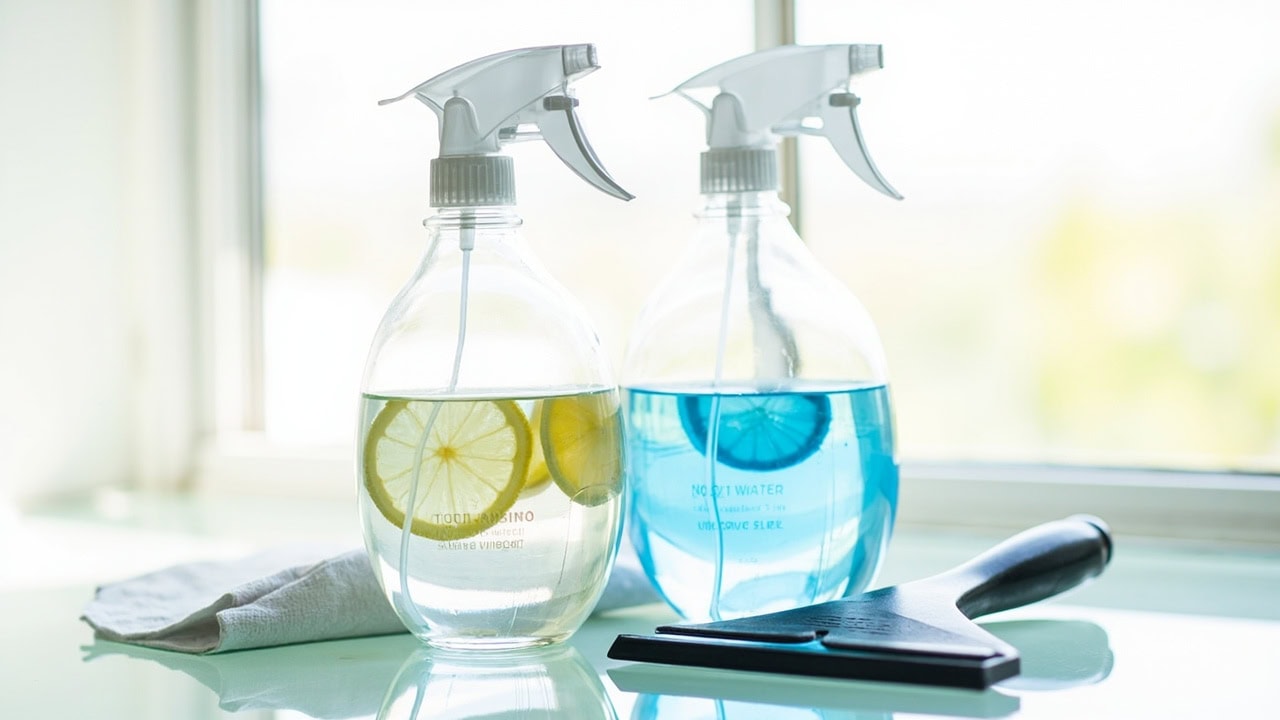
Best Window Cleaning Solution: DIY and Commercial Compared

The best window cleaning solution is a 1:1 mixture of distilled water and white vinegar for DIY cleaning, or a commercial ammonia-free surfactant-based cleaner for streak-free results with minimal effort. A DIY solution of equal parts distilled water and white vinegar removes general grime effectively at near-zero cost, while commercial ammonia-free cleaners deliver faster drying and consistent results. Both approaches require a squeegee and microfiber cloth for a professional-quality finish.
What Makes a Window Cleaning Solution Effective?
A window cleaning solution works through a combination of surfactants, solvents, and pH balance that together break down and lift contaminants from glass surfaces. Understanding these mechanisms helps you choose the right solution for your specific cleaning situation and avoid products that cause streaking or damage.
Surfactants are the primary active agents in most effective window cleaners. These molecules have a hydrophilic (water-attracting) head and a lipophilic (oil-attracting) tail, which allows them to bond with both water and grease simultaneously. When applied to glass, surfactants surround and emulsify oily residues, lifting them off the surface so they can be wiped away. In commercial cleaners, synthetic surfactants like alkyl polyglucosides or sodium lauryl sulfate provide this action. In DIY solutions, the acetic acid in vinegar or the surfactants present in liquid dish soap serve the same purpose.
Solvents dissolve dried-on particles, fingerprints, and adhesive residues that surfactants alone cannot break down. Isopropyl alcohol (rubbing alcohol) evaporates quickly and dissolves oils, making it especially effective for mirrors and glass surfaces where fast drying is critical. Ammonia, traditionally used in commercial glass cleaners, acts as a strong solvent but carries health and material compatibility risks that make it less suitable for residential use.
pH level plays a direct role in streak formation. Glass cleaning solutions perform best at a slightly acidic pH of 5.0 to 7.0. This range dissolves alkaline mineral deposits (such as hard water stains and soap scum) without leaving an alkaline residue that dries into visible streaks. White vinegar, with a pH of approximately 2.5, falls within an effective range when diluted 1:1 with distilled water, bringing the working pH to roughly 3.0 to 4.0 — strong enough to cut through grime without damaging standard window glass.
Distilled water is essential for streak-free results because it contains no dissolved minerals. Tap water carries calcium, magnesium, and silica that deposit on glass as the solution evaporates, creating the very spots and streaks you are trying to remove. Using distilled water in any window cleaning solution eliminates this source of contamination entirely. Learn more about how water chemistry affects cleaning in the Cleaning Chemistry Hub.
Contact time — the duration a solution sits on the glass before wiping — determines how effectively it can dissolve bonded contaminants. Light grime requires only 10 to 15 seconds of contact before squeegeeing, while hard water stains and baked-on residue benefit from 30 to 60 seconds of dwell time. Rushing this step is one of the most common reasons for residual streaking and incomplete soil removal.
DIY Window Cleaning Solutions
Homemade window cleaning solutions offer effective cleaning power at a fraction of the cost of commercial products. Each recipe below targets a specific type of window contamination, and all three use ingredients available at any grocery store. The key to success with DIY solutions is precise dilution — too much vinegar or soap leaves residue, while too little fails to clean effectively.
Recipe 1: Water and White Vinegar (Best Overall DIY)
Mix 1 cup of distilled water with 1 cup of white vinegar (5% acetic acid concentration) in a clean spray bottle. For fragrance, add 5 drops of essential oil — lemon or lavender work well and do not interfere with cleaning performance. This solution works on general window grime, fingerprints, light soap scum, and hard water deposits. The acetic acid in vinegar dissolves calcium carbonate deposits and cuts through oily residues through acid-base neutralization, while the water acts as a carrier and rinsing agent.
White vinegar contains approximately 5% acetic acid by volume, giving it a pH of roughly 2.5 undiluted. When mixed 1:1 with distilled water, the working pH rises to approximately 3.0 to 4.0 — strong enough to dissolve mineral deposits on glass but safe for standard residential windows, frames, and seals. This dilution ratio has been validated by professional cleaners as the optimal balance between cleaning power and surface safety. For particularly stubborn hard water stains, see our guide on how to remove hard water stains from glass.
Recipe 2: Dish Soap Solution (Best for Greasy Windows)
Add 2 to 3 drops of liquid dish soap to 2 cups of warm distilled water. Mix gently to avoid creating excessive foam, which can leave streaks on glass. This solution is specifically formulated for kitchen windows and windows near cooking areas where grease films accumulate from vaporized cooking oils. The surfactants in dish soap — typically sodium alkyl sulfate or sodium alkylbenzene sulfonate — are engineered to emulsify and lift grease from surfaces, making them more effective against cooking residue than vinegar alone.
Using more than 3 drops of dish soap is a common error that causes visible filming on glass. Dish soap surfactants are concentrated — a single drop contains enough active ingredient to clean several square feet of glass. Excess soap leaves a thin polymer film that attracts dust and creates a hazy appearance within hours of cleaning. If you notice a soapy residue after cleaning, reduce the soap to 1 drop per 2 cups of water for subsequent applications.
Recipe 3: Rubbing Alcohol Solution (Best for Mirrors and Glass)
Combine 1 cup of distilled water with 1 cup of rubbing alcohol (70% isopropyl alcohol) in a spray bottle. This solution excels on bathroom mirrors, glass shower doors, and chrome fixtures where fast evaporation is critical to preventing streaks. Isopropyl alcohol evaporates at a rate approximately 10 times faster than water, which means the solution dries before minerals or residues can deposit on the surface. The alcohol also dissolves cosmetic residues, toothpaste splatter, and hairspray overspray that water-based solutions struggle to remove.
For maximum effectiveness, apply this solution to a microfiber cloth rather than spraying directly onto mirrors — this prevents overspray onto painted walls and wood frames that alcohol can damage. The 1:1 dilution ratio brings the working isopropyl concentration to approximately 35%, which provides sufficient solvent power while maintaining enough water content to carry away dissolved soils.
Commercial Window Cleaning Solutions
Commercial window cleaners offer convenience, consistent formulation, and specialized ingredients that can outperform DIY solutions in specific scenarios. The table below compares the four main categories of commercial window cleaning products by their active ingredients, ideal applications, and trade-offs. For a detailed cost comparison between commercial and homemade options, see our analysis of commercial vs DIY cleaning products.
| Product Type | Active Ingredients | Best For | Pros | Cons |
|---|---|---|---|---|
| Ammonia-based | Ammonia, synthetic surfactants | Heavy grease removal | Strong degreasing power | Toxic fumes; damages seals, tinting, and rubber gaskets |
| Ammonia-free | Surfactants, mild solvents | Everyday cleaning | Streak-free; safe on seals and films | Higher cost per ounce |
| Plant-based | Plant-derived surfactants | Eco-conscious users | Non-toxic; biodegradable | May require more product per use |
| Glass-specific | Specialized surfactants | Windows only | Optimized for glass pH | Limited versatility for other surfaces |
Ammonia-based cleaners deserve special caution. The Occupational Safety and Health Administration (OSHA) classifies ammonia as a hazardous substance, and exposure to ammonia vapors at concentrations above 25 parts per million can cause eye irritation, respiratory distress, and headaches. Beyond health concerns, ammonia degrades the butyl rubber seals used in window frames, causing premature seal failure and condensation between double-pane glass. Ammonia also damages window tinting films by breaking down the adhesive layer and causing the film to bubble and peel. For these reasons, ammonia-free cleaners are recommended for all residential window cleaning applications.
How to Apply Window Cleaning Solution
Regardless of which solution you choose, the application technique determines whether you achieve streak-free glass. Professional window cleaners follow a consistent seven-step process that removes contaminants without redistributing them. Each step builds on the previous one — skipping any step compromises the final result.
- Remove loose debris: Dust and dry dirt from the glass surface using a dry microfiber cloth or a soft-bristle brush. Starting dry prevents mud formation when liquid is applied.
- Pre-rinse: Apply a light mist of clean water to the glass. This lubricates the surface and prevents dry particles from scratching the glass during scrubbing.
- Apply solution: Spray the cleaning solution directly onto the glass for large windows, or onto your applicator pad for smaller panes. Avoid oversaturating — a fine mist is more effective than heavy spray.
- Agitate: Use a microfiber pad or applicator to work the solution across the glass in a circular motion. This mechanical action breaks the bond between contaminants and the glass surface.
- Squeegee: Pull the squeegee from top to bottom in straight, overlapping strokes. Wipe the squeegee blade with a clean cloth after each pass to prevent redepositing residue. This is the single most important step for achieving professional results.
- Detail edges: Use a dry microfiber cloth to wipe the perimeter of the glass, corners, and frame edges where the squeegee cannot reach. These areas collect the most runoff and are the most visible source of streaking.
- Buff to shine: Perform a final inspection by looking at the glass from multiple angles. Buff any remaining marks with a clean, dry microfiber cloth using light circular motions.
Common Mistakes to Avoid
Even with the right solution, incorrect technique can produce worse results than not cleaning at all. The following mistakes are the most frequent causes of streaking, scratching, and damage that both homeowners and inexperienced cleaners encounter.
- Using newspaper: While newspaper was a popular recommendation in the past, modern newspaper inks contain synthetic dyes and waxes that can transfer onto glass and create a hazy film. The paper itself is also abrasive enough to scratch glass surfaces under pressure. Microfiber cloths are a superior replacement in every way.
- Cleaning in direct sunlight: Sunlight heats the glass and accelerates evaporation, causing the cleaning solution to dry before you can squeegee it off. This leaves concentrated residue that forms permanent streaks. Schedule window cleaning for early morning, late afternoon, or overcast days.
- Using paper towels: Paper towels leave behind lint fibers and contain binders that can create micro-scratches on glass with repeated use. They also absorb and waste more solution than necessary. Microfiber cloths trap dirt within their fibers and can be washed and reused hundreds of times.
- Mixing ammonia with bleach: Combining ammonia-based cleaners with chlorine bleach produces chloramine gas, a toxic compound that causes severe respiratory irritation, chest pain, and nausea. This chemical reaction occurs instantly at room temperature and affects indoor air quality even at low concentrations. Always use one cleaning agent at a time and ventilate thoroughly between applications.
- Using tap water: Tap water contains dissolved calcium and magnesium minerals that deposit on glass as the water evaporates. These mineral deposits appear as white spots and streaks that are difficult to remove without acidic cleaners. Distilled water, which has been purified to remove all dissolved solids, eliminates this problem entirely.
What Solution Works Best for Each Situation?
Matching the right solution to the specific cleaning challenge produces better results than using a single all-purpose cleaner for every situation. The table below maps common window cleaning scenarios to their optimal solutions, along with the reasoning behind each recommendation. For comprehensive guidance on all aspects of glass care, visit the Window and Glass Cleaning Hub.
| Situation | Recommended Solution | Why |
|---|---|---|
| Everyday windows | Ammonia-free commercial | Quick application; consistent streak-free results without mixing |
| Kitchen grease | Dish soap + warm distilled water | Surfactants in dish soap break down cooking grease more effectively than acid-based solutions |
| Hard water stains | White vinegar + distilled water (1:1) | Acetic acid dissolves calcium carbonate and magnesium deposits at pH 3.0–4.0 |
| Bathroom mirrors | Rubbing alcohol + distilled water (1:1) | Fast evaporation prevents streaks; dissolves cosmetic residues and toothpaste |
| Large commercial glass | Commercial plant-based cleaner | Bulk efficiency; eco-safe for outdoor runoff and landscaped areas |
Kitchen windows present a unique challenge because cooking vapors deposit a thin grease film that standard glass cleaners cannot penetrate effectively. The Kitchen Cleaning Hub provides additional guidance on removing grease from surfaces throughout the kitchen, including windows, range hoods, and backsplashes. For kitchen windows specifically, the dish soap solution outperforms vinegar because surfactants are chemically designed to emulsify oils — the same reason dish soap cuts through greasy cookware.
Frequently Asked Questions
Q: What is the best homemade window cleaning solution?
A: The best homemade window cleaning solution is a 1:1 mixture of distilled water and white vinegar. This combination creates a mild acid that dissolves hard water deposits, cuts through everyday grime, and evaporates without leaving streaks when used with a squeegee.
Q: Is commercial window cleaner better than DIY?
A: Commercial window cleaners are better for convenience and consistent streak-free results, especially ammonia-free formulations. DIY solutions are better for cost savings and avoiding harsh chemicals. Both are effective when applied correctly with proper technique.
Q: Can you use vinegar on all types of glass?
A: Vinegar is safe on most residential glass and windows. However, it should be avoided on stone-coated or acid-sensitive coatings, tinted windows with permeable films, and specialty glass with UV-protective treatments — check manufacturer instructions for these surfaces.
Q: How do you prevent streaks when cleaning windows?
A: To prevent streaks, clean windows on a cloudy day or in shade, use distilled water in your solution, apply solution to the applicator not directly on glass, use a squeegee with a fresh rubber blade, and buff remaining marks with a clean, dry microfiber cloth in circular motions.
References
- National Center for Biotechnology Information. (2024). Acetic Acid Compound Summary. PubChem, U.S. National Library of Medicine.
- Occupational Safety and Health Administration. (2024). Ammonia — Safety and Health Topics. U.S. Department of Labor.
- U.S. Environmental Protection Agency. (2024). Safer Choice — Certified Products. EPA.
- International Window Cleaning Association. (2023). Professional Window Cleaning Standards and Safety Guidelines. IWCA.


