
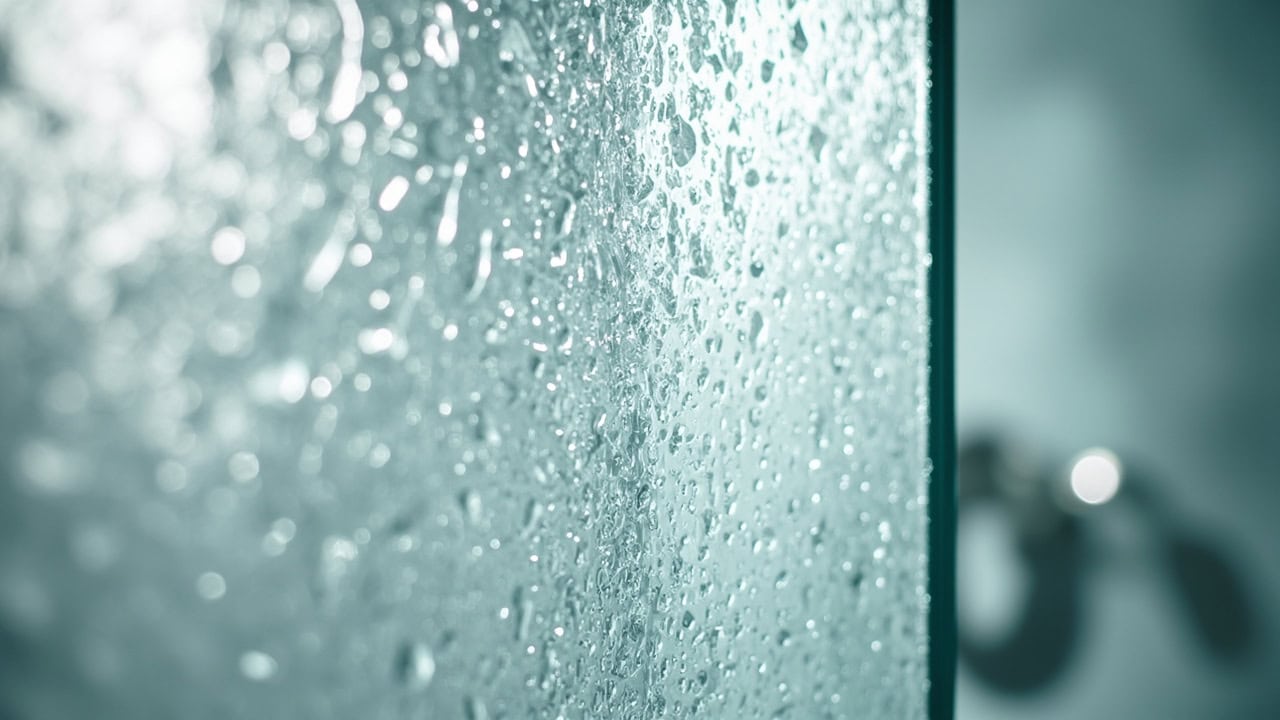
How to Remove Hard Water Stains from Glass

Hard water stains on glass are removed by applying an acidic cleaning solution—typically white distilled vinegar at 5% acetic acid concentration (pH 2.5)—or a commercial limescale remover containing lactic or phosphoric acid. These acidic solutions dissolve the calcium and magnesium carbonate deposits that form when hard water evaporates, breaking the weak chemical bonds (van der Waals forces) that hold the mineral crystals to the glass surface. Once dissolved, the deposits wipe away with a non-abrasive cloth, restoring glass clarity without scratching.
According to the U.S. Geological Survey (USGS), hard water is classified as water containing more than 121 mg/L of dissolved calcium and magnesium measured as calcium carbonate—that is, roughly 7 grains per gallon (gpg) or higher. More than 85% of American homes have hard water, which means glass surfaces in showers, windows, and fixtures are constantly exposed to mineral-laden water that leaves behind cloudy, spotted stains every time it evaporates. Understanding the chemistry behind these deposits and the correct removal method prevents permanent glass damage.
What Removes Hard Water Stains from Glass
Hard water stains on glass are effectively dissolved using acidic solutions that break down mineral carbonate deposits at the molecular level. The primary active agent in most home remedies is white distilled vinegar, which contains acetic acid at approximately 5% concentration with a pH of 2.5. When acetic acid contacts calcium carbonate (CaCO₃), it produces a chemical reaction that converts the insoluble mineral deposit into water-soluble calcium acetate: 2CH₃COOH + CaCO₃ → Ca(CH₃COO)₂ + H₂O + CO₂. The carbon dioxide released during this reaction is visible as tiny bubbles on the glass surface, confirming the dissolution process is active.
Commercial limescale removers use stronger acids for faster results on stubborn deposits. Products containing lactic acid (pH range 2.4–2.7), phosphoric acid (pH 1.5 in concentrated form), or sulfamic acid (pH 1.0 in solution) dissolve mineral carbonates more aggressively than vinegar. For light surface deposits, a paste made from baking soda and water can serve as a gentle mechanical abrasive, though baking soda alone (pH 8.3) does not dissolve mineral carbonates chemically—it relies on friction to lift loose particles from the glass surface.
For severe or old hard water stains, a 50/50 mixture of white vinegar and warm water applied with a dwell time of 5–10 minutes produces the most reliable results. The warm water increases the reaction rate slightly, while the extended contact time allows the acetic acid to penetrate deeper into the mineral crystal structure. The USGS notes that the acidity of vinegar “helps to dissolve mineral particles by making them charged,” causing these newly charged particles to become attracted to the positive and negative charges in water so they can be washed away.
Why Hard Water Stains Bond to Glass
Hard water stains form when water containing dissolved calcium and magnesium ions evaporates on glass surfaces, leaving behind crystalline mineral deposits. The primary culprits are calcium carbonate (CaCO₃) and magnesium carbonate (MgCO₃), which precipitate out of solution as the water evaporates and the concentration of dissolved minerals exceeds their solubility threshold. The USGS classifies water hardness in four tiers: soft (0–60 mg/L CaCO₃), moderately hard (61–120 mg/L), hard (121–180 mg/L), and very hard (≥181 mg/L). Homes with water hardness above 121 mg/L—roughly 7 grains per gallon—are particularly susceptible to visible glass staining.
These mineral deposits bond to glass through two mechanisms: van der Waals forces (weak intermolecular attractions between the mineral crystals and the glass surface) and mechanical interlocking within microscopic surface irregularities in the glass. While glass appears perfectly smooth to the naked eye, its surface contains microscopic pits and ridges at the nanometer scale where mineral crystals can anchor. As the calcium carbonate crystals dry and recrystallize, they form a progressively harder and more adherent layer that becomes increasingly difficult to remove with age.
Glass is particularly vulnerable to hard water staining because its smooth, non-porous surface allows minerals to settle uniformly across the entire surface area. Unlike porous materials such as grout or stone, which absorb minerals deep into their structure, glass holds deposits at the surface where they create a characteristic cloudy, spotted, or filmed appearance. This same surface-level bonding, however, also makes glass easier to clean than porous materials—once the chemical bond is broken by an acidic solution, the deposits lift away completely rather than leaving residual staining within the material.
What NOT to Use on Glass
Using the wrong cleaning tool or product on glass can cause permanent damage that no amount of proper cleaning will reverse. The following products and tools should never be used on glass surfaces with hard water stains:
- Abrasive scrubbers (scouring pads, steel wool, abrasive sponges): These cause microscopic scratches in the glass surface that create permanent clouding. Scratched glass also provides more surface area for future mineral deposits to anchor, making stains return faster and adhere more strongly each cycle.
- Alkaline cleaners (ammonia, bleach, baking soda alone): Alkaline solutions have a pH above 7 and cannot dissolve the alkaline mineral carbonates that make up hard water stains. Instead, they raise the surface pH and can cause streaking, filming, and a hazy residue that mimics the appearance of the original stain.
- Razor blades or scrapers: Even when held at the recommended 45-degree angle, metal blades can chip glass edges and create stress fractures. The risk is highest on tempered glass (commonly used in shower enclosures), where a single chip can compromise the entire panel’s structural integrity.
- Citrus-based cleaners with oils: While citrus extracts themselves are acidic, many commercial citrus cleaners contain added oils (such as d-limonene) that leave a thin residue on glass. This oily film attracts and holds additional mineral deposits, accelerating future staining rather than preventing it.
- Undiluted vinegar on sensitive glass coatings: While plain white vinegar at 5% concentration is safe for standard glass, extended contact with undiluted vinegar on anti-reflective coatings, tinted glass, or factory-applied water-repellent coatings can degrade these surface treatments. Always test on a small inconspicuous area first when cleaning coated glass.
How to Remove Hard Water Stains from Glass: Step-by-Step
- Prepare the cleaning solution: Mix equal parts white distilled vinegar and warm water in a spray bottle for light to moderate stains. For severe mineral buildup on glass shower doors or windows, use undiluted white vinegar at full 5% acetic acid concentration. Warm water (approximately 100°F / 38°C) increases the reaction rate of the acid against mineral deposits.
- Apply the solution: Spray the affected glass surface generously, ensuring every stained area is fully saturated. For vertical surfaces like shower enclosures, apply the solution from the bottom to the top—this prevents drips from creating uneven streaks as the solution runs down over already-treated areas.
- Allow dwell time: Let the vinegar solution sit for 5–10 minutes to penetrate and dissolve the mineral deposits. The acetic acid needs this contact time to fully break down the calcium carbonate crystals. Do not let the solution dry completely on the glass—if it begins to dry, mist lightly with additional solution. For very old or stubborn stains, extend the dwell time to 10–15 minutes, but do not exceed 15 minutes on coated or tinted glass.
- Agitate gently: Using a soft, non-abrasive sponge or a clean microfiber cloth, wipe the glass in circular motions to mechanically lift the now-dissolved mineral deposits. Apply only light pressure—let the chemical action of the vinegar do the work, not physical force. Heavy pressure risks micro-scratching even with soft materials.
- Rinse thoroughly: Use clean warm water to rinse all traces of the cleaning solution from the glass surface. Any residual acetic acid left on the glass will dry and create new streaks and filming that can be mistaken for remaining hard water stains. For shower doors, a detachable showerhead on a gentle setting works well for thorough rinsing.
- Dry immediately: Use a clean silicone squeegee or a lint-free microfiber cloth to dry the glass immediately after rinsing. Wipe in a single direction from top to bottom, or use a zigzag pattern across the surface. This step prevents new water droplets from evaporating and forming fresh mineral deposits.
- Inspect and repeat if needed: Examine the glass under direct light for any remaining cloudy spots or streaks. For stubborn stains that survived the first treatment, repeat the process with a longer dwell time of 10–15 minutes, or switch to a commercial limescale remover formulated specifically for glass. Products containing sulfamic acid or phosphoric acid are more aggressive than vinegar and can dissolve mineral deposits that have recrystallized into harder forms over months or years.
How to Prevent Future Hard Water Stains on Glass
Preventing hard water stains requires three strategies: reducing water contact time with glass surfaces, treating the water itself, and creating a protective barrier on the glass. The most effective single habit is squeegeeing glass surfaces immediately after water contact—whether that means wiping down shower enclosure glass after each use or clearing window condensation promptly. A squeegee removes water before it can evaporate and deposit minerals, breaking the stain formation cycle entirely.
Applying a hydrophobic glass sealant or water-repellent coating creates an invisible barrier that causes water to bead up and roll off rather than spreading into a thin film that evaporates and leaves deposits. These coatings, typically based on fluoropolymer or silicone chemistry, should be reapplied monthly on shower glass and every 2–3 months on exterior windows. The beading effect reduces the glass surface area that water contacts by up to 90%, dramatically lowering the rate of mineral deposit formation.
For homes with consistently hard water above 7 grains per gallon (approximately 121 mg/L CaCO₃), installing a water softener addresses the root cause. Ion-exchange water softeners replace calcium and magnesium ions with sodium ions, preventing mineral deposits from forming on any surface in the home—including glass, fixtures, tile, and plumbing. A weekly maintenance wipe-down with a microfiber cloth dampened with a 50/50 vinegar-water solution removes any mineral deposits that do form before they have time to recrystallize and harden. For exterior windows, ensure proper sealing around frames to prevent water from pooling on the glass surface where it can evaporate and leave stains.
Common Mistakes When Removing Hard Water Stains from Glass
Even with the right products, incorrect technique can leave glass looking worse than before or cause permanent damage. The most common mistakes fall into five categories:
Using too much pressure: Pressing hard while scrubbing—even with a soft cloth—causes micro-scratches in the glass surface. These scratches scatter light and create permanent clouding that cannot be polished out at home. The chemical action of the acidic solution does the heavy lifting; physical agitation should be gentle and brief. If heavy pressure seems necessary, the solution needs more dwell time, not more force.
Letting vinegar dry on glass: Extended dwell time beyond 10–15 minutes allows the acetic acid to begin etching some glass types, particularly older or thinner glass panels. As the vinegar evaporates, its concentration increases, raising the risk of surface etching. Keep the surface wet with the solution during the entire dwell period, and never apply vinegar in direct sunlight or to hot glass, where evaporation accelerates.
Using paper towels to dry: Paper towels are made from wood pulp fibers that can cause light scratching on glass, and they leave behind lint and fiber residue that creates a hazy appearance. They also absorb and redistribute dissolved minerals rather than removing them. Use only a clean, lint-free microfiber cloth or a silicone squeegee for drying.
Skipping the rinse step: Residual cleaning solution left on glass creates new streaks and filming that can be mistaken for remaining hard water stains. Dried vinegar residue leaves a sour smell and a cloudy film that attracts dust and additional minerals. Always rinse with clean water and dry immediately afterward.
Using the wrong cloth: Terry cloth towels and regular household sponges can transfer particles, lint, and trapped debris that scratch the glass surface. Only clean microfiber cloths (laundered without fabric softener, which coats the fibers) or dedicated glass-cleaning cloths should contact glass during stain removal. For more on this topic, see our complete guide to window and glass cleaning.
Frequently Asked Questions
Q: Does vinegar damage glass?
A: Plain white distilled vinegar at 5% concentration is safe for most glass surfaces when used correctly with a dwell time under 15 minutes. It should not be left on coated or tinted glass for extended periods, and heavy-duty or undiluted vinegar should be tested on a small area first. Always rinse thoroughly after cleaning to prevent residual acid from etching the surface.
Q: What is the best hard water stain remover for glass shower doors?
A: The most effective hard water stain removers for glass shower doors are acidic products containing lactic acid, phosphoric acid, or sulfamic acid. Commercial products like CLR (calcium, lime, and rust remover) or Bar Keeper’s Friend work well. For a DIY approach, a 50/50 mixture of white vinegar and warm water with a 5-minute dwell time dissolves most hard water deposits on glass shower doors.
Q: Can I use baking soda to remove hard water stains from glass?
A: Baking soda alone is not ideal for hard water stains because it is mildly alkaline (pH 8.3) and alkaline cleaners do not dissolve mineral carbonate deposits effectively. However, a paste of baking soda with a small amount of water can work as a gentle abrasive for very light deposits. For best results, use vinegar first to dissolve the minerals chemically, then use baking soda paste only for any remaining light discoloration as a second step.
Q: How do I remove old hard water stains that won’t come off?
A: Old, set-in hard water stains that resist standard vinegar cleaning may require a commercial limescale remover with stronger acid content, such as phosphoric acid or sulfamic acid, applied with extended dwell time of 15 to 30 minutes while keeping the surface wet. For extremely stubborn stains, a single-edge razor blade held at a 45-degree angle can carefully scrape off layered deposits on standard (non-tempered, non-coated) glass, followed by thorough cleaning with vinegar solution and drying. For related bathroom surface cleaning, see our guide on removing limescale from bathroom surfaces.
References
- U.S. Geological Survey. (2018). Hardness of Water. USGS Water Science School.
- World Health Organization. (2003). Hardness in Drinking-Water. WHO Guidelines for Drinking-water Quality.
- Briggs, J.C. and Ficke, J.F. (1977). Quality of Rivers of the United States, 1975 Water Year. U.S. Geological Survey Open-File Report 78-200.
- Desmarais, A.M. et al. (2010). Quality of Water from Domestic Wells in the United States. USGS Scientific Investigations Report.


