
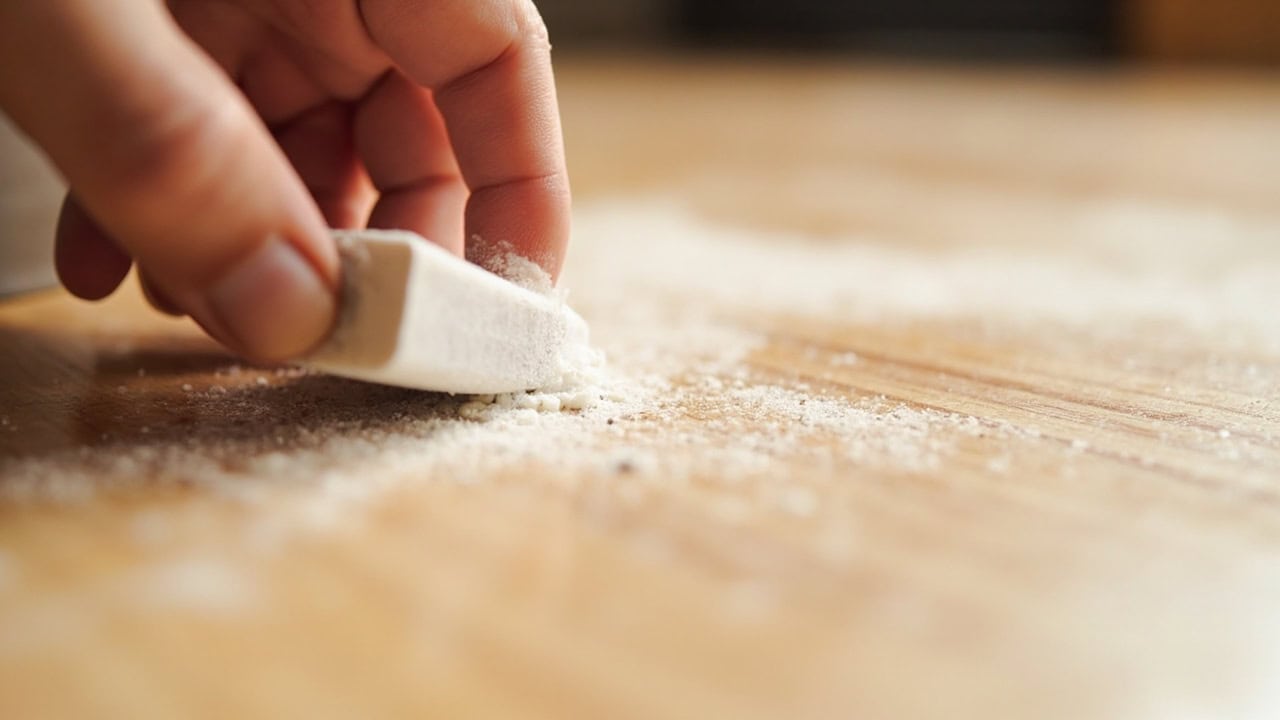
How to Remove Scuff Marks from Laminate Floors

Scuff marks on laminate floors are most effectively removed using a melamine foam eraser (Magic Eraser) with light pressure and circular motions — the micro-abrasive structure lifts scuff residue without damaging the laminate’s protective wear layer. The friction from foot traffic causes rubber or shoe sole materials to temporarily bond to the floor surface through pressure and heat, creating the characteristic dark streak that responds to dry-erase style cleaning methods. For light scuffs, a damp microfiber cloth alone may suffice, but deeper marks require the mechanical action of melamine foam or a paste of baking soda and warm water.
What You Need Before You Start
Before attempting scuff mark removal on laminate floors, gather the following supplies. Having everything prepared before you begin prevents unnecessary foot traffic across the cleaned areas and ensures the process goes smoothly without interruptions.
- Clean microfiber cloths (2–3, for testing and final wipe-down)
- Melamine foam eraser (Magic Eraser or generic brand)
- Baking soda
- Warm water
- Soft-bristle scrub brush or old toothbrush
- pH-neutral laminate floor cleaner (for final cleaning)
- Soft dry towel or paper towels
Tools: No specialized equipment required — melamine foam erasers are inexpensive and available at most grocery stores. The foam’s microporous structure features a 3D network of hard polymeric strands that work like extremely fine sandpaper, reaching into microscopic grooves on the laminate surface to mechanically lift awayrubber residue without scratching the protective layer.
Dilution ratio for baking soda paste: Mix 2 tablespoons of baking soda with 1 tablespoon of warm water to form a spreadable paste. This creates a mildly alkaline mixture (pKa 6.34) that serves as a gentle mechanical abrasive safe for laminate surfaces. Sodium bicarbonate has a solubility of 96 g per liter of water at 20°C, so the paste consistency is essential — too much water dilutes the cleaning action.
Why Scuff Marks Bond to Laminate Flooring
Scuff marks on laminate flooring form through a combination of heat, pressure, and friction. When footwear — particularly shoes with rubber soles — contacts the floor surface, the friction generates localized heat that temporarily softens the rubber material while the pressure forces it into the microscopic grooves of the laminate’s protective wear layer. As the rubber cools, it adheres to the surface, creating the dark streak characteristic of scuff marks.
Unlike stains that penetrate into porous materials, scuff marks sit on the surface of the laminate’s protective layer and respond to mechanical removal rather than chemical dissolution. Laminate flooring consists of five permanently bonded layers: a protective wear layer (the top surface that guards against daily wear), a decorative layer (providing the wood, tile, or stone visual appearance), a wood-based core (adding strength and flexibility), a backing layer (providing stability and moisture resistance), and underlayment (for sound absorption). The protective wear layer is hard but relatively thin compared to solid hardwood or tile, making it susceptible to cosmetic scuffing from rubber deposits.
Key mechanism: The scuff is rubber or polymer residue, not a stain — it requires friction and mild abrasion to remove, not solvent-based cleaners. Attempting to dissolve rubber scuff marks with solvents can damage the laminate finish and cause clouding or etching over time.
Step-by-Step Scuff Mark Removal
Method 1: Melamine Foam Eraser (Primary Method)
Melamine foam erasers are the most effective tool for removing scuff marks from laminate floors. The foam’s open-cell structure consists of a 3D network of very hard strands that scrub surfaces effectively while remaining flexible enough to conform to floor contours. The micro-abrasive action lifts rubber residue without damaging the laminate’s protective wear layer when used with light pressure.
- Test in an inconspicuous area — Apply light pressure in a corner or closet area first to confirm no surface damage occurs. This is especially important for lower-quality laminate floors with thinner wear layers (typically 0.2mm to 0.6mm thick).
- Dampen the melamine foam — Lightly wet the foam eraser and squeeze out excess water until damp, not soaking. A soaking-wet eraser can saturate the seams between planks, causing moisture infiltration and warping. The foam should be visibly moist but not dripping.
- Rub in circular motions — Place the damp foam on the scuff mark and apply light pressure while moving in small circles. Continue for 15–20 seconds per scuff mark, allowing the micro-abrasive structure to mechanically lift the rubber residue.
- Wipe clean — After 15–20 seconds of rubbing, wipe the area with a damp microfiber cloth to remove any foam residue. The eraser wears away during use, leaving behind a slight white residue that must be wiped away.
- Dry immediately — Use a soft towel to dry the cleaned area thoroughly, preventing water penetration between planks. Laminate flooring is particularly sensitive to excess moisture — if the floor looks wet after one minute, you’re using too much water.
- Repeat if necessary — For stubborn scuffs, repeat the melamine foam process once more before trying the baking soda paste method. Persistent marks may require two or three applications of light-pressure circular rubbing.
Method 2: Baking Soda Paste (For Stubborn Scuffs)
When melamine foam alone does not fully remove a scuff mark, a baking soda paste provides slightly stronger mechanical abrasion. Sodium bicarbonate (NaHCO₃) has a molar mass of 84.0066 g/mol and serves as a gentle scouring agent suitable for softer substrates. The mildly alkaline solution (pKa 6.34) breaks down rubber residue without attacking the laminate protective coating.
- Mix the paste — Combine 2 tablespoons baking soda with 1 tablespoon warm water. The ratio of approximately 2:1 (baking soda to water by volume) creates a spreadable paste with sufficient viscosity to cling to vertical surfaces without dripping.
- Apply to scuff — Using a soft-bristle toothbrush or scrub brush, spread a thin layer of paste directly onto the scuff mark. Only apply paste to the affected area — avoid spreading across the surrounding floor surface.
- Scrub gently — Using the soft-bristle brush in circular motions for 20–30 seconds, work the paste into the scuff mark. The mild abrasion from the baking soda crystals combined with the mechanical friction breaks down rubber deposits. Use light pressure to avoid scratching the wear layer.
- Wipe clean — Remove paste with a damp microfiber cloth, wiping in the direction of the wood grain or floor texture pattern. Ensure all paste residue is removed to prevent white powder buildup.
- Dry thoroughly — Ensure the area is completely dry within 1–2 minutes. Never allow a baking soda paste to sit on laminate flooring for extended periods, as the moisture content can infiltrate seams and cause swelling or warping of the wood-based core.
- Mop with laminate cleaner — Finish with a pH-neutral laminate floor cleaner to restore shine and remove any remaining residue. pH-neutral cleaners (typically pH 6.5–7.5) are specifically formulated to clean without degrading the laminate finish or causing clouding over time.
What NOT to Use on Laminate Floors
Laminate flooring’s protective wear layer, while durable, is thinner than solid hardwood or tile and can be permanently damaged by improper cleaning methods. Avoid the following products and tools to maintain the longevity and appearance of your laminate floors:
- Abrasive scouring pads or steel wool — Will scratch and dull the protective wear layer permanently. Even medium-grit scrubbing pads can leave visible scratches that dull the floor’s finish and attract more dirt.
- Vinegar or ammonia-based cleaners — Acidic (vinegar, pH 2.5) or highly alkaline (ammonia) cleaners can degrade the laminate finish and cause clouding, etching, or premature wear of the protective coating over time.
- Steam mops — Excessive heat (typically above 120°F / 49°C) and moisture can cause laminate planks to swell, warp, or separate at the seams. The wood-based core is particularly susceptible to heat damage.
- Bleach or hydrogen peroxide (concentrated) — Can discolor or bleach the decorative layer beneath the protective coating. Even diluted solutions risk penetrating seams and causing chemical damage to the core layer.
- Oil-based cleaners or furniture polishes — Leave slippery residues that attract more dirt and create safety hazards. These products also buildup on the surface, creating a hazy film that dulls the laminate appearance.
How to Prevent Future Scuff Marks
Preventing scuff marks on laminate flooring is more effective than removing them. A combination of entryway management and floor protection significantly reduces the frequency and severity of scuff marks in your home.
- Place doormats at all entrances — Capture dirt and debris before it reaches the floor, and absorb moisture from shoes. Place mats both outside and inside entrances to maximize dirt capture. Studies show doormats can reduce indoor dirt tracked across floors by up to 80%.
- Enforce a no-outdoor-shoes policy — Removing shoes at the door eliminates the primary source of scuff-causing rubber soles. Rubber-soled shoes generate heat and friction that temporarily bond rubber particles to the laminate surface, making them the dominant cause of scuff marks.
- Use felt furniture pads — Apply felt pads to chair legs, table legs, and any furniture that may be moved across the floor. Check pads monthly for grit accumulation and replace when worn. Furniture movement without pads can create scuff marks equal to or worse than shoe scuffs.
- Clean spills immediately — Liquid and sticky substances attract more foot traffic to affected areas, increasing scuff risk. Use a soft microfiber cloth dampened with pH-neutral cleaner for spill cleanup — never let liquids sit on laminate surfaces.
- Sweep or vacuum regularly — Dirt particles (especially sand and grit, which have Mohs hardness of 3–5) act like sandpaper underfoot, accelerating both scuff formation and surface abrasion of the wear layer. Vacuum or sweep high-traffic areas daily and the entire floor at least twice weekly.
Frequently Asked Questions
Q: Can I use a Magic Eraser on laminate floors?
A: Yes, melamine foam erasers (commonly sold as Magic Erasers) are safe for laminate floors when used correctly. Apply light pressure, keep the foam damp (not wet), and immediately dry the cleaned area to prevent water damage to the planks. The foam’s micro-abrasive structure lifts scuff residue without scratching the protective wear layer.
Q: Why does my laminate floor get scuff marks so easily?
A: Laminate floors have a hard but relatively thin protective wear layer compared to hardwood or tile. Rubber-soled shoes generate heat and friction that temporarily bond rubber particles to this surface, creating visible scuff marks that are cosmetic rather than structural damage. The scuff is rubber residue sitting on the surface, not damage to the floor itself.
Q: Will baking soda damage my laminate floor?
A: When used as a paste with water, baking soda is safe for laminate floors and serves as a gentle mechanical abrasive. However, never use dry baking soda or let a paste sit for extended periods. Rinse thoroughly and dry within 2 minutes to prevent moisture infiltration. The wood-based core is susceptible to moisture damage from prolonged exposure.
Q: How do I remove scuff marks from laminate without any cleaning products?
A: The dry-erase marker method involves coloring over the scuff mark with a white dry-erase marker, letting it dry for 30 seconds, then wiping clean with a dry microfiber cloth. The solvents in dry-erase markers dissolve rubber-based scuff residue, though this method may not work on all scuff types or older, set-in marks.
References
- NALFA (North American Laminate Flooring Association). What Is Laminate Flooring?. North American Laminate Flooring Association.
- Wikipedia. Melamine Foam. Wikimedia Foundation.
- Wikipedia. Sodium Bicarbonate. Wikimedia Foundation.
Related Articles
Complete Floor Cleaning Guide: Covers All Floor Types and Problems — Section: Laminate Floor Care
How to Clean Laminate Floors Without Streaks
Best Vacuum for Laminate Floors


