
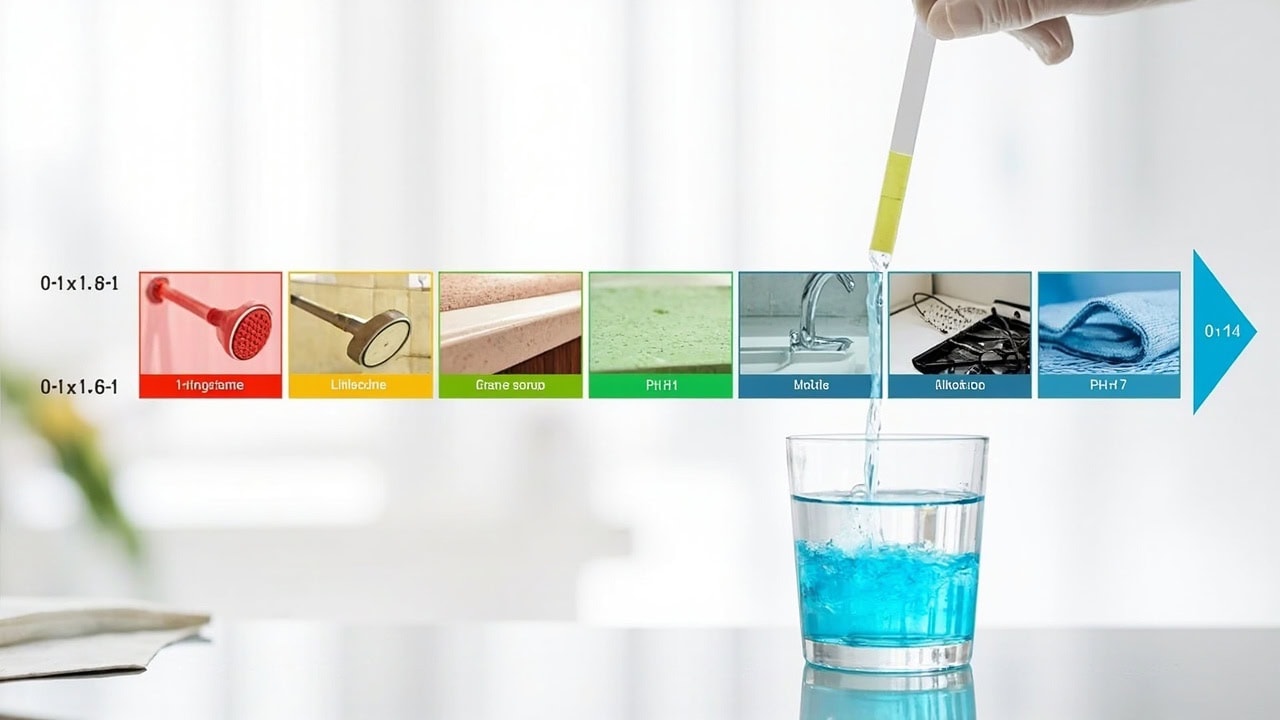
pH in Cleaning: Why It Matters for Every Surface

pH in cleaning refers to the hydrogen ion concentration that determines whether a cleaner is acidic (0–6), neutral (7), or alkaline (8–14), and matching the cleaner’s pH to the specific contaminant and surface is essential for effective cleaning without damage. Acidic cleaners at pH 2–4 dissolve mineral deposits, limescale, and rust scale through proton donation, while alkaline cleaners at pH 10–13 emulsify fats, oils, and organic soils through saponification. Using an acidic cleaner on an alkaline-sensitive surface like marble causes etching — a permanent surface dissolution that removes the polish and creates dull spots visible across the entire surface.
Understanding the pH Scale in Cleaning
pH measures the concentration of hydrogen ions (H+) in a solution on a logarithmic scale from 0 to 14. The scale is logarithmic, meaning each whole number change represents a tenfold difference in acidity or alkalinity. A solution at pH 3 is not merely three units more acidic than pH 6 — it is 1,000 times more acidic. This exponential relationship has direct consequences for cleaning: a small shift in pH can mean the difference between effective soil removal and permanent surface damage.
Neutral pH 7 sits at the midpoint of the scale, where hydrogen ion and hydroxide ion concentrations are balanced. Solutions below pH 7 are acidic — they contain more H+ ions and function as proton donors. Solutions above pH 7 are alkaline (or basic) — they contain more OH- ions and function as proton acceptors. Understanding which end of the scale a cleaner occupies tells you which types of contaminants it will dissolve and which surfaces it may damage.
Why pH Matters for Cleaning Effectiveness
Different contaminants respond to different pH environments because their chemical bonds break under specific conditions. The fundamental rule of cleaning chemistry is straightforward: acidic contaminants respond to alkaline cleaners, and alkaline contaminants respond to acidic cleaners. This opposite-pH principle drives every effective cleaning formulation.
Acidic soils — food wastes, perspiration residues, coffee stains, and urine deposits — dissolve most effectively in alkaline solutions above pH 10. In these environments, hydroxide ions (OH-) break down the molecular structure of organic acids and convert them into water-soluble salts that rinse away. Alkaline mineral deposits — limescale (calcium carbonate), rust (iron oxide), and hard water spots — require acidic solutions below pH 4 to dissolve through proton-driven reactions that convert insoluble minerals into soluble salts.
Organic soils including fats, oils, and proteins undergo saponification in strongly alkaline solutions above pH 10. This chemical reaction converts insoluble triglycerides into water-soluble glycerol and fatty acid salts — essentially turning grease into soap. pH also affects the ionic charge of soil molecules, altering how they bind to or release from surfaces. Using the wrong pH can cause soil redeposition, where partially dissolved contaminants settle back onto the surface rather than being rinsed away.
pH and Surface Compatibility Guide
Matching cleaner pH to surface material is as important as matching it to the contaminant. Every surface has a safe pH window; exceeding that range causes chemical damage that may be irreversible. The following table provides specific safe pH ranges and the chemical reasons behind each limit.
| Surface Type | Safe pH Range | Why | Avoid |
|---|---|---|---|
| Natural stone (marble, travertine) | 6.5–7.5 | Acid-sensitive calcite structure | Below pH 6, acids cause etching |
| Engineered quartz | 5–9 | Resin binding resists mild acids | Strong acids above pH 2 |
| Stainless steel | 6–9 | Passive oxide layer stable | Chlorides and strong acids pH < 4 |
| Glass | 5–10 | Silicate structure unaffected | Hydrofluoric acid (not in cleaners) |
| Ceramic tile | 4–10 | Glazed surface resists most pH | Very low pH can degrade grout |
| Grout (unsanded) | 6–8 | Portland cement degrades in acid | pH below 5 causes powdering |
| Hardwood (finished) | 6–8 | Floor finish sensitive to alkalinity | pH above 9 causes finish dulling |
| Laminate flooring | 6–8 | Adhesive layer vulnerable | Extreme pH in either direction |
| Aluminum | 6–8 | Alkaline attack causes pitting | pH above 9 causes darkening |
| Brass/Copper | 6–8 | Acid dissolves patina, alkalies cause oxidation | Both extremes damage finish |
The Chemistry Behind Acidic Cleaners
Acidic cleaners work by donating protons (H+) to contaminants, breaking their chemical bonds and converting insoluble compounds into water-soluble products. The most common reaction in household cleaning is the dissolution of limescale. Calcium carbonate (CaCO₃), the primary component of limescale and hard water deposits, reacts with acids to produce calcium salt, carbon dioxide gas, and water — all of which rinse away easily.
Rust (iron oxide, Fe₂O₃) dissolves in acidic solutions through reduction reactions where protons convert the insoluble oxide into soluble iron salts. This is why rust removers contain strong acids such as oxalic acid (pH 1.5–2) or phosphoric acid (pH 1.5–2.5). The rate of dissolution depends on acid concentration and dwell time — longer contact allows more complete reaction, but also increases the risk of surface damage.
Common acidic cleaning agents and their approximate pH values include: citric acid solutions at pH 2–3, phosphoric acid-based cleaners at pH 1.5–2.5, white vinegar (5% acetic acid) at pH 2.5–3.5, and oxalic acid solutions at pH 1.5–2. Stronger acids clean faster but require proper ventilation due to vapor release and carry greater risk to sensitive surfaces.
The Chemistry Behind Alkaline Cleaners
Alkaline cleaners function by accepting protons and providing hydroxide ions (OH-) that drive saponification and hydrolysis reactions. Saponification is the key mechanism for grease removal: triglycerides (the molecular structure of fats and oils) react with strong alkalis to produce glycerol and fatty acid salts. This reaction is the same one used in soap manufacturing — the cleaner literally converts grease into soap on the surface.
Protein soils — blood, egg, grass stains, and food residues — undergo hydrolysis in strongly alkaline solutions. The OH- ions break the peptide bonds that hold protein chains together, fragmenting large insoluble molecules into smaller water-soluble pieces that wash away. This is why oven cleaners (sodium hydroxide at pH 13–14) dissolve baked-on food residue that neutral cleaners cannot touch.
Common alkaline cleaning agents span a wide range: baking soda (sodium bicarbonate) at pH 8–9 for mild cleaning, ammonia solutions at pH 10–11 for glass and surface cleaning, trisodium phosphate (TSP) at pH 12–13 for heavy-duty degreasing, and sodium hydroxide (lye) at pH 13–14 for industrial-strength cleaning. Higher pH solutions penetrate organic soils more effectively due to reduced surface tension, but they also increase the risk of damage to sensitive materials like aluminum, finished wood, and some plastics.
How to Test and Verify Cleaner pH
Testing cleaner pH before application prevents costly surface damage. Three methods provide varying levels of accuracy, and each has practical use in household and professional cleaning contexts.
- pH test strips (litmus paper): Dip the strip into the cleaning solution and compare the color change to the printed scale. Accuracy is approximately ±1 pH unit — sufficient for distinguishing acidic from alkaline but not for precise measurement.
- Digital pH meter: Calibrate the meter with standard buffer solutions (pH 4, 7, and 10), then immerse the electrode in the cleaner. Accuracy reaches ±0.1 pH unit, making this the preferred method for testing cleaners on pH-sensitive surfaces like marble and natural stone.
- pH indicator drops: Add a few drops of universal indicator solution to the cleaner and compare the resulting color to a reference chart. Accuracy falls between test strips and digital meters.
- Test on a hidden area first: Regardless of the testing method, always apply a small amount of cleaner to an inconspicuous spot before full application. Wait for the surface to dry and inspect for discoloration, dulling, or etching.
- Check product labels: Some manufacturers list pH ranges on the label or safety data sheet (SDS). When available, this information provides the most reliable baseline.
- Account for dilution ratio: Adding water to a concentrated cleaner shifts pH toward neutral (pH 7). A concentrate at pH 12 diluted 1:10 with water may yield a working solution at pH 9–10, potentially moving it into the safe range for sensitive surfaces.
Common pH-Related Cleaning Mistakes to Avoid
The most frequent pH-related cleaning errors stem from assuming that common household products are universally safe. Vinegar (pH 2.5) is widely recommended as a natural cleaner, but applying it to marble, limestone, or travertine surfaces causes permanent etching. The acid dissolves calcium carbonate in the stone, removing the polished finish and creating dull spots that require professional refinishing to repair.
Mixing bleach (sodium hypochlorite, pH 11) with any acidic cleaner — including vinegar, toilet bowl cleaners, or rust removers — produces toxic chlorine gas. This reaction occurs rapidly and can cause severe respiratory damage at concentrations that build up in enclosed spaces like bathrooms and kitchens. Never combine products from opposite ends of the pH scale.
Other common mistakes include applying undiluted ammonia (pH 11) to glass, which leaves streaky alkaline residue; using high-pH degreasers on aluminum, which causes dark oxidation stains through alkaline attack; and assuming “natural” products are automatically pH-safe. Lemon juice (pH 2) is as acidic as many commercial descalers, and baking soda (pH 8–9) is alkaline enough to dull certain floor finishes over time. Always verify that the cleaner’s pH falls within the surface’s safe range listed in the compatibility table above.
pH and Disinfection: What You Need to Know
pH directly influences the antimicrobial efficacy of common disinfecting agents. Quaternary ammonium compounds (quats), the active ingredients in many household disinfectant sprays, achieve peak biocidal activity between pH 6 and 9. Outside this range, quat molecules lose their positive charge, reducing their ability to disrupt bacterial cell membranes. Similarly, sodium hypochlorite (household bleach) is most effective at pH 6–8; at higher alkalinity, the hypochlorous acid equilibrium shifts toward the less biocidal hypochlorite ion, reducing germ-killing power.
Hydrogen peroxide maintains stable antimicrobial activity across a broader pH range (3–7), making it more forgiving in mixed-use cleaning scenarios. However, strongly alkaline conditions accelerate its decomposition into water and oxygen, shortening its effective dwell time. Sanitizer efficacy testing protocols, including those published by ASTM International and the EPA, account for pH interference by requiring efficacy verification in the presence of organic soil loads that can shift the local pH of the test surface.
Understanding the pH–disinfection relationship matters because pre-cleaning with the wrong pH can neutralize the disinfectant applied afterward. If you clean a surface with an alkaline detergent and then apply a quat-based disinfectant without rinsing, residual alkalinity can push the quat outside its effective pH window. The practical solution: rinse surfaces thoroughly between the cleaning and disinfecting steps, and verify that the disinfectant’s pH remains within its labeled effective range on the surfactant-free surface.
Frequently Asked Questions
Q: What pH level is best for general household cleaning?
A: A pH-neutral cleaner (6.5–7.5) is safest for most surfaces including sealed floors, countertops, and appliances — it effectively removes light soils without risking etching on stone, dulling on finishes, or damage to sealants and adhesives.
Q: Can you mix an acidic cleaner with an alkaline cleaner for better results?
A: No — mixing acidic and alkaline cleaners is dangerous and counterproductive: the chemicals neutralize each other, reducing cleaning effectiveness, and can produce toxic fumes (chlorine gas when mixing acids with bleach) or cause splashing hazards from exothermic reactions.
Q: Why does pH testing matter for cleaning stone countertops?
A: Natural stone countertops contain calcite (marble) or similar minerals that dissolve in acidic solutions below pH 6 through etching — a permanent surface damage that removes the polished finish and creates dull spots that cannot be repaired without professional refinishing.
Q: How does pH affect whether a cleaning product is safe for the environment?
A: pH influences aquatic toxicity and biodegradation rates — strongly acidic or alkaline cleaners can harm aquatic life if they enter waterways untreated, and their pH affects how quickly surfactants and other ingredients break down in wastewater treatment systems.
References
- U.S. Environmental Protection Agency. (2024). Antimicrobial Pesticide Registration. EPA.gov.
- ASTM International. (2023). Standard Guide for Determination of Antimicrobial Efficacy of Antimicrobial Agents. ASTM E2315.
- Centers for Disease Control and Prevention. (2024). Chemical Disinfectants: Guidelines for Disinfection and Sterilization. CDC.gov.
- Marble Institute of America. (2023). Care and Maintenance of Natural Stone Surfaces. Natural Stone Institute.
- U.S. Environmental Protection Agency. (2023). Safer Choice Standard for Cleaning Products. EPA.gov.


