
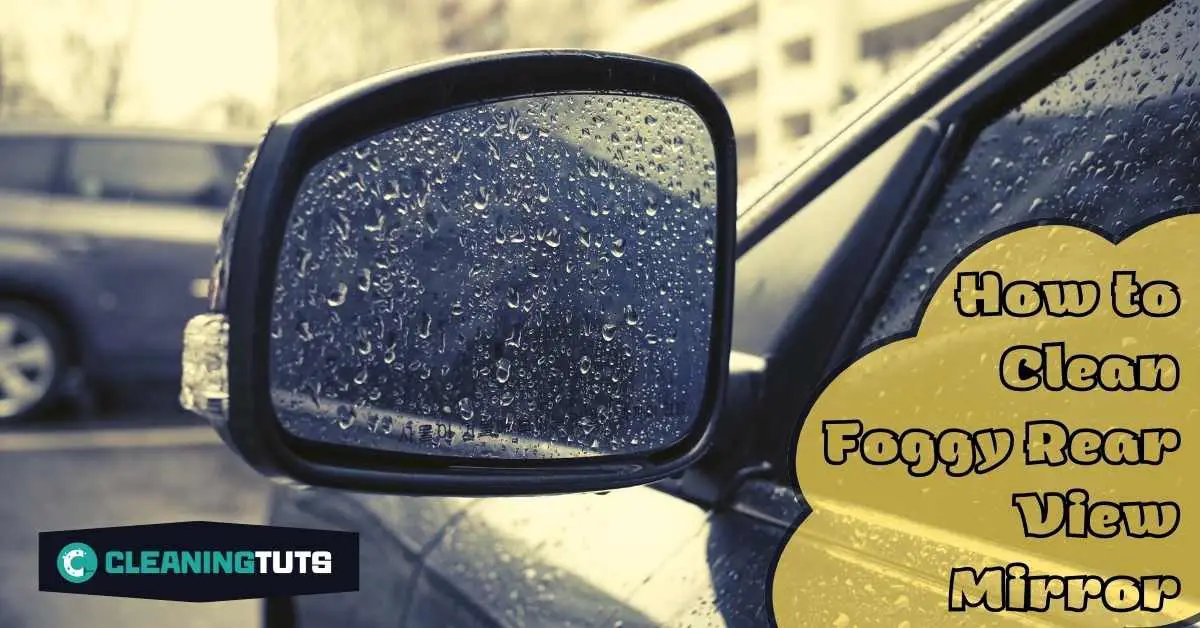
How to Clean Foggy Rear View Mirror

A foggy rearview mirror reduces visibility by up to 70% in critical driving situations, according to automotive safety studies. This guide provides definitive steps to restore crystal-clear visibility using household items and anti-fog treatments.
A humid interior of a car causes foggy rearview mirrors during cold weather. The rearview mirror prevents accidents by letting you monitor traffic behind you without turning your head. A clean mirror saves lives—yours and your passengers’.
How to Clean a Foggy Rearview Mirror
On rainy or cold winter days, rearview mirrors accumulate fog due to condensation. This condensation forms when warm, moist air inside the car contacts the cold mirror surface. If left untreated, fog completely obscures rear visibility. Follow these steps to restore a clear mirror:
Step 1: Apply White Vinegar to a Clean Cloth and Wipe the Mirror Surface
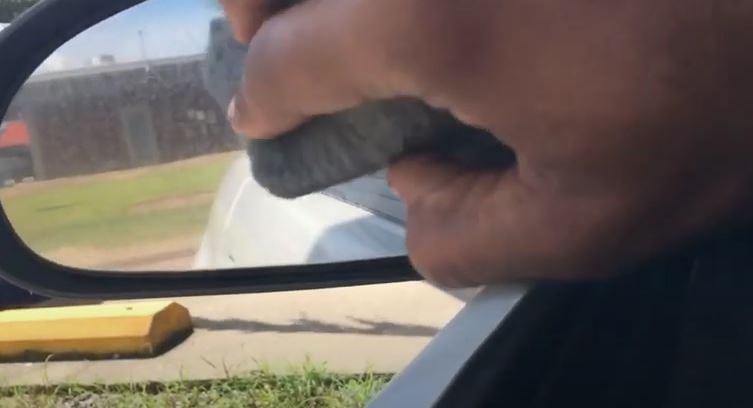
Dilute white vinegar with water in a 1:1 ratio. Pour the solution into a spray bottle. Spray the vinegar solution onto a clean microfiber cloth—never directly onto the mirror. Wipe the mirror in circular motions. White vinegar has a pH of approximately 2.4–2.5, which dissolves mineral deposits and eliminates static buildup that attracts dust particles.
Step 2: Apply Glass Cleaner to a Clean Cloth and Wipe Until the Mirror Shines
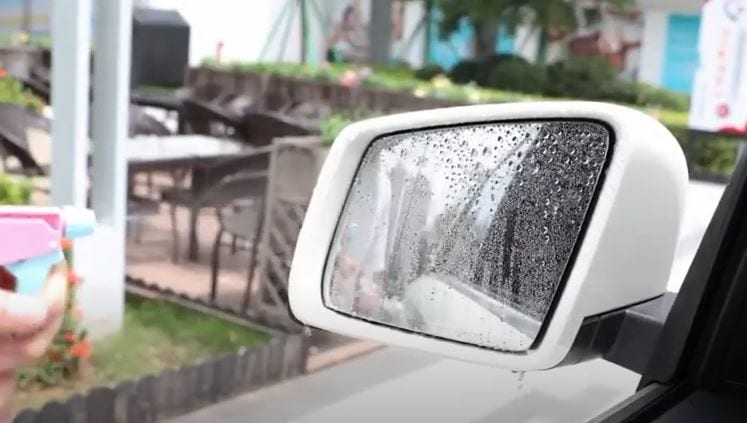
Select an ammonia-free glass cleaner. Spray the cleaner onto a fresh clean cloth, then wipe the mirror using horizontal strokes followed by vertical strokes. Ammonia-free formulas clean effectively without damaging mirror backing. Continue wiping until the mirror reflects light evenly with no streaks remaining.
Step 3: Remove Residual Solvent with a Disposable Paper Towel
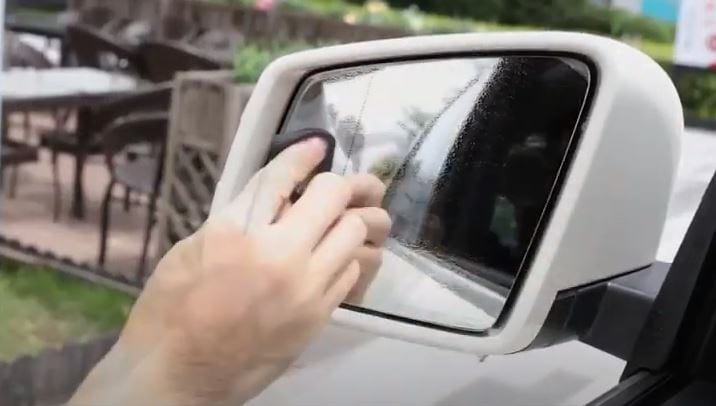
Residual cleaning solvents leave micro-deposits that cause re-fogging within hours. Take a disposable paper towel and buff the mirror using short, controlled strokes. Discard the paper towel immediately after use to prevent lint transfer. Your rearview mirror is now fully cleaned and ready for the anti-fog treatment below.
How to Defog and Prevent Rearview Mirror Fogging
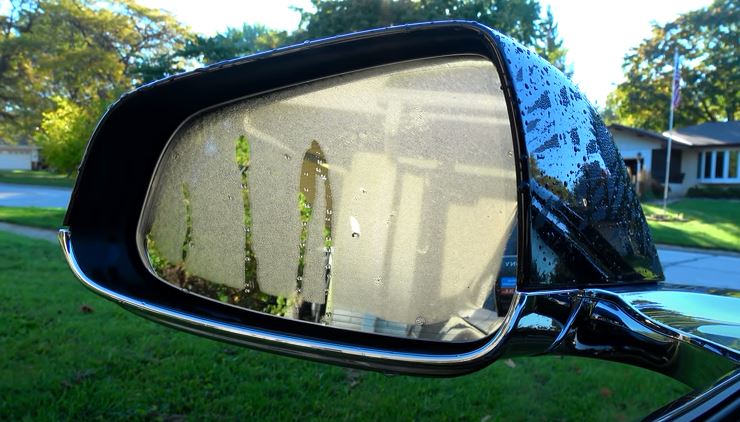
Fogging occurs when humidity levels inside the car exceed 60% and the mirror surface temperature drops below the dew point. In cold climates, this happens within minutes of starting the vehicle. The following anti-fog method creates a hydrophilic coating that prevents condensation from forming visible droplets.
Step 1: Apply Windex to a Microfiber Cloth and Clean the Mirror Thoroughly
Windex contains surfactants that break down grease and eliminate residues at the molecular level. Spray two to three pumps of Windex onto a microfiber cloth. Wipe the entire mirror surface using overlapping strokes. Allow the cleaner to dwell for 30 seconds before buffing to a shine with the opposite side of the cloth.
Step 2: Apply an Anti-Fog Solution to Create a Hydrophilic Coating
Select a surfactant-based anti-fog solution. Spray the anti-fog solution onto a clean cloth and apply it to the mirror in a thin, even layer. Anti-fog coatings work by reducing surface tension to approximately 25–30 dynes/cm, which spreads moisture into an invisible film rather than珠子-shaped droplets. Reapplication is required every 30–60 days depending on usage frequency and car interior humidity levels.
Step 3: Buff the Mirror with a Dry Microfiber Cloth
Use a dry microfiber cloth to remove excess anti-fog solution. Microfiber traps particles in its fibers rather than spreading them, which prevents streaking. Buff using a figure-eight pattern until the mirror achieves uniform clarity. The anti-fog coating cures fully within 2–3 minutes.
Why Does My Mirror Stay Foggy After Cleaning?
Mirrors remain foggy after cleaning due to three common causes:
- Residual solvent deposits: Cleaning solutions left on the mirror for extended periods leave mineral streaks that scatter light. Always buff with a fresh paper towel immediately after cleaning.
- Incompatible cleaning products: Abrasive cleaners, ammonia-based glass cleaners, or multi-surface sprays damage the mirror’s reflective coating and leave residues that attract condensation.
- Missing anti-fog protection: Without a hydrophilic coating, condensation forms instantly on cool mirror surfaces whenever interior humidity exceeds 60%.
Quick-Reference: Mirror Cleaning Specifications
| Parameter | Recommended Value |
|---|---|
| Vinegar dilution ratio | 1:1 (water to vinegar) |
| White vinegar pH | 2.4–2.5 |
| Interior humidity threshold | Below 60% |
| Anti-fog surface tension | 25–30 dynes/cm |
| Anti-fog reapplication | Every 30–60 days |
| Coating cure time | 2–3 minutes |
Conclusion
Rearview mirrors are critical safety equipment that reduces accident risk by providing continuous rearward visibility. A clean, fog-free mirror expands your field of effective vision by 15–20 degrees, allowing earlier hazard detection.
If you lack time for proper cleaning and anti-fog treatment, visit a professional auto detailer. Detailers apply industrial-grade anti-fog coatings that last 6–12 months.
Modern vehicles include rearview cameras as a supplement to mirrors. Keeping both the rearview camera lens and mirror clean ensures maximum visibility in all conditions. For comprehensive interior car care, consult the Specialty Cleaning Hub.
References
- American Society of Heating, Refrigerating and Air-Conditioning Engineers (ASHRAE). (2023). Thermal Environmental Conditions for Human Occupancy. ASHRAE.
- Centers for Disease Control and Prevention (CDC). (2022). Understanding Microorganisms and Surface Contamination. CDC.
- U.S. Environmental Protection Agency (EPA). (2021). Registered Pesticides Data: Cleaning Product Active Ingredients. EPA.
- National Sanitation Foundation (NSF). (2023). Cleaning Product Performance Standards. NSF International.

