
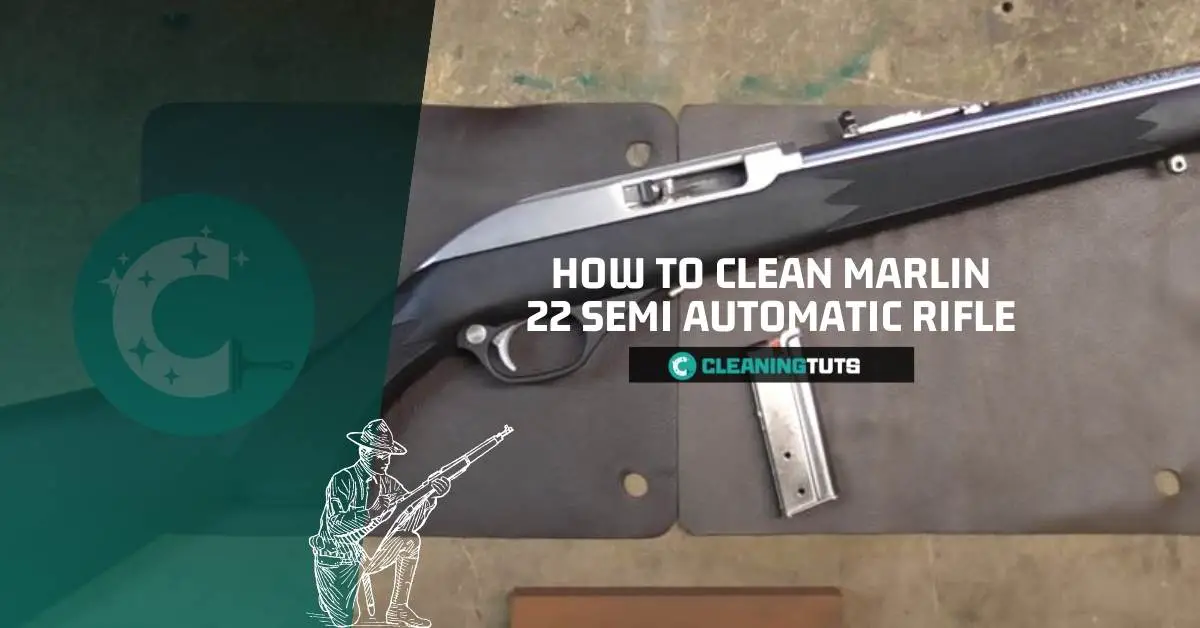
How to Clean Marlin 22 Semi Automatic Rifle?

The Marlin Model 60 .22 caliber semi-automatic rifle delivers reliable accuracy out to 500 yards, but powder residue from every 20-25 rounds accumulates in the action and chamber, requiring proper field stripping and cleaning to maintain function.
Cleaning this rifle involves disassembling it into five main components—stock, action, bolt assembly, charging handle, and recoil spring—then washing parts in soapy water and applying 2-3 drops of gun oil to each moving part before reassembly.
Tools and Materials for Cleaning a Marlin 22 Semi-Automatic Rifle
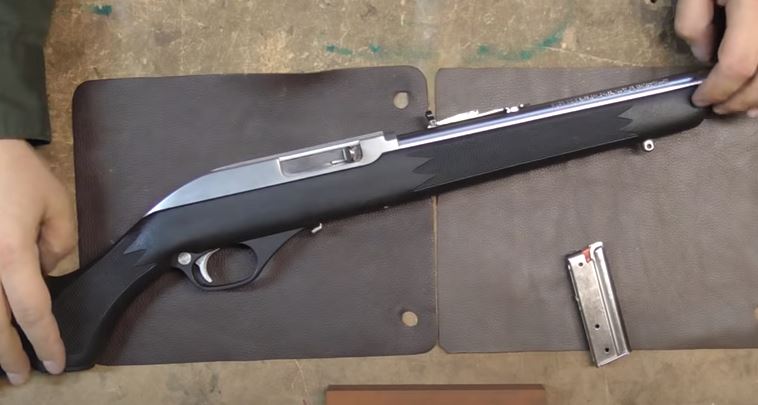
Gather these items before starting:
- Flat Head Screwdriver — for takedown screws
- Gun Oil — specifically formulated for firearms (viscosity: 5W-30 equivalent at room temperature)
- Cleaning Rod — 22 caliber with slotted tip
- Bore Snake — .22 caliber with 18-inch nylon bristles
- Mild Dish Soap — pH 7-8 for safe metal and polymer cleaning
- Nylon Brush — for hard-to-reach crevices
- Microfiber Cloths — lint-free drying
Step 1: Safety Check
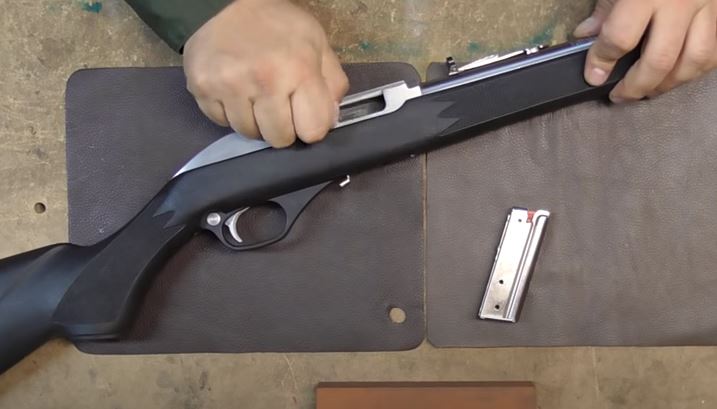
Always verify the rifle is completely unloaded before beginning. Press the trigger to release the breech, then remove the loading tube by pulling it forward out of the stock.
Visually and physically inspect the chamber and loading tube bore to confirm no ammunition remains. Set the loading tube aside and proceed only when the rifle is confirmed empty.
Step 2: Remove the Action from the Stock
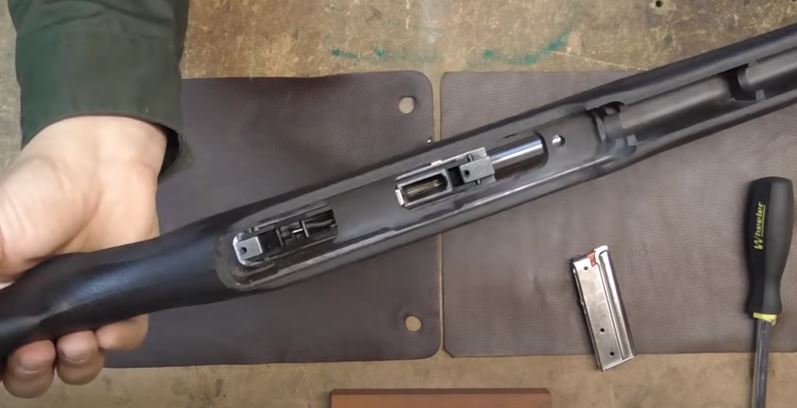
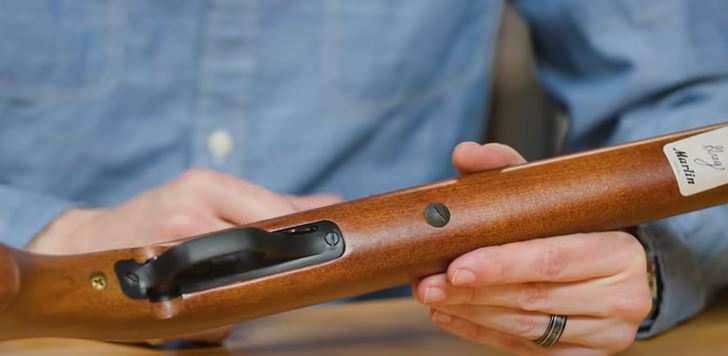
Loosen the front and rear takedown screws located on the underside of the stock near the ejection port. Use a standard flat-head screwdriver and apply firm, even pressure to avoid stripping the screw heads.
Remove both screws completely, then lift the barrel upward—this separates the stock from the action assembly. The two components come apart without force; if resistance is felt, verify all screws are fully removed.
Step 3: Remove Charging Handle, Bolt, and Recoil Spring
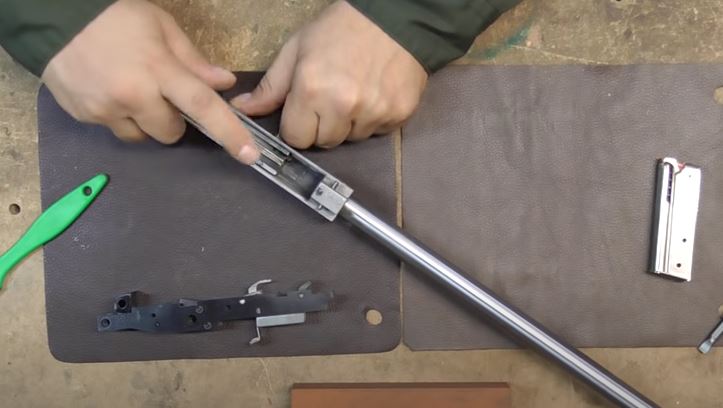
Pull the bolt carrier assembly rearward until it stops, then tilt the bolt handle downward to release it from the receiver rail. Push the bolt forward to separate it from the recoil spring and guide rod.
Hold the recoil spring assembly firmly during separation—the compressed spring can spring free if released suddenly. Lift the bolt body upward to remove it from the charging handle.
The rifle is now fully field-stripped into five components: stock, action housing, bolt assembly, charging handle, and recoil spring with guide rod.
Step 4: Clean All Components
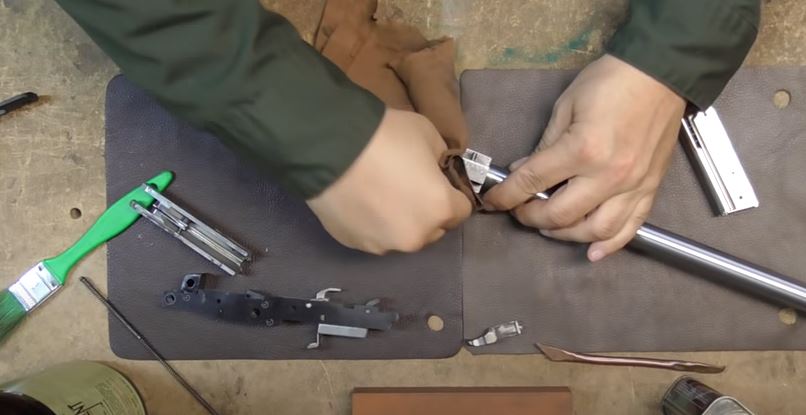
Submerge metal components in warm soapy water (40-50°C / 104-122°F) for 10-15 minutes to dissolve powder fouling. Scrub with a nylon brush, paying special attention to the bolt face, extractor, and inside of the receiver rails.
For the barrel, pass a bore snake with cleaning solvent through the bore 5-8 times, then run dry patches until they come out clean. A bore snake with nylon bristles provides 360° contact at approximately 0.0015 inches per pass for effective residue removal.
Critical: Never use strong solvents (acetone, MEK) or abrasive materials—they cause pitting on metal surfaces and degrade polymer components. Dish soap (pH 7-8) is safe for all Marlin Model 60 parts.
After cleaning, apply 2-3 drops of gun oil to each friction point: bolt rails, recoil spring collar, and takedown screw holes. Excessive oil (more than 5 drops per component) collects carbon fouling and causes sluggish cycling.
Step 5: Reassemble the Rifle
Allow all components to dry completely (5-10 minutes) before reassembly. Reassemble in reverse order: recoil spring into bolt, bolt onto charging handle, then slide the complete assembly into the receiver rails.
Seat the action back into the stock, install both takedown screws finger-tight, then torque to 15-20 inch-pounds using a properly-sized screwdriver. Cycle the action 3-4 times to verify smooth operation before loading.
Cleaning Frequency for Marlin 22 Semi-Automatic Rifles
The Marlin Model 60 accumulates powder residue from each firing cycle—burned and unburned powder particles blow back through the action, settling into the bolt channel, extractor recess, and loading tube bore.
Clean the rifle after every shooting session, regardless of round count. Even 10-15 rounds produce enough fouling to affect accuracy and reliability in semi-automatic .22 rifles. Gummy residue buildup within 100-200 rounds causes extraction failures and reduced reliability.
For storage, clean and apply a light preservative oil coating within 24 hours of last use. Humidity above 60% RH accelerates corrosion within 72 hours on unprotected carbon steel.
Lubrication Schedule for Marlin 22 Semi-Automatic Rifles
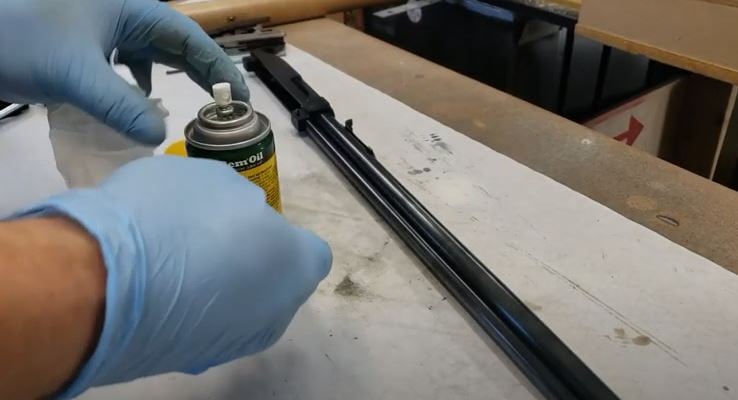
Apply gun oil after every cleaning session. During active use (weekly range sessions), lubricate at minimum once per week. In high-humidity environments (relative humidity above 70%), increase to twice-weekly lubrication.
For long-term storage exceeding 30 days, use a preservative gun oil or rust preventative. Apply a heavier coating than normal use—wipe off excess after 24 hours, leaving a thin film on all metal surfaces.
Warning: Over-lubrication causes carbon buildup that gums up the action. The Marlin Model 60 specifically requires light lubrication—2-3 drops per component. More than 5 drops per part creates the exact gumming problems that cause jamming in .22lr firearms.
Marlin 22 Semi-Automatic Rifle Maintenance Summary
Regular Cleaning Intervals
- After every range session: Complete field strip and clean
- Every 100-200 rounds: Even without visible fouling
- Monthly (storage): Inspect and re-oil if unused
- Before extended storage: Full clean with preservative oil
Lubrication Points and Amounts
| Component | Drops of Oil | Location |
|---|---|---|
| Bolt Rails (each side) | 2-3 | Top edge where they contact receiver |
| Recoil Spring Collar | 1-2 | Center post |
| Takedown Screw Holes | 1 each | Inside threads |
| Extractor Spring | 1 | Under extractor clip |
| Loading Tube Bore | 1 (wipe) | Light coat on cloth, not dripped |
Proper Storage Practices
Store in a location with relative humidity below 50% to prevent corrosion on carbon steel components. Use a silicone gun sock or rust preventative wrap for added protection during extended storage.
Keep the rifle away from dust, moisture, and temperature extremes. A temperature range of 10-25°C (50-77°F) with low humidity provides optimal storage conditions for firearms with carbon steel barrels.
Before returning to use after storage, verify the bore is clear of obstructions and apply a fresh drop of oil to the bolt rails if needed.
Final Thoughts on Marlin Model 60 Cleaning
The Marlin Model 60 .22lr semi-automatic rifle is straightforward to clean with proper field stripping. Five components separate without special tools, and mild dish soap safely cleans all metal and polymer parts.
Apply only 2-3 drops of gun oil per component—the Marlin Model 60’s design is sensitive to over-lubrication. Light oil prevents carbon fouling buildup that gums up the action and causes extraction failures in .22lr firearms.
For related cleaning guides, see the Cleaning Glossary or explore the Specialty Cleaning Hub.
References
- NRA Museums. (2022). Firearm Care and Cleaning Guide. National Rifle Association of America. https://home.nra.org
- Centers for Disease Control and Prevention. (2021). Firearm Safety and Storage Guidelines. https://www.cdc.gov
- U.S. Environmental Protection Agency. (2020). Safe Use and Disposal of Cleaning Products. https://www.epa.gov

