
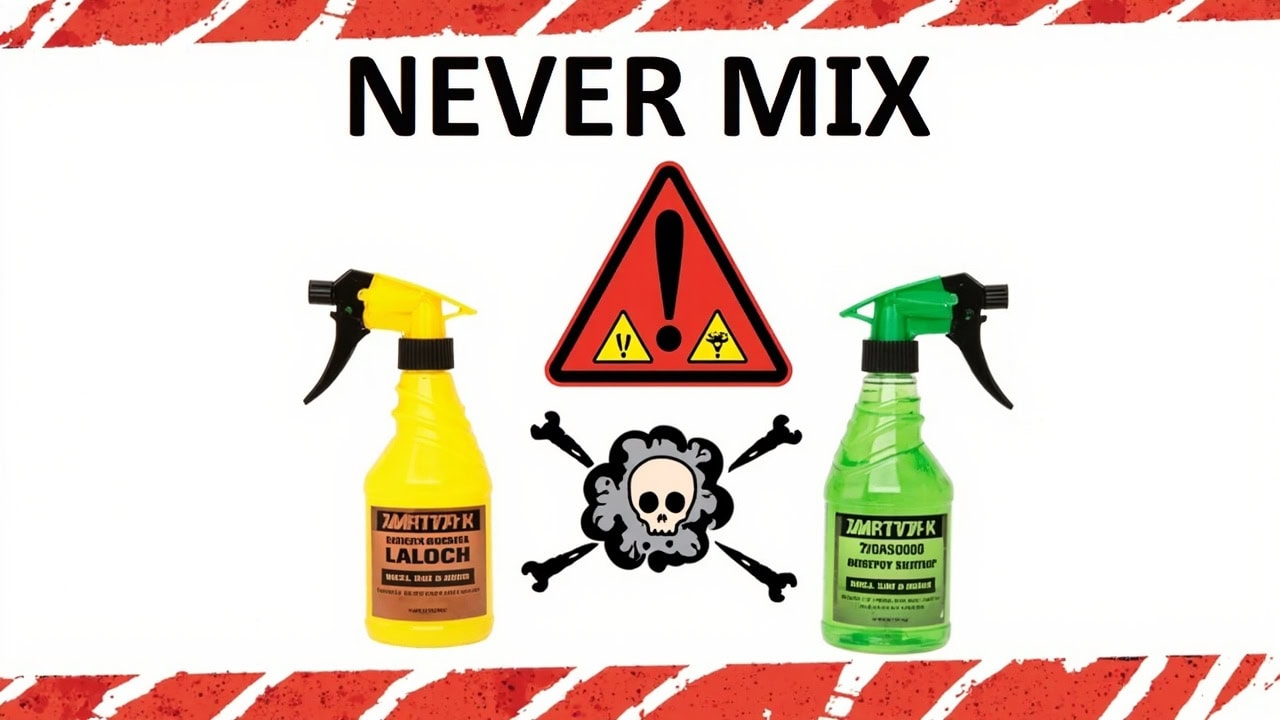
Can You Mix Cleaning Products? The Danger Chart

Can You Mix Cleaning Products? The Danger Chart
You cannot safely mix bleach with ammonia, vinegar, or hydrogen peroxide — these combinations release toxic chloramine gas, chlorine gas, or trigger violent exothermic reactions that cause respiratory failure, chemical burns, and container explosions in enclosed spaces. According to the American Association of Poison Control Centers, cleaning product exposures account for over 180,000 calls to US poison centers annually, with accidental product mixing being one of the leading causes of serious injury. The chemical reactions between incompatible cleaning agents produce gases and compounds that reach lethal concentrations within 60 seconds in a typical unventilated bathroom.
What Happens When You Mix Cleaning Products
Mixing incompatible cleaning agents can release toxic gases, cause violent chemical reactions, or produce corrosive compounds that damage surfaces and burn human tissue. The three primary danger categories are toxic gas release (chloramine, chlorine), explosive oxygen release (hydrogen peroxide reactions), and acidic or alkaline burns from neutralization reactions. Each category produces distinct symptoms and requires different emergency responses.
Even products marketed as “natural” or “green” can create dangerous reactions when combined. Botanical and plant-based cleaning products still contain reactive chemical compounds — citric acid, essential oil terpenes, and enzymatic surfactants that can interact unpredictably with oxidizers like bleach or hydrogen peroxide. The cleaning chemistry behind these reactions follows predictable principles based on pH, oxidation potential, and molecular reactivity, regardless of whether the source ingredients are synthetic or natural.
Many cleaning injuries result from mixing products sequentially without rinsing between applications, not from intentionally pouring two products into the same bottle. Spraying a vinegar-based glass cleaner over a surface still wet from a bleach-based disinfectant triggers the same chlorine gas reaction as pouring the two liquids together directly. Labels that state “never mix with” or “use only as directed” carry legal weight — ignoring them voids manufacturer safety claims and increases personal liability for any resulting injury.
The Cleaning Product Danger Chart
The following chart documents the most dangerous cleaning product combinations found in typical households. Each entry identifies the specific chemical reaction, the toxic byproduct produced, and the severity of exposure. Print this chart and post it inside your cleaning supply cabinet for quick reference.
| Product A | Never Mix With | Dangerous Reaction | Severity |
|---|---|---|---|
| Bleach (sodium hypochlorite) | Ammonia | Chloramine gas (NH₂Cl) — respiratory collapse | Fatal in enclosed spaces |
| Bleach (sodium hypochlorite) | Vinegar or other acids | Chlorine gas (Cl₂) — hydrochloric acid in lungs | Life-threatening |
| Bleach (sodium hypochlorite) | Hydrogen peroxide | Violent exothermic reaction, oxygen gas explosion | Container rupture, burns |
| Bleach (sodium hypochlorite) | Rubbing alcohol (isopropyl) | Chloroform and hydrochloric acid formation | Toxic fumes, fire hazard |
| Ammonia | Vinegar or other acids | Neutralization reaction — heat and irritating vapors | Moderate skin/eye irritation |
| Ammonia | Bleach | See bleach + ammonia above | Fatal in enclosed spaces |
| Hydrogen peroxide | Vinegar | Peracetic acid formation — corrosive and explosive at high concentrations | Severe burns |
| Hydrogen peroxide | Bleach | See bleach + hydrogen peroxide above | Container rupture, burns |
| Vinegar (acetic acid) | Bleach | See bleach + vinegar above | Chlorine gas exposure |
The Chemistry Behind Dangerous Mixing Reactions
Bleach + Ammonia: Chloramine Gas Production
When sodium hypochlorite (the active ingredient in household bleach at 5.25–6.15% concentration) contacts ammonium hydroxide (the active compound in ammonia-based cleaners at 5–10% concentration), the hypochlorite ion (OCl⁻) displaces chlorine that bonds with ammonia to form chloramine gas (NH₂Cl). This reaction further produces nitrogen trichloride (NCl₃) — a toxic, explosive yellow liquid that volatilizes at room temperature. Chloramine gas exposure causes tearing, coughing, and chest pain at concentrations as low as 5 parts per million (ppm), and respiratory failure at concentrations above 40 ppm in enclosed spaces.
Bleach + Acid (Vinegar): Chlorine Gas Release
Mixing bleach with vinegar (5% acetic acid, pH 2.5) or any acid lowers the solution pH below 4, causing hypochlorite to convert to hypochlorous acid, which rapidly decomposes into chlorine gas (Cl₂). Chlorine gas is a dense greenish-yellow vapor — 2.5 times heavier than air — that pools at floor level, making it especially dangerous for children and pets. At 1–3 ppm, chlorine gas causes mucous membrane irritation; at 5–15 ppm, it produces moderate respiratory distress; above 30 ppm, it causes immediate chest pain, vomiting, and potentially fatal pulmonary edema as the gas reacts with moisture in the lungs to form hydrochloric acid directly on lung tissue.
Bleach + Hydrogen Peroxide: Exothermic Oxygen Release
Sodium hypochlorite acts as a strong oxidizer, while hydrogen peroxide (3% household concentration, pH approximately 4.5) functions as both an oxidizer and reductant. When combined, a rapid redox reaction occurs: hypochlorite oxidizes peroxide to produce oxygen gas (O₂) and sodium chloride, releasing substantial heat in the process. The oxygen gas generation is immediate and voluminous — a half-cup of each product in a sealed spray bottle can generate enough pressure to rupture the container within seconds, propelling plastic shards and corrosive liquid in all directions. The thermal output can raise the mixture temperature above 80°C (176°F), causing severe contact burns in addition to the mechanical injury from container failure.
Bleach + Rubbing Alcohol: Chloroform Formation
Combining sodium hypochlorite with isopropyl alcohol (the 70% concentration found in standard rubbing alcohol) produces chloroform (CHCl₃) through a haloform reaction, along with hydrochloric acid and other chlorinated organic compounds. Chloroform was historically used as a surgical anesthetic but is now classified as a probable human carcinogen by the EPA. Inhalation causes dizziness, nausea, central nervous system depression, and at high concentrations, loss of consciousness and liver damage. The reaction also generates heat, creating an additional fire hazard near open flames or pilot lights common in kitchens and utility rooms.
Hydrogen Peroxide + Vinegar: Peracetic Acid
Combining hydrogen peroxide (3% household concentration) with vinegar produces peracetic acid (CH₃COOOH), a highly corrosive oxidizer used industrially as a disinfectant at carefully controlled concentrations. In an uncontrolled home mixing scenario, peracetic acid concentrations can reach levels that cause severe skin burns, permanent eye damage, and respiratory tract corrosion. At concentrations above 15%, peracetic acid becomes explosive — while household-strength mixtures rarely reach this threshold, the reaction is unpredictable and accelerated by warm temperatures or contaminated containers.
Vinegar + Ammonia: Neutralization Reaction
Vinegar (pH 2.5) combined with ammonia (pH 11–12) produces a neutralization reaction that generates ammonium acetate and releases heat. While less immediately dangerous than the chloramine or chlorine gas reactions, this mixture still produces irritating vapors that cause eye stinging, throat discomfort, and skin irritation. The heat generated can cause splattering if the products are mixed in a confined container, potentially spraying caustic liquid onto skin or into eyes.
The pH scale determines whether mixing produces conditions that accelerate or inhibit these reactions. Products at the extremes — pH 0–4 (strongly acidic) and pH 10–14 (strongly alkaline) — are the most reactive when combined. Understanding where common products fall on this scale is essential for preventing accidental reactions during routine cleaning.
What To Do If You’ve Exposed Yourself to Toxic Gas
If you have inhaled toxic gas from mixing cleaning products, immediately move to fresh air — go outdoors or open windows to create cross-ventilation. Do not remain in the room where the mixing occurred. Call poison control at 1-800-222-1222 (US) or emergency services (911) if you experience chest pain, difficulty breathing, blurred vision, or persistent coughing. Time is critical — the longer the exposure, the greater the lung tissue damage from acid-forming gases like chlorine and chloramine.
If cleaning chemicals have contacted your skin or eyes, rinse immediately with copious amounts of cool running water for at least 15 continuous minutes. Remove contaminated clothing and seal it in a plastic bag before disposal — do not wash contaminated clothing with other laundry, as residual chemicals can transfer and cause secondary exposure. If chemicals have been ingested, do not induce vomiting. Drink water or milk if fully conscious and seek emergency medical care immediately.
The “deadly six feet” rule applies to toxic gas exposure in enclosed spaces: chlorine and chloramine gases can reach lethal concentrations within 6 feet of the mixing source in under 60 seconds in an unventilated bathroom. Never mix cleaning products in small bathrooms, closet-sized kitchens, or any space without active ventilation. If a reaction occurs in such a space, evacuate immediately and ventilate from outside the room by opening doors and windows before re-entering.
How To Safely Use Multiple Cleaning Products
Safely using multiple cleaning products requires strict separation between chemically incompatible agents. Never mix products in the same container — residue from a previous product coating the inside of a spray bottle can trigger a violent reaction when a different product is added. Even trace amounts of bleach residue reacting with ammonia-based glass cleaner can produce enough chloramine gas to cause respiratory distress.
- Rinse between applications: If using multiple products on the same surface, rinse thoroughly with clean water and allow the surface to dry completely before applying the next product.
- Keep original containers: Maintain all cleaning products in their original labeled bottles with caps secured. Cross-contamination through shared caps or funnels causes many accidental reactions.
- Label secondary containers: If you must transfer products to spray bottles, label the container with the product name, concentration, and date — degraded solutions can become more reactive over time.
- Wait 24–48 hours: For chemically incompatible products like bleach and ammonia, maintain a full day or two gap between applications in the same area, and ventilate thoroughly during and after each use.
- Store separately: Keep cleaning products in a dedicated cabinet away from food preparation areas, and out of reach of children and pets. Store oxidizers (bleach, hydrogen peroxide) on a different shelf from acids (vinegar, toilet bowl cleaners) and bases (ammonia, oven cleaners).
Create a “safe mixing” reference card for your household by printing the danger chart above and laminating it. Post it inside the cabinet door where you store cleaning supplies so it is visible every time you reach for a product. This single step — making hazard information available at the point of use — significantly reduces the risk of accidental mixing.
Alternative Safe Cleaning Approaches
The safest approach to cleaning is using a single product designed for the specific task rather than combining multiple agents. Choose pre-formulated combination products — disinfecting glass cleaners, bathroom cleaners with integrated soap and acid, and all-purpose surface sprays — that have been tested for chemical stability by their manufacturers.
For heavy-duty disinfection, use a single EPA-registered disinfectant and allow it the full contact time specified on the label (typically 3–10 minutes of wet surface contact) rather than layering multiple products hoping for better results. A properly applied disinfectant at the correct concentration and contact time kills 99.9% of target organisms without any need for supplemental products. Our kitchen cleaning guide covers specific surface-safe disinfection protocols for food preparation areas.
Several natural cleaning combinations are genuinely safe to mix. Vinegar diluted with water (1:1 ratio) works effectively for glass and mirror cleaning. Baking soda combined with a few drops of dish soap creates an effective scrubbing paste for sinks, tubs, and countertops. Castile soap diluted in warm water serves as a general-purpose surface cleaner safe for most materials. However, none of these combinations function as EPA-registered disinfectants — they clean visible soil but do not kill pathogenic microorganisms.
When uncertain about product compatibility, test on a small inconspicuous area and wait 24 hours to observe for adverse reactions before full application. Adopting a “one product per surface” approach eliminates mixing risk entirely: use specialized bathroom cleaner for fixtures, glass cleaner for mirrors, and floor cleaner for floors without ever combining applications on the same surface area.
Frequently Asked Questions
Q: Can you mix vinegar and baking soda to clean?
A: Yes, vinegar and baking soda are safe to combine and produce a foaming reaction that helps lift debris — the sodium acetate produced is a gentle cleaner suitable for drains, countertops, and general scrubbing. However, this combination is not a disinfectant and should not be used as a replacement for sanitizing or disinfecting surfaces in kitchens or bathrooms.
Q: What cleaning products can you safely mix together?
A: Only mix products when labels explicitly state compatibility. Pre-formulated multi-surface cleaners, laundry detergents with built-in boosters, and all-in-one bathroom cleaners are designed for safe combination. When using separate products, apply them sequentially with thorough rinsing between each application, allowing surfaces to dry completely.
Q: Why should you never mix bleach with ammonia?
A: Bleach (sodium hypochlorite) combined with ammonia (ammonium hydroxide) produces chloramine gas through a displacement reaction where hypochlorite releases chlorine that bonds with ammonia. Chloramine gas causes acute respiratory distress at low concentrations and respiratory failure at higher levels. In a small bathroom, a single mixing event can produce lethal concentrations within 60 seconds.
Q: How long should you wait between using different cleaning products?
A: Wait at least 5–10 minutes between applying different cleaning products and always rinse surfaces with clean water between applications. For chemically incompatible products like bleach and ammonia, wait 24–48 hours in a well-ventilated area before applying the second product to ensure the first has fully dissipated or been rinsed away.
References
- Centers for Disease Control and Prevention. (2024). Cleaning and Disinfecting Chemical Safety. CDC.
- American Association of Poison Control Centers. (2023). Annual Report of the National Poison Data System. AAPCC.
- Occupational Safety and Health Administration. (2024). Hazard Communication Standard: Cleaning Chemicals. OSHA.
- National Institutes of Health. (2021). Toxic Gas Exposure From Household Cleaning Product Mixtures. National Library of Medicine.
- US Environmental Protection Agency. (2024). Safer Choice and Disinfectant Registration Guidelines. EPA.


