
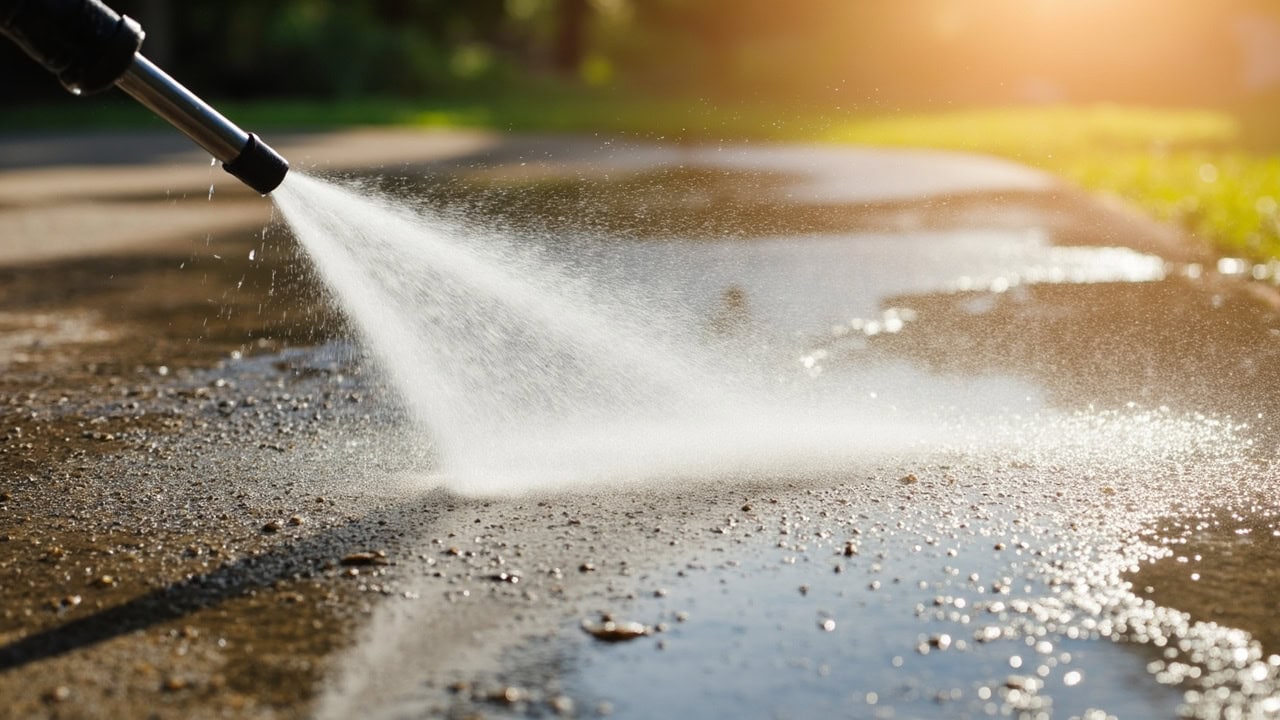
How Pressure Washers Work: PSI, GPM, and Surface Selection

Pressure washers work by combining high-pressure water output (measured in PSI) with volumetric water flow (measured in GPM) to physically blast away dirt, mildew, and grime from surfaces. PSI (pounds per square inch) indicates the force driving water outward, while GPM (gallons per minute) determines how much water flows through the machine to flush suspended contaminants away. The combination of these two measurements — not just PSI alone — determines a pressure washer’s actual cleaning power and effectiveness for different surface types.
What Is a Pressure Washer and How Does It Work?
A pressure washer is a mechanical device that uses an electric or gas-powered pump to increase water pressure from a standard garden hose — typically 40 to 60 PSI — up to 1,000 to 4,000 PSI or more. Water enters the pump at low pressure through a garden hose connection and exits through a narrow nozzle tip at high velocity, creating a concentrated cleaning stream capable of stripping away stubborn dirt, mold, mildew, and surface stains that ordinary hose pressure cannot remove.
The pump is the heart of every pressure washer system. Two primary pump designs determine performance and longevity: axial cam pumps, which are sealed units rated for light-duty residential use with a typical lifespan of 1 to 3 years, and triplex piston pumps, which feature serviceable components and deliver consistent pressure for 5 to 10 years in commercial applications. Triplex pumps use three plungers driven by a crankshaft, producing smoother pressure delivery and allowing field replacement of worn seals and valves.
Water supply must provide adequate flow rate to match or exceed the pump’s rated GPM. Insufficient incoming water causes cavitation — a condition where air bubbles form inside the pump and collapse against internal surfaces, rapidly degrading seals and damaging the manifold. Most manufacturers require a minimum supply of 4 to 5 GPM from the water source for residential units rated at 2.5 GPM output. For more on how water chemistry interacts with cleaning performance, see our Cleaning Chemistry Hub.
Understanding PSI: The Pressure Rating
PSI measures the force water exerts per square inch on the target surface. This pressure rating determines what types of dirt and grime the machine can effectively remove — but higher PSI does not automatically mean better cleaning. Electric pressure washers typically produce 1,000 to 2,300 PSI, while gas-powered units range from 2,000 to 3,500 PSI. Commercial-grade machines can exceed 4,000 PSI for industrial degreasing and paint preparation tasks.
Pressure washer PSI ratings fall into three general duty categories:
- Light-duty (1,000–1,900 PSI): Outdoor furniture, patio cushions, window screens, bicycles, vehicles, and delicate surfaces. Electric models dominate this category, typically priced between $90 and $250.
- Medium-duty (2,000–2,800 PSI): Driveways, sidewalks, wood fences, garage floors, siding, and deck surfaces. Both electric and gas models operate in this range, with gas units offering higher GPM for faster results.
- Heavy-duty (3,000–4,000+ PSI): Construction equipment, industrial decks, stubborn masonry stains, paint stripping, and large commercial flatwork. Gas-powered units with triplex pumps dominate this tier, with prices ranging from $400 to over $1,000.
Higher PSI without adequate GPM damages soft surfaces without improving cleaning results. A 3,000 PSI machine with only 1.5 GPM will etch wood and crack mortar joints — while a 2,500 PSI machine with 3.0 GPM cleans the same surface faster and more safely. Never judge a pressure washer’s cleaning capability by PSI alone. For technical term definitions, visit our Cleaning Glossary.
Understanding GPM: The Flow Rate
GPM measures how many gallons of water flow through the nozzle per minute. While PSI provides the force to break the bond between dirt and surface, GPM provides the volume to flush suspended debris away. Higher GPM means faster cleaning on large flat surfaces like driveways and patios, because more water carries away loosened material in fewer passes. Typical residential pressure washers deliver 1.4 to 2.5 GPM, while commercial units produce 2.5 to 4.0 GPM or more.
The industry-standard method for comparing pressure washer cleaning power combines both measurements into a single figure called Cleaning Units (CU). The formula is straightforward:
Cleaning Power Formula: PSI × GPM = Cleaning Units (CU)
For example, a pressure washer rated at 2,500 PSI with 2.3 GPM produces 5,750 Cleaning Units (2,500 × 2.3 = 5,750 CU). A different machine rated at 3,000 PSI with only 1.5 GPM produces 4,500 CU — significantly less overall cleaning power despite the higher pressure rating. When comparing pressure washers at similar price points, prioritize the machine with higher CU for faster, more effective results across all surface types.
GPM also plays a critical role in rinsing. After applying a cleaning solution or detergent to a surface, adequate water volume is necessary to fully flush away residual chemicals and suspended debris. Insufficient GPM leaves detergent residue that attracts dirt and can damage certain finishes over time. Always allow the machine’s full GPM flow to complete the rinse cycle before moving to a new section.
Matching Pressure Washer Specifications to Surfaces
Selecting the correct PSI and nozzle combination for each surface prevents damage while maximizing cleaning effectiveness. Every material has a pressure tolerance threshold — exceeding it causes irreversible harm. Below are manufacturer-recommended specifications for common residential and commercial cleaning tasks.
| Surface Type | Recommended PSI | Nozzle Angle | Key Precautions |
|---|---|---|---|
| Wood decks and fences | 1,500–2,000 PSI | 40° (white) | Excessive pressure splinters wood fibers; always sweep with the grain |
| Vinyl siding | 1,300–1,600 PSI | 25° (green) | Hold wand 6+ inches away to avoid denting panels |
| Concrete and brick | 2,500–3,000 PSI | 15° (yellow) | Stubborn stains may require a rotating surface cleaner attachment |
| Vehicles and RVs | 1,200–1,800 PSI | 40° (white) | Use foam cannon for even detergent distribution |
| Composite decking (Trex) | 1,500 PSI max | 40° wide fan | Directional cleaning only — never sweep against board pattern |
| Windows and glass | 1,000–1,400 PSI | Soft wash attachment | High pressure causes glass stress cracks and breaks seals |
For concrete surfaces, our guide on how to clean a concrete driveway walks through the complete PSI selection and technique process step by step. For siding, see our detailed guide answering can you pressure wash vinyl siding with surface-specific PSI limits and safe techniques.
Pressure Washer Components and Terminology
Understanding the key components of a pressure washer helps you select the right machine and maintain it properly over years of use. Each component plays a specific role in generating, controlling, and directing high-pressure water flow.
Pump Types
Axial cam pumps are sealed, maintenance-free units found on most residential electric and entry-level gas pressure washers. They use a wobbling plate that drives pistons in a circular motion. Axial pumps are compact and inexpensive but cannot be serviced — when internal seals wear out, the entire pump must be replaced. Typical lifespan ranges from 1 to 3 years with regular residential use.
Triplex piston pumps use three plungers driven by a crankshaft, similar to an engine’s design. These pumps deliver consistent pressure output, run cooler under load, and allow field replacement of worn seals, valves, and packings. Triplex pumps are standard on commercial-grade machines and high-end residential units, with expected lifespans of 5 to 10 years when properly maintained. They cost more upfront but provide significantly lower total cost of ownership for frequent users.
Nozzle Tips
Pressure washer nozzle tips are color-coded by spray angle to provide quick visual identification. Each angle produces a different spray pattern suited to specific cleaning tasks. The five standard nozzle colors are: red (0°, concentrated spot blast), yellow (15°, heavy-duty stripping), green (25°, general-purpose cleaning), white (40°, light-duty and delicate surfaces), and black (65°, chemical and detergent application at low pressure). For a complete breakdown, see our guide on pressure washer nozzle types and uses.
Detergent Injectors, Surface Cleaners, and Unloader Valves
Downstream detergent injectors add cleaning solution to the water stream after it leaves the pump, typically at low pressure through the black 65° nozzle. This design prevents corrosive chemicals from contacting internal pump components. Surface cleaners are rotating dual-nozzle attachments that maintain consistent distance from flat surfaces, preventing the zebra-stripe patterns that wand-only cleaning produces on driveways and patios. Unloader valves regulate system pressure when the trigger is released, diverting water flow back to the pump inlet to prevent pressure spikes that would damage seals and hoses.
Nozzle Distance and Technique for Safe Cleaning
Nozzle distance from the surface directly affects impact force. The relationship is exponential, not linear — holding the nozzle twice as far from the surface reduces impact force by approximately 75%. This means small changes in wand distance create dramatic differences in cleaning intensity. Starting too close is the single most common cause of surface damage during pressure washing.
- Start wide and far: Begin with a 40° nozzle at 12 to 18 inches from the surface. Narrow the angle and reduce distance only for stubborn stains that resist initial cleaning.
- Use sweeping motions: Move the wand in consistent horizontal sweeps to prevent etching patterns in soft metals, wood, and painted surfaces. Overlapping each pass by 50% ensures even coverage. Work top-to-bottom: Clean upper sections first so dirty water runs over uncleaned areas rather than staining freshly cleaned surfaces below. Maintain safe distances: Consumer Reports recommends keeping the nozzle at least 6 inches from any surface when using 15° or narrower spray angles. Never point the pressure stream at people, animals, electrical outlets, window seals, or air intakes.
Common Pressure Washer Mistakes to Avoid
Pressure washers cause thousands of injuries and property damage incidents each year — most resulting from preventable operator errors. Understanding and avoiding these common mistakes protects both your surfaces and your safety.
- Using a narrow-angle nozzle on delicate surfaces. The 0° red nozzle concentrates all pressure into a pencil-thin stream that gouges wood, etches concrete, strips paint unintentionally, and can cause serious laceration injuries. Consumer Reports advises never using the 0° nozzle — the 15° yellow nozzle provides sufficient force for even the toughest cleaning tasks.
- Standing too close to the surface. Holding the wand closer than 6 inches with a 15° nozzle damages most residential materials, including wood, vinyl, painted surfaces, and soft metals. The pressure spike at close range can also inject water beneath skin — a serious medical emergency requiring immediate emergency room treatment.
- Running the pump dry. Water cools and lubricates internal pump seals. Running the pump without an adequate water supply — even for 30 seconds — overheats and destroys piston seals, requiring complete pump replacement. Always confirm full water flow from the garden hose before squeezing the trigger.
- Using household cleaning products in the detergent tank. Household dish soaps, bleach solutions, and all-purpose cleaners produce excessive foam that clogs detergent injectors and can corrode internal pump components. Use only pressure-washer-formulated chemicals designed for downstream injection systems.
- Neglecting winterization. Water left inside the pump, hose, and manifold during freezing temperatures expands as it freezes, cracking brass manifolds, splitting rubber seals, and destroying the unloader valve. Proper winterization — running RV antifreeze through the system or storing the unit in a heated space — prevents costly spring repairs.
Maintaining Your Pressure Washer for Longevity
Regular maintenance extends pressure washer lifespan significantly and prevents the performance degradation that occurs when seals wear and internal tolerances change. A consistent maintenance routine costs a fraction of pump replacement and keeps cleaning output at rated specifications.
- Flush the pump after each use. Run clean water through the system for 60 seconds after disconnecting the detergent supply to remove residual chemicals and suspended debris from internal passages.
- Inspect hoses before every use. Check high-pressure hoses for cracks, bulges, and fitting wear. A ruptured high-pressure hose operates at forces sufficient to cause serious injection injuries — replace any hose showing visible damage immediately.
- Replace worn piston seals annually in triplex pumps to prevent gradual pressure loss. Most manufacturers sell seal kits specific to each pump model for $20 to $40. Use fuel stabilizer in gas-powered units stored for more than 30 days. Ethanol-blended gasoline degrades quickly, leaving varnish deposits that clog carburetor jets and prevent starting. Run the pump monthly for 30 seconds while connected to a water supply to keep internal seals lubricated and prevent rubber from drying and cracking during extended storage periods.
For cross-surface cleaning applications involving interior floors and tile, see our comprehensive Floor Cleaning Hub for techniques that complement exterior pressure washing work.
Frequently Asked Questions
Q: Can pressure washers damage surfaces?
A: Yes — pressure washers above 2,000 PSI easily etch wood, crack concrete, dent aluminum siding, and break window seals. Always match PSI to surface tolerance and use the widest appropriate nozzle angle. Starting with a 40° nozzle at 12 to 18 inches distance prevents most surface damage while still providing effective cleaning power.
Q: What is the difference between PSI and GPM in a pressure washer?
A: PSI is the force (pressure) pushing water out, while GPM is the volume (flow rate) of water delivered. Both matter for cleaning — PSI removes stuck-on debris while GPM flushes it away. The Cleaning Units formula (PSI × GPM) provides the best single-number comparison for overall cleaning power. A balanced combination of both specifications produces the best results for any cleaning task.
Q: Should I use hot or cold water in a pressure washer?
A: Cold water handles approximately 95% of residential cleaning tasks effectively. Hot water at 180°F or above significantly improves grease and oil removal by lowering the viscosity of hydrocarbon-based soils, making them easier to flush away. However, hot water capability is only available in commercial-grade machines equipped with heating elements, which typically cost $1,000 or more.
Q: What PSI pressure washer do I need to clean my driveway?
A: Concrete driveways require 2,500 to 3,000 PSI with a 15° or 25° nozzle for effective cleaning. For light maintenance cleaning of surface dirt and mildew, a 2,000 PSI unit paired with a rotating surface cleaner attachment prevents the streaking and zebra-stripe patterns that wand-only cleaning produces on large flat areas. Gas-powered units in the 2,500 to 3,000 PSI range with at least 2.5 GPM provide the fastest results for typical residential driveways.
References
- Consumer Reports. (2025). Pressure Washer Buying Guide. Consumer Reports.
- Wikipedia Contributors. (2025). Pressure Washing. Wikimedia Foundation.
- U.S. Consumer Product Safety Commission. (2024). Pressure Washer Safety Information. CPSC.


