
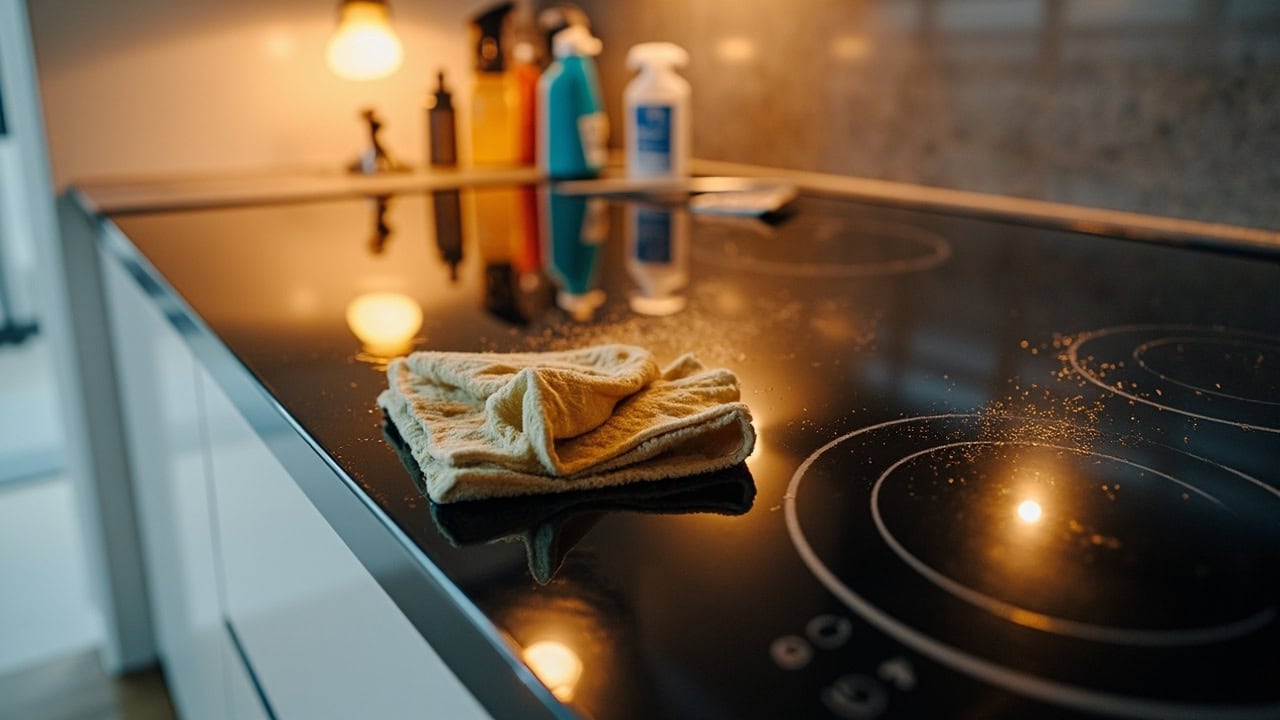
How to Clean a Glass Cooktop: Complete Guide

A glass cooktop must be cleaned with a pH-neutral cleaner applied to a damp microfiber cloth using gentle circular motions — harsh abrasives, acidic cleaners like vinegar, and steel wool pads cause permanent etching that ruins the smooth surface and creates microscopic grooves where food residue accumulates. Glass ceramic cooktops are made from a vitroceramic material that is highly resistant to heat but surprisingly vulnerable to mechanical and chemical damage from improper cleaning tools.
The smooth, flat surface of a glass cooktop gives it a sleek appearance, but that same smoothness means every scratch, etch mark, and haze spot becomes immediately visible. Unlike coil or gas burners, there is no grate or drip pan to hide spills — any residue left on the surface bakes directly onto the glass ceramic during the next use, making proper cleaning technique essential for both appearance and longevity.
What You Need Before You Start
Gathering the right supplies before you begin prevents the common mistake of grabbing whatever is nearby — which is how most glass cooktop damage occurs. The materials you use matter as much as the technique, because glass ceramic surfaces respond poorly to both mechanical abrasion and chemical attack.
- pH-neutral cooktop cleaner (cream-based formula preferred over spray) — Cream-based cleaners adhere to the surface longer, giving surfactants adequate dwell time to break down cooked-on residue. Spray formulas tend to run off the flat surface before they can work effectively.
- Soft microfiber cloths (at least two: one damp, one dry) — Microfiber fibers are split to a diameter roughly 1/100th the width of a human hair, giving them the ability to lift and trap grease particles without relying on abrasive friction.
- Non-abrasive cooktop scraper or plastic razor blade — A dedicated cooktop scraper has a rigid handle that maintains the proper 45-degree angle against the glass, reducing the risk of the blade edge catching and gouging the surface.
- Distilled water (avoids mineral deposits on glass surface) — Tap water contains dissolved minerals like calcium and magnesium that leave white spots and streaks when they evaporate on glass, adding a secondary cleaning task.
- Protective gloves if using chemical cleaners — Repeated skin contact with cooktop cleaning creams can cause dryness and irritation, even with pH-neutral formulations.
Avoid substituting paper towels, sponges with scouring pads, or general-purpose kitchen sprays. Paper towels leave lint and can introduce fine scratches from embedded wood fibers. Sponges with any abrasive surface — even the mild green side — create micro-scratches visible under direct light. For more guidance on selecting the right cleaning chemistry for kitchen surfaces, see our Cleaning Chemistry Hub.
Step-by-Step Cleaning Process
Follow these eight steps in order. Each step builds on the previous one — skipping ahead or combining steps reduces effectiveness and increases the risk of surface damage. The entire process takes approximately 10 to 15 minutes for a standard 30-inch cooktop with moderate residue.
- Allow cooktop to cool completely — Never clean a warm or hot surface. Glass ceramic cooktops can withstand temperatures above 1,000°F during cooking, but rapid temperature changes from applying cool water or cleaner to a hot surface cause thermal stress that can crack the glass. Wait until the surface is at room temperature — typically 30 to 45 minutes after the heat indicator light turns off.
- Remove loose debris — Use a dry microfiber cloth or soft towel to wipe away crumbs, spilled liquids, and loose particles before applying any cleaner. This prevents debris from being ground into the surface during the scrubbing phase. Brush particles toward the edge and off the cooktop entirely.
- Apply pH-neutral cleaner — Squeeze a small amount — about a teaspoon, roughly the size of a quarter — of cream-based cooktop cleaner directly onto the glass surface, focusing on stained or discolored areas near the burner elements. Spread the cream with your damp microfiber cloth to create a thin, even layer across the soiled section.
- Let cleaner dwell for 2–3 minutes — This allows the surfactants in the cleaner to penetrate and break down cooked-on grease and food residue without requiring aggressive manual scrubbing pressure. Do not let the cleaner dry on the surface — if it begins to dry, mist lightly with distilled water.
- Scrub gently with damp microfiber — Using circular motions about the size of a half-dollar, work the cleaner into the surface. Apply only light pressure — the weight of your hand is sufficient. Rewet the cloth as needed with warm distilled water to maintain a lubricated surface that prevents friction damage.
- Remove stubborn residue with plastic scraper — Hold the scraper at a 45-degree angle to the glass surface and apply gentle, steady pressure to lift baked-on spots. Move the scraper in one direction rather than back and forth to reduce the chance of the blade edge catching on residue and snapping against the glass. Never use a metal scraper, metal spatula, or knife blade — metal edges scratch and chip glass ceramic permanently.
- Wipe clean with damp cloth — Remove all cleaner residue using a fresh damp microfiber cloth. Rinse the cloth frequently in distilled water to prevent redistributing dissolved residue back onto the surface. Work systematically from one edge to the other so no area is missed.
- Dry and buff to streak-free shine — Use a completely dry microfiber cloth to polish the surface in circular motions until no streaks, smears, or water spots remain. This final buff removes the thin film of moisture and dissolved minerals that causes hazing between the glass and the light above it.
Glass Cooktop-Specific Considerations
Materials That Permanently Damage Glass Ceramic
Understanding which materials cause irreversible damage is more important than knowing how to clean — prevention costs seconds, while repair or replacement costs hundreds of dollars. Glass ceramic is a brittle, non-porous material that tolerates heat exceptionally well but is vulnerable to three categories of damage: mechanical abrasion, chemical etching, and thermal shock.
- Never use abrasive scrubbers — Steel wool, scouring pads, melamine foam erasers (such as Magic Erasers), and any pad rated coarse or medium create microscopic scratches across the glass surface. These scratches are permanent and cannot be polished out. Over time, they collect residue that becomes increasingly difficult to remove, creating a cycle of worsening appearance.
- Avoid acidic cleaners — Vinegar (5% acetic acid, pH 2.5), lemon juice (citric acid, pH 2.0), and ammonia-based cleaners cause chemical etching that dissolves the silica matrix of the glass ceramic surface. This damage is cumulative — each exposure removes a microscopic layer, gradually dulling the surface and creating a frosted appearance that cannot be reversed.
- Do not use cooktop cleaners containing fluoride compounds or rough particles — Some heavy-duty formulations include abrasive minerals or fluoride-based compounds that accelerate surface degradation. Always check the product label for compatibility with glass ceramic or radiant cooktop surfaces.
Why Sugar Spills Require Immediate Attention
Sugar-based spills — including jelly, syrup, caramelized sauce, and any food with high sugar content — pose a unique threat to glass ceramic cooktops. When sugar is heated to high temperatures on the glass surface, it undergoes pyrolysis and bonds with the silica in the glass ceramic at a molecular level. This process, called pitting, creates small depressions in the surface that are permanent and grow larger with each subsequent exposure to heat.
If a sugar-based spill occurs while cooking, turn off the burner immediately and use a cooktop scraper to remove as much of the spill as possible while it is still warm but not hot enough to cause burns. Once the cooktop cools completely, clean the area thoroughly with cream cleaner. For stubborn sugar residue that has already bonded, see our guide on how to remove burn marks from a glass cooktop.
Using Cooktop Protectors
Thin silicone or rubberized cooktop protector mats shield the glass surface from scratches when the cooktop is not in active use. These mats are cut to fit standard cooktop sizes and can be left in place under decorative items or as a protective barrier when using the counter space around the burners for food preparation. Never place a protector on a warm or hot cooktop — the mat can melt and fuse to the glass surface.
Drying and Finishing the Cooktop
The drying and buffing stage is where most people undo their cleaning work. Using a cloth that is even slightly damp during the final wipe leaves behind a thin film of water that evaporates and deposits dissolved minerals as white streaks and spots. This filming effect is the most common reason a cooktop still looks dirty after a thorough cleaning.
- Always use a completely dry microfiber cloth for the final buff. Any moisture left behind creates water spots that are visible under overhead kitchen lighting.
- Work in sections from the outside edge toward the center to avoid re-contaminating areas you have already cleaned with residue from the border.
- For an extra shine after deep cleaning, apply a small amount of cooktop polish specifically formulated for glass ceramic surfaces. These polishes fill microscopic imperfections and create a hydrophobic layer that resists future residue adhesion.
- Remove all cleaner residue completely before the polish step. Leftover cleaner mixed with polish creates a cloudy, streaked finish that is harder to remove than the original soil.
Common Mistakes to Avoid
The table below summarizes the most frequent errors people make when cleaning glass cooktops, along with the specific mechanism by which each mistake damages the surface. Understanding the “why” behind each rule makes it easier to remember and follow the correct technique.
| Mistake | Why It Damages the Cooktop |
|---|---|
| Using steel wool or abrasive pads | Creates microscopic scratches that cause permanent haze and collect residue in the grooves, making future cleaning progressively harder |
| Cleaning while surface is warm | Thermal shock from cooler cleaner or water can crack the glass; cleaner evaporates before surfactants have time to penetrate residue |
| Using vinegar or acidic cleaners | Chemical etching corrodes the glass ceramic surface permanently — acetic acid at pH 2.5 dissolves the silica matrix over repeated exposures |
| Applying too much cleaner | Excess product leaves residue that creates streaks and a sticky film that attracts and holds dirt more quickly than a clean surface |
| Using a dry paper towel | Wood fibers in paper towels can scratch the glass surface and leave lint that interferes with the final buff to a streak-free shine |
| Scraping with metal tools | Metal edges nick or scratch the glass ceramic permanently — these gouges collect residue and cannot be repaired without professional resurfacing |
How to Prevent Future Buildup
Prevention is far more effective than remediation on glass cooktops because every cleaning cycle — even with proper technique — involves some mechanical contact with the surface. Reducing the frequency and severity of soiling extends both the appearance and the functional life of the cooktop.
- Wipe down after each use — Once the cooktop cools to a warm (not hot) temperature, a quick wipe with a damp microfiber cloth removes cooking fumes, oil splatter, and light spills before they bake onto the surface during the next use.
- Use a cooktop cover or protector mat — When the stove is not in use, a fitted cover shields the glass from accidental scratches, dust accumulation, and spills from nearby food preparation.
- Lift pots and pans — never slide them — Sliding cookware across the surface, even smooth-bottomed pots, introduces fine scratches over time. The weight of a filled pot amplifies the friction damage significantly.
- Clean spills before they bake on — If a spill occurs during cooking, turn off the element and allow it to cool slightly, then reheat on low just enough to soften the residue for easy removal with a scraper. This is far easier than removing fully carbonized food.
- Perform a weekly deep clean — Even if the surface appears clean, cooking fumes deposit a thin, invisible film of grease that accumulates over time. A weekly cleaning with cream-based cleaner prevents this buildup from reaching the point where it requires aggressive scrubbing.
For related kitchen cleaning tasks, our guide on how to clean a gas stove top covers the sibling topic of burner grate and drip pan maintenance. Our Kitchen Cleaning Hub provides a complete index of all kitchen surface and appliance cleaning guides.
Glass surfaces in other areas of the home share some cleaning principles with cooktops — our Bathroom Cleaning Hub includes guidance on shower door glass and mirror maintenance that applies similar pH-neutral, non-abrasive techniques.
Frequently Asked Questions
Q: Can I use vinegar to clean my glass cooktop?
A: No, vinegar should never be used on a glass cooktop. Its acetic acid content (5% concentration, pH 2.5) causes permanent chemical etching that dulls the smooth glass ceramic surface and creates microscopic grooves where future residue accumulates more easily. Each application removes a thin layer of the silica matrix, and the damage is cumulative and irreversible.
Q: How often should I clean my glass cooktop?
A: Wipe down your glass cooktop after each use when it cools to a warm temperature, and perform a deep clean with cream-based pH-neutral cleaner once weekly to prevent cumulative residue buildup from cooking fumes, oil splatter, and invisible grease film that accumulates between visible soilings.
Q: What is the best tool for removing baked-on food from a glass cooktop?
A: A plastic cooktop scraper held at a 45-degree angle provides the safest method for removing baked-on food. Plastic is soft enough to avoid scratching glass ceramic while firm enough to lift stubborn residue after cleaning solution has been applied and allowed to dwell for 2–3 minutes. Never use metal scrapers, spatulas, or knife blades.
Q: Why does my cooktop still look hazy after cleaning?
A: Haziness on a glass cooktop typically results from either leftover cleaner residue causing a filming effect or microscopic scratches from abrasive materials. Both create light scatter that appears as a dull haze. If the haze is from residue, re-clean with a fresh damp microfiber cloth and buff dry. If it is from scratches, use a cooktop polish formulated for glass ceramic to fill microscopic imperfections and restore shine.
References
- Whirlpool Corporation. (2024). How to Clean a Glass Cooktop. Whirlpool Product Support.
- GE Appliances. (2024). Glass Cooktop Cleaning and Maintenance. GE Appliances Knowledge Center.
- Samsung Electronics. (2024). How to Clean Your Ceramic or Glass Cooktop. Samsung Support.
- ASTM International. (2023). Standard Specification for Flat Glass. ASTM C1036.
- Corning Incorporated. (2022). Glass-Ceramic Material Properties and Applications. Corning Technical Publications.


