
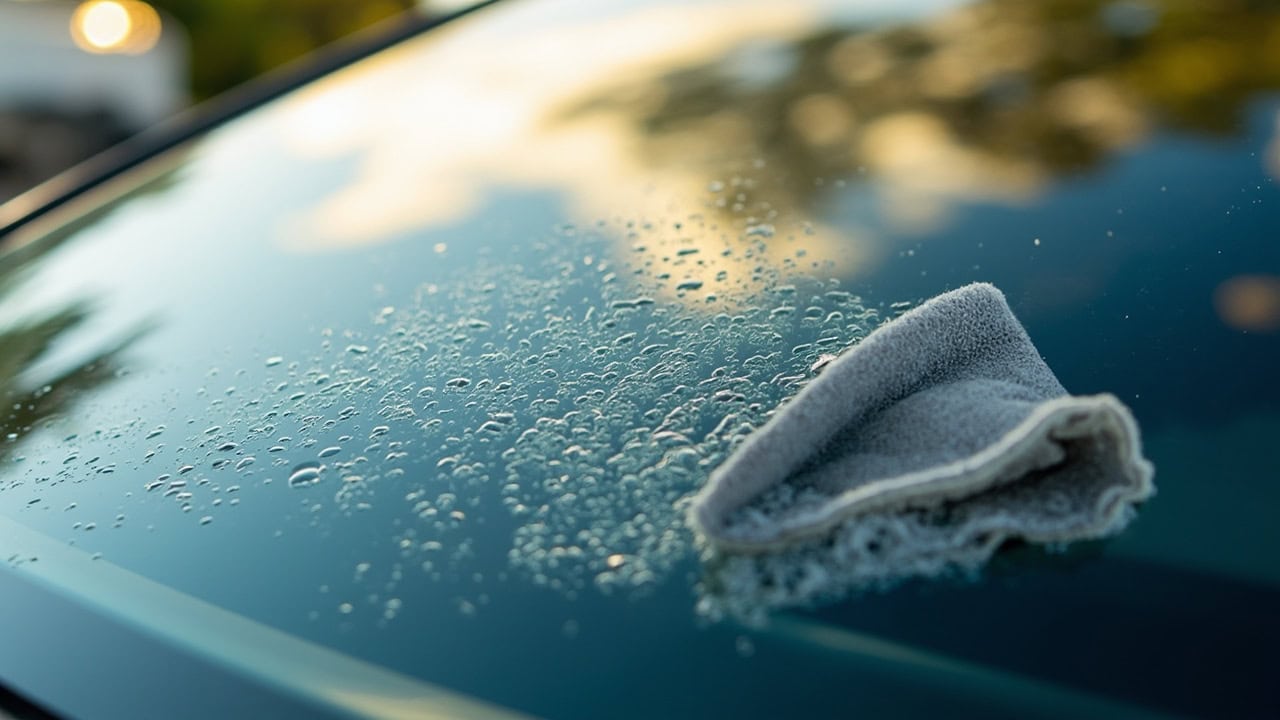
How to Clean Car Windows: Interior and Exterior

Clean car windows using a 10:1 distilled water to white vinegar solution or a dedicated pH-neutral automotive glass cleaner applied to a clean microfiber towel — never sprayed directly onto the glass — wiping in straight overlapping strokes from top to bottom while the glass is cool and shaded. Interior and exterior glass accumulate entirely different contaminants: interior surfaces collect body oils, off-gassing from plastics, and airborne dust, while exterior glass faces road grime, bug splatter, mineral deposits from car washes, and UV degradation. The single most important rule is to avoid ammonia-based household cleaners like Windex on any tinted window, because ammonia breaks down the polyester adhesive layer that bonds the tint film to the glass, causing bubbling, discoloration, and eventual film failure.
What You Need Before You Start
Gathering the right supplies before you begin prevents mid-job interruptions and ensures every surface gets the correct treatment. Automotive glass requires different tools than household window cleaning — the contours, tint films, and surrounding trim demand specialized care.
- Automotive glass cleaner: A pH-neutral formula rated safe for tinted glass, or a 10:1 dilution of distilled water to white vinegar (approximately 1 cup white vinegar per 10 cups distilled water). Household glass cleaners like Windex contain ammonia that degrades window tint adhesive.
- Microfiber towels: Minimum two clean 16 × 16 inch microfiber cloths rated at 300+ GSM — one for applying cleaner, one for buffing dry. Glass-cleaning microfiber should never be washed with fabric softener, which leaves a silicone residue that streaks.
- Detailing clay bar (optional): For removing bonded contaminants like tree sap or industrial fallout that ordinary cleaning will not lift. Use only on exterior glass.
- Squeegee: A flexible rubber-bladed squeegee or a second-generation glass cleaning tool for reaching the lower windshield edge and rear window corners.
- Dashboard brush or soft-bristled brush: For cleaning window channels, weather stripping grooves, and frame edges where debris accumulates and transfers back onto freshly cleaned glass.
- Compressed air (optional): For blowing dust and loose debris from window channels and dashboard crevices before wiping interior glass.
- Distilled water: Essential for dilution and final rinsing — tap water contains calcium and magnesium minerals that leave hard water spots on glass as they evaporate.
Step-by-Step: Exterior Car Window Cleaning
Exterior glass faces the harshest contamination — bug splatter at highway speeds, road tar, tree sap, hard water deposits from sprinklers and car washes, and UV-oxidized grime that bonds to the silica surface. Cleaning exterior windows before interior ones prevents dirt from transferring onto already-clean interior surfaces.
- Park in shade and let the glass cool. Never clean hot glass. When glass surface temperature exceeds roughly 90 °F (32 °C), the solvent in your cleaner evaporates faster than you can wipe it, leaving concentrated residue that bonds to the surface and creates permanent streaks. Wait at least 20 minutes after driving or parking in sun before starting.
- Rinse exterior glass thoroughly with water. Use a hose or pressure washer on a low setting to dislodge loose debris, dried bug remains, and road grit. This pre-rinse prevents abrasive particles from being dragged across the glass during the wipe-down, which causes fine swirl marks visible in direct sunlight.
- Apply glass cleaner to your microfiber towel — not directly onto the glass. Spraying onto the towel prevents overspray onto painted surfaces, rubber trim, and plastic moldings where solvent-based cleaners can cause discoloration or drying. Apply 3–4 pumps to a folded section of the towel.
- Wipe the windshield from top to bottom in straight vertical strokes, overlapping each pass by about 1 inch. Vertical strokes on the driver’s side glass and horizontal strokes on the passenger side make it easy to identify which surface has a streak later — if the streak runs vertically, it is on the side you wiped vertically; if horizontally, it is on the other side.
- Flip to the dry side of the microfiber or switch to a second clean towel and buff immediately. Do not let the cleaner air-dry. Buffing while the surface is still damp lifts dissolved contaminants before they can redeposit. Use light, even pressure in the same direction as your cleaning strokes.
- Clean the rear window using horizontal strokes. The rear window often has defroster grid lines on the interior side, so use extra care not to press hard enough to damage them. Work around any antenna elements embedded in the glass.
- Run a rubber-bladed squeegee from top to bottom in single, steady pulls across the windshield. This removes residual moisture from the micro-surface texture of the glass that towel buffing alone cannot fully clear. Wipe the squeegee blade with a clean towel between each pull.
- Clean window channels and weather stripping with a soft-bristled brush and a damp microfiber. Debris trapped in the rubber channels transfers back onto the glass every time the window is raised or lowered. This step is what separates a detailer-quality result from a quick wipe-down.
Interior Car Window Cleaning
Interior glass collects an invisible film of body oils from breath and skin contact, off-gassing volatile organic compounds (VOCs) from dashboard plastics and seat materials, airborne dust recirculated by the HVAC system, and residue from air fresheners and cleaning products. This film creates a hazy layer that scatters oncoming headlights at night and significantly reduces visibility. Interior cleaning requires a lighter touch than exterior work because the contaminants are thinner but more chemically bonded.
- Clear all items from the dashboard and front console. Remove phone mounts, air fresheners, receipts, and anything else that obstructs access to the windshield interior. This prevents knocking items into the footwell mid-stroke and gives you unrestricted reach across the full glass surface.
- Blow out dust from window channels, vents, and dashboard creases using compressed air or a soft brush. Interior window cleaning kicks up fine dust from these channels. Removing it first means it will not settle onto freshly cleaned glass.
- Apply a small amount of pH-neutral glass cleaner to your microfiber towel. On interior glass, less cleaner is more — the film is thinner and excess solvent leaves streaks. Two pumps on the towel is typically sufficient for the entire front windshield.
- Wipe the interior windshield using overlapping vertical strokes, focusing on the driver’s sight line between the steering wheel and rearview mirror. This zone is the most critical for driving safety and the most prone to hazing from dashboard off-gassing directed upward by the defroster vents.
- Roll side windows down approximately 2 inches to access the top edge. The top ¼ inch of each side window sits inside the weather stripping when fully raised, and this edge collects a concentrated band of grime from channel debris. Missing this edge is the most common cause of recurring streaks on side windows.
- Wipe cleaner residue from window controls, door panels, and mirror housings using a separate damp microfiber. Any cleaner that contacted these surfaces during the glass cleaning process should be removed promptly to prevent staining or discoloration of plastics and leather.
- Buff all interior glass surfaces with a dry microfiber towel to eliminate remaining streaks or cleaner residue. Inspect each pane at a 45-degree angle with a flashlight or overhead light to spot any remaining film. Re-buff any areas that show haze.
Car Window-Specific Considerations
Not all car windows are the same. Factory tinting, aftermarket films, embedded defroster elements, and sensor housings all change the cleaning approach. The table below covers the factors most likely to affect your technique and product choice.
| Consideration | Interior Impact | Exterior Impact |
|---|---|---|
| Window tint (aftermarket film) | Ammonia dissolves the adhesive layer between the film and glass, causing bubbles and purple discoloration. Use only ammonia-free, pH-neutral cleaners. | Not applicable — tint film is applied to the interior surface only. |
| Bonded contaminants (sap, tar, water spots) | Use a clay bar sparingly on interior glass; excessive pressure causes micro-scratches. | Tree sap, bird droppings, and hard water etching require a dedicated contaminant remover before standard washing. See our specialty cleaning guide for product recommendations. |
| UV exposure and oxidation | UV degrades interior plastics, which off-gas and deposit a hazy film on glass over time — more frequent cleaning is needed in high-UV climates. | Exterior glass develops a microscopic oxide layer from UV exposure combined with road chemicals. A glass polish removes this layer and restores optical clarity. |
| Cleaning frequency | Clean interior glass weekly to prevent buildup of body oils and VOC film that becomes harder to remove over time. | Bi-weekly exterior cleaning, or immediately after highway trips where bug splatter is heavy. |
Common Mistakes When Cleaning Car Windows
Even experienced car owners make errors that leave windows looking worse than before they started. Avoiding these six mistakes is the difference between professional-grade clarity and a streaked, frustrating result.
- Using ammonia-based household cleaners: Products like Windex and generic glass sprays contain ammonia (ammonium hydroxide) at concentrations of 1–5%. Ammonia attacks the polyester and dye layers in window tint films, breaking the adhesive bond and causing irreversible bubbling and purple discoloration. Even on non-tinted glass, ammonia leaves a volatile residue that attracts dust.
- Cleaning glass in direct sunlight or on hot glass: When the glass surface temperature is above approximately 90 °F (32 °C), the carrier solvent in glass cleaner evaporates in seconds — faster than you can wipe. The dissolved contaminants and surfactant residue are left behind as a bonded streak that is harder to remove than the original dirt.
- Using paper towels, newspaper, or shop towels: Paper products are made from wood pulp fibers that leave microscopic lint on glass and can cause fine scratches on the silica surface over repeated use. Newspaper ink also contains solvents that transfer to the glass. Microfiber towels with a tight weave rated at 300+ GSM are the only recommended material for glass contact.
- Spraying cleaner directly onto the glass: Overspray lands on the dashboard, leather seats, steering wheel, and exterior paint and trim. Glass cleaners contain isopropyl alcohol and other solvents that can dry out leather, cloud plastic instrument panels, and strip wax from painted surfaces. Always spray onto the towel first.
- Skip cleaning the window channels: Debris, dust, and dead insects accumulate inside the rubber weather stripping channels that hold the window. Every time you roll the window down and back up, this debris transfers a visible line onto the glass. Cleaning the channels with a soft brush and damp microfiber prevents this recurring contamination.
- Reusing dirty microfiber towels: A microfiber towel that has already been used on paint, wheels, or interior trim carries embedded abrasive particles. Wiping glass with a contaminated towel scratches the surface and grinds old contaminants into the glass micro-texture, producing a permanent hazy appearance visible in direct sunlight.
Drying and Finishing Car Windows
The drying and finishing stage is where streak-free results are won or lost. Even after correct cleaning, improper buffing leaves visible residue. Professional detailers follow a consistent finishing protocol on every vehicle.
- Fold your dry microfiber towel into quarters. A standard 16 × 16 inch towel folded twice yields eight clean working surfaces. When one surface becomes damp or soiled, flip to the next. This prevents redistributing residue from one section of glass to another.
- Buff with light, even pressure using both hands. Pressing too hard stretches the microfiber and reduces its contact with the glass surface. Use just enough pressure to maintain full contact across the towel face.
- Inspect each glass pane at a 45-degree angle. Hold a flashlight or position yourself so that overhead light reflects across the surface. Streaks, smudges, and residue are nearly invisible when viewed head-on but stand out clearly at an oblique angle. Re-buff any problem areas.
- Clean the edges and corners where cleaner pools. Gravity pulls residual moisture to the bottom edge of each pane, where it dries into a visible line. Run your dry towel along all four edges of every window.
- Apply a glass sealant or water-repellent treatment (optional). Hydrophobic coatings like those containing polysiloxanes bond to the silica surface and cause water to bead and roll off at speeds above 30 mph, dramatically improving visibility in rain. Apply according to the manufacturer’s instructions after the glass is completely clean and dry.
- Replace or wash your microfiber towels immediately after use. Store used glass towels separately from general-purpose cleaning towels. Wash in warm water without fabric softener or bleach, and air-dry or tumble-dry on low heat to maintain fiber integrity for the next use.
How to Prevent Future Window Contamination
Prevention reduces the frequency and intensity of cleaning sessions. A few habits keep car windows clearer for longer and reduce the need for aggressive cleaning methods that risk scratching or degrading the glass surface.
- Clean interior and exterior glass on separate weekly and bi-weekly schedules. Weekly interior cleaning prevents body-oil film and VOC haze from building to the point where it requires heavy scrubbing. Exterior glass benefits from bi-weekly cleaning, or immediately after highway trips where bug splatter is concentrated.
- Use only automotive-specific glass cleaners. Household glass cleaners are formulated for flat architectural glass in climate-controlled environments, not for the curved, tinted, film-coated, and contoured glass found in vehicles. Automotive formulas use lower dilution ratios of solvent and avoid ammonia entirely.
- Keep pre-moistened automotive glass wipes in the vehicle for quick touch-ups. A 30-second wipe of the interior windshield at a gas station stop prevents haze from accumulating between full cleaning sessions.
- Vacuum door panel pockets and window channels regularly. Debris in door pockets becomes airborne when doors are opened and settles on window glass. A quick vacuum every two weeks significantly reduces glass contamination.
- Avoid parking under trees and near sprinklers. Tree sap bonds chemically to the silica surface and requires a dedicated solvent to remove without scratching. Hard water from sprinklers leaves calcium carbonate deposits that etch into glass over time. When parking under trees is unavoidable, clean exterior glass within 24 hours to prevent sap curing and water spot etching. For tree sap removal techniques, see our guide on how to remove tree sap from car paint.
For comprehensive auto detailing guidance that covers glass care in the context of a full vehicle detail, see the specialty cleaning guide. If you are also cleaning the dashboard and interior trim as part of your window cleaning routine, our guide to cleaning car interior dashboard and trim covers compatible products and sequences. The window and glass cleaning guide provides additional techniques for household glass surfaces using similar pH-neutral principles.
Frequently Asked Questions
Q: Can I use vinegar to clean car windows?
A: Yes — a 10:1 dilution of distilled water to white vinegar is an effective, pH-neutral car window cleaner that removes fingerprints and road grime without damaging window tint. White vinegar contains approximately 5% acetic acid, and when diluted at a 10:1 ratio with distilled water, the resulting solution has a pH of roughly 3.0 — strong enough to dissolve oily residues but mild enough to be safe on tint adhesive and automotive trim. Never use undiluted vinegar as the higher acidity can affect certain rubber seals and plastic trim components over time.
Q: What is the best way to clean car window streaks?
A: Car window streaks are caused by cleaner residue, dirty microfiber, or wiping hot glass. Remove streaks by applying fresh pH-neutral cleaner to a clean microfiber towel and wiping in a single direction, then immediately buffing with a dry side of the towel. Check for remaining streaks by viewing the glass at a 45-degree angle under direct light. If streaks persist, dampen the towel with distilled water only and re-buff — streaks that resist this treatment are usually caused by silicone-based product residue and may require an isopropyl alcohol wipe to remove completely.
Q: Can I use paper towels to clean car windows?
A: No — paper towels cause micro-scratches on automotive glass and leave lint residue that is visible in direct sunlight. Paper products are manufactured from wood pulp fibers that are harder than the silica dioxide surface of glass at a microscopic level, meaning repeated paper towel use gradually abrades the surface. Use only 300+ GSM microfiber towels designated exclusively for glass cleaning. A quality microfiber towel can be washed and reused hundreds of times without losing effectiveness or degrading.
Q: How do I clean the inside of my windshield without getting streaks?
A: Clean interior glass by applying pH-neutral cleaner to your microfiber towel rather than spraying the glass directly, using overlapping vertical strokes from top to bottom, and working in a shaded area with cool glass. The key technique is to roll side windows down approximately 2 inches to access the top edge where grime accumulates in the weather stripping channel — this hidden band of contamination is the most common cause of streaks that reappear after cleaning. Buff immediately with a dry microfiber while the surface is still damp, and inspect at a 45-degree angle to catch any remaining residue.
References
- International Window Film Association. (2024). Window Film Care and Maintenance Guidelines. IWFA Technical Bulletin.
- Automotive Maintenance and Repair Association. (2023). Best Practices for Automotive Glass Cleaning and Maintenance. AMRA Technical Standards.
- Griot’s Garage. (2024). The Science of Glass Cleaning: Why Microfiber Matters. Griot’s Garage Technical Library.
- United States Environmental Protection Agency. (2023). Safer Choice Standard for Cleaning Products. EPA Safer Choice Program.


