
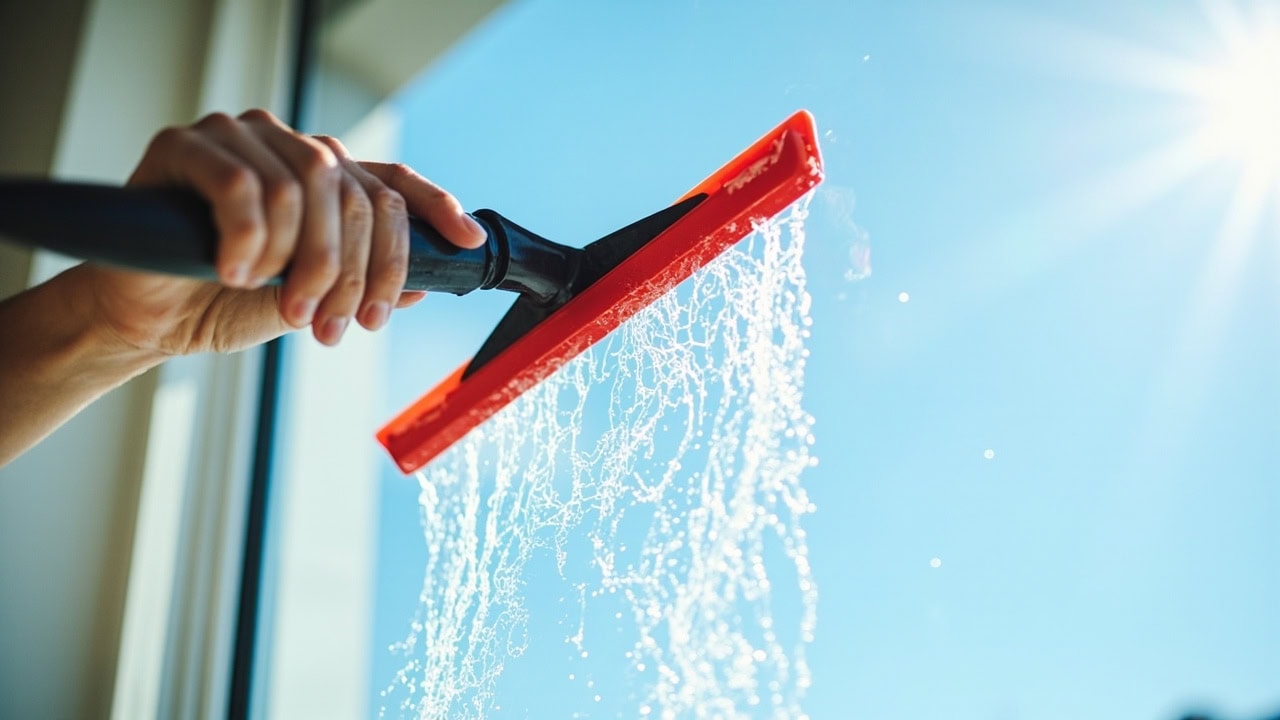
How to Clean Windows Without Streaking

Windows must be cleaned with a streak-free technique using a squeegee and a 1:10 vinegar-to-water solution applied to a microfiber cloth, then dried immediately with a 100% cotton cloth or chamois — cleaning in direct sunlight causes rapid evaporation that leaves mineral deposits and streaks behind. The key to preventing streaks is working from top to bottom in overlapping horizontal strokes while keeping the squeegee blade at a 45-degree angle to the glass surface.
Streak-free window cleaning depends on three variables: the chemical composition of your cleaning solution, the physical technique used to remove liquid from glass, and the environmental conditions during cleaning. White distilled vinegar contains approximately 5% acetic acid by volume, which dissolves grease films and light mineral deposits on glass at a pH of roughly 2.4–2.5. When diluted at a 1:10 ratio with distilled water, the solution provides sufficient cleaning power without leaving surfactant residue — the primary cause of visible streaking on glass surfaces.
What You Need Before You Start
Gathering the correct materials before you begin prevents mid-cleaning interruptions that allow solution to dry on the glass. Every item on this list serves a specific function in the streak-free cleaning process, from dissolving contaminants to physically removing them without leaving residue behind.
- Distilled or filtered water — Tap water contains dissolved calcium and magnesium minerals (measured as grains per gallon of hardness) that remain on glass as white spots and filming when the water evaporates. Distilled water eliminates this mineral source entirely.
- White distilled vinegar — The acetic acid in white vinegar (approximately 5% concentration, pH 2.4–2.5) breaks down grease and dissolves alkaline mineral buildup on glass surfaces without depositing surfactant films.
- Clean spray bottle — Use a bottle that has not previously contained soap or chemical cleaners, as residual surfactants will contaminate your streak-free solution.
- Microfiber applicator pad or lint-free cloth — Microfiber traps dirt particles within its fine fibers rather than pushing them across the glass surface, reducing the risk of micro-scratching.
- Rubber squeegee with fresh replacement blade — A sharp, flexible rubber blade creates the consistent contact pressure needed to sheet liquid cleanly off glass. Worn or nicked blades leave streaks by allowing liquid to pass beneath uneven sections.
- 100% cotton chamois or lint-free drying cloth — Cotton absorbs residual moisture without depositing lint. Avoid blended fabrics, which may contain polyester fibers that shed onto the glass.
- Optional: commercial glass cleaner labeled streak-free — For those who prefer not to mix their own solution, a quality streak-free glass cleaner provides a pre-measured alternative. See our comparison of vinegar versus commercial glass cleaners for detailed performance data.
Step-by-Step: Clean Windows Without Streaking
Follow these six steps in sequence. Each step builds on the previous one — skipping any step or performing them out of order will compromise the streak-free result. The entire process for an average residential window (approximately 3 by 4 feet) takes roughly 3 to 5 minutes once you have prepared your materials.
- Prepare your solution — Mix one part white vinegar to ten parts distilled water in a clean spray bottle. For a standard 16-ounce spray bottle, combine roughly 1.5 ounces of vinegar with 14.5 ounces of distilled water. The acetic acid in vinegar cuts through grease while this dilution prevents residue buildup that occurs at higher concentrations.
- Choose the right time — Clean windows on a cloudy day or in early morning and late evening hours. Direct sunlight heats glass surfaces to temperatures significantly above ambient air, causing cleaning solution to evaporate within seconds — far faster than you can squeegee. This rapid evaporation concentrates dissolved minerals and soap residues into visible streaks and water spots before they can be physically removed.
- Apply solution to microfiber, not directly to glass — Spray your vinegar solution onto the microfiber applicator pad until it is damp but not dripping. Wiping the applicator across the glass distributes an even, thin film of cleaning solution. Spraying directly onto the window causes over-saturation, uneven coverage, and solution running down to the frame where it pools and is difficult to remove completely.
- Wipe in a single direction pattern — Using your dampened microfiber cloth, wipe the entire window surface in overlapping horizontal strokes from top to bottom. Overlap each stroke by approximately one inch to ensure no areas are missed. This top-to-bottom pattern uses gravity to your advantage — loosened dirt and solution flow downward into areas you have not yet cleaned, preventing redeposition of contaminants onto cleaned glass.
- Squeegee immediately — Before the solution begins to dry, drag the squeegee from the top of the window downward in straight, overlapping vertical strokes. Hold the squeegee blade at a 45-degree angle to the glass surface — this angle maximizes the blade-to-glass contact area while maintaining enough downward pressure to sheet liquid cleanly. Wipe the squeegee blade dry with your lint-free cloth after every single pass. A wet blade redeposits liquid onto the glass, negating the purpose of the stroke.
- Dry immediately with 100% cotton — Once the squeegee has removed the bulk of the liquid, immediately buff any remaining moisture with a 100% cotton chamois or lint-free cloth. Use light circular motions across the entire surface, paying particular attention to edges and corners where liquid tends to collect. Check your work by viewing the glass at a 45-degree angle to reflected light — this angle reveals any remaining film, water spots, or streaks that are invisible when looking straight at the surface.
Why Your Windows Streak (The Mechanism)
Understanding the physical and chemical mechanisms behind streak formation helps you diagnose and prevent the problem rather than relying on trial and error. Streaks on glass are visible because they create microscopic variations in surface smoothness that scatter light unevenly — the same principle that makes a drop of water on a screen door visible. Two primary mechanisms produce these surface variations.
Mineral Deposit Streaks
Tap water contains dissolved calcium carbonate and magnesium ions — the same minerals that create scale inside kettles and on shower doors. When tap water evaporates on glass, these minerals crystallize into a thin white or gray film that bonds to the silica surface. According to the United States Geological Survey (USGS), water is classified as “hard” at concentrations above 120 milligrams per liter of calcium carbonate equivalent. At these levels, even a thin film of water left to air-dry will deposit visible mineral residue. Using distilled water, which has been processed to remove these dissolved solids, eliminates this entire class of hard water deposits.
Surfactant Residue Streaks
Soap-based and detergent-based glass cleaners contain surfactants — molecules with a hydrophilic (water-attracting) head and a lipophilic (oil-attracting) tail that emulsify grease. While effective at lifting dirt, surfactants leave behind a molecular film when the carrier liquid evaporates. This film creates the cloudy, smeared appearance most people recognize as “streaks.” The 1:10 vinegar solution avoids this problem entirely because acetic acid evaporates without leaving a surfactant residue — it breaks down into water vapor and carbon dioxide as it dries.
Mechanical Streaks from Worn Blades
A squeegee blade that is nicked, warped, or worn cannot maintain uniform contact with the glass surface. Even a gap of a fraction of a millimeter allows a thin film of liquid to pass beneath the blade. This liquid dries in place, creating a visible streak line that follows the path of the blade defect. Inspect your squeegee blade before each use by running your finger along the rubber edge — if you feel any nicks, flat spots, or waviness, replace the blade. Most professional window cleaners replace squeegee blades every 3 to 6 months depending on frequency of use.
What NOT to Use on Windows
Many common household cleaning tools and products cause more harm than good on glass surfaces. Avoiding these items is just as important as using the correct technique.
- Paper towels or newspaper — Paper towels contain wood pulp fibers that lint and can micro-scratch glass over repeated use. Newspaper, often recommended as a traditional cleaning hack, contains wood fibers, clay coatings, and petroleum-based inks that leave gray residue on window frames and your hands. Neither material matches the cleaning effectiveness or safety of a rubber squeegee.
- Soap-based dishwashing liquid — Dish soaps are formulated with surfactants designed to emulsify cooking grease on dishes, not to leave glass surfaces clear. Even a few drops of dish soap in your cleaning solution will leave a greasy surfactant film that attracts dust and creates filming within hours of cleaning.
- Ammonia-based cleaners in direct sunlight — Ammonia evaporates faster than water at room temperature, and this rate accelerates dramatically on sun-heated glass. The rapid evaporation causes the cleaner to dry before you can physically remove it with a squeegee, leaving concentrated chemical residue in visible streak patterns.
- Abrasive scrubbers or scouring pads — Glass has a Mohs hardness of approximately 5.5, which means abrasive scrubbing pads can micro-scratch the surface. These scratches are not immediately visible but accumulate over time, creating a permanent hazy appearance that cannot be reversed without professional polishing.
- Dirty or worn squeegee blades — A blade that has picked up grit or has visible wear marks cannot form the continuous seal with the glass surface that is required for streak-free squeegeeing. Dirt on the blade also redeposits onto the glass, negating your cleaning effort.
Drying and Finishing Windows
The drying and finishing stage is where the difference between an acceptable result and a truly professional, streak-free result becomes apparent. After squeegeeing, any residual moisture that remains on the glass will air-dry and deposit whatever dissolved solids it contains — whether minerals from incomplete distilled water coverage or trace contaminants from the environment.
Use a 100% cotton chamois or a dedicated lint-free glass cloth in a buffing motion across the entire pane. Work systematically from one corner to the opposite corner, overlapping your buffing passes. The cloth should be dry and clean — a damp or dirty cloth will smear rather than absorb. For best results, keep separate cloths for interior and exterior windows, as exterior glass typically has heavier soil loads that can contaminate a cloth and redeposit on interior surfaces.
Check for streaks by standing to the side of the window and viewing the glass at approximately a 45-degree angle to reflected light. This oblique angle reveals any remaining film, water spots, or streaks that are invisible when looking perpendicular to the surface. If you find streaks, re-buff only the affected area with a clean section of your drying cloth — do not reapply cleaning solution, as this will compound the problem.
For stubborn hard water deposits around window frames and sills, apply full-strength white vinegar directly to the deposit and allow it to dwell for 2 to 3 minutes. The higher concentration of acetic acid dissolves the calcium and magnesium carbonate minerals that form these deposits. After the dwell time, wipe clean with a microfiber cloth and squeegee dry. For severe buildup, a razor blade scraper held at a 45-degree angle to the glass can mechanically remove heavy deposits before chemical cleaning — but test on an inconspicuous area first, as scraper technique on glass requires practice to avoid scratching.
Common Streaking Mistakes
Even with the right materials, specific technique errors consistently produce streaks. Review this checklist before and after each window cleaning session to identify and correct the most frequent mistakes.
- Cleaning in direct sunlight rather than shade — Sun-heated glass causes solution to evaporate in seconds, far faster than any squeegee technique can remove it. Always wait for cloud cover or clean during early morning and late evening.
- Using tap water instead of distilled water — Even if your tap water is only moderately hard (61–120 mg/L calcium carbonate), the minerals it deposits will appear as white filming when the water evaporates. Distilled water eliminates this variable completely.
- Applying too much cleaning solution — Over-saturating the glass with solution creates a thicker liquid film that takes longer to squeegee away. In the extra seconds required, partial evaporation begins at the edges, producing uneven drying patterns visible as streaks.
- Skipping the squeegee and relying only on wiping — No cloth, regardless of material, can physically lift and remove liquid from glass as completely as a rubber squeegee blade. Wiping spreads liquid into a thinner film that dries faster but still deposits whatever dissolved solids it contains. Using a worn or damaged squeegee blade — A blade with nicks, flat spots, or visible waviness creates gaps in the seal against the glass, allowing liquid to pass through and dry in streak patterns that mirror the blade defect.
- Failing to wipe the blade dry between strokes — Each squeegee stroke leaves a thin film of liquid on the rubber blade. If you do not wipe it dry before the next stroke, that residual liquid redeposits onto the glass in a line that dries as a visible streak.
- Working from bottom to top — Cleaning upward fights gravity: loosened dirt and excess solution drip down onto areas you have already cleaned, redepositing contaminants that produce visible streaks and spots.
If you are also dealing with dirty screens that contribute dust and debris to your windows, our guide on how to clean window screens without removing them covers the complementary process. Clean screens reduce the frequency of window cleaning by blocking dust and pollen before they reach the glass surface. For the complete picture on glass cleaning techniques, tools, and solutions, see our Window and Glass Cleaning Guide.
Frequently Asked Questions
Q: Can I use newspaper instead of a squeegee to clean windows?
A: No — newspaper contains wood pulp fibers that lint, scratch glass over time, and leave gray ink residue on window frames and fingers. Use a rubber squeegee for streak-free results or a 100% cotton microfiber cloth for wiping only.
Q: Why do my windows streak even after using a squeegee?
A: Worn squeegee blades are the most common cause — replace blades every 3 to 6 months depending on use frequency. Also verify you are using distilled water rather than tap water, cleaning in shade rather than direct sun, and wiping the blade dry with a lint-free cloth after each pass before continuing.
Q: Can I use vinegar on tinted windows?
A: Yes — vinegar is safe on most window tint films because its mild acidity does not degrade polyester-based tint material. However, avoid ammonia-based cleaners, which can break down the adhesive layer bonding the tint film to the glass over time. Test any new cleaner on a small corner area first and avoid scrubbing aggressively on tinted surfaces.
Q: How do I prevent streaking on windows that have hard water deposits?
A: Hard water deposits require a stronger 1:1 vinegar-to-water solution applied directly to the deposit. Allow it to dwell for 2 to 3 minutes — this gives the acetic acid time to dissolve the calcium and magnesium carbonate minerals. Then wipe clean with a microfiber cloth and squeegee dry. For severe buildup, a razor blade scraper held at a 45-degree angle can mechanically remove heavy deposits before chemical cleaning. For more on related glass cleaning challenges, see our Kitchen Cleaning Guide, which covers glass cooktop cleaning using similar glass-safe principles.
References
- National Center for Biotechnology Information. (2024). Acetic Acid Compound Summary (CID 176). PubChem.
- U.S. Geological Survey. (2018). Water Hardness. USGS Water Science School.
- American Cleaning Institute. (2023). Glass and Window Cleaning Tips. Cleaning Institute.


