
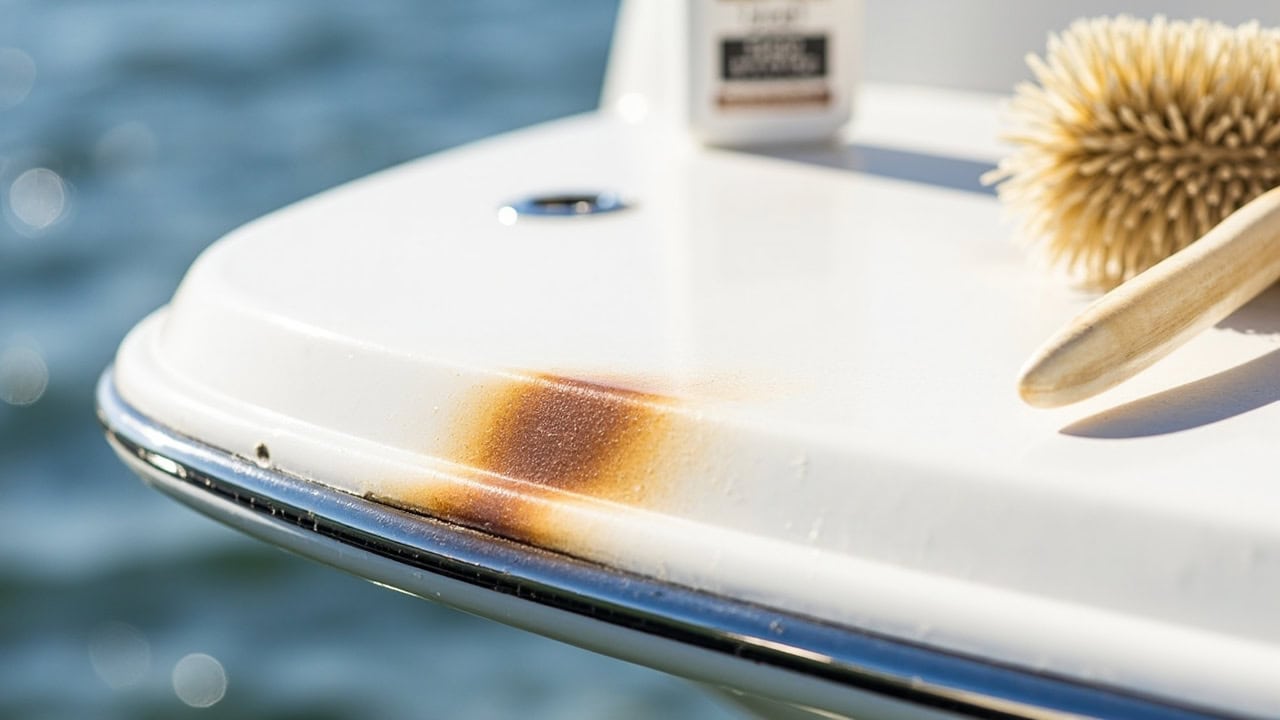
How to Remove Waterline Stains from Boat Hull

Waterline stains on boat hulls are removed by applying a diluted acid-based hull cleaner (pH 1–3) or a 1:1 white vinegar solution directly to the stained area, allowing 5–15 minutes of dwell time, then scrubbing with a soft-bristled brush and rinsing thoroughly with fresh water. The stains form when mineral deposits — primarily calcium carbonate and magnesium hydroxide — bond to the gelcoat or painted surface through a combination of evaporation concentration and electrochemical reaction with metal components in the water. Acid-based cleaners containing phosphoric acid or oxalic acid dissolve these mineral bonds at the molecular level, restoring the hull surface without damaging the underlying finish when used correctly.
Oxidizing agents like sodium hypochlorite can lighten organic stains but do not dissolve mineral deposits effectively without an acid component. For boat owners seeking a reliable removal method, understanding the chemistry behind both the stain formation and the cleaning process is essential for choosing the right product and technique for your specific hull material.
What Causes Waterline Stains on Boat Hulls
Waterline stains develop at the precise boundary where the hull meets the water surface — a zone of constant wetting, evaporation, and re-exposure. Each cycle leaves behind dissolved minerals that accumulate into a visible film over time. In freshwater environments, the primary culprits are calcium carbonate and magnesium hydroxide, which precipitate out of solution as water evaporates. In saltwater, sodium chloride crystals combine with trace metals to form a harder, more adhesive stain layer.
Iron oxide and copper residue from underwater metals — propellers, shafts, seacocks, and through-hull fittings — bleed into the stain layer through galvanic corrosion. Anti-fouling bottom paints containing copper oxide or zinc pyrithione also contribute metallic compounds that tint the mineral film brown, green, or rust-colored. The result is a composite stain that bonds both chemically and mechanically to the hull surface.
Organic matter compounds the problem further. Algae, plankton, and biofilm adhere readily to the rough mineral layer, creating dark discoloration that is especially visible on white or light-colored gelcoat. This biological component thrives in the nutrient-rich zone at the waterline where sunlight penetrates and oxygen is abundant. Different water compositions produce characteristically different stains: hard freshwater lakes leave chalky white deposits, brackish coastal waters create yellow-brown tannin stains, and full-salt marine environments produce the most tenacious mineral-metal-organic composite stains.
What NOT to Use on Boat Hull Waterline Stains
Choosing the wrong cleaning method can cause permanent damage to gelcoat, painted surfaces, or metal hardware. Abrasive scrubbers, scouring pads, and sandpaper create micro-scratches in the gelcoat resin that trap future stain particles faster, accelerating the very problem you are trying to solve. These micro-abrasions also degrade the UV-protective layer, leading to faster oxidation and chalkiness over time.
Chlorine bleach at concentrations above 20% degrades gelcoat resin and strips protective wax coatings, leaving the surface more vulnerable to staining within days. More critically, never mix acid-based hull cleaners with chlorine bleach — this combination produces toxic chloramine gas, which causes severe respiratory injury. Wire brushes and steel wool must also be avoided; they leave behind microscopic metal particles that trigger galvanic corrosion and produce rust staining that is far more difficult to remove than the original waterline stain.
Acetone and strong petroleum-based solvents can dissolve gelcoat resin and soften painted surfaces, particularly on older hulls where the protective layer has already thinned. Even household degreasers containing sodium metasilicate or sodium carbonate can raise the surface pH high enough to etch aluminum hulls. Always select a cleaner that is specifically formulated for your hull material and follow the manufacturer’s dilution recommendations precisely.
Step-by-Step Waterline Stain Removal
Materials Needed
- Acid-based hull cleaner (phosphoric acid or oxalic acid based, pH 1–3) OR white distilled vinegar (5% acetic acid, pH 2.5)
- Soft-bristled hull brush or long-handled scrub brush with nylon or natural-fiber bristles
- Fresh water hose with adjustable nozzle
- Chemical-resistant gloves and safety glasses
- Marine-grade paste wax or polymer hull sealant
- Bucket for dilution (if using concentrated hull cleaner)
Removal Steps
- Rinse the hull thoroughly with fresh water from top to bottom to remove loose debris, surface salt, and any loose organic growth. This prevents rubbing grit into the gelcoat during scrubbing.
- Apply the acid-based hull cleaner directly to the stained waterline area. If using a commercial hull cleaner, apply it undiluted unless the manufacturer specifies otherwise. If using white vinegar, apply it at full strength or diluted 1:1 with water. Work in sections no larger than 6–8 feet to maintain control over the dwell time.
- Allow the cleaner to dwell for 5–15 minutes without letting it dry completely on the surface. Acid-based hull cleaners dissolve mineral bonds through a chemical reaction that requires sustained contact time. If the surface begins to dry, reapply a light mist of cleaner to keep it active. Do not exceed 20 minutes of total dwell time on gelcoat surfaces.
- Scrub the stained area using a soft-bristled brush, working in small 2–3 foot sections with moderate pressure. Use overlapping strokes and let the chemical action do most of the work — excessive mechanical force damages the gelcoat. You will see the stain begin to lift and dissolve as you scrub.
- Rinse each section immediately after scrubbing using fresh water at standard hose pressure. Preventing cleaner residue from drying on the surface is critical — dried acid residue can etch gelcoat and leave permanent hazy marks that require compounding to remove.
- For stubborn brown or rust-colored stains that persist after the first pass, apply a second coat of hull cleaner and allow 10 additional minutes of dwell time. Oxalic acid-based products are particularly effective on iron oxide stains because they chelate the iron ions, converting insoluble rust into water-soluble iron oxalate that rinses away cleanly.
- Rinse the entire hull with fresh water from top to bottom, ensuring every trace of cleaner is removed. Pay special attention to areas near through-hull fittings, transom corners, and the chine where runoff can pool and concentrate.
- Allow the hull to dry completely — typically 1–2 hours in warm, dry conditions — before applying a marine-grade paste wax or polymer hull sealant. This protective layer is essential for preventing rapid stain recurrence.
How to Prevent Future Waterline Stain Buildup
Prevention is significantly less effort and expense than repeated stain removal. The single most effective preventive measure is applying a fresh coat of marine-grade wax or polymer hull sealant after every cleaning. This creates a hydrophobic barrier that prevents mineral deposits from bonding directly to the gelcoat, making future stains far easier to rinse away without chemical cleaners. Most marine paste waxes provide 3–4 months of protection; polymer sealants can last up to 6 months.
Rinsing the hull with fresh water after every saltwater outing removes salt crystals and dissolved minerals before they can concentrate and bond. This simple habit, which takes only 5–10 minutes, dramatically reduces stain severity over the course of a season. Using a hull cover or storing the vessel on a trailer or lift when not in use eliminates waterline exposure entirely — the most reliable prevention method for boats that do not need to remain moored.
Schedule a full hull cleaning at least once per season or every 100 hours of water use, whichever comes first. For vessels that sit in water continuously, consider applying bottom paint with anti-fouling properties to the waterline area — copper-based or zinc-based anti-fouling paints inhibit both mineral adhesion and biological growth. Keep the waterline area free of barnacles, algae, and other growth, as these organisms trap and concentrate stain-causing minerals against the hull surface, creating deeply embedded composite stains that require aggressive removal.
Understanding Different Hull Materials and Stain Resistance
Not all hull surfaces respond the same way to waterline staining or to cleaning methods. The table below compares the five most common hull materials, their stain resistance characteristics, and the appropriate cleaning approach for each. Using the wrong cleaner on a sensitive material can cause permanent cosmetic or structural damage.
| Hull Material | Stain Resistance | Recommended Cleaner Type | Special Considerations |
|---|---|---|---|
| Gelcoat (fiberglass) | Moderate | Phosphoric acid-based hull cleaner (pH 1–3) | Wax after cleaning to restore protective barrier; avoid dwell times over 20 minutes |
| Painted hull | Moderate to Low | Mild acid (pH 2–3) or vinegar solution | Test on an inconspicuous area first — some marine paints are sensitive to strong acids |
| Aluminum | High | Aluminum-safe acid cleaner or white vinegar | Never use alkaline or caustic cleaners, which etch aluminum through amphoteric dissolution |
| Wooden hull | Low | Mild detergent or specialized wood hull cleaner | Saltwater intrusion causes wood fiber degradation; avoid prolonged acid exposure |
| Steel hull | High | Acid-based industrial hull cleaner | Monitor for rust pit formation in stained areas; apply rust-inhibiting primer after cleaning |
Gelcoat is the most common hull finish on recreational boats and offers moderate stain resistance due to its dense, non-porous polyester resin surface. However, gelcoat develops micro-porosity over years of UV exposure, which increases its susceptibility to staining. Regular waxing fills these microscopic pores and maintains the surface barrier. For deeper guidance on maintaining gelcoat surfaces, see our guide on how to clean and maintain boat hull gelcoat.
Aluminum hulls found on many fishing boats and work vessels are highly stain-resistant but require careful cleaner selection. Aluminum is amphoteric — it reacts with both strong acids and strong alkalis. Phosphoric acid-based cleaners formulated specifically for aluminum are safe because they passivate the surface with a thin iron phosphate layer that actually improves corrosion resistance. White vinegar at 5% acetic acid concentration is also safe for aluminum when rinsed promptly after use. For related stain challenges, our article on how to remove rust stains from boat surfaces covers metallic stain chemistry in detail.
For more specialty cleaning techniques across different surfaces and materials, visit our comprehensive specialty cleaning guide. If you are working with tile or grout surfaces in marine bathrooms or galley areas, our floor cleaning complete guide covers acid-based cleaning methodology for mineral deposits on similar hard surfaces.
Frequently Asked Questions
Q: What causes brown waterline stains on boat hulls?
A: Brown waterline stains on boat hulls are primarily caused by iron oxide and copper oxidation from underwater metal components (propellers, seacocks, through-hulls) and anti-fouling paint leaching — these metallic compounds combine with mineral deposits from evaporated water to form a rust-colored stain that bonds strongly to gelcoat and painted surfaces. Galvanic corrosion between dissimilar metals in saltwater accelerates the process significantly.
Q: Can I use vinegar to remove waterline stains from my boat hull?
A: Yes, white distilled vinegar at full strength or diluted 1:1 with water effectively dissolves mineral-based waterline stains on boat hulls through its acetic acid content (5% concentration, pH 2.5), making it safe for regular use on gelcoat, painted surfaces, and aluminum hulls when rinsed thoroughly after cleaning. Vinegar works more slowly than commercial oxalic or phosphoric acid hull cleaners but is an excellent low-cost option for routine maintenance.
Q: Should I pressure wash my boat hull to remove waterline stains?
A: Pressure washing can damage gelcoat surfaces by forcing water into micro-cracks and accelerating delamination — use a pressure washer only at low PSI (under 1200) with a wide-angle fan nozzle, and always apply hull cleaner and scrub manually first to avoid driving stains deeper into the surface. Pressure washing should be used as a supplementary rinse, never as the primary stain removal method.
Q: How often should I clean the waterline stains on my boat hull?
A: Clean waterline stains every 3–4 months if the vessel is stored in water, or once per season if stored out of water — prevention through regular rinsing after each use and annual wax application reduces cleaning frequency and stain severity significantly. Boats kept in warm, nutrient-rich waters may require monthly attention during peak season.
References
- United States Environmental Protection Agency. (2024). Safer Choice Standard for Cleaning Products. EPA.gov.
- American Boat and Yacht Council. (2023). Standards for Boat Construction and Repair — Hull Materials and Finishes. ABYC.
- University of Wisconsin Sea Grant Institute. (2022). Marine Fouling and Hull Maintenance Guide. UW Sea Grant.
- National Marine Manufacturers Association. (2023). Boat Maintenance and Care Best Practices. NMMA.


