
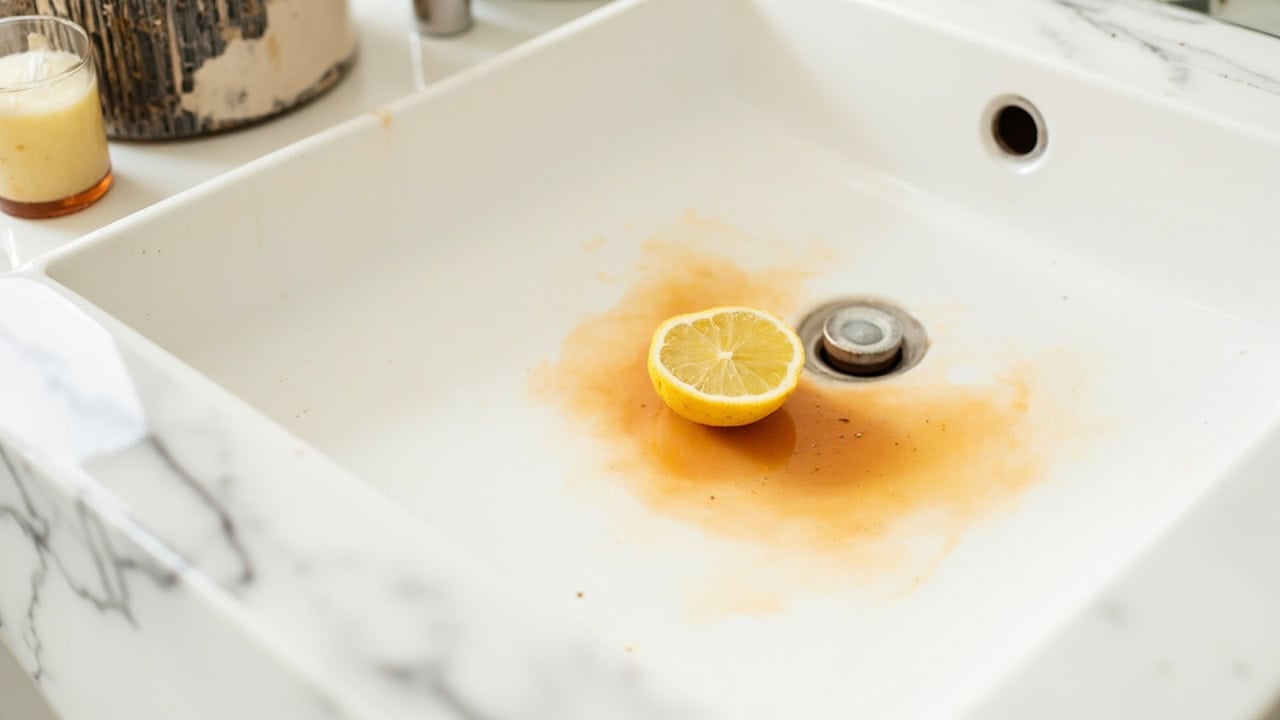
How to Remove Rust Stains from Bathroom Surfaces

Rust stains from bathroom surfaces are removed with acidic solutions such as white vinegar or lemon juice applied directly to the stain for 10–15 minutes of dwell time before scrubbing with a non-abrasive brush. The iron oxide deposits that cause rust stains bond chemically to ceramic, porcelain, and fiberglass surfaces through oxidation, making acid-based dissolution the most effective removal method. For stubborn stains, a paste of baking soda and cream of tartar provides gentle abrasive action without damaging bathroom finishes.
Bathrooms are particularly vulnerable to rust staining because of constant moisture exposure, metal plumbing fixtures, and water that may contain dissolved iron. According to the U.S. Environmental Protection Agency, iron concentrations above 0.3 mg/L in household water can cause visible staining on fixtures and surfaces. Understanding the chemistry behind rust formation and dissolution allows you to select the right cleaning agent and technique for each surface type in your bathroom cleaning routine.
What Removes Rust Stains from Bathroom Surfaces
Rust stain removal from bathroom surfaces requires acidic cleaning agents that dissolve iron oxide deposits through a process called chelation. Acids break the chemical bond between iron oxide and the surface by converting insoluble Fe³⁺ compounds into water-soluble complexes that rinse away with clean water. The pH of the cleaning agent determines how effectively it dissolves the stain — lower pH values correspond to stronger dissolving power.
The most effective primary solutions for bathroom rust stain removal include:
- White vinegar — Contains acetic acid at 5–8% concentration with a pH of approximately 2.5, making it the most accessible and cost-effective option for household rust removal
- Lemon juice — Contains citric acid at 5–6% concentration with a pH of approximately 2.0–2.6, offering a natural alternative with a pleasant scent Cream of tartar paste — Contains tartaric acid, providing gentle abrasive action combined with mild acidity at pH 3.5–4.0
- Commercial rust removers — Contain oxalic acid or phosphoric acid at professional concentrations, reserved for severe staining that household acids cannot resolve
Acidic solutions work by chelating the iron ions in rust deposits. During this process, acid molecules form stable coordination complexes with iron atoms, breaking the bond between the rust and the bathroom surface. This chelation converts insoluble iron oxide (Fe₂O₃) into water-soluble iron salts such as iron acetate or iron citrate that dissolve completely during rinsing. The PubChem database maintained by the National Library of Medicine confirms that both acetic acid (CID 176) and citric acid (CID 311) function as effective chelating agents for iron compounds.
Why Rust Stains Bond to Bathroom Surfaces
Rust stains form when iron particles from corroding pipes, fixtures, or metal objects oxidize and chemically bond to bathroom surfaces. This bonding process involves multiple chemical and physical mechanisms that make rust stains resistant to ordinary soap-and-water cleaning.
The Iron Oxidation Process
Iron oxidation follows a two-step electrochemical pathway: elemental iron (Fe⁰) first loses two electrons to form ferrous iron (Fe²⁺), which then loses an additional electron to form ferric iron (Fe³⁺). This Fe⁰ → Fe²⁺ → Fe³⁺ conversion produces stable iron oxide compounds, primarily hematite (Fe₂O₃) and hydrated iron oxide (FeOOH), which appear as the characteristic orange-brown rust stains on bathroom surfaces. Moisture and oxygen together accelerate this conversion, which is why bathrooms — with their constant humidity levels often exceeding 70% — are prime environments for rust formation.
Surface Adsorption and Mineral Precipitation
The bonding mechanism involves four interconnected processes that explain why rust stains adhere so stubbornly to bathroom surfaces:
- Surface adsorption — Porous surfaces like grout, caulk, and unglazed ceramic tile absorb iron particles deeply into their microstructure, making surface-only cleaning insufficient
- Mineral precipitation — Hard water containing dissolved iron leaves mineral deposits on surfaces that oxidize upon air exposure, gradually building visible rust stains
- Moisture acceleration — Constant bathroom humidity accelerates both the initial corrosion of metal fixtures and the subsequent bonding of iron oxide to surrounding surfaces
- Chemical bonding — Iron oxide forms coordination bonds with the silicate and carbonate compounds found in ceramic, porcelain, and tile glazes
This bonding mechanism is critical to understand because it explains why mechanical scrubbing alone cannot remove established rust stains. The chemical bonds between iron oxide and bathroom surfaces require chemical dissolution — specifically acid-based chelation — to break. Simply rubbing harder with soap and water will not sever the ionic bonds holding the stain to the surface. For related mineral deposit issues, see our guide on how to remove hard water from shower doors, as hard water deposits frequently contain dissolved iron that contributes to rust-like staining.
What NOT to Use on Bathroom Surfaces
Certain cleaning products that consumers commonly reach for will actually worsen rust stains or permanently damage bathroom surfaces. Understanding which products to avoid prevents costly surface damage and staining that becomes harder to remove over time.
| Product | Damage Caused | Why |
|---|---|---|
| Bleach (sodium hypochlorite) | Can oxidize iron further, setting stains deeper into the surface | Reacts with iron to form darker iron oxide compounds that bond more aggressively |
| Abrasive powders | Scratches ceramic, porcelain, and gel-coat finishes | Microscopic scratches create pores that trap future stains and accelerate buildup |
| Steel wool or wire brushes | Leaves behind iron particles that cause new rust stains | Iron fragments embed in surfaces and begin oxidizing immediately upon water exposure |
| Harsh chemicals (muriatic acid) | Etches and corrodes bathroom fixtures and glaze | Overly aggressive acid at pH below 1 permanently damages porcelain enamel and gel-coat surfaces |
Bleach deserves special attention because many homeowners instinctively apply it to any bathroom stain. Sodium hypochlorite is a strong oxidizing agent — it adds oxygen to chemical compounds rather than removing it. When bleach contacts iron oxide, it can drive further oxidation, converting orange-brown stains into darker, more stubborn compounds. Similarly, steel wool and wire brushes introduce new iron particles directly into the surface, creating fresh rust stains that compound the original problem.
Step-by-Step Rust Stain Removal Method
The following five-step method uses readily available household products to dissolve and remove rust stains from all common bathroom surface types including porcelain, ceramic tile, fiberglass, and gel-coat finishes.
Required Materials
- White vinegar or lemon juice
- Soft-bristled scrub brush (nylon or natural bristle)
- Clean microfiber cloths
- Baking soda (for stubborn stains)
- Cream of tartar (optional)
- Rubber gloves
Step 1: Prepare the Cleaning Solution
Apply white vinegar directly to the rust stain, ensuring complete coverage of the stained area. For fresh stains, undiluted vinegar at 5% acetic acid concentration works best. Allow the vinegar to penetrate for 10–15 minutes without allowing it to dry — reapply if the surface begins to dry before the full dwell time elapses. The acid needs sustained contact with the iron oxide to break the chemical bonds through chelation. For light stains on porcelain or ceramic, this initial application alone may be sufficient.
Step 2: Apply Mechanical Cleaning Action
After the dwell time has elapsed, use a non-abrasive soft-bristled scrub brush to agitate the stain in circular motions. Apply moderate pressure consistent with the surface type — porcelain enamel can handle firmer pressure, while fiberglass and gel-coat surfaces require gentler treatment to avoid scratching. The combination of dissolved iron oxide and mechanical agitation lifts the stain from the surface. Work from the outer edges of the stain toward the center to prevent spreading the dissolved rust to clean areas.
Step 3: Rinse and Inspect
Rinse the treated area thoroughly with clean water. Use a clean microfiber cloth to wipe away all dissolved rust residue — any remaining iron-bearing solution left on the surface can dry and create a secondary stain. Inspect the area under good lighting. If any stain persists, repeat Steps 1 through 3 before proceeding to the paste treatment. For stains on tiled surfaces, our floor cleaning guide provides additional techniques for grout-specific stain removal.
Step 4: Treat Stubborn Stains with Paste
For persistent stains that resist the vinegar treatment, create a paste by mixing equal parts baking soda and cream of tartar with just enough water to form a thick consistency similar to toothpaste. Apply the paste directly to the stain in a layer approximately 3mm thick, ensuring complete coverage. Let the paste sit for 20–30 minutes — the tartaric acid in cream of tartar provides ongoing chelation while the baking soda adds gentle abrasive action. After the extended dwell time, scrub gently with the soft-bristled brush and rinse thoroughly with clean water.
Step 5: Dry and Prevent Regrowth
Dry the bathroom surface completely with a clean microfiber cloth. Leaving surfaces wet after cleaning allows any remaining microscopic iron particles to re-oxidize and form new stains. Inspect plumbing fixtures for leaks — even a slow drip introduces both moisture and potentially iron-bearing water that will cause stains to return. For comprehensive faucet maintenance that prevents the mineral buildup that contributes to rust staining, see our guide on how to remove hard water from faucets.
How to Prevent Future Rust Stain Buildup
Removing rust stains is only effective long-term when you address the underlying causes that allow iron oxide to form and bond to surfaces. Prevention requires targeting both the source of iron and the bathroom environment that accelerates staining.
- Fix plumbing issues — Repair corroded pipes or replace iron-containing fixtures that serve as the primary source of iron particles. Galvanized steel pipes, common in homes built before 1980, are a frequent contributor to rust staining.
- Improve ventilation — Use exhaust fans during and for 30 minutes after showers to reduce humidity below 60%, slowing both metal corrosion and the moisture-driven bonding of iron oxide to surfaces.
- Wipe surfaces dry — After each use, squeegee shower walls or wipe sink and counter surfaces with a dry cloth to eliminate the standing water that accelerates rust formation.
- Treat water at source — Install water softeners or dedicated iron filters if household water testing reveals iron levels above 0.3 mg/L, the threshold at which the EPA Secondary Drinking Water Standards indicate visible staining begins.
- Use shower mats and organizers — Prevent metal objects such as shampoo bottle lids, razor holders, and soap dishes from sitting directly on wet surfaces where they can corrode and deposit iron.
Regular maintenance cleaning also plays a preventive role. Wiping bathroom surfaces weekly with a mild acidic solution — a 50/50 mixture of vinegar and water — prevents iron oxide deposits from building to the point where they form visible stains. For a complete weekly cleaning protocol, see our complete bathroom cleaning guide.
Common Mistakes When Removing Rust Stains
Even with the right products, incorrect technique can worsen stains or damage surfaces. Understanding these common errors saves time and prevents permanent surface damage.
- Using bleach — Bleach (sodium hypochlorite) is an oxidizer that reacts with iron to darken and set stains rather than remove them. This is the single most common mistake homeowners make when treating rust stains.
- Scrubbing with abrasives — Powdered cleansers and abrasive sponges create microscopic scratches in porcelain glaze and fiberglass gel-coat. These scratches increase surface area and create pores that future stains penetrate more deeply, making each subsequent stain harder to remove.
- Insufficient dwell time — Acid requires a minimum of 10–15 minutes of sustained contact with iron oxide to dissolve the chemical bonds. Wiping the acid off prematurely leaves the stain partially intact and wastes the cleaning effort.
- Ignoring underlying leaks — Surface cleaning without fixing the plumbing or fixture problem that introduced the iron provides only temporary results. The stain will return as long as the iron source and moisture remain.
- Using steel wool — Steel wool sheds iron fragments that embed in bathroom surfaces and immediately begin oxidizing upon water exposure. You end up replacing the original rust stain with dozens of new micro-stains.
For stains specifically on toilet surfaces — where the constant presence of standing water creates unique challenges — see our detailed guide on how to remove toilet bowl stains. Toilet bowl rust stains often require adjusted techniques because of the curved porcelain surface and continuous water exposure.
Frequently Asked Questions
Q: Does vinegar remove rust stains from bathroom tiles?
A: Yes, white vinegar effectively removes rust stains from bathroom tiles when applied with 10–15 minutes of dwell time followed by scrubbing with a soft brush and thorough rinsing. The 5% acetic acid concentration in standard household vinegar provides sufficient chelating power to dissolve iron oxide deposits on both glazed ceramic and porcelain tile surfaces. For grout lines with rust stains, apply undiluted vinegar directly into the grout using a small brush or cotton swab, allow 15 minutes of dwell time, then scrub along the grout line with a grout brush and rinse thoroughly.
Q: Can I use lemon juice instead of vinegar to remove rust?
A: Lemon juice is an effective rust stain remover due to its citric acid content, though it is slightly less concentrated than white vinegar. Fresh lemon juice at 5–6% citric acid concentration provides effective chelation, and you should allow 15–20 minutes of dwell time before scrubbing. Lemon juice offers the advantage of leaving a pleasant citrus scent after cleaning. For best results, use freshly squeezed lemon juice rather than bottled varieties, which may contain preservatives that dilute the acid concentration.
Q: What is the best rust stain remover for porcelain sinks?
A: For porcelain sinks, a paste made from baking soda and cream of tartar mixed with water provides the best balance of cleaning power and surface safety. The tartaric acid in cream of tartar chelates the iron oxide while the baking soda provides gentle mechanical abrasion that will not scratch the porcelain glaze. Apply the paste in a 3mm layer, let it sit for 20–30 minutes, then scrub gently with a soft-bristled nylon brush and rinse thoroughly with clean water. This method is safe for all porcelain finishes including both vitreous china and fireclay sinks.
Q: How do I prevent rust stains in my bathroom?
A: Prevent rust stains by fixing any plumbing leaks promptly, improving bathroom ventilation to reduce humidity below 60%, wiping surfaces dry after each use, and installing a water softener or iron filter if your water supply contains iron levels above 0.3 mg/L. Regularly clean metal fixtures to prevent corrosion buildup, and avoid leaving metal objects sitting in standing water on bathroom surfaces. A weekly wipe-down with a 50/50 vinegar and water solution prevents iron oxide from accumulating to visible levels.
References
- National Library of Medicine. (2025). Acetic Acid, CID 176. PubChem Database.
- National Library of Medicine. (2025). Citric Acid, CID 311. PubChem Database.
- U.S. Environmental Protection Agency. (2025). National Primary Drinking Water Regulations. EPA Ground Water and Drinking Water.
- U.S. Environmental Protection Agency. (2023). Secondary Drinking Water Standards: Guidance for Nuisance Chemicals. EPA Office of Water.
- Grassian, V. H. (2005). Environmental Catalysis: A Selected Review of Recent Developments in Surface Science of Metal Oxides. Chemical Reviews, 105(4), 1395–1422.


