
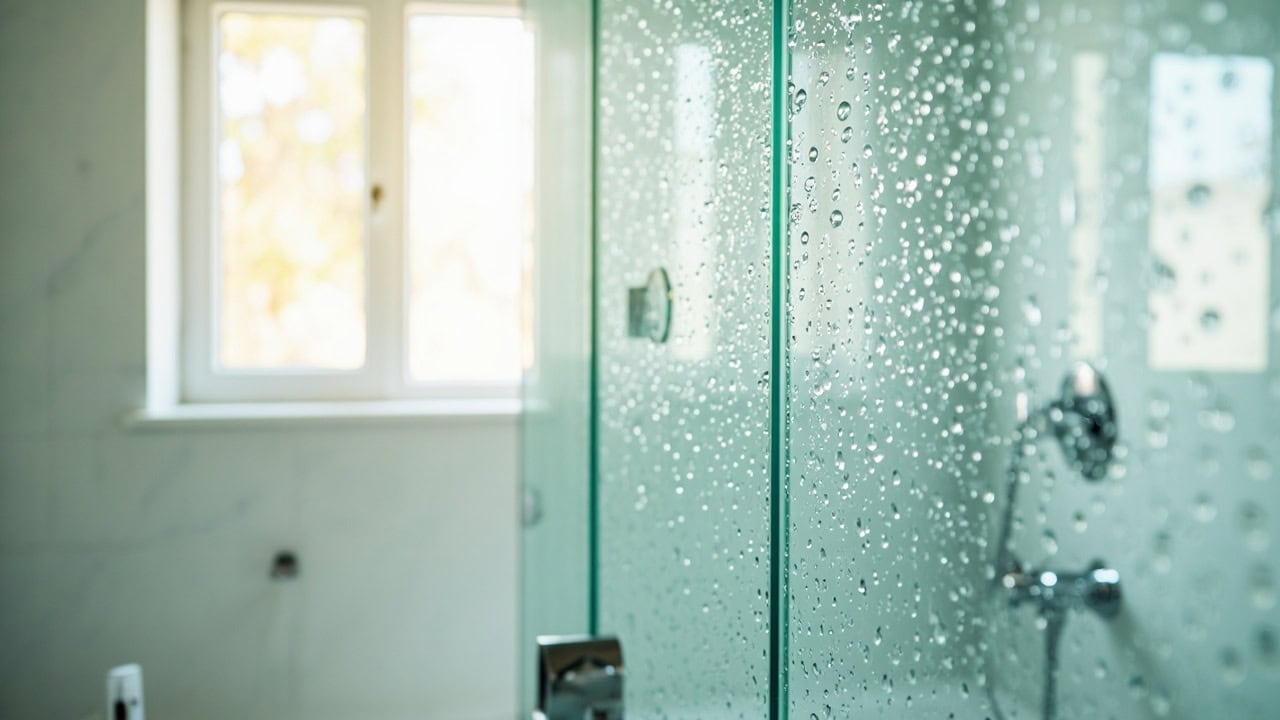
How to Clean Glass Shower Doors: Complete Guide

Glass shower doors must be cleaned with a pH-neutral or mildly acidic cleaner (pH 3–6) using a squeegee after each use and a deep clean with white vinegar solution weekly — alkaline cleaners cause soap scum to polymerize and bond harder to the glass surface, while abrasive tools create microscopic scratches that accelerate future staining. The most effective approach combines daily water removal with weekly acidic cleaning to dissolve calcium carbonate and magnesium stearate deposits before they etch into the glass.
White distilled vinegar (4–8% acetic acid, pH 2.4) dissolves hard water deposits by reacting with calcium carbonate at the molecular level, converting insoluble CaCO₃ into water-soluble calcium acetate. This reaction is the scientific basis for why vinegar outperforms alkaline and neutral cleaners on mineral buildup. Combined with proper squeegee technique after every shower, this method prevents both soap scum accumulation and hard water etching — the two primary causes of permanently cloudy glass.
What You Need Before You Start
Tools
- Squeegee — rubber blade, 10–12 inch width, for daily water removal and post-cleaning drying
- Microfiber cloths — 2–3 lint-free cloths for separate rinse, dry, and buff stages
- Soft-bristled brush or non-abrasive scrub pad — for agitating soap scum without scratching glass
- Spray bottle — for applying vinegar and cleaning solutions evenly across the surface
- Extension pole (optional) — for reaching upper portions of tall shower enclosures
Cleaning Agents
Selecting the right cleaning agent depends on the type of contamination and the glass finish. White distilled vinegar is the most versatile option — its acetic acid content (pKa 4.76) reacts with alkaline mineral deposits while remaining safe for clear and tempered glass. pH-neutral commercial glass cleaners are suited for daily maintenance between deep cleans, while baking soda paste provides mild abrasion for stubborn deposits that resist acidic dissolution alone.
Dilution Ratios
| Solution | Dilution | Use Case |
|---|---|---|
| White vinegar | Undiluted or 1:1 with water | Weekly deep clean, soap scum removal |
| pH-neutral cleaner | Ready-to-use | Daily maintenance |
| Dish soap solution | 1–2 drops per 8 oz water | Light cleaning, film removal |
| Baking soda paste | 3:1 water to baking soda | Stubborn hard water stains |
| Isopropyl alcohol | 50:50 with water | Hard water spot removal |
The dilution ratio directly affects cleaning efficacy. Undiluted vinegar (pH 2.4) provides maximum dissolving power for heavy soap scum and mineral deposits, while a 1:1 dilution (approximately pH 2.7) is sufficient for routine weekly cleaning. Dish soap solutions should remain highly diluted — excess surfactant leaves a film on glass that attracts more soap scum over time.
Step-by-Step Cleaning Process
Daily Maintenance (2–3 Minutes)
Daily squeegee use is the single most effective preventive measure for glass shower door maintenance. The United States Geological Survey classifies water hardness by calcium carbonate concentration: soft water contains 0–60 mg/L CaCO₃, while very hard water exceeds 180 mg/L CaCO₃. When hard water evaporates from glass surfaces, it leaves behind calcium carbonate and magnesium hydroxide deposits that become progressively more difficult to remove. Squeegeeing immediately after each shower removes the water before evaporation can concentrate these minerals.
- After showering, use a squeegee to remove all standing water from the glass surface, starting from the top and working downward in overlapping strokes
- Wipe edges, corners, and the frame channel with a dry microfiber cloth where water pools and drains
- Leave the bathroom door open to improve air circulation and speed drying — adequate ventilation reduces ambient humidity by 30–50% in typical residential bathrooms
- Spray a light coat of pH-neutral glass cleaner if desired, then wipe with a clean microfiber cloth for a streak-free finish
Weekly Deep Clean (15–20 Minutes)
- Remove all shampoo bottles, soap dishes, loofahs, and other items from the shower area. Clear the shower floor of any standing water.
- Rinse the glass thoroughly with warm water to loosen surface debris and wet the glass for even solution application.
- Apply white vinegar solution (undiluted for heavy buildup, 1:1 with water for routine cleaning) to the entire glass surface using a spray bottle. Coat the glass evenly from top to bottom.
- Allow the solution a dwell time of 3–5 minutes to dissolve soap scum and hard water deposits. Do not let the vinegar dry on the surface — re-spray if needed in warm environments.
- Scrub gently with a soft-bristled brush or non-abrasive pad using circular motions. Focus on areas with visible soap scum film or water spots.
- For stubborn spots that resist the vinegar treatment, apply baking soda paste (3:1 water to baking soda) directly to the deposit and let sit for 2–3 minutes. The mild abrasive action combined with the chemical reaction between baking soda and residual vinegar creates a fizzing action that lifts adhered deposits.
- Rinse completely with clean warm water, ensuring no cleaning residue remains on the glass or in the frame channel.
- Squeegee off excess water, starting from the top corner and pulling across in smooth, overlapping strokes at a 45-degree angle.
- Dry with a clean, dry microfiber cloth using an “S” pattern motion to prevent streaking and lint transfer.
Monthly Treatment for Hard Water Deposits
In areas with hard or very hard water (above 120 mg/L CaCO₃), weekly vinegar cleaning may not fully prevent mineral deposit accumulation. A monthly isopropyl alcohol treatment targets calcium carbonate deposits that have begun to bond with the glass surface. The alcohol reduces surface tension, allowing the solution to penetrate the porous structure of the mineral layer more effectively than water-based solutions alone.
- Apply isopropyl alcohol solution (50:50 with water) to affected areas using a spray bottle or saturated cloth.
- Allow 2–3 minutes contact time for the alcohol to penetrate the mineral deposit layer.
- Rub gently with a soft cloth until deposits dissolve. For persistent deposits, follow with vinegar application.
- Rinse thoroughly with warm water and dry following the standard weekly process.
Glass Shower Door-Specific Considerations
What Damages Glass Shower Doors
Glass shower doors are vulnerable to specific chemical and physical damage that permanently degrades their appearance. Understanding these damage mechanisms is essential for selecting safe cleaning methods and products.
- Abrasive cleaners (powdered cleansers, steel wool, scrub sponges) — create microscopic scratches that trap soap scum and hard water minerals, making future cleaning progressively harder with each use.
- Bleach-based cleaners — degrade rubber seals, corrode chrome fixtures, and strip protective coatings on treated glass. Sodium hypochlorite oxidizes metal surfaces, accelerating dezincification in brass-based fixtures.
- Alkaline cleaners with high pH (>9) — cause soap scum to saponify and bond more strongly to glass. Soap scum forms when the sodium salts of fatty acids in soap react with calcium and magnesium ions in hard water, producing insoluble calcium stearate and magnesium stearate. Alkaline environments promote this saponification reaction.
- Leaving standing water — hard water deposits form when minerals in water evaporate; each evaporation cycle leaves a mineral layer that builds over time. In very hard water areas (above 180 mg/L CaCO₃), visible etching can develop within weeks without squeegee use.
- Acidic cleaners on coated or tinted glass — can strip hydrophobic coatings, anti-spot treatments, and tint layers. Always test on an inconspicuous area before applying vinegar or alcohol solutions to specialty glass.
Types of Glass Finishes
All modern shower doors use tempered glass — a safety requirement under the International Building Code. Tempered glass has a minimum surface compression of 69 MPa, making it approximately four times stronger than annealed glass. When broken, it shatters into small, granular pieces rather than sharp shards. While the tempering process strengthens the glass physically, it does not change its chemical susceptibility to mineral etching or soap scum adhesion.
- Clear glass: Most susceptible to visible hard water spots and soap scum film. Shows every water droplet and mineral trace, requiring the most diligent maintenance routine.
- Frosted or etched glass: The acid-etched surface diffuses light, hiding minor water spots and soap residue. However, the textured surface traps contaminants in microscopic pits and requires gentler cleaning — no abrasive tools or powders.
- Tempered glass: Standard for all residential and commercial shower enclosures. More resistant to thermal shock but shares the same chemical vulnerabilities as annealed glass.
- Coated glass (anti-spot, Easy Clean, hydrophobic): Factory-applied coatings cause water to bead and sheet off, reducing deposit formation. These coatings degrade with harsh chemicals — avoid undiluted vinegar, bleach, and abrasive cleaners. Use only pH-neutral cleaners on coated surfaces.
Drying and Finishing Glass Shower Doors
Proper drying technique separates a streak-free glass shower door from one that looks worse after cleaning than before. The drying stage removes the mineral-laden rinse water before it can evaporate and redeposit on the glass surface. Using microfiber cloths — which absorb up to seven times their weight in water without leaving lint — is critical for the final finish.
- Use a clean, dry squeegee to remove the majority of water. Wipe the blade with a cloth after each pass to prevent redepositing water and minerals.
- Wipe all edges and corners where water pools — the bottom frame channel, door hinges, and soap shelf ledges are the most common areas for trapped moisture.
- Use a lint-free microfiber cloth for final buffing. Microfiber cloths with a tight weave (200 GSM or higher) produce the best streak-free results.
- Buff in circular motions or “S” patterns — never back-and-forth, which creates visible streak lines under bathroom lighting.
- Leave the shower door slightly open to prevent moisture buildup in the frame channel, which promotes mold growth and corrosion of metal components.
- For chrome or metal frames, dry immediately after contact with any cleaning solution to prevent water spots and dezincification of brass-based components.
Common Mistakes to Avoid
| Mistake | Why It Causes Problems | Correct Approach |
|---|---|---|
| Using paper towels | Leave behind fibers and cause micro-scratches on the glass surface | Use lint-free microfiber cloths only |
| Spray and walk away | Vinegar and cleaners need dwell time to dissolve mineral bonds | Allow 3–5 minutes contact time before scrubbing |
| Using the same cloth for everything | Spreads dissolved contaminants rather than removing them | Use separate cloths for rinse, dry, and buff steps |
| Ignoring the frame and caulk | Trapped moisture causes mold growth and metal corrosion | Wipe dry and keep well-ventilated; see our shower caulk and grout cleaning guide |
| Over-wetting during cleaning | Creates opportunity for hard water deposits to form from the cleaning solution itself | Use spray bottles for controlled application, not flooding |
| Skipping daily squeegee | Soap scum and minerals accumulate daily without removal | Squeegee after every shower use — 30 seconds prevents hours of scrubbing |
Each of these mistakes compounds over time. A glass shower door that is squeegeed daily and deep-cleaned weekly with vinegar will maintain its clarity indefinitely. Neglecting the routine allows calcium carbonate and calcium stearate to build in layers, each one harder to remove than the last. For more detailed guidance on bathroom maintenance, see our complete bathroom cleaning guide and the floor cleaning guide for bathroom tile and grout care.
Frequently Asked Questions
Q: How often should you clean glass shower doors?
A: Glass shower doors require daily squeegee maintenance (30 seconds) to prevent soap scum buildup, plus a weekly deep clean with vinegar solution (15–20 minutes). In areas with hard water (above 120 mg/L CaCO₃), a monthly treatment with isopropyl alcohol may be needed to remove hard water deposits that resist vinegar cleaning.
Q: What is the best cleaner for glass shower doors?
A: White distilled vinegar (pH 2.4, 4–8% acetic acid) is the most effective and economical cleaner for glass shower doors — it dissolves hard water deposits by converting insoluble calcium carbonate into water-soluble calcium acetate and breaks down soap scum without damaging glass or chrome fixtures. Use undiluted for heavy buildup or 1:1 with water for routine weekly cleaning. Commercial pH-neutral glass cleaners work well for daily maintenance between deep cleans.
Q: Can you use Windex or other glass cleaners on shower doors?
A: Yes, standard ammonia-based glass cleaners like Windex work for daily maintenance on clear, uncoated glass shower doors, but they do not dissolve hard water deposits or soap scum as effectively as vinegar because ammonia lacks the acidic properties needed to break down calcium carbonate and calcium stearate. Avoid using ammonia cleaners on coated or tinted glass, and never mix them with bleach or other cleaning products — combining ammonia and bleach produces toxic chloramine gas.
Q: How do you prevent hard water stains on glass shower doors?
A: Hard water stains are prevented by squeegeeing all standing water from glass after every shower (primary prevention), applying a rain-repellent or protective glass coating quarterly, installing a water softener if hardness exceeds 120 mg/L CaCO₃, and using a water-filtering showerhead to reduce mineral content. The USGS classifies water as hard at 121–180 mg/L CaCO₃ — at these levels and above, preventive measures become essential to avoid permanent glass etching.
References
- United States Geological Survey. (2018). Hardness of Water. USGS Water Science School.
- International Code Council. (2021). International Building Code — Section 2406 Safety Glazing. ICC.
- ASTM International. (2019). ASTM C1048 — Standard Specification for Heat-Strengthened and Fully Tempered Flat Glass. ASTM.
- National Institutes of Health. (2023). PubChem Compound Summary: Acetic Acid. National Library of Medicine.


