
How to Clean A Colt Defender

Regular cleaning ensures the Colt Defender functions reliably and safely. This guide covers complete disassembly, solvent selection, barrel cleaning, and lubrication using industry-recommended procedures for 1911-style pistols.
The Colt Defender—a 3-inch barreled 1911 sidearm—requires cleaning every 500–1,000 rounds fired or after exposure to moisture, sweat, or environmental contaminants. Proper maintenance prevents carbon buildup, removes metal fouling, and protects the aluminum or steel frame from corrosion.
How to Clean a Colt Defender: Step-by-Step
Before starting, always verify your firearm is unloaded in a safe, well-lit environment. Point the barrel in a safe direction and keep your finger off the trigger throughout the entire process. Quality cleaning tools prevent scratches and ensure thorough residue removal from the barrel rifling and internal components.
Step 1: Disassemble the Gun
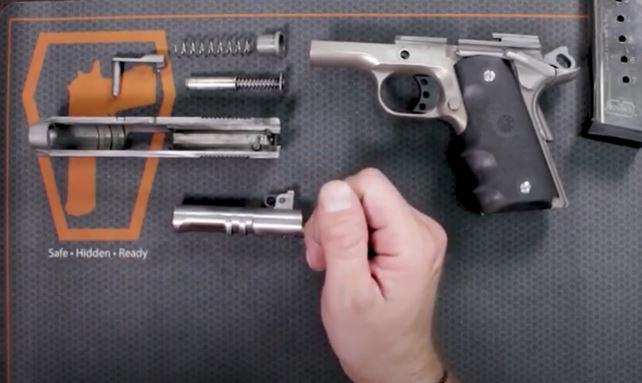
Field-strip the Colt Defender using these steps: (1) Depress the recoil spring plug and rotate the plug 90 degrees to release tension. (2) Align the slide stop with its notch and push it out from the left side. (3) Remove the slide from the frame by pulling it forward. (4) Extract the barrel and recoil spring assembly. This level of disassembly reaches approximately 90% of carbon and fouling buildup areas without specialized tools.
Step 2: Wipe Residue from Components
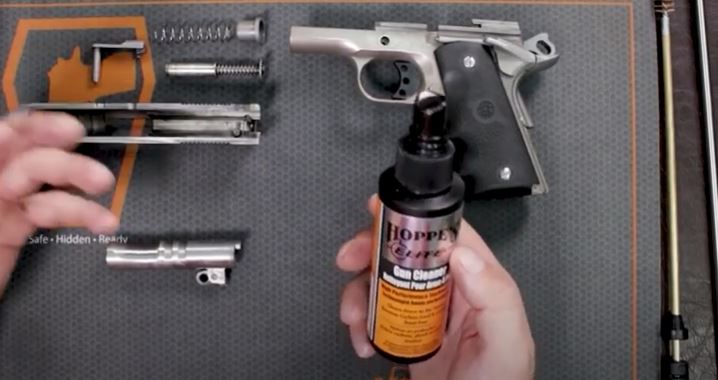
Apply a dedicated firearms solvent such as Hoppes No. 9 or Ballistol to a microfiber cleaning cloth. Solvents with pH values between 6.5 and 8.5 dissolve carbon fouling without damaging gunmetal finishes. Wipe all accessible surfaces, then use cotton swabs dipped in solvent to scrub tight spaces like the barrel hood, rails, and trigger guard corners. Allow solvents to penetrate for 2–5 minutes on heavy carbon deposits.
Step 3: Clean the Barrel
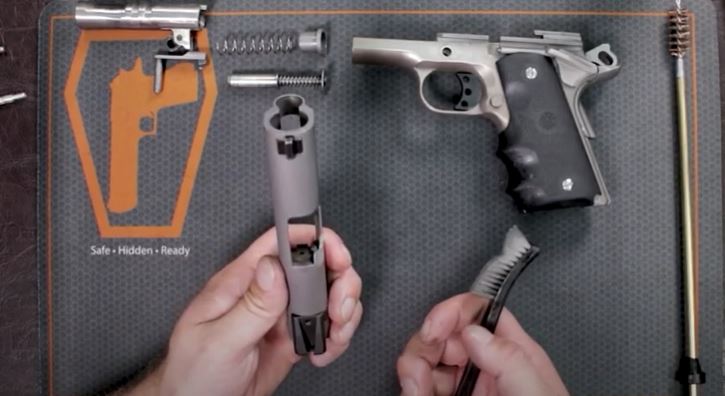
Run a bore brush matching your caliber (.45 ACP or 9mm) through the barrel 10–15 times to loosen copper fouling and carbon buildup. Follow with a tight-fitting cleaning patch saturated with solvent. Push the patch through the bore from chamber to muzzle 5–8 times until it emerges clean. Finish by running a dry patch to remove excess solvent. The Colt Defender’s 3-inch barrel requires less cleaning time than full-size 1911 models—approximately 3–5 minutes total.
Step 4: Lubricate Moving Parts
Apply 2–3 drops of gun-specific oil (such as Mobil 1 or Break-Free CLP) to rail surfaces, the barrel hood, and the disconnector. A light coating on the recoil spring reduces friction during cycling. Avoid overlubrication—the excess oil collects unburned powder and debris, accelerating future fouling. The aluminum frame on standard Colt Defenders requires less oil than steel frames due to the metal’s natural corrosion resistance.
Step 5: Reassemble and Function Check
Reinstall in reverse order: insert the recoil spring assembly, place the barrel into the slide, then slide the complete assembly onto the frame rails. Align the slide stop hole with its notch and insert the slide stop. Depress and rotate the recoil spring plug to lock position. Cycle the slide three times to verify smooth movement. Pull the trigger—the hammer should fall with a crisp, consistent break.
Colt Defender Specifications and Features
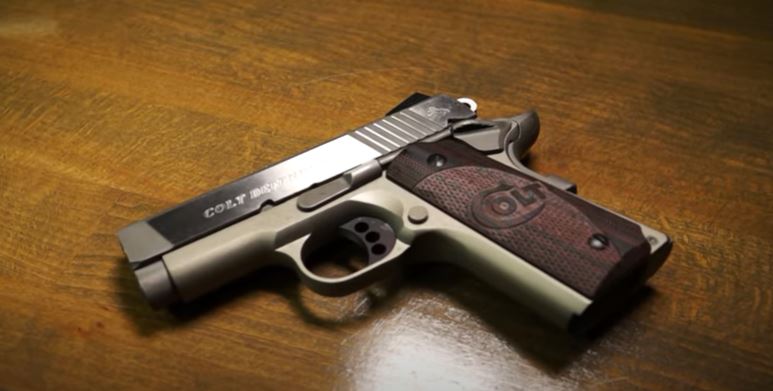
The Colt Defender excels as an everyday concealed carry pistol. Key features include:
Lightweight Aluminum Frame
Weighing 24–28 ounces unloaded (depending on configuration), the Defender’s aluminum alloy frame reduces carry fatigue during extended daily wear. The compact profile measures 6.75 inches overall length, 5.5 inches in height, and 3.5 inches in width—small enough for pocket carry in an appropriate holster.
3-Inch National Match Barrel
The 3-inch National Match barrel delivers accuracy suitable for self-defense distances (typically 7–15 yards). The shorter barrel profile makes the Defender ideal for close-quarters engagement scenarios where maneuverability matters more than terminal ballistics. Available in .45 ACP (standard 8-round capacity) and 9mm (standard 7-round capacity).
1911-Series Trigger Mechanism
The Colt Defender uses the proven 1911 single-action trigger, which travels approximately 4–5 pounds of pressure in a straight-line motion. This design maintains sight alignment during the critical moment of trigger press. Regular trigger assembly cleaning preserves the crisp let-off and prevents grit-induced hesitations.
Novak-Style Sight System
factory-installed Novak sights provide a snag-free profile while offering excellent readability in low-light conditions. The rear sight features a vertical groove for target focus, while the front sight contains a high-visibility dot. The sight dovetails accept aftermarket replacements for competition or specialized carry applications.
Colt Defender Technical Specifications
| Specification | Value |
|---|---|
| Caliber | .45 ACP, 9mm |
| Barrel Length | 3.0 inches (76mm) |
| Overall Length | 6.75 inches (171mm) |
| Overall Height | 5.5 inches (140mm) |
| Overall Width | 3.5 inches (89mm) |
| Weight (unloaded, .45 ACP) | 24 oz (680g) |
| Weight (unloaded, 9mm) | 28 oz (794g) |
| Frame Material | 7075-T6 Aluminum Alloy |
| Slide Material | Carbon Steel or Stainless Steel |
| Capacity (.45 ACP) | 8+1 rounds |
| Capacity (9mm) | 7+1 rounds |
| Sights | Novak-style 3-dot |
| Trigger Pull | 4–5 lbs (18–22 N) |
Why the Colt Defender Remains a Top Concealed Carry Choice
The Colt Defender combines 1911 reliability with modern carry features. The aluminum frame reduces weight by approximately 30% compared to all-steel 1911 alternatives, while the 3-inch barrel hits the sweet spot between concealability and ballistic performance. The Novak sight system and trigger quality—hallmarks of the 1911 platform—give users confidence under stress.
Compared to polymer-framed competitors, the Defender’s all-metal construction provides faster return to battery and smoother cycling at the cost of increased weight. For shooters who prioritize the proven 1911 ergonomics and trigger characteristics, the Defender delivers everyday carry practicality without sacrificing performance.
Colt Defender Maintenance Schedule
- After every range session: Wipe down the slide, frame, and barrel exterior. Light oil on rails prevents surface corrosion from perspiration.
- Every 500–1,000 rounds: Full disassembly cleaning including bore, chamber, and internal components.
- Every 3–6 months (no firing): Apply corrosion inhibitor to bore and chamber. Light oil coating on all metal surfaces.
- Annual professional inspection: Recommended for defensive carry firearms to verify spring tension, extractor function, and firing pin integrity.
Storage Best Practices
Store the Colt Defender in a breathable gun sock or dedicated concealed carry holster to maintain the finish. Avoid airtight plastic cases—trapped moisture accelerates corrosion. Apply a silicone cloth wipe to the slide and frame quarterly when storing long-term. Relative humidity above 70% requires more frequent oiling to prevent surface oxidation on the aluminum frame.
For collectors maintaining a pristine example, cleaning protocols for the Winchester Defender shotgun share similar solvent selection principles. Firearms maintenance follows consistent chemistry regardless of action type—solvent selection, lubrication points, and inspection intervals apply across all gun categories.
If carry time limits cleaning frequency, professional gunsmiths offer ultrasonic cleaning services that reach internal components inaccessible to manual cleaning. Expect to pay $25–$50 for ultrasonic breakdown and reassembly, typically completed within 24–48 hours.
References
- Colt Manufacturing. (2024). Colt Defender Series Product Information. Colt Manufacturing Company.
- U.S. Army. (2019). Technical Manual for 1911 Pistols. Department of the Army.
- ATF. (2023). Federal Firearms Regulations Reference Guide. Bureau of Alcohol, Tobacco, Firearms and Explosives.

