
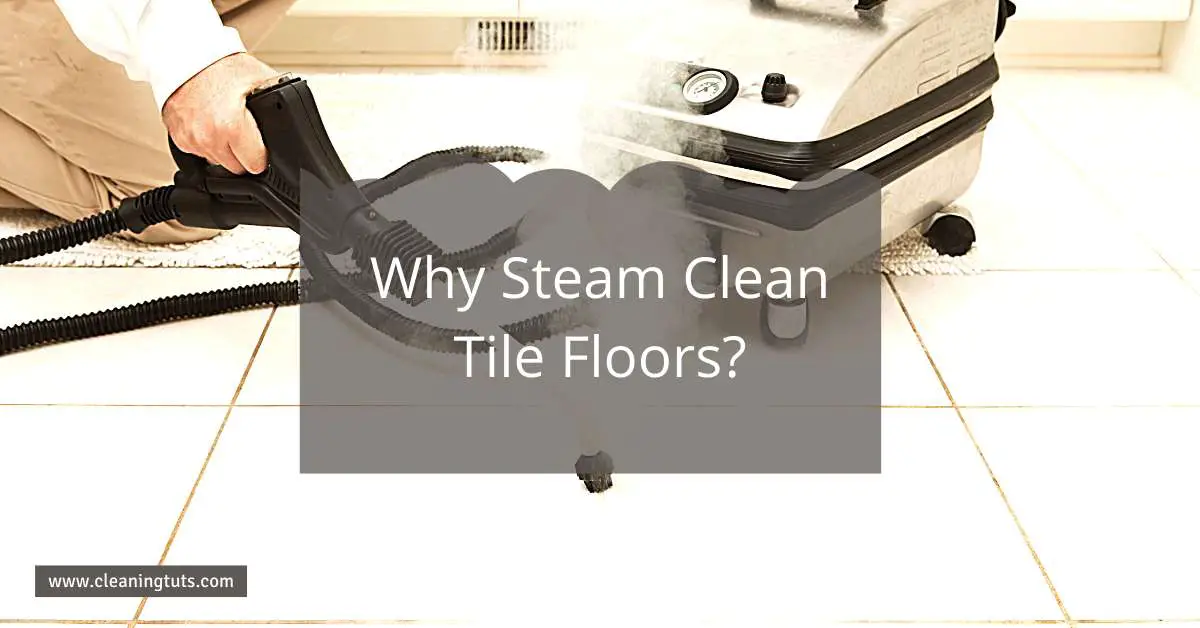
Why Steam Clean Tile Floors?

Steam cleaning tile floors delivers a 99.9% bacterial kill rate at temperatures between 140-179.6°F (60-82°C), sanitizing grout lines that scrubbing alone cannot reach. Unlike mopping, steam cleaning uses minimal water — approximately 11.5-16 fluid ounces per session — and requires no chemical cleaners, making it safe for households with children and pets.
Tile floors accumulate dirt and debris in grout lines and microscopic surface pores, making routine mopping ineffective at removing embedded grime. Steam cleaning penetrates these tiny crevices with pressurized steam that loosens bonded dirt while the high temperature disinfects the surface — killing Escherichia coli, Salmonella, and Staphylococcus aureus on sealed tile when applied for 20 seconds or more per spot.
This guide explains why steam cleaning outperforms traditional mopping, provides step-by-step instructions, and covers equipment selection, frequency recommendations, and safety precautions for sealed and unsealed tile floors.
Does Steam Cleaning Affect Cleaning Methods for Unsealed Tile Floors?
Steam cleaning poses risks for unsealed tile floors. Grout is a porous material that absorbs moisture; when exposed to steam, water molecules penetrate and cause the grout to deteriorate over time, leading to cracks, discoloration, and mold growth. For unsealed tile and grout, use a low-moisture spray mop with a pH-neutral cleaner (pH 7-8) instead. Follow DIY tile floor cleaning tips that focus on gentle, low-moisture methods to preserve flooring longevity.
Why Choose Steam Cleaning Over Other Methods?
Steam cleaning tile outperforms mopping and spray-and-wipe methods in five measurable ways: bacterial kill rate, water consumption, drying time, grout soil removal, and chemical residue. Commercial steam cleaners generate temperatures of 212°F (100°C) at the nozzle, which exceeds the 140°F (60°C) threshold required to kill common household pathogens within 20 seconds of contact.

Steam cleaning does not leave behind chemical residue that attracts future dirt, a common problem with detergent-based mopping. It also uses 80-90% less water than traditional mopping, reducing slip hazards and preventing moisture damage to grout lines. Here are the top reasons to choose steam cleaning:
Efficient
Steam cleaners preheat in 20-30 seconds and clean an average room in 15-20 minutes, compared to 30-45 minutes for traditional mop-and-bucket cleaning. A single session with a canister steam cleaner (with a 16-ounce water tank) covers approximately 300-500 square feet of tile flooring without refilling.
Affordable
Steam cleaning costs $0.02-0.05 per square foot when accounting for electricity and water alone. Professional tile cleaning services charge $3-6 per square foot, making a $150-300 steam cleaner payoff after cleaning 150-600 square feet of tile just 3-5 times.
More Effective Than Other Methods
Steam penetrates surface pores and grout lines to a depth of 1/8 inch, loosening dirt that physically bound to the surface. In Good Housekeeping tests, steam removed dried spaghetti sauce, orange juice, cola, and salad oil from ceramic tile in under 30 strokes per stain — after stains were allowed to set for 14 hours.
Gentle on Delicate Surfaces
Steam at 140-179.6°F (60-82°C) will not etch sealed stone tile, damage grout sealers, or degrade the finish on glazed ceramic when used with a appropriate distance and dwell time. This makes steam cleaning safe for natural stone (with appropriate caution), glazed porcelain, and sealed quarry tile.
Chemical-Free Sanitization
Steam cleaning achieves a 99.9% bacterial kill rate without requiring EPA-registered disinfectants. This eliminates exposure to quaternary ammonium compounds, bleach fumes, and peroxyacid residues that linger on floors after conventional cleaning — a critical consideration for households with asthmatics or chemical sensitivities.
Minimal Water Usage
Steam cleaners use 11.5-16 fluid ounces of water per session, compared to 3-5 gallons for a single mop-and-bucket run. This 90% water reduction eliminates standing water in grout lines, which prevents the mold and mildew growth that occurs when grout stays damp for more than 24-48 hours.
How to Steam Clean Tile Floors: Step-by-Step
Follow this 10-step process to achieve professional-grade results on ceramic, porcelain, and sealed stone tile floors. For unsealed tile, grout, or natural stone, skip to the unsealed tile guide for alternative methods.
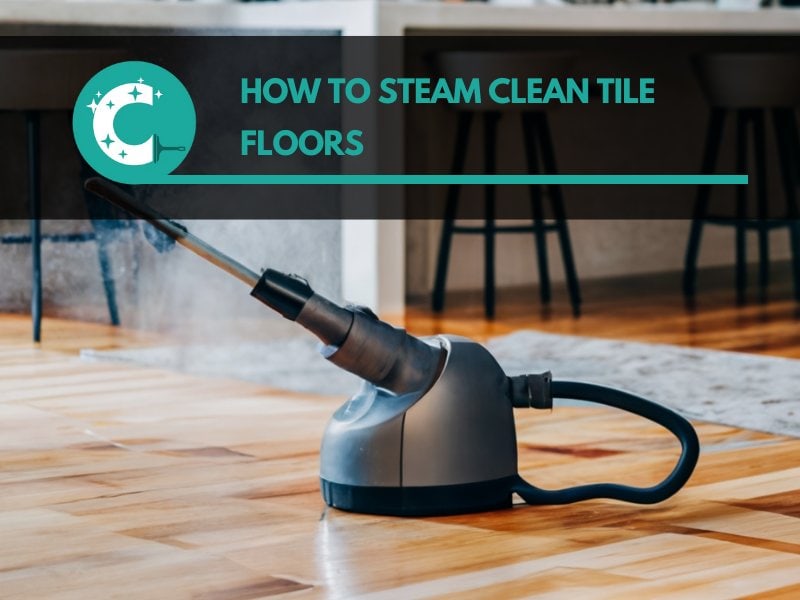
Step 1: Gather Your Materials
Collect a steam cleaner with a tile-and-grout attachment, a stiff-bristle grout brush, microfiber towels (2-3), a shop vacuum or household vacuum with hard-floor attachment, and a pH-neutral tile cleaner for pre-treating stubborn stains. A backup mop head or pad is useful for large areas.
Step 2: Vacuum the Floor
Vacuum all tile surfaces using a hard-floor attachment to remove loose dirt, dust, and debris from grout lines. This step prevents loose particles from becoming slurry when steamed, which can embed deeper into grout pores. Pay special attention to corners, behind toilets, and along baseboards.
Step 3: Pre-Treat Tough Stains
Apply a pH-neutral tile cleaner (pH 7-8) directly to stains. Allow a 3-5 minute dwell time before scrubbing gently with a stiff-bristle brush. Avoid acidic cleaners (pH below 4) or alkaline degreasers (pH above 10) on marble, travertine, or limestone tile, as these etch the surface.
Step 4: Fill Your Steam Cleaner with Water
Fill the reservoir with 11.5-16 fluid ounces of distilled or demineralized water to prevent mineral deposits on tile and grout. Using tap water leaves white mineral residue (calcium carbonate) on grout lines after steaming, which attracts dirt and causes discoloration over time.
Step 5: Add a Cleaning Solution (Optional)
For heavily soiled grout lines, add 2-3 drops of a low-foaming, pH-neutral tile cleaner to the steam cleaner’s reservoir. Avoid adding vinegar, bleach, ammonia, or abrasive cleaners to a steam cleaner — these damage internal components and create hazardous fumes when heated. NSF-certified steam-cleaning solutions are available for areas requiring degreasing.
Step 6: Start Steaming — Work in Straight Lines
Preheat the steam cleaner for 20-30 seconds, then work in overlapping straight lines, moving from the back corner of the room toward the exit. Hold the steam nozzle against each grout line for 5-10 seconds before slowly moving forward. Maintain a 45-degree angle toward the grout for best penetration depth.
For sanitization, allow steam to contact each spot for a minimum of 20 seconds or 15 passes — this exceeds the 140°F (60°C) threshold for bacterial kill on sealed tile surfaces. Do not rush this step; insufficient dwell time reduces sanitization effectiveness by up to 60%.
Step 7: Extract Residual Moisture
After steaming each 4-foot by 4-foot section, run a dry microfiber mop or absorb excess moisture with clean towels. Steam leaves condensation on tile surfaces; extraction prevents water from pooling in grout lines where it can cause swelling, discoloration, or mold growth within 24-48 hours.
Step 8: Dry the Floor Completely
Allow the floor to air-dry for 15-30 minutes after steaming. Verify the floor is completely dry by touch — damp grout appears darker than dry grout. Use a fan on low speed to accelerate drying in bathrooms, kitchens, or basements with limited airflow.
Step 9: Inspect and Repeat as Necessary
Inspect grout lines under good lighting for remaining soil. For stubborn discoloration, repeat the pre-treat and steam process on affected areas. Deep-set stains in porous grout may require 2-3 treatment sessions spaced 24 hours apart to allow the grout to dry fully between applications.
Step 10: Final Vacuum and Seal Check
Vacuum the dry floor once more to remove any loosened soil released during drying. If grout was steam-cleaned, allow 24 hours before applying a grout sealer — the sealer requires completely dry grout with no residual moisture trapped below the surface.
The Benefits of Steam Cleaning Tile Floors
Steam cleaning provides measurable advantages over mop-and-bucket cleaning in four key areas: bacterial kill rate, water consumption, grout soil removal depth, and chemical residue. The Tile & Grout Hub covers these benefits in greater detail along with maintenance schedules for different tile types.
A Deeper Clean
Steam penetrates 1/8 inch into grout lines, compared to less than 1/16 inch with scrubbing. This depth is critical in high-traffic areas (kitchens: 500-1,000 steps per day; bathrooms: 200-400 steps per day) where oils and food particles accumulate in deep grout pores. Standard mopping only addresses surface contamination.
Sanitizing Power
At 140-179.6°F (60-82°C) sustained for 20 seconds, steam kills 99.9% of E. coli, Salmonella enterica, and Staphylococcus aureus on hard, non-porous tile surfaces, according to testing protocols used by EPA-registered steam cleaner manufacturers. This meets the CDC threshold for “sanitization” on food-contact surfaces.
Less Water Waste
A single mop-and-bucket cleaning uses 3-5 gallons of water for 100-150 square feet of tile. Steam cleaning uses 11.5-16 ounces (0.09-0.125 gallons) for the same area — a 96-97% water reduction. This matters in drought-prone regions and prevents the moisture saturation that causes grout deterioration in poorly ventilated bathrooms.
How to Choose the Best Steam Cleaner for Tile Floors
Selecting a steam cleaner for tile floors requires matching three variables: floor tile type, room size, and desired attachments. The Cleaning Glossary defines technical terms used in steam cleaner specifications.
Types of Steam Cleaners for Tile
Two steam cleaner types are suitable for residential tile floors:
| Type | Best For | Tank Size | Heat-Up Time | Run Time |
|---|---|---|---|---|
| Canister steam cleaner | Large areas (kitchens, living rooms) | 16-48 oz | 5-8 minutes | 45-60 minutes |
| Steam mop | Bathrooms, small areas, quick cleans | 11.5-16 oz | 20-30 seconds | 15-25 minutes |
| Handheld steam cleaner | Spot cleaning grout lines, corners | 4-8 oz | 3-5 minutes | 8-12 minutes |
Match the Cleaner to the Tile Type
Tile types have different heat and moisture tolerances:
- Ceramic and porcelain tile (sealed): Accepts all steam cleaner types. Temperature range of 140-212°F (60-100°C) is safe. Use a flat-floor mop head for large areas.
- Natural stone (marble, granite, travertine, limestone): Limit steam to 140°F (60°C) maximum. Use a handheld steamer with a low-setting nozzle held 12+ inches from the surface. Avoid prolonged steam exposure on marble and limestone, which are calcium-based and moisture-sensitive.
- Vinyl and linoleum: Use steam mops only at low-to-medium settings (below 160°F / 71°C). High heat can soften vinyl adhesives and cause curling at seams.
- Unsealed grout: Avoid steam cleaning. Moisture penetrates unsealed grout within 2-3 seconds of steam contact, leading to efflorescence, mold, and premature cracking. Use a damp (not wet) microfiber mop with pH-neutral cleaner instead.
Essential Features for Tile and Grout Cleaning
Prioritize these features when selecting a steam cleaner for tile:
- Adjustable steam settings (2-3 levels or fully variable): Allows temperature control for delicate stone versus durable porcelain
- Tile-and-grout attachment or narrow nozzle: Focuses steam pressure into grout lines rather than dispersing across the tile face
- Detachable handheld unit: Converts canister cleaner to a handheld for above-floor surfaces and tight grout areas
- Anti-scald housing: Prevents burns during handling; interior surfaces reach 250-300°F (121-149°C) during operation
- Automatic shut-off: Turns unit off when water reservoir is empty, preventing damage to heating elements
Recommended Brands for Tile Cleaning
NSF International-certified steam cleaner brands include Bissell, Shark, Hoover, and Polti. Models from Bissell (PowerFresh series) and Shark (Vacuum then Steam series) are widely available in the US, with prices ranging from $60-300 depending on tank size and feature set.
How Often Should You Steam Clean Tile Floors?
Cleaning frequency depends on room type, foot traffic, and household composition. The Floor Cleaning Master Hub provides a full maintenance calendar for all floor types.
| Room / Traffic Level | Steam Clean Frequency | Maintenance Between Deep Cleans |
|---|---|---|
| Kitchen (high traffic, grease exposure) | Weekly | Dry microfiber mop every 1-2 days; spot-clean after spills |
| Bathroom (moisture, biological soil) | Weekly | Squeegee after shower; pH-neutral spray wipe every 2-3 days |
| Entryway / mudroom (dirt, grit) | 2-3 times per week | Vacuum daily if household has pets or children |
| Living areas (moderate foot traffic) | Monthly | Vacuum 2-3 times per week; damp mop weekly |
| Guest rooms (low traffic) | Monthly or quarterly | Vacuum weekly; dust mop bi-weekly |
In households with pets, children under 5, or immunocompromised members, increase steam cleaning frequency by one step — kitchens and bathrooms weekly regardless of traffic level, and entryways at least twice weekly — to maintain sanitary surfaces and reduce pathogen load.
Steam Cleaning Tile Floors: Pro Tips and Critical Precautions
Steam cleaning is straightforward, but eight specific practices separate professional results from substandard cleaning that damages floors or leaves residual soil.
Choose the Right Steam Setting
Match steam temperature to tile type. Use low (140-160°F / 60-71°C) for natural stone, vinyl, and unsealed grout. Use medium-to-high (160-212°F / 71-100°C) for sealed ceramic, porcelain, and quarry tile. Starting on a low setting prevents accidental surface damage while you learn how the tile and grout respond.
Test Solution on an Inconspicuous Area First
Before using any cleaning solution in the steam reservoir, test it on a 6-inch by 6-inch section of grout in a corner or closet area. Wait 24 hours to verify no discoloration, etching, or residue remains. This prevents permanent damage to visible grout lines.
Vacuum Before Steaming
Never steam a dry, dirty floor. Loose grit acts as an abrasive when steamed into grout, embedding particles and causing scratches on tile surfaces. A thorough vacuum with a hard-floor attachment removes 95% of loose debris from grout lines before steaming begins.
Use pH-Neutral Cleaners Only
Steam cleaning alone provides a 99.9% bacterial kill rate on sealed tile. If additional soil removal is needed, use only NSF-certified, pH-neutral (6-8) tile cleaners in the steam reservoir. Acidic cleaners (vinegar, pH 2.5-3.5) etch calcium-based stone and degrade grout. Alkaline cleaners (bleach, pH 11-13) leave residues that attract dirt and can release chlorine gas when heated.
Do Not Over-Wet Grout Lines
Keep steam application to 5-10 seconds per spot before moving forward. Prolonged saturation causes grout to swell, weaken, and eventually crack. If excess moisture pools in grout lines, extract immediately with a dry microfiber pad. Standing water in grout for more than 48 hours creates conditions for mold and bacterial growth, including Stachybotrys chartarum (black mold).
Use a Tile-and-Grout Attachment, Not the Floor Mop Head
General floor mop heads disperse steam across the tile face without adequate pressure on grout lines. A narrow-angle nozzle or dedicated grout-cleaning attachment directs concentrated steam into the 1/8-inch grout gap where soil accumulates. This attachment is the single most important factor in achieving visibly clean grout.
Overlap Passes and Allow Proper Dwell Time
Move the steam nozzle at a rate of 1 linear foot per 3-4 seconds to ensure 20+ seconds of heat exposure per grout section for sanitization. Faster movement reduces effective temperature below the 140°F (60°C) bacterial kill threshold. Overlapping passes by 2 inches prevents gaps in cleaning.
Allow Complete Drying Before Foot Traffic
Tile floors are safe to walk on within 15-30 minutes of air-drying. However, grout in corners, along baseboards, and in bathrooms (where moisture is highest) may require up to 2 hours to reach complete dryness. Placing rugs or furniture on damp grout traps moisture and creates mold risk. Test by touch before replacing mats and furniture.
Frequently Asked Questions
Does steam damage grout?
Steam can damage grout if the grout is unsealed or if steam is applied for extended periods without extraction. Sealed, epoxy-based grout tolerates steam cleaning indefinitely. Traditional cement-based grout is porous and absorbs moisture; repeated steam exposure without adequate drying time causes efflorescence, cracking, and mold growth. Always extract excess moisture and allow cement grout to dry 24-48 hours between steam cleanings.
Is a steam mop worth it for tile floors?
A steam mop is worth it for sealed ceramic, porcelain, and quarry tile in kitchens, bathrooms, and entryways. It reduces chemical use by 100%, uses 96% less water than mopping, and kills 99.9% of bacteria without disinfectants. However, steam mops are less effective on deeply soiled grout (where a canister steam cleaner with a grout attachment excels), and they are not suitable for unsealed tile, natural stone (without restrictions), or surfaces with wax or sacrificial coatings.
Does vinegar clean tile grout effectively?
Vinegar (pH 2.5-3.5) dissolves surface dirt on grout but damages cement-based grout with repeated use. The acid etches calcium compounds in the grout matrix, causing roughness that accelerates future soil attachment. For routine grout cleaning, use a pH-neutral (7-8) cleaner instead. For periodic deep cleaning of cement grout, a paste of baking soda (pH 8-9) followed by a mild acid (pH 4-5) applied briefly and rinsed thoroughly is less damaging than straight vinegar.
Is Steam Cleaning Tile Floors Effective for Tile Grout?
Steam cleaning is effective for tile grout on sealed, cement-based grout and highly effective on epoxy-based grout. The high temperature (140-212°F / 60-100°C) penetrates the 1/8-inch depth of grout lines, loosening bonded soil and killing bacteria without chemical residue. For heavily soiled or stained grout, a canister steam cleaner with a narrow-angle grout attachment outperforms steam mops because it delivers concentrated steam pressure directly into the grout gap rather than dispersing steam across the tile face.
The Stain Removal Hub provides targeted treatments for specific grout stain types (rust, oil, efflorescence, mildew), while the Cleaning Chemistry Hub explains why pH-neutral cleaners preserve grout integrity better than acidic or alkaline alternatives.
Final Thoughts
Steam cleaning tile floors delivers measurable advantages over mop-and-bucket methods: a 99.9% bacterial kill rate without chemicals, 96% less water consumption, and superior grout penetration that removes soil embedded 1/8 inch deep. A quality steam cleaner pays for itself after 3-5 uses compared to professional tile cleaning services.
For the best results, match your steam cleaner to your tile type, use a grout-specific attachment, allow proper dwell time (20+ seconds per spot for sanitization), and extract excess moisture immediately. Weekly steam cleaning in high-traffic areas and monthly maintenance in lower-traffic zones keeps tile and grout in good condition year-round. For natural stone, unsealed tile, or heavily damaged grout, consult the Tile & Grout Hub for appropriate alternative methods.
References
- Bob Vila. (2024). Best Steam Mop: Top Picks for Tile and Hardwood Floors. Bob Vila Media.
- Good Housekeeping Institute. (2024). Best Steam Mops, Tested by Our Cleaning Lab. Good Housekeeping.
- Wikipedia. (2025). Steam Cleaning. Wikimedia Foundation.


