
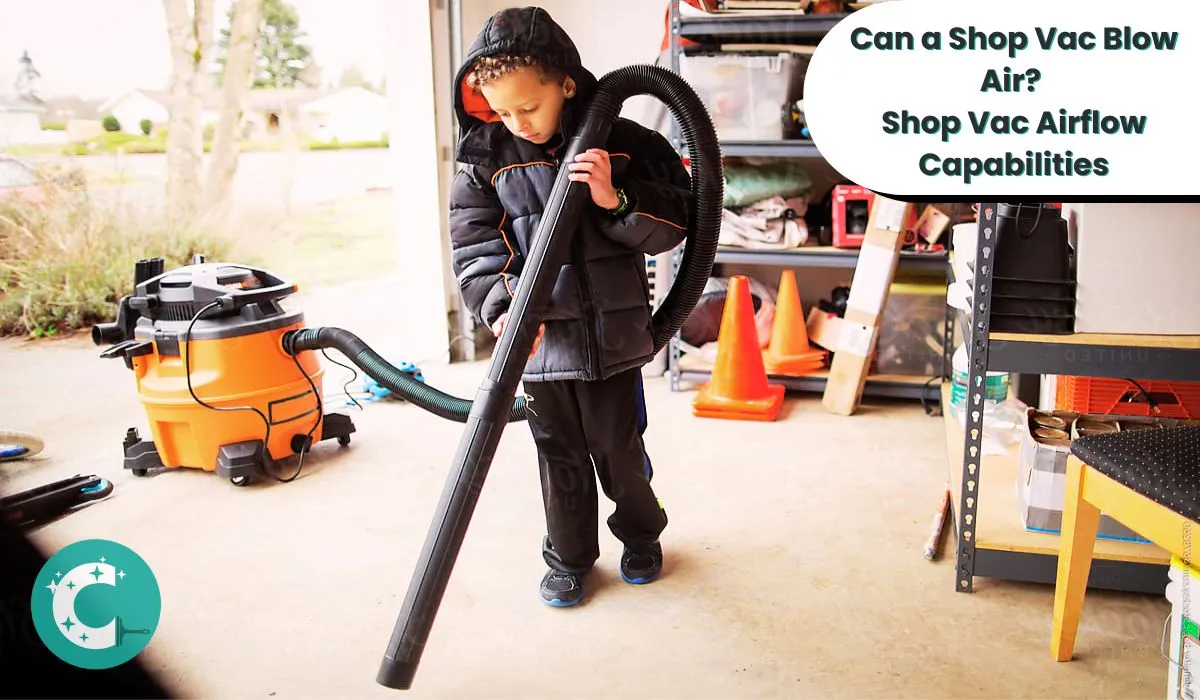
Can a Shop Vac Blow Air? – Versatile Airflow Options

Yes, a shop vac blows air through a dedicated blower port that reverses normal vacuum airflow. This exhaust port directs air outward at high velocity, measured in cubic feet per minute (CFM), making shop vacs effective for clearing sawdust, inflating inflatable mattresses up to 0.5 PSI, and blowing debris from workshop surfaces.
Shop vacs deliver powerful suction rated at 80–150 inches of water lift and airflow rates of 100–200+ CFM, depending on the model. Beyond vacuuming, these units include an exhaust port or detachable blower that reverses airflow for tasks like clearing sawdust, inflating pool toys, and blowing debris into a corner for collection.
This dual-functionality design makes shop vacs indispensable in workshops and garages. Understanding how to switch between vacuum and blower modes maximizes the tool’s utility across a range of cleaning tasks.
How to Make a Shop-Vac Blow Air: Step-by-Step
Activating the blower function on a shop vac requires a specific sequence. Follow these steps to redirect airflow effectively for various tasks.
Locate the Blower Port
Confirm that your Shop-Vac model includes a blower port. Not all units have this feature—consult your user manual or check the unit’s rear panel for a dedicated exhaust port. Cleaning Glossary articles on vacuum maintenance can help you identify your model’s capabilities.
Detach the Vacuum Hose
Disconnect the hose from the inlet port used for vacuuming. This unblocks the blower exhaust pathway. Removing the hose also prevents debris from being blown back toward the operator during blower use.
Attach Hose to the Blower Port
Connect the hose to the designated blower port on the shop vac’s rear panel. This port channels air outward through the hose at high velocity, typically exceeding 100 CFM on standard models. Standard shop vac hoses (1.5–2.5 inch diameter) attach directly to most blower ports.
Empty the Collection Drum
Remove all debris and liquid from the collection drum before activating blower mode. Operating the blower with a full drum forces material through the exhaust, causing blockages and damaging the motor. Also remove any dust bags and standard filters—use a foam wet-filter or no filter when blowing.
Power On and Direct Airflow
Turn on the shop vac. Some models use a single switch that toggles between vacuum and blower modes; others have a separate blower setting. Refer to your user manual for model-specific activation. The expelled air reaches velocities of 200–400+ feet per minute depending on hose diameter and motor rating.
Begin Blowing
Once activated, direct the hose at your target surface. Typical applications include clearing sawdust from hardwood floor workspaces, blowing leaves from driveways, and inflating inflatable objects. Maintain a distance of 6–12 inches from surfaces to prevent debris scatter.
Shop Vac Blower Mode: Pros, Cons, and Key Considerations
Using a shop vac to blow air offers advantages and limitations. The table below outlines the functional trade-offs to help you decide when blower mode is the right approach.
| Pros | Cons | Considerations |
| Dual-functionality — one tool handles vacuuming and blowing | Forceful airflow — exceeds 200 CFM on standard models, scattering loose debris | Regulate airflow intensity by using a narrower attachment or reducing motor speed |
| High velocity — 200–400+ feet per minute airspeed for fast debris clearing | Debris scatter risk — blows dust into the air rather than containing it | Choose the correct attachment for the task; use a concentrated nozzle for precision |
| Inflation capability — fills inflatable mattresses, pool toys, and rafts | Limited control — no variable speed on many models | Use lower power settings or brief bursts for delicate tasks like inflating thin vinyl toys |
| Workshop essential — clears sawdust, wood chips, and metal shavings efficiently | Noise — most shop vacs produce 70–90 dB during blower operation | Wear hearing protection (earplugs or earmuffs) during extended blower use |
| Reduces physical strain — air does the pushing rather than manual brushing | Motor strain risk — running blower mode with debris in the drum overheats the motor | Empty the drum completely before each blower session; inspect the filter monthly |
| Wet/dry capability — blower mode works on wet or damp surfaces | Power dependency — corded models require a 15-amp outlet for full performance | For outdoor tasks, use a properly grounded outdoor-rated extension cord (12-gauge, 50-foot max length) |
Shop Vac vs. Standard Vacuum Cleaner: Feature Comparison
Shop vacs and household vacuum cleaners serve different purposes. The comparison below clarifies which tool is appropriate for specific tasks, particularly when blower functionality is a factor.
| Aspect | Shop Vac | Vacuum Cleaner |
| Primary function | Heavy-duty wet/dry vacuuming and blowing | Indoor dry vacuuming |
| Suction capacity | 80–150 inches of water lift; 100–200+ CFM airflow | 60–90 inches of water lift; 80–120 CFM airflow |
| Airflow (CFM) | 100–200+ CFM (higher = stronger blow force) | Typically below 120 CFM |
| Wet/dry capability | Handles liquids, sawdust, and bulk debris | Dry materials only—liquid damage occurs |
| Blower port | Standard on most models; redirects airflow outward | Not available on standard vacuum cleaners |
| Drum capacity | 4–20 gallons (larger = longer runtime) | 1–3 gallons typical |
| Hose diameter | 1.5–2.5 inches (wider = higher airflow volume) | 1.0–1.5 inches (optimized for airspeed) |
| Typical applications | Garages, workshops, job sites, vehicle interiors | Homes, offices, apartments |
| Noise level | 70–90 dB (hearing protection recommended) | 60–80 dB |
References
- Wikipedia. (2025). Shop vacuum. https://en.wikipedia.org/wiki/Shop_vac
- Shop-Vac. (2025). Shop-Vac Brand Products. https://www.shopvac.com/


