
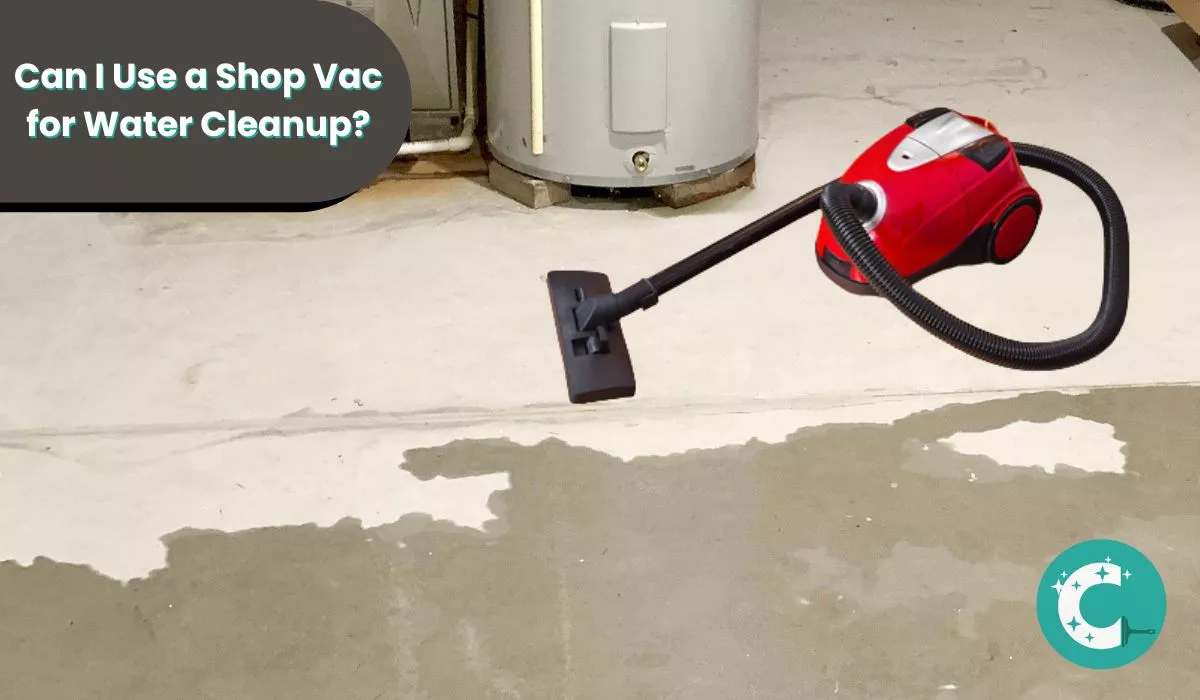
Can I Use a Shop Vac for Water Cleanup? – Yes, You Can!

Yes, you can use a shop vac for water cleanup. Wet/dry shop vacs handle up to 53 US gallons (200+ litres) of liquid and produce suction measured in inches of water with airflows of 100+ CFM. For effective water extraction, remove the filter and bag first, select the correct floor attachment, and empty the canister when the automatic float shutoff activates.
Shop vacs—also called wet/dry vacuums—are designed for versatile cleaning tasks including water removal. These units produce suction measured in inches of water lift and airflow ratings exceeding 100 cubic feet per minute (CFM), making them effective for extracting standing water from floors, carpets, and hard surfaces.
Large shop vac models store over 53 US gallons (200 litres) of liquid, while standard residential units typically hold 5 to 20 gallons. This guide covers the step-by-step process, safety requirements, and maintenance procedures for using a shop vac to remove water effectively.
Shop Vac Water Removal: Step-by-Step Process
Using a shop vac for water extraction requires proper preparation and sequential steps. Follow this process to maximize suction performance and protect your equipment.
Step 1: Remove the Bag and Filter
Always remove the collection bag and filter before vacuuming water. Paper bags disintegrate when wet, and a wet filter restricts airflow, reducing suction power by up to 50%. Standard procedure:
- Unplug the vacuum from the electrical outlet.
- Open the lid or access panel to reach the bag and filter compartment.
- Unhook or slide out the collection bag and dispose of debris.
- Detach the filter from its housing and set it aside to dry completely.
- Close the lid or access panel securely before operating.
Step 2: Install the Correct Attachment
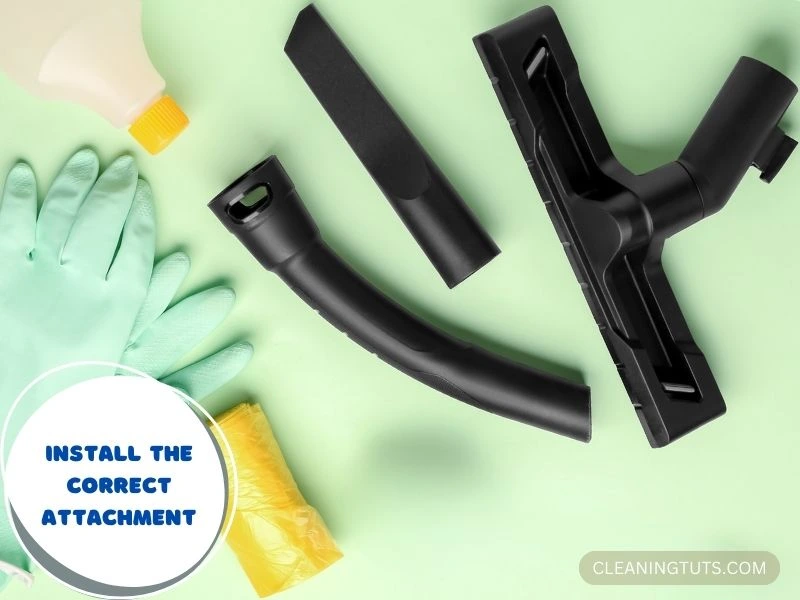
Selecting the proper attachment determines extraction efficiency. Two attachments work best for water removal:
| Attachment Type | Best Use | Surface Compatibility |
| Wide, T-shaped floor nozzle with rubber squeegees | Flat hard floors, low-pile carpets | Tile, vinyl, laminate, concrete |
| Crevice tool or squeegee attachment | Vehicle floors, tight spots, recessed areas | Carpeted floor mats, between tiles |
Step 3: Extract Water Methodically
Hold the attachment stationary over each section until most water is extracted—typically 5 to 10 seconds per square foot. Rapid back-and-forth movements spread water rather than removing it.
Work in small overlapping sections (approximately 12-inch squares) to ensure complete extraction. The EPA recommends addressing all water damage within 24 to 48 hours to prevent mold growth on porous materials.
For carpets, allow 30 to 60 seconds per section to let water wick up from fibers. Lift the carpet corner if water has soaked through to the padding.
Step 4: Empty the Canister
Wet/dry shop vacs include an automatic float shutoff that halts suction when water reaches the motor housing. When this activates, empty the canister immediately to resume extraction.
- Carry the canister outdoors to a floor drain or utility sink.
- Remove the motor head and set it aside on a dry surface.
- Dump the collected water and debris into the drain.
- Rinse the canister with clean water if necessary.
- Replace the motor head securely before resuming extraction.
Step 5: Clean and Dry the Shop Vac After Use
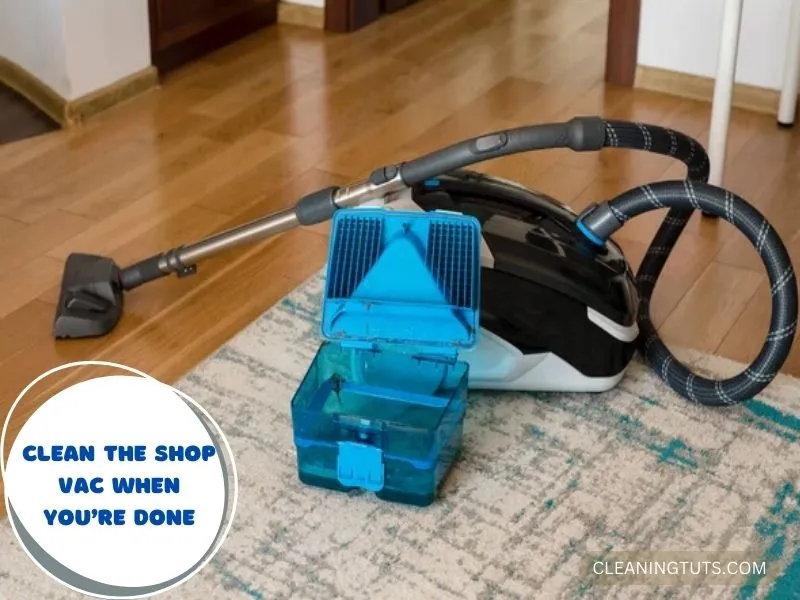
Mold develops within 24 to 48 hours on wet surfaces. Clean and dry the shop vac thoroughly after each water extraction to prevent odor-causing bacteria and mold growth in the canister and hose.
- Detach the hose and rinse it with a garden hose until water runs clear.
- Clean the canister interior with an all-purpose cleaner or a solution of 1 tablespoon mild detergent per quart of warm water.
- Rinse all surfaces thoroughly to remove cleaning solution residue.
- Turn the canister and components upside down to air dry completely (24+ hours).
- Reinstall the dry filter and a fresh collection bag before storage.
Electrical Safety Requirements for Wet/Dry Vacuum Use
Electric shock is a risk when operating any electrical device near water. Follow these safety requirements without exception:
| Safety Requirement | Specification |
| GFCI outlet | Required for all wet-area operation per National Electrical Code (NEC) |
| Extension cord | Three-prong, heavy-duty cord rated for the vacuum’s amperage draw |
| Circuit breaker | Verify the circuit matches or exceeds the vacuum’s amperage requirement |
| Ground connection | Never bypass the three-prong grounding plug |
If the work area lacks GFCI protection, use a portable GFCI adapter. Test the GFCI before each use by pressing the “test” button and confirming the “reset” button pops out.
Do Shop Vacs Require a Filter for Water Cleanup?
No—shop vacs do not require a filter for water extraction. In fact, removing the filter before water use increases suction efficiency and prevents filter damage. A wet filter becomes clogged with reduced airflow, decreasing extraction performance by up to 50%.
However, always reinstall the filter before switching to dry debris collection. Without a filter, fine dust and particles bypass the collection chamber and damage the motor.
When to Call a Professional Instead
Shop vacs handle residential water spills up to approximately 20 gallons effectively. For the following situations, professional water damage restoration is recommended:
- Flooded basements exceeding 4 inches of standing water
- Sewage backup or contaminated water (Category 2 or 3)
- Structural water damage affecting walls, flooring, or subfloors
- Carpet padding that has been wet for more than 24 hours
- Any situation where mold has begun growing (typically visible within 48 hours)
Professional extraction equipment produces 3× the suction power of standard shop vacs and includes built-in water removal and drying systems.
Frequently Asked Questions
Can regular vacuum filters stay in when vacuuming water?
No—always remove paper bags and standard dry-use filters before vacuuming water. Paper filters disintegrate when wet, clogging the system and potentially causing motor damage. Foam filters can remain if explicitly rated for wet use, but removing all filtration increases suction significantly.
What is the maximum water volume a shop vac can handle?
Residential shop vacs typically handle 5 to 20 gallons per emptying. Large workshop models store up to 53 US gallons. The automatic float shutoff prevents overfilling by stopping suction when water reaches the motor housing.
How long does it take for mold to grow after water damage?
Mold growth begins within 24 to 48 hours on wet organic materials such as wood, drywall paper, and carpet padding. Non-porous surfaces like tile and metal can be dried within this window without mold risk. Porous materials saturated for more than 24 hours typically require professional remediation or replacement.
Can I use a regular household vacuum for water removal?
No—standard household vacuums are designed for dry use only. Water entering a standard vacuum motor causes immediate damage and creates an electrical shock hazard. Only wet/dry shop vacs (or purpose-built water extraction units) are rated for water removal.
References
- U.S. Environmental Protection Agency. (n.d.). Mold Cleanup in Your Home. EPA.
- Wikipedia contributors. (n.d.). Vacuum cleaner — Wet/dry vacuum. Wikipedia.
For more cleaning guides, explore the Vacuum Troubleshooting Master Hub or browse the Cleaning Glossary for terminology definitions.


