
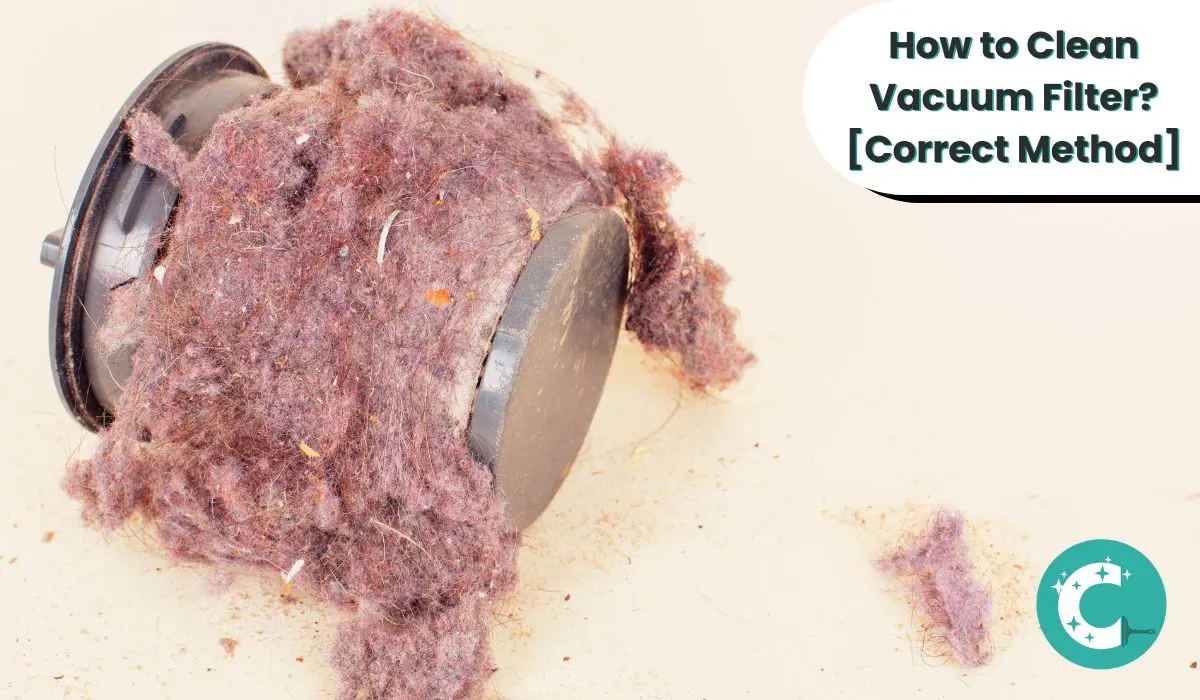
How to Clean Vacuum Filter?

Vacuum filter cleaning is a maintenance task that directly affects suction performance and motor longevity. The process varies by filter type: foam filters are washable, cartridge filters require careful dry cleaning, and HEPA filters must be replaced rather than cleaned. A clogged filter forces the motor to work harder, reducing vacuum lifespan and increasing energy consumption.
This guide covers foam, cartridge, and HEPA filter cleaning methods with step-by-step instructions.
How to Clean Vacuum Filter: Foam, Cartridge, and HEPA Types
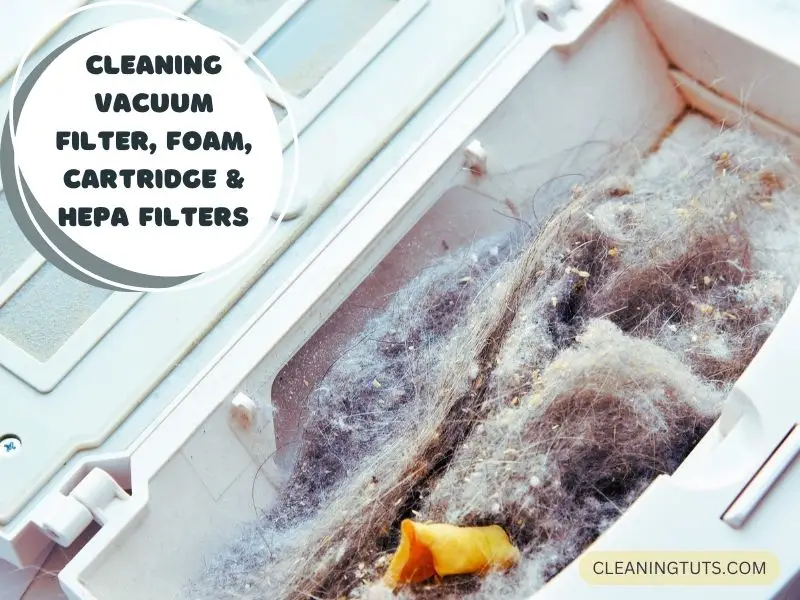
Vacuum Filter Types at a Glance
| Filter Type | Location | Cleanable? | Replacement Interval |
|---|---|---|---|
| Foam (Sponge) | Canister, bagless vacuums | Yes — wash with water | Every 3–6 months |
| Cartridge (Pleated) | Handheld vacuums, shop vacs | Dry cleaning only | Every 6–12 months |
| HEPA | Most upright and canister vacuums | No — replace only | Every 60–90 days |
Before jumping into the process, gather these items: a screwdriver (if needed to access the filter), a dust-storing bin bag, and a sunny outdoor workspace. Working outdoors in natural light makes it easier to spot trapped debris in filter pleats and foam pores. Grass or a drop cloth beneath your workspace catches falling dirt for easy disposal.
A congested filter forces the motor to strain, which measurably reduces appliance lifespan and increases energy draw. Regular filter maintenance is one of the simplest ways to protect your vacuum investment.
How to Clean Foam Vacuum Filter
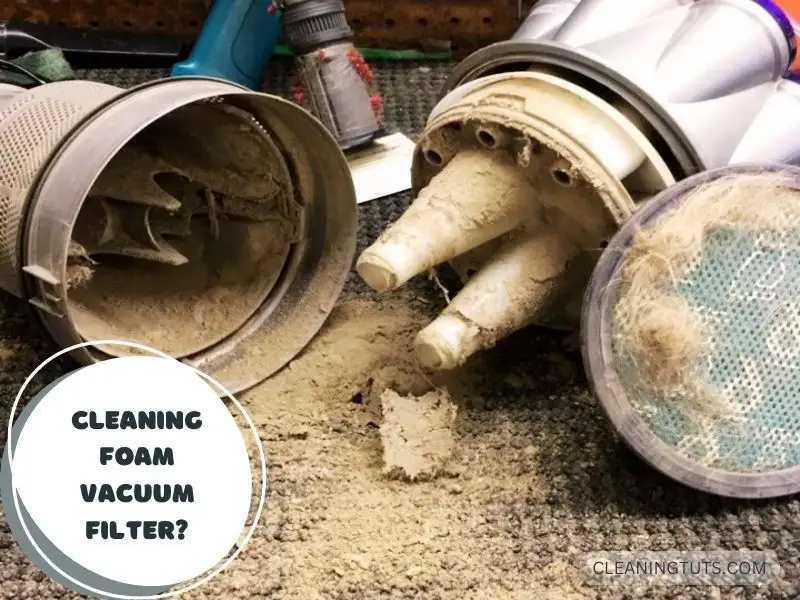
Foam filters are standard in Shark vacuums and most bagless canister models. The porous foam captures large particles before air reaches the motor. Over time, trapped oils and debris compress the foam structure, reducing airflow and suction power.
Follow these steps to clean a foam filter:
- Submerge the foam entirely in clean, lukewarm water.
- Squeeze the foam 5–10 times to dislodge embedded dirt. Use slow, firm pressure — wringing distorts the foam cell structure.
- Rinse until water runs clear, indicating all debris has been flushed.
- Allow the foam to air-dry completely (24–48 hours) on a clean surface. A damp filter promotes mold growth.
- Reinstall only when fully dry to prevent moisture from reaching the motor.
Neutralizing Odor in Foam Filters
Foam filters develop musty odors from trapped organic matter. After cleaning and while the foam is still slightly damp, add 3–5 drops of essential oil with antibacterial properties. Effective options include tea tree oil (known for antimicrobial activity against common household pathogens), eucalyptus, peppermint, or lemongrass. These oils also leave a fresh scent during vacuum use. Replace foam filters every 3–6 months, or sooner if the foam appears cracked, compressed, or retains an odor after cleaning.
How to Clean Cartridge Filter
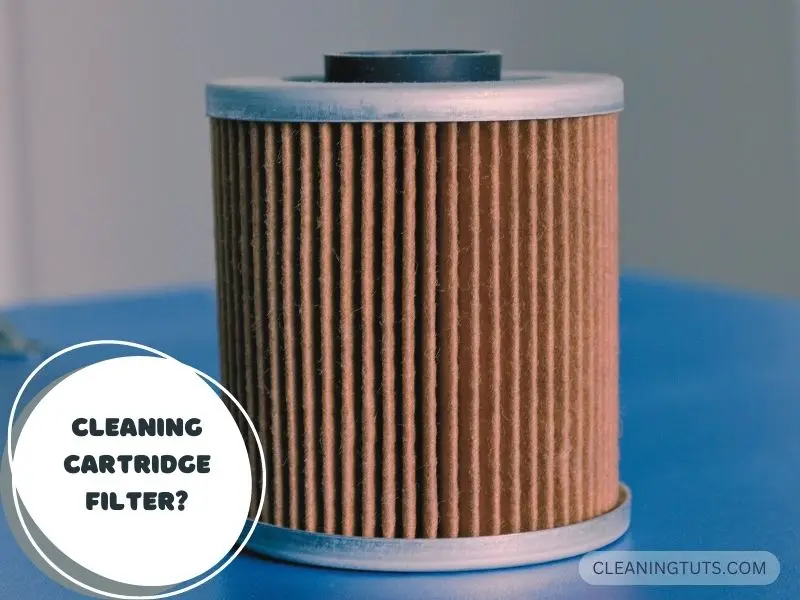
Cartridge filters are pleated paper or synthetic cylinders found in most handheld vacuums and heavy-duty shop vacs. Unlike foam, these are not washable — water breaks down the pleated medium and destroys filtration integrity. Cleaning extends the filter’s useful life but does not replace the need for eventual replacement.
Follow these steps to clean a cartridge filter:
- Remove the cartridge carefully — the pleats are delicate and bend easily.
- Take the filter outdoors or to a bin area. Tap it firmly against the inside edge of a garbage can 8–12 times to dislodge loose debris.
- Rotate the filter 90 degrees and repeat tapping. Continue until all sides are cleared.
- For deeper cleaning, use short bursts of compressed air (30–40 PSI) held 4–6 inches from the pleats, blowing from the clean side outward.
- Inspect for tears, dis-coloration, or damage before reinstalling. Replace if the pleats are compressed or the medium is torn.
- Seat the filter gently into its housing without forcing it.
After dry cleaning, air permeability improves measurably — tests show a clean cartridge restores up to 85% of original airflow compared to a clogged unit. Replace cartridge filters every 6–12 months or sooner if vacuum suction does not recover after cleaning. If you vacuum drywall dust, sawdust, or fine powders, clean the cartridge more frequently as these particles embed deeply in the pleats.
HEPA Filters: Do Not Clean — Replace
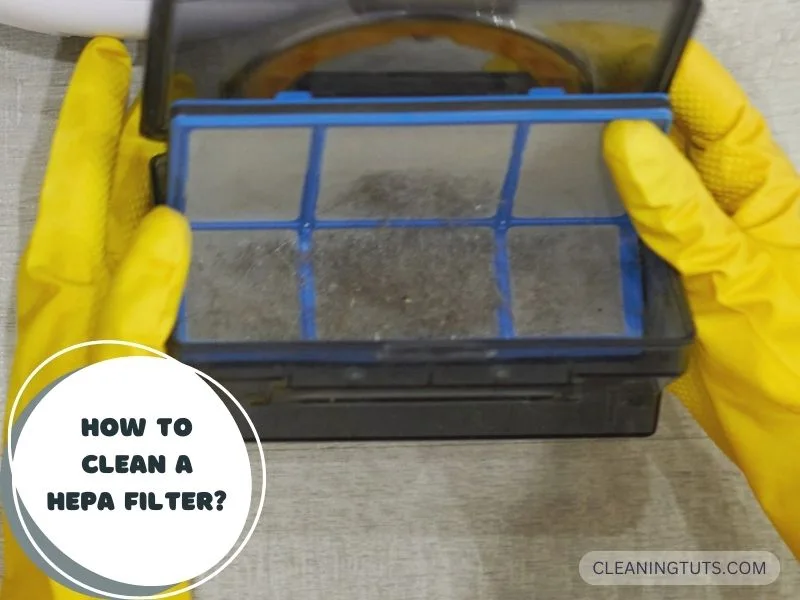
HEPA (High Efficiency Particulate Air) filters are constructed from interlaced glass or synthetic fibers that trap microscopic particles. Per the U.S. Environmental Protection Agency, a true HEPA filter removes at least 99.97% of airborne particles sized 0.3 micrometers (µm) and larger. This particle size — known as the Most Penetrating Particle Size (MPPS) — is the hardest for the filter to capture. Larger and smaller particles are trapped with even higher efficiency.
Washing or scrubbing a HEPA filter destroys the fiber matrix. Even gentle rinsing disrupts the precise air gaps between fibers, creating paths for particles to bypass the filter. Once the structure is compromised, the filter loses its rated efficiency and cannot be restored. Any filter labeled “washable HEPA” is not a true HEPA filter by EPA standards.
When to Replace Your HEPA Filter
- Visual darkening or discoloration covering more than 50% of the surface area
- Noticeable reduction in suction despite a clean primary filter
- A “rotating” or rattling sound from the filtration chamber indicating structural collapse
- Every 60–90 days per manufacturer guidance, or more frequently in high-use or pet-household environments
For Dyson, Shark, and Roomba owners, genuine OEM replacement filters are available from the manufacturer or NSF-certified third-party suppliers. Generic “HEPA-style” filters often do not meet the 99.97% standard — look for the DOE (Department of Energy) specification on packaging.
Key Maintenance Takeaways
- Foam filters: Wash with lukewarm water, squeeze gently, air-dry 24–48 hours. Replace every 3–6 months.
- Cartridge filters: Dry clean only — tap and use compressed air. Never submerge in water. Replace every 6–12 months.
- HEPA filters: Do not clean. Replace every 60–90 days or when airflow noticeably drops.
- All types: Check monthly during routine vacuum use. A congested filter forces the motor to overwork, shortening the vacuum’s operational lifespan.
Consult your vacuum’s user manual for the manufacturer’s specific interval recommendations, as usage intensity affects replacement frequency.


