
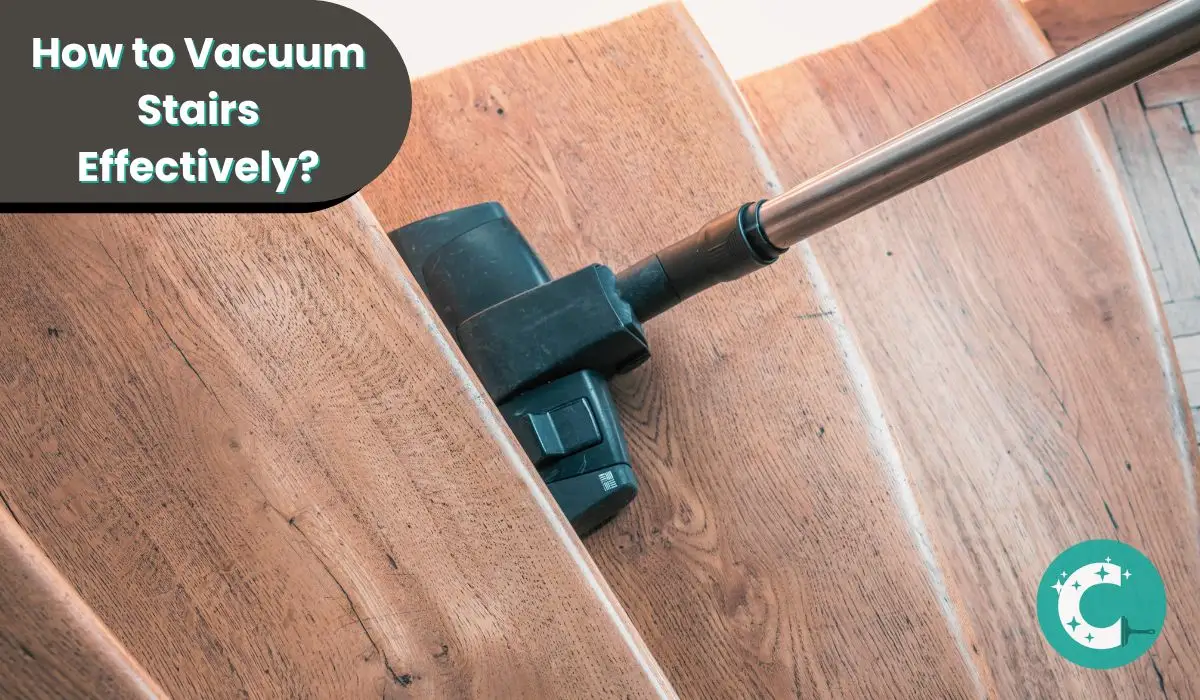
How to Vacuum Stairs Effectively?

Vacuuming stairs requires a specific sequence—edges first, then treads, then risers—to capture dislodged debris before it falls to lower steps. Using the right attachments (crevice tool for edges, mini motorized brush for treads) and working top-down ensures debris falls toward the floor where it can be vacuumed once at the end. Most households should vacuum stairs at least twice per pass per step for thorough results.
Stairs rank among the highest-traffic surfaces in any home. According to the U.S. Bureau of Labor Statistics, 80% of adults engage in household activities daily, spending an average of two hours on housework—and stairs are a routinely neglected trouble spot that accumulates dust, pet fur, and debris faster than many realize.
How to Vacuum Stairs: Step-by-Step Process
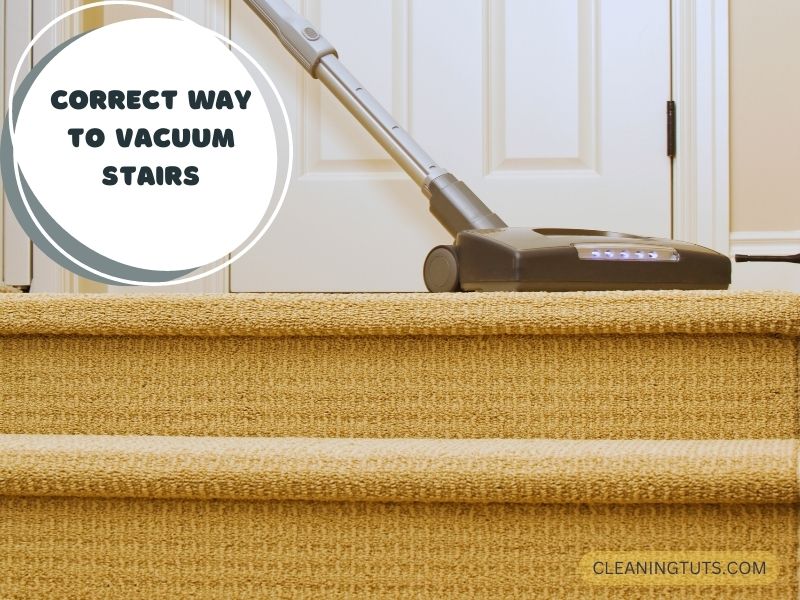
Work from the top of the staircase downward. Vacuum the edges and corners of each step first, then the tread (the flat horizontal surface), then the riser (the vertical face between steps). This top-down sequence ensures that any debris knocked free falls onto already-cleaned lower surfaces rather than onto areas you have yet to vacuum.
Step 1: Start with the Edges Using a Crevice Tool
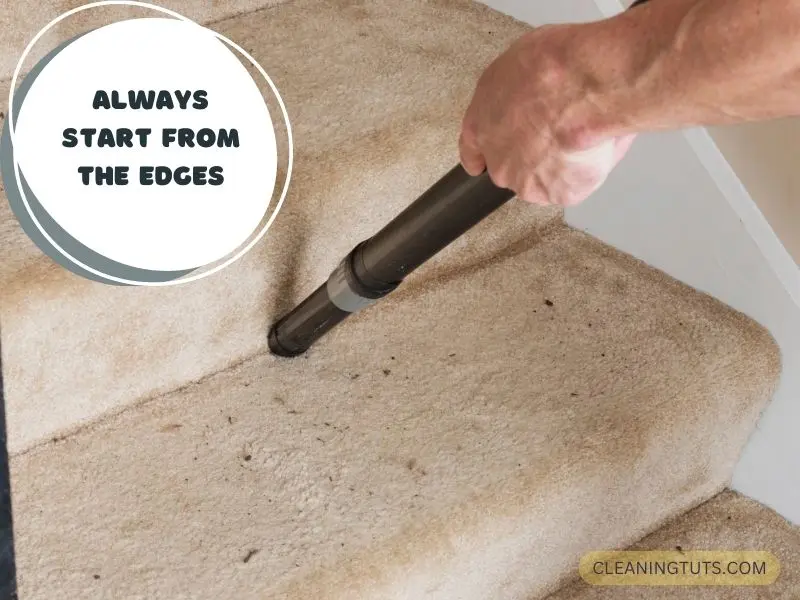
The crevice tool is essential for stairs. Its long, thin nozzle reaches into corners, along trim, and between balusters where dust and debris accumulate. Position the tool at the junction where the tread meets the riser and work along the full edge of each step.
Starting from the edges prevents debris from scattering as you work. Any particles knocked free during edge vacuuming get suctioned up as you progress down the step.
Step 2: Vacuum the Treads with a Mini Motorized Brush
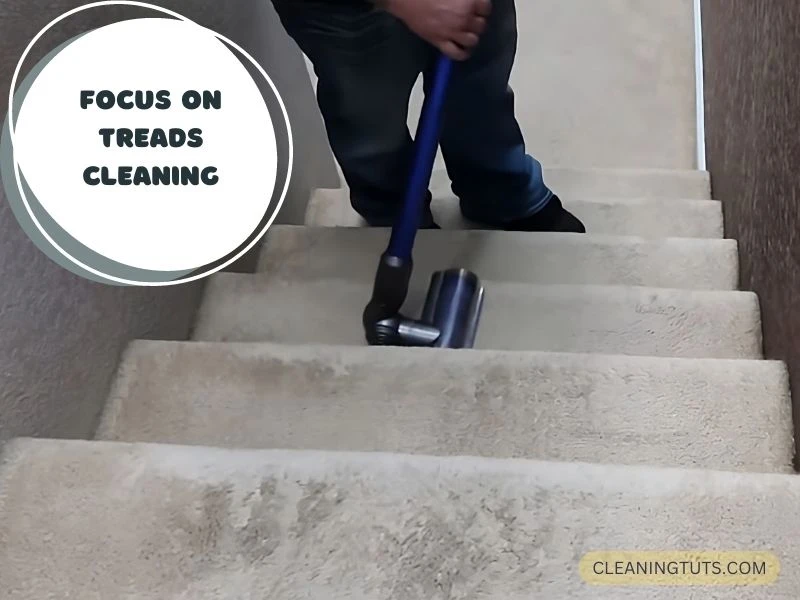
The tread is the flat horizontal surface where feet contact the step. Use a mini motorized brush attachment for this area. The rotating bristles agitate carpet fibers and dislodge embedded dirt that static suction alone misses.
Pass the brush over each tread 2–3 times in overlapping strokes. For bare wood or tile treads, a crevice tool or hard-floor attachment works better than a rotating brush.
Vacuum each tread from top to bottom—working downward ensures debris falls to the floor level rather than onto already-cleaned steps. Once all treads are done, vacuum the collected debris from the floor at the base of the stairs.
Step 3: Clean the Risers with a Brush Attachment
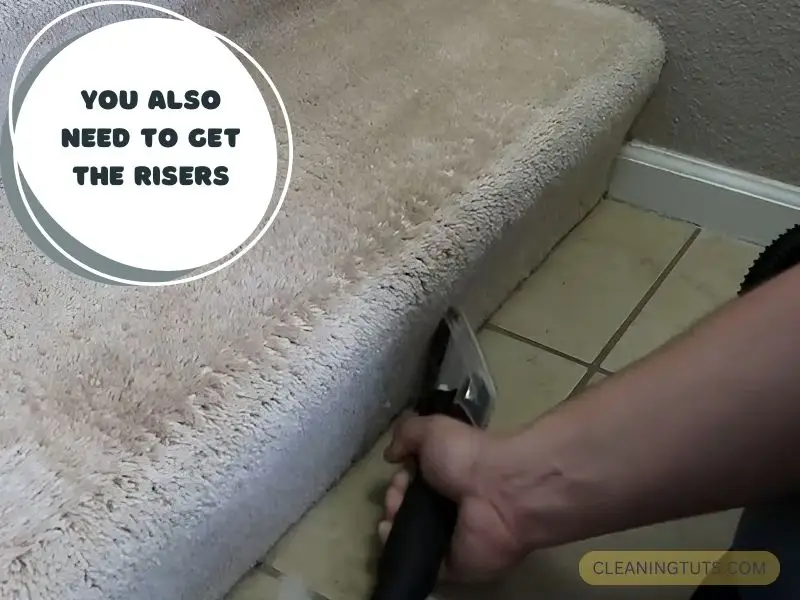
The riser is the vertical surface between each tread. This area catches dust that settles from the air and receives contact from shoes during ascent or descent.
Use a brush attachment on risers. Twist the tool angle to match the riser face and use short, overlapping strokes from top to bottom. Alternate between risers and treads as you work down the staircase for the most efficient workflow.
See Also: How to Remove Hair from a Vacuum
Vacuuming Carpeted Stairs: Key Tips
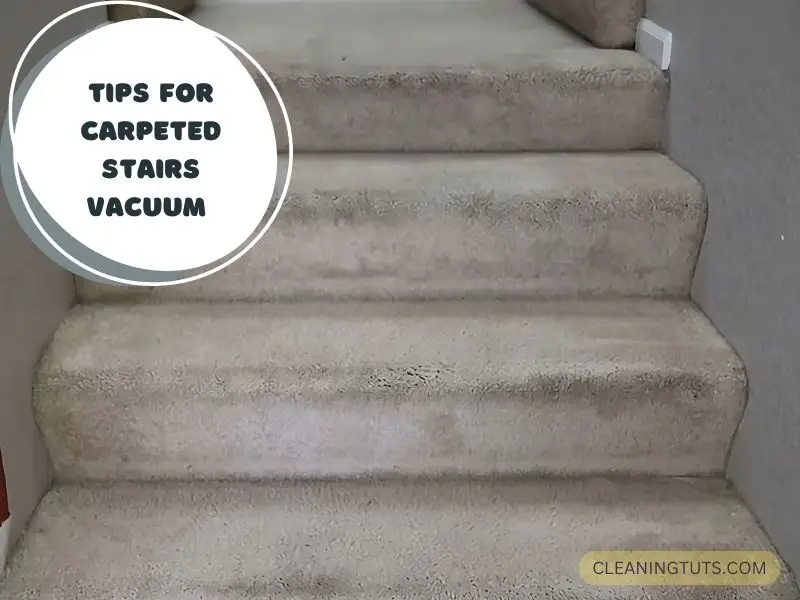
Carpeted stairs require extra attention because carpet fibers trap dust, allergens, and debris deep within the pile. Follow these additional guidelines:
- Use a lightweight cordless stick vacuum weighing under 5 lbs (such as the Dyson V12 Detect Slim at 4 lbs in hand) to reduce fatigue and minimize tripping hazards on stairs.
- Vacuum carpeted stairs at least 2–3 times per step to ensure fibers are thoroughly cleaned down to the base of the pile.
- Pre-treat high-traffic carpeted stairs with a carpet brush to loosen embedded grime before vacuuming—this improves suction efficiency by up to 40%.
- Work with a partner when vacuuming carpeted stairs to prevent falls and to hold the vacuum hose steady while you maneuver the attachments.
- Use a detachable canister or shoulder-mounted vacuum for carpeted stairs—this keeps your hands free and provides better balance on uneven surfaces.
Recommended Vacuum Attachments for Stairs
| Attachment | Best For | Why It Works |
|---|---|---|
| Crevice Tool | Edges, corners, tread-riser junctions | Long thin profile reaches into gaps standard nozzles miss |
| Mini Motorized Brush | Carpeted treads and risers | Rotating bristles agitate carpet fibers to release embedded dirt |
| Dusting Brush | Bare wood, tile, stone stairs | Soft bristles sweep dust without scratching hard surfaces |
| Upholstery Tool | Wide carpeted tread areas | Wide head covers more surface area faster than a brush |
Cordless Stick Vacuum Specifications for Stairs Cleaning
For stairs cleaning, cordless stick vacuums offer the best combination of portability and suction power. According to Wirecutter testing, the lightest cordless stick vacuums weigh just over 5 lbs total (approximately 4 lbs in hand), making them ideal for overhead reach on stairs.
- Dyson V12 Detect Slim: 4 lbs in hand, 45-minute battery life
- Shark PowerDetect Clean & Empty: Relatively lightweight, up to 70-minute battery in eco mode
- Tineco GO Pet: 4 lbs in hand, approximately 40-minute runtime on low mode
- Ryobi 18V One+ HP Advanced: 10+ lbs (heaviest option), approximately 32-minute runtime
For stairs, a vacuum under 5 lbs in hand reduces arm fatigue during overhead reach. Battery life of 40+ minutes handles a full staircase in one charge. Look for models with a detachable hand unit for the most versatile stair-cleaning setup.
Frequently Asked Questions
How often should you vacuum your stairs?
What attachment should I use to vacuum stairs?
Are stick vacuums good for stairs?
Do any robot vacuums clean stairs?
Wrapping Up
The vacuum cleaner you use on stairs directly affects results. A lightweight cordless stick vacuum (under 5 lbs in hand) with a crevice tool and mini motorized brush attachment handles most residential stair cleaning effectively.
The sequence matters: edges first, then treads, then risers, always working top-down. Pass each step 2–3 times and finish by vacuuming debris that has fallen to the floor at the base of the staircase.
For carpeted stairs, prioritize a model with a shoulder strap or detachable hand unit to keep your hands free for balancing and maneuvering attachments on uneven surfaces.
References
- U.S. Bureau of Labor Statistics. (2024). Time spent in household activities. BLS American Time Use Survey.
- New York Times Wirecutter. (2026). Best Cordless Stick Vacuum. NYT Wirecutter.


