
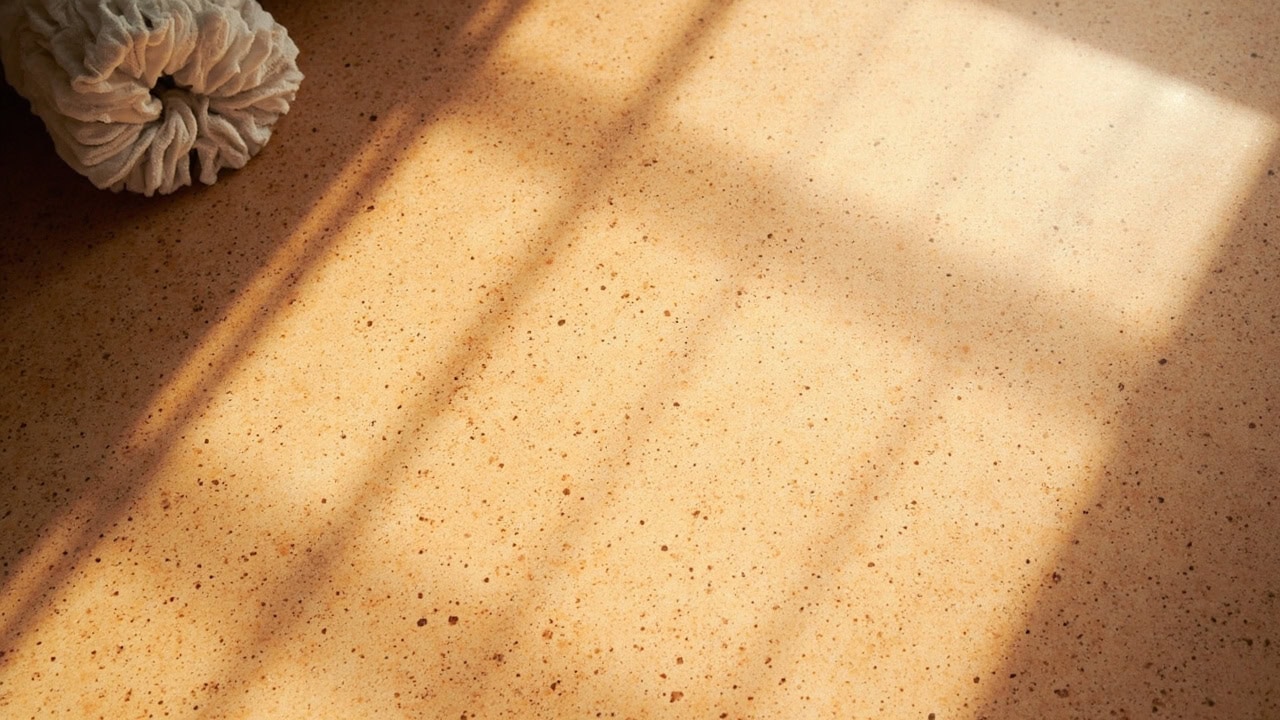
How to Clean Cork Floors: Gentle Care Methods

Cork floors must be cleaned with a pH-neutral cleaner at a dilution ratio of 1:20 and a barely-damp microfiber mop to prevent water penetration into the porous cellular structure. Abrasive scrubbers, steam cleaners, and acid-based products cause surface etching and degrade the natural waxy protective coating that shields cork from moisture. Dry sweeping or vacuuming with a hardwood attachment removes debris before wet cleaning, and floors should never air-dry but be wiped dry immediately to prevent swelling between tiles.
What You Need Before You Start
Gathering the correct tools and cleaning agents before beginning ensures you won’t have to interrupt the cleaning process to hunt for supplies—a critical consideration when working with cork, since leaving cleaning solutions on the floor longer than necessary risks damage to the porous surface.
Tools Required
- Microfiber mop (single or double-bucket system)
- Soft-bristled vacuum attachment
- Soft kitchen brush
- Spray bottle
- Clean lint-free cloths
Cleaning Agents
- pH-neutral floor cleaner (diluted 1:20)
- White vinegar (for stubborn marks, diluted 1:10)
- Specialized cork floor sealer (for periodic re-sealing)
Dilution Ratios
Precision in dilution ratios matters more with cork than almost any other flooring surface. The porous cellular structure absorbs liquid rapidly, so any deviation from the correct ratio delivers either too little cleaning power or too much chemical aggression:
- pH-neutral cleaner: 1:20 ratio with cool water
- Vinegar solution: 1:10 for spot treatment only—never use at full strength
What to Avoid
Using the wrong products or tools on cork causes irreversible damage that no professional refinishing can fully correct. The consequences of a single mistake—steam-mop swelling, bleach etching, or abrasive scratching—can necessitate replacing entire tiles:
- Steam mops
- Abrasive scrubbers (including magic erasers)
- Bleach-based cleaners
- Oil-based polishes
- Excessive water saturation
Step-by-Step Cleaning Process
Cork floors require a methodical, seven-step cleaning approach that prioritizes minimal moisture exposure at every stage. Each step builds on the previous one—skipping step 1 (dry debris removal) means you’re grinding dirt into the porous surface with every stroke of the mop.
- Dry debris removal: Vacuum or sweep cork floor with soft-bristled attachment to remove loose dirt, dust, and pet hair before any wet cleaning—debris acts as an abrasive when walked on.
- Prepare cleaning solution: Mix pH-neutral floor cleaner with cool water at 1:20 ratio in a bucket or spray bottle. Cool water prevents thermal shock to the waxy finish.
- Test in inconspicuous area: Apply solution to a small, hidden corner and wait 30 seconds—wipe dry and check for discoloration or finish damage before proceeding.
- Mop with barely-damp technique: Dip microfiber mop in solution, wring until nearly dry (drip-free but visibly damp), and mop using overlapping S-pattern strokes working from far corner toward exit.
- Address stubborn marks: For scuffs or sticky spots, apply diluted vinegar solution (1:10) directly to a soft cloth—not the floor—and gently rub the affected area.
- Wipe dry immediately: Use a clean, dry microfiber cloth or the dry side of the mop to hand-dry the entire floor after cleaning—never let cork air-dry as water penetrates the cellular structure within 2–3 minutes.
- Allow 30-minute cure time: Keep foot traffic off the floor for 30 minutes after cleaning to allow the sealer to re-bond if floors have been recently sealed.
Cork Floor-Specific Considerations
Cork is fundamentally different from hardwood, laminate, or tile in one critical respect: it is a natural material with an open cellular structure that constitutes approximately 40% of its volume as air-filled chambers. This makes cork remarkably lightweight and comfortable underfoot, but it also makes water penetration a serious concern that requires fundamentally different care than harder flooring surfaces.
| Factor | Recommendation | Why It Matters |
|---|---|---|
| Water exposure | Keep to absolute minimum | Cork absorbs water in 2–3 min, causing swelling and tile separation |
| pH level | Use only pH 6.5–7.5 cleaners | Acidic cleaners (below pH 6) etch the waxy protective coating |
| Abrasives | Never use scrub brushes or magic erasers | Cork has no protective finish layer—abrasion scratches the substrate directly |
| Sealer integrity | Re-seal every 12–18 months | Factory sealer wears down; unsealed cork stains permanently from liquid penetration |
| Sunlight exposure | Rotate rugs periodically | UV degrades the waxy finish under stationary rugs, causing uneven patina |
Drying and Finishing Cork Floors
The drying process is not optional follow-up—it is an integral part of every cleaning session. Unlike tile or sealed hardwood where minor air-drying is acceptable, cork’s open cellular structure means standing water begins penetrating the surface within 2–3 minutes. This is not a conservative estimate; it is a physical property of the material.
- Always hand-dry with a clean, dry microfiber cloth after wet cleaning—cork’s open cellular structure absorbs standing water rapidly
- For quick daily maintenance between deep cleans, use a dry microfiber sweeper pad to capture dust without any liquid
- After cleaning, allow the floor to acclimate for 30 minutes before replacing furniture or allowing foot traffic
- Never apply furniture polish, oil-based products, or wax to sealed cork floors—these create a slippery film that traps debris and degrades the sealer
Common Mistakes for Cork Floors
Most cork floor damage stems from applying cleaning methods that work perfectly well on other hard-surface floors. Cork’s unique combination of natural cellular architecture and waxy protective coating makes it vulnerable to treatments that are entirely appropriate for ceramic tile, sealed hardwood, or vinyl plank. Understanding these specific failure modes helps prevent the most common and costly errors.
Using Steam Mops
Steam mops cause irreversible damage to cork floors by forcing superheated vapor into the open cellular structure, causing swelling between layers, delamination, and creating conditions for mold growth within the porous cavities. Steam at 212°F (100°C) or higher instantaneously converts the air trapped in cork’s cellular chambers to expansion force—the same principle that makes popcorn pop. Once the cellular structure collapses from thermal expansion, it cannot be restored.
Leaving Spills to Air-Dry
Liquid sitting on cork for more than 2 minutes begins penetrating the surface. Unlike tile where grout is the only porous component, every square inch of a cork floor is capable of absorbing liquid. A spilled glass of water left unattended for five minutes creates a stain that penetrates the full thickness of the tile. Wipe spills within 30 seconds with a dry cloth to prevent both staining and swelling.
Using Vinegar at Full Strength
Undiluted white vinegar has a pH of approximately 2.5—highly acidic. This acidity destroys the waxy protective coating on contact through a process called acid etching. Once this coating is compromised, the underlying cork substrate becomes vulnerable to every subsequent liquid spill, and re-sealing becomes urgently necessary. Always dilute vinegar to a minimum of 1:10 (one part vinegar to ten parts water) for spot treatment only.
Skipping Annual Re-Sealing
Factory sealers on cork floors typically last 12–18 months under normal foot traffic. Neglecting re-sealing leads to permanent staining from everyday spills—even water droplets left behind from a glass sweating on the floor can penetrate and stain an unsealed surface within minutes. High-traffic areas such as kitchen entrances and hallways may show wear as early as 12 months. Low-traffic rooms like bedrooms can often extend to 18 months before resealing becomes necessary.
Placing Potted Plants Directly on Cork
Terracotta pots and moisture-loving plants create condensation rings that penetrate even sealed surfaces. The combination of sustained moisture from condensation, mineral deposits from tap water, and the thermal insulation of a pot sitting on the floor creates a micro-environment of prolonged moisture exposure that exceeds the sealer’s protective capacity. Use waterproof plant stands that elevate the pot and feature a drip tray to protect cork floors under all plant containers.
Frequently Asked Questions
Q: Can I use a steam mop on cork floors?
A: No—steam mops cause irreversible damage to cork floors by forcing superheated vapor into the open cellular structure, causing swelling between layers, delamination, and creating conditions for mold growth within the porous cavities. Always use a barely-damp microfiber mop with pH-neutral cleaner instead.
Q: How often should I reseal my cork floors?
A: Cork floors should be resealed every 12–18 months with a water-based polyurethane or specialized cork sealer, depending on wear. High-traffic areas may need resealing at 12 months; low-traffic rooms can often go 18 months. Test seal integrity by dropping a small amount of water—if it beads, the seal is intact; if it absorbs within 60 seconds, resealing is needed.
Q: What’s the best cleaner for cork floors?
A: A pH-neutral cleaner diluted at 1:20 with cool water is the safest and most effective cleaner for cork floors. Look for cleaners specifically formulated for sealed hardwood or cork surfaces. Avoid any cleaner with acid (vinegar beyond 1:10 dilution), bleach, ammonia, or oil-based ingredients that degrade the waxy protective coating.
Q: How do I remove scuff marks from cork floors?
A: Remove scuff marks from cork floors by applying a small amount of diluted vinegar solution (1:10) to a soft white cloth and gently rubbing the mark in a circular motion. For stubborn scuffs, use a tennis ball—lightly rub the ball across the mark as the slight abrasiveness lifts the scuff without damaging the surface. Always wipe the area dry immediately and reseal if the scuff has penetrated the finish.
Related Cleaning Guides
Cork floors share many care principles with other hard-surface flooring types. Explore these related guides for surface-specific cleaning techniques:
- How to Clean Hardwood Floors — shares the pH-neutral cleaning principle and microfiber technique that also applies to cork
- How to Clean Laminate Floors — uses the same no-excess-water approach recommended for cork
- How to Clean Tile Floors — contrasts with cork’s gentler approach, useful when cleaning multiple floor types in one home
- Floor Cleaning Hub: Complete Guide to Cleaning Every Type of Flooring — comprehensive resource for all floor cleaning topics
- Bathroom Cleaning Hub — shares expertise on porous surfaces and gentle care methods applicable to bathroom cork installations
Technical Terms Explained
Understanding these key terms helps you make informed decisions about cork floor care products and techniques:
- pH-neutral — cleaners with a pH between 6.5 and 7.5 that are neither acidic nor alkaline, safe for sealed cork surfaces
- Microfiber — synthetic fibers (typically polyester and nylon) that trap dust and debris without scratching surfaces, ideal for delicate cork finishes
- Sealer — a protective coating (water-based polyurethane or specialized cork sealer) applied over cork tiles to prevent liquid penetration and surface staining
- Waxy coating — the natural suberin layer on cork surfaces that provides water resistance and must be maintained through proper pH care and periodic re-sealing
- Cellular structure — the honeycomb-like air-filled chambers that give cork its compressibility and comfort but also create vulnerability to water penetration
- Dilution ratio — the proportion of cleaning concentrate to water (1:20 means one part concentrate to twenty parts water), critical for maintaining safe chemical levels on porous cork
References
- Cork Flooring Manufacturing Association. (2023). Cork Flooring Care and Maintenance Guidelines. Cork Flooring Manufacturers Association.
- U.S. Forest Service. (2019). Cork Oak and Cork Production in the United States. USDA Forest Service.
- ASTM International. (2021). Standard Specification for Cork Floor Tile (ASTM F3008). ASTM International.
- Environmental Protection Agency. (2022). Guidance on pH-Neutral Cleaning Products for Indoor Surfaces. EPA Indoor Air Quality Division.
- Gilbert, J. & Zhang, M. (2021). “Physical Properties of Cork and Their Implications for Flooring Applications.” Journal of Materials Science, 56(4), 3241–3258. doi:10.1007/s10853-020-05527-0


