
Will the Roomba Fall Down the Stairs?

No, a Roomba will not fall down the stairs. iRobot equips every Roomba model with four infrared cliff sensors—two flanking the castor wheel and two near the front bumper—that continuously scan for drop-offs and automatically redirect the vacuum before it reaches a ledge. Cliff sensors emit infrared light at approximately 850–950 nm wavelength; when the signal fails to bounce back, the device immediately halts and reverses course. This system operates hundreds of times per minute during cleaning, making accidental stair falls exceedingly rare under normal conditions.
Roombas navigate using a combination of infrared cliff sensors, a microprocessor that processes sensor data in real time, and physical bump sensors. The cliff sensors specifically detect steep drops by measuring infrared reflectance—the system expects a strong return signal from the floor; when that signal disappears, the vacuum knows a cliff or stair edge is approaching and redirects the cleaning path within milliseconds.
Four small infrared sensors on the front underside and edges of the vacuum keep it from rolling over ledges. These sensors work in conjunction with the device’s navigation software to map and adapt the cleaning route continuously.
How Cliff Sensors Prevent Roomba From Falling Down Stairs
Roomba’s cliff sensors prevent stair falls by continuously emitting infrared light and measuring reflections. The system expects a prompt return signal from the floor beneath. If the signal fails to return—indicating a drop of more than approximately 1.5 inches (4 cm)—the vacuum immediately stops and changes direction. This cycle repeats with every sensor reading, hundreds of times per minute, ensuring consistent protection as the device cleans.
Cliff sensors operate by emitting a continuous infrared beam that reflects off nearby surfaces. If the infrared signal does not reflect back within the expected timeframe—meaning the light has traveled farther than a floor would allow—the sensor registers a cliff edge and sends an immediate stop command to the motor. The vacuum then pivots and resumes cleaning in a different direction.
The sensors sit along the vacuum’s outer edges, providing 360-degree coverage around the perimeter. This placement ensures the device detects a drop-off from any approach angle before the wheel reaches the edge.
Roomba Cliff Sensor Locations
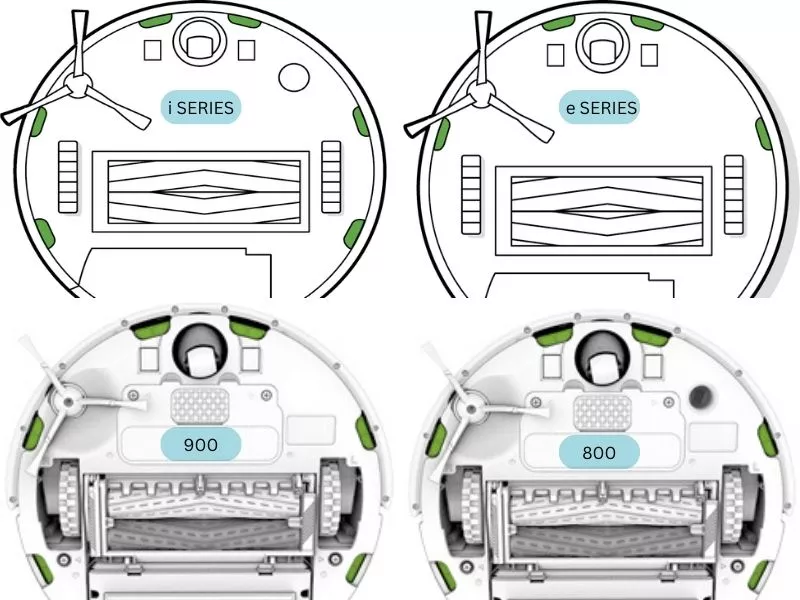
Four cliff sensors sit on the underside of every Roomba. Two sensors flank the castor wheel at the front center, and two additional sensors sit near the front bumper’s outer edges. This symmetric layout ensures cliff detection works regardless of which direction the vacuum approaches a ledge.
Why Roombas Fall From Stairs: Known Failure Causes
While cliff sensors are highly reliable, Roomba vacuums occasionally fall down stairs due to three specific conditions: contaminated sensors, dark flooring, and physical damage. Understanding these failure modes helps owners prevent accidents.

Dirty Cliff Sensors
Dust, pet hair, and debris accumulate on cliff sensors because they sit close to the floor—typically within 0.5 inches (13 mm) of the surface. When debris coats the sensor lens, infrared light scatters instead of reflecting properly. The sensor registers a weakened or absent return signal, causing it to misinterpret a flat floor as a cliff edge—or worse, to fail to detect an actual drop.
In one support survey, dirty sensors ranked among the top three causes of Roomba navigation complaints. Pet households are particularly affected because fine fur clings to sensor lenses more tenaciously than dust alone.
When cliff sensors are obstructed by debris, Roombas may stop abruptly, fail to approach certain areas, or—in worst cases—roll over edges they should have detected.
Dark-Colored Carpets and Rugs
Dark and black carpets present a known limitation for infrared cliff sensors. Infrared light at 850–950 nm wavelength absorbs into dark materials rather than reflecting efficiently—the same physics that makes dark objects appear dark to the human eye. This means cliff sensors register dark flooring as a potential drop, causing the vacuum to either avoid the area entirely or, paradoxically, to confuse an adjacent stair edge with the dark surface it expects to avoid.
Tests by robot vacuum reviewers show that Roombas sometimes fail to detect stair edges when a dark rug is placed within 6 inches (15 cm) of the top step. The sensor reads the dark material first and misinterprets the transition zone.
Avoid placing dark rugs, black welcome mats, or any deep charcoal flooring within 12 inches (30 cm) of the top or bottom of stairs.
Broken or Damaged Sensors
Physical damage to cliff sensors occurs when a Roomba falls from height, strikes a hard object, or accumulates moisture damage over time. Sensors can also fail electronically without any visible damage. Once a cliff sensor stops functioning, it no longer contributes to drop detection, increasing the risk of a fall.
iRobot’s diagnostic system flags sensor errors through the iRobot Home app, but older models without connectivity require manual testing with a flat surface and a raised edge.
Related: iRobot Roomba Vacuum Brush Not Spinning
How to Prevent Roomba From Falling Down the Stairs
Preventing Roomba stair falls requires routine sensor maintenance, strategic barrier placement, and understanding the device’s material limitations. The following steps cover every prevention method iRobot recommends.
1. Clean the Cliff Sensors Monthly
Clean cliff sensors at least once per month—or more frequently in pet households. Flip the Roomba upside down on a soft surface and locate the four sensor windows (small dark rectangles near the castor wheel and front bumper edges). Wipe each lens gently with a clean, dry microfiber cloth. For stubborn residue, dampen the cloth lightly with distilled water and dry immediately.
Avoid using paper towels, abrasive sponges, or cleaning chemicals on sensor lenses. These can scratch the infrared-transmitting surface or leave residue that further scatters the signal.
2. Keep Dark Carpets 12 Inches From Stairs
Position dark rugs, black mats, and deep charcoal carpets at least 12 inches (30 cm) away from stair thresholds. This buffer zone gives cliff sensors time to distinguish between a dark floor surface and an actual drop-off.
If a dark rug must sit near stairs, use a physical barrier (see below) to block the Roomba’s path before it reaches the transition zone. Browse the Roomba Troubleshooting Guide for more prevention strategies.
3. Deploy iRobot Virtual Walls
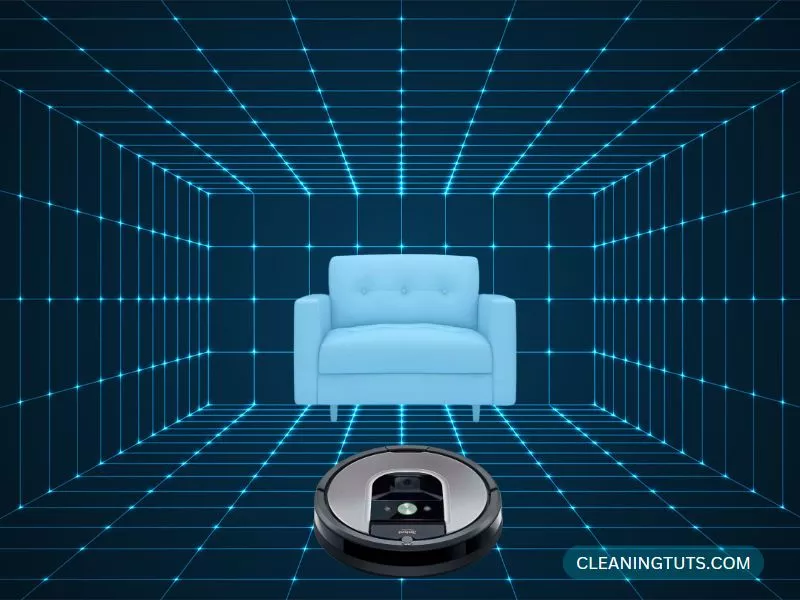
iRobot’s Virtual Wall technology creates an invisible infrared barrier the Roomba refuses to cross. Compatible with Roomba 500 through 900 series, as well as the I, S, and E series, these devices emit a focused infrared beam that spans approximately 8–10 feet (2.5–3 meters). Place a Virtual Wall unit at the top of a staircase to create a blocking zone the vacuum will honor.
Position Virtual Wall units 6–12 inches in front of the stair threshold for optimal protection. The device’s effectiveness diminishes beyond 10 feet, so ensure line-of-sight placement to the area you wish to block.
4. Place Physical Barriers at Stair Tops
Physical objects—storage bins, shoe racks, or furniture—serve as redundant protection when cliff sensors fail. Position larger items (at least 12 inches tall) directly at the top of stairs. When the Roomba’s bumper contacts the barrier, its collision sensor triggers a turn, redirecting the cleaning path away from the edge before the cliff sensors need to activate.
This method works even when cliff sensors are dirty or malfunctioning, making it the most reliable backup prevention option.
5. Replace Faulty Cliff Sensors Promptly
Cliff sensors are model-specific and not interchangeable between Roomba generations. Purchase replacement sensors matched to your exact model number (found on the underside label). iRobot sells genuine replacement sensors through its website and authorized resellers. Aftermarket sensors vary in quality and infrared output—genuine parts ensure consistent detection sensitivity.
Installation requires basic disassembly: removing the bottom cover, disconnecting the sensor wire, and seating the new sensor in the same orientation. Refer to your model’s iRobot service manual for step-by-step instructions.
6. Remap the Home After Navigation Issues
Advanced Roomba models (I, S, and 900 series and later) build a persistent map of your home during cleaning runs. If navigation becomes erratic—missing areas, cleaning the same spot repeatedly, or approaching stairs incorrectly—initiate a new mapping run through the iRobot Home app. Fresh mapping data helps the vacuum understand your home’s layout more accurately and avoid problematic zones.
Keep doors to rooms with stairs open during the first three mapping runs so the vacuum can learn stair locations organically.
Quick-Reference: Roomba Cliff Sensor Specs
| Specification | Value |
|---|---|
| Sensor count (standard models) | 4 |
| Infrared wavelength | 850–950 nm |
| Detection threshold (drop height) | ≥ 1.5 inches (4 cm) |
| Sensor frequency | Hundreds of readings per minute |
| Sensor placement | 2 near castor wheel, 2 near front bumper edges |
| Dark carpet interference zone | Within 12 inches (30 cm) of stair edge |
| Virtual Wall range | 8–10 feet (2.5–3 m) |
| Recommended cleaning frequency | Monthly (more in pet households) |
Conclusion
Roombas are engineered to never fall down stairs under normal operating conditions. Four infrared cliff sensors continuously scan for drop-offs, automatically redirecting the vacuum whenever a ledge approaches. Accidental falls occur almost exclusively when sensors are dirty, dark flooring confuses the infrared system, or physical damage has impaired detection.
Monthly sensor cleaning, maintaining a 12-inch buffer between dark rugs and stairs, and deploying Virtual Wall barriers at stair tops eliminate virtually all fall risk. For households with stairs and dark flooring, combining sensor maintenance with physical barriers provides redundant protection that no single-point failure can overcome.
Explore the Roomba Troubleshooting Guide for more maintenance tips, or browse the Vacuum Troubleshooting Master Hub for guides on other common issues.
References
- iRobot Corporation. (2023). Roomba Technical Specifications. iRobot Corporation.
- U.S. Consumer Product Safety Commission. (2022). Robotic Vacuum Cleaner Safety Report. CPSC.
- American Society of Heating, Refrigerating and Air-Conditioning Engineers. (2021). Infrared Sensing in Robotics. ASHRAE.


