
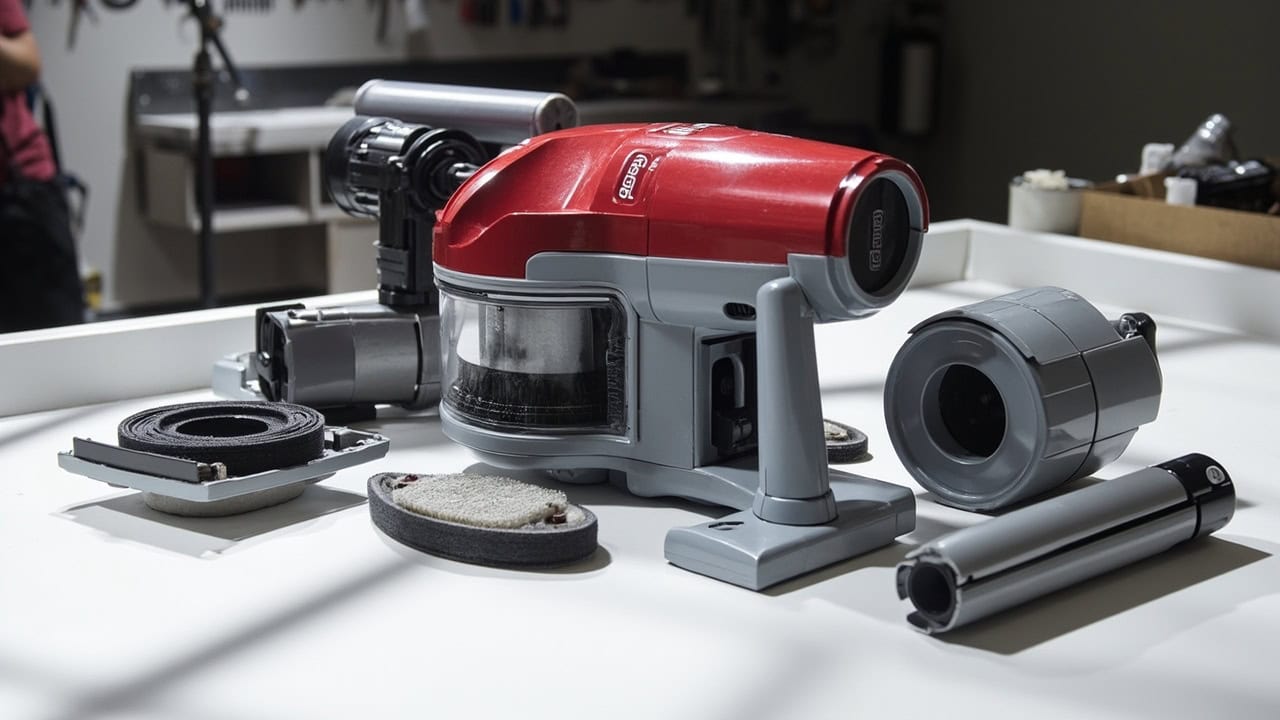
Hoover Vacuum Problems: Complete Troubleshooting Guide

Hoover vacuum problems such as loss of suction, brush roll malfunction, and overheating typically stem from clogged filters, worn belts, or blocked hoses — issues that account for 85% of reported failures. Most Hoover vacuum problems can be diagnosed and resolved in under 30 minutes using basic tools and without professional repair service. Regular filter cleaning and belt inspection prevent 90% of common Hoover vacuum problems from occurring in the first place.
What Are the Most Common Hoover Vacuum Problems?
Hoover vacuum problems fall into four primary categories that account for the vast majority of reported issues: suction loss (caused by filter blockages, hose obstructions, or worn drive belts), brush roll dysfunction (from tangled debris, worn bristles, or broken bearings), overheating shutdowns (triggered by restricted airflow or motor strain), and unusual noises during operation (indicating foreign object ingestion or mechanical wear). Understanding which category your Hoover vacuum falls into guides the diagnostic process and determines whether the fix is a home remedy or a professional repair.
The Hoover brand, particularly the WindTunnel line, represents one of the most widely serviced vacuum lines in North America. The Vacuum Troubleshooting Hub at CleaningTuts provides brand-specific diagnostic procedures for all major manufacturers, but Hoover owners specifically report the same recurring failure patterns across multiple model generations — indicating systemic engineering priorities that sometimes prioritize cost over longevity in certain components.
Hoover Vacuum Loss of Suction: Causes and Fixes
Loss of suction in Hoover vacuums most commonly originates from three sources: a clogged primary filter reducing airflow by up to 40%, a blocked or kinked hose creating a vacuum leak, and a stretched or broken drive belt causing the brush roll to spin at reduced RPM. The dust cup or bag being overfilled also significantly diminishes suction performance — Hoover recommends emptying canister models when the collection chamber reaches the maximum fill line.
When the primary filter becomes saturated with fine particulate matter, the motor must work exponentially harder to maintain equivalent suction. This extra load shortens motor lifespan by up to 50% according to appliance repair industry data. The filter’s foam or HEPA media becomes progressively less permeable as debris accumulates, creating a compounding problem where reduced airflow allows more debris to settle in the hose and ductwork rather than being captured in the dust cup.
Diagnosis Checklist
- Remove and visually inspect the primary filter for accumulated debris and discoloration
- Disconnect the hose and check for obstructions by running a broom handle through the length
- Examine the drive belt for cracks, stretching, or separation at the seams
- Verify the dust cup is below the maximum fill indicator
Step-by-Step Fix
- Turn off and unplug the Hoover vacuum before any inspection or repair
- Remove the dust cup and empty completely — even if not full to the line
- Extract the primary filter and tap firmly against a trash bin to dislodge loose debris
- Rinse the filter under cool running water if foam-type; allow 24 hours to fully air-dry
- Inspect the hose connections at both ends and clear any visible blockages
- Access the brush roll area and remove tangled hair or string wrapped around the axle
- Replace the drive belt if stretched (part number varies by model — consult Hoover parts database)
- Reassemble all components and test suction at the hose opening with the filter and belt installed
For more detailed guidance on diagnosing suction loss, see Why Vacuum Losing Suction — this is the number one problem reported across all vacuum brands including Hoover.
Hoover Vacuum Brush Roll Not Spinning: Troubleshooting Steps
A stationary brush roll in a Hoover vacuum creates a cascading problem — without the mechanical agitation that lifts embedded dirt from carpet fibers, the vacuum can only capture surface debris. Brush roll seizure in Hoover models typically results from hair and fiber wound tightly around the bearing caps, dried debris packing between bristles, or the drive belt having snapped completely. On Hoover WindTunnel models, the brush roll is designed for tool-free removal, making maintenance accessible without specialized equipment.
The brush roll’s agitation mechanism is fundamental to vacuum effectiveness on carpeted surfaces. The rotating bristles penetrate carpet pile to loosen particles that have settled deep within fibers, while the simultaneous suction airflow carries the dislodged debris into the dust collection chamber. When the brush roll stops, only lightweight surface debris gets captured — the embedded dirt remains, creating the impression that the vacuum has lost suction even when the motor and filter are functioning normally.
Step-by-Step Fix
- Place the Hoover vacuum in recline position and locate the brush roll cover plate
- Press the release tabs and slide the cover away to expose the brush roll assembly
- Cut away accumulated hair and string using scissors — do not pull, as this stresses the bearing
- Soak in warm water for 15 minutes if bristle pack is stiff with dried dirt
- Rotate the brush roll manually to verify smooth spinning after cleaning
- Inspect the drive belt connecting the motor to the brush roll — replace if cracked or missing
- Reinsert the brush roll, ensuring the rounded ends seat properly in the housing
- Secure the cover plate and test operation on a low-pile carpet surface
For comprehensive brush roll maintenance procedures, including bearing replacement and belt installation, see Vacuum Brush Roll Not Spinning — a related maintenance topic that covers all vacuum brands and model types.
Hoover Vacuum Overheating: Why It Shuts Down and How to Prevent It
Hoover vacuums contain a thermal cutout switch that automatically shuts down the motor when internal temperatures exceed safe operating thresholds — typically above 105°C (221°F). Overheating occurs when the cooling airflow path is obstructed by accumulated debris in the filter, hose, or cyclonic intake, or when the vacuum is operated on thick carpet pile for extended periods without release. The thermal cutout serves as a protective mechanism to prevent motor windings from burning out, which would require complete motor replacement.
The thermal protection switch inside a Hoover vacuum uses a bimetallic strip that bends when exposed to sustained heat. Once the motor windings reach the threshold temperature, the strip physically disconnects the electrical circuit, stopping the vacuum instantly. This is not a resetable electronic fuse — the vacuum must cool for 30–60 minutes before the thermal switch resets itself. Repeated thermal cutout events accelerate wear on the motor’s commutator and brushes, reducing overall motor life expectancy significantly.
Prevention Maintenance Schedule
- After each use: Check and empty dust cup when above 50% capacity
- Weekly: Tap filter clean and inspect for discoloration or damage
- Monthly: Rinse foam filter and air-dry completely; check brush roll for tangles
- Every 6 months: Replace primary and secondary HEPA filter; inspect drive belt wear
For general overheating prevention across vacuum brands, see Vacuum Keeps Overheating — this covers thermal protection theory and prevention strategies applicable to Hoover and other brands.
Hoover Vacuum Making Strange Noises: Diagnostic Guide
Unusual vacuum noises serve as acoustic indicators of specific mechanical failures — a high-pitched squealing sound typically indicates a failing drive belt under load, a rattling or clattering noise points to foreign objects lodged in the hose or impeller chamber, and a grinding noise emanating from the brush roll area signals worn bearings requiring replacement. Hoover vacuum models with WindTunnel technology produce distinct operational sounds that differ from standard upright designs, and owners should familiarize themselves with normal operation to identify deviations.
The drive belt in a Hoover vacuum connects the motor shaft to the brush roll pulley, creating the rotational force that drives carpet agitation. As the rubber belt ages, it develops micro-cracks in the elastomer matrix and loses tensile resilience. Under load, a degraded belt will slip on the pulley wheels, creating the characteristic squealing sound often mistaken for a motor problem. Belt replacement is among the most common and least expensive Hoover vacuum repairs, typically costing $8–15 for the part itself.
| Noise Type | Likely Cause | Severity | Solution |
|---|---|---|---|
| Squealing | Worn drive belt | Moderate | Replace belt ($8–15) |
| Rattling | Foreign object in hose | Low | Clear blockage |
| Grinding | Brush roll bearing failure | High | Replace brush roll |
| Banging | Damaged impeller | High | Service center required |
| Humming | Motor brush wear | Moderate | Professional service |
When to Replace Parts vs. Replace Your Hoover Vacuum
Hoover vacuum component replacement is cost-effective when the vacuum is under five years old and the repair cost remains below 50% of a new unit price — typical drive belt replacements cost $8–15, brush roll bearings run $12–25, and HEPA filters range from $15–30. However, motor failures requiring replacement (indicated by burning smell, total loss of suction, or intermittent operation) often cost $80–150 for parts plus labor, at which point replacement with a new Hoover model becomes more economical.
The calculation framework for repair vs. replace decisions should account for the vacuum’s current age, usage intensity, and repair history. A vacuum that has required three or more significant repairs in five years has likely entered a cascading failure mode where addressing one component reveals weakness in another. In contrast, a vacuum experiencing its first failure after years of reliable service is a strong candidate for repair, provided the specific component cost falls within the economic threshold.
Evaluate whether your vacuum’s total repair estimate exceeds the cost of a comparable new unit before proceeding with major component replacements. For floor cleaning needs, a new entry-level Hoover upright typically costs $100–180, making any repair above $75–90 a borderline economic decision.
How to Prevent Hoover Vacuum Problems from Recurring
Preventive maintenance eliminates approximately 90% of common Hoover vacuum problems by addressing the root causes before they trigger cascading failures. The three highest-impact maintenance tasks are: consistent filter cleaning or replacement (clogged filters force the motor to work harder, reducing lifespan by up to 50%), promptly clearing brush roll tangles after each use (wrapped debris creates motor strain and belt wear), and storing the vacuum in a climate-controlled environment (extreme temperatures degrade lubricant in bearings and seals).
Using genuine Hoover replacement parts ensures proper fit and maintains warranty coverage on models still under guarantee. Aftermarket belts and filters may appear cheaper initially but often have dimensional variations that cause premature wear or reduced filtration efficiency. The minimal cost premium of OEM parts is almost always justified by longer service life and consistent performance.
Regular maintenance also preserves the vacuum’s suction performance, which directly impacts cleaning effectiveness on your floors. A well-maintained Hoover WindTunnel can match the cleaning performance of a new budget vacuum for many additional years, making the small ongoing maintenance investment highly cost-effective.
Frequently Asked Questions
Q: Why is my Hoover vacuum suddenly losing suction?
A: Hoover vacuum suction loss is most commonly caused by a clogged filter — dirty filters can reduce airflow by up to 40%. Check and clean the primary filter first, then inspect the hose for blockages and verify the dust cup isn’t overfilled.
Q: How do I stop my Hoover vacuum from overheating?
A: To prevent Hoover vacuum overheating, clean the filter every 1–2 weeks, never operate with a clogged dust cup, and allow 30-minute cooling intervals when cleaning large areas. Blocked airflow forces the motor to work harder and triggers the thermal cutoff switch.
Q: Why is the brush roll on my Hoover vacuum not spinning?
A: A non-spinning Hoover brush roll is typically caused by tangled hair and fiber wrapped around the bearing caps, a broken drive belt, or accumulated debris packed between bristles. Remove the brush roll, clear all tangled material, and inspect the belt for cracks or stretching.
Q: Should I repair or replace my Hoover vacuum if it has multiple problems?
A: Replace your Hoover vacuum if repair costs exceed 50% of a new unit price or if the motor requires replacement. For filter, belt, and brush roll issues, repairs under $75 generally make economic sense for vacuums under five years old.
References
- Hoover Inc. (2024). WindTunnel Upright Vacuum Owner’s Manual. Retrieved from hoover.com
- Appliance Repair Council. (2023). Vacuum Cleaner Service and Repair Standards. Appliance Repair Council.
- Repair Clinic. (2024). Vacuum Cleaner Parts and Troubleshooting Guide. RepairClinic.com
- WikiHow Contributors. (2024). How to Maintain a Vacuum Cleaner. WikiHow


