
How to Make a Vacuum Quieter

Vacuum cleaners typically produce 70 to 85 decibels (dB) during operation, with premium quiet models reducing this to 55 to 65 dB. Routine maintenance—including cleaning or replacing filters every 3 to 6 months, checking for clogs, and lubricating brush roll bearings—significantly reduces noise levels and extends the vacuum’s lifespan.
This guide covers six evidence-based methods to make your vacuum quieter, from filter maintenance to selecting a low-decibel replacement model.
Tips to Make a Vacuum Quieter
Vacuum noise depends on motor speed, filter condition, airflow obstruction, and mechanical wear. Addressing these factors systematically reduces decibel output and improves cleaning performance.
1. Clean or Replace the Vacuum Filter
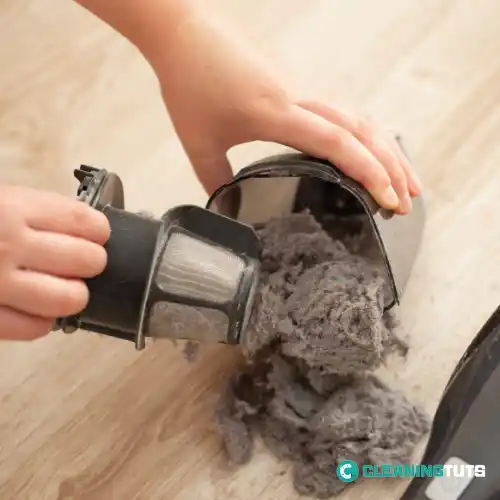
Clogged filters restrict airflow, forcing the motor to work harder and increasing noise output by 15 to 25 percent. A clean HEPA filter captures 99.97 percent of particles 0.3 microns or larger, including dust, pollen, and pet dander.
Most vacuum cleaners have two filters: a pre-motor filter near the canister and a HEPA post-motor filter. Washable foam filters should be rinsed under warm water at 100°F to 115°F every 3 to 4 weeks. Non-washable pleated filters require replacement every 6 to 12 months or sooner in high-use households.
To clean washable filters: remove the filter from the housing, rinse under lukewarm water without soap, allow to air-dry completely for 24 hours before reinstallation. Never reinstall a damp filter—the trapped moisture damages the motor.
For non-washable filters, tap gently against a hard surface to dislodge debris, then replace according to the manufacturer’s schedule. Using a clogged filter strains the motor and voids warranties on many models.
2. Inspect and Service the Vacuum Fan
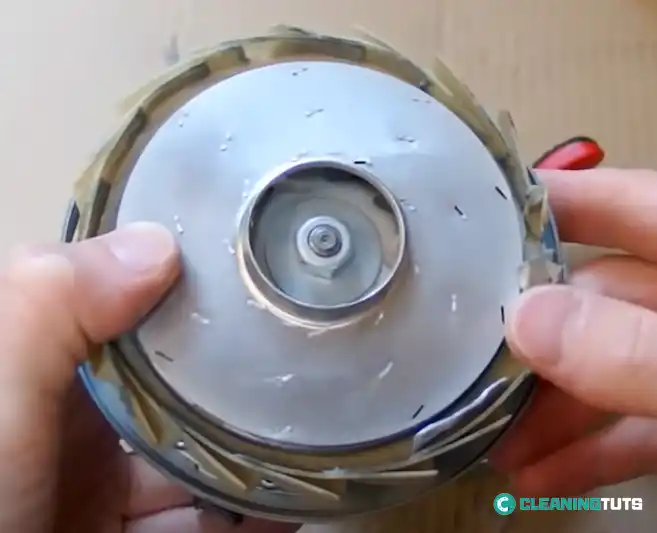
The impeller fan propels airflow through the vacuum. Bent, warped, or debris-wrapped blades create an unbalanced load that generates vibration noise and accelerates bearing wear in the motor shaft.
To inspect the fan: unplug the vacuum, remove the bottom plate or fan cover access panel, and visually examine each blade for cracks, bending, or accumulation of string, hair, or fiber wrappings. Use bamboo skewers or plastic tweezers to carefully remove tangled debris without bending the blades further.
If blades are cracked, chipped, or visibly warped, replace the fan assembly—the imbalance cannot be corrected through cleaning alone. Replacement fan blades cost $15 to $40 depending on the vacuum brand and model.
3. Cover the Air Exhaust Outlet
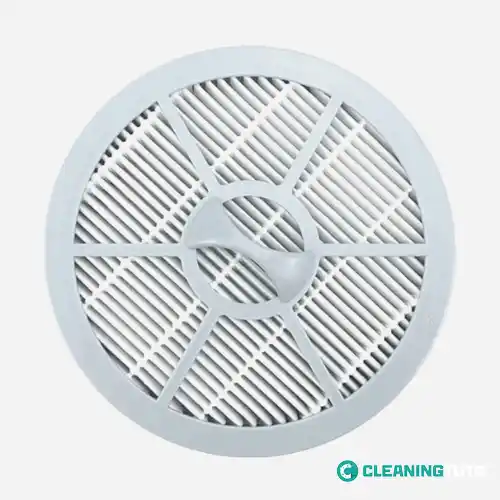
The exhaust outlet expels air at high velocity, contributing 40 to 60 percent of total vacuum noise. Covering the exhaust with an acoustic barrier reduces decibel output by 6 to 10 dB.
To create an exhaust muffler: cut three pieces of microfiber cloth or fleece, each approximately 4 by 6 inches. Punch 6 to 8 holes in each piece using a hole punch or scissor tip to maintain airflow. Layer the fabric pieces and secure with elastic bands, ensuring 70 to 80 percent surface coverage of the exhaust opening.
Monitor motor temperature every 5 minutes during use. If the vacuum housing feels hot to the touch (exceeding 140°F), add additional perforations to the fabric. Never operate the vacuum with a fully blocked exhaust—thermal overload destroys the motor windings.
4. Remove Clogs from the Airflow Path
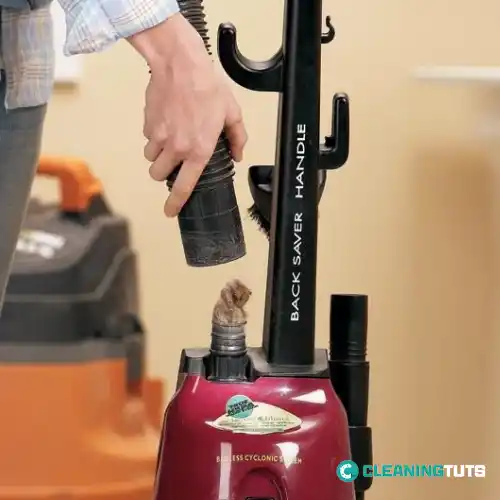
Partial blockages in the hose, intake neck, or brush housing force the motor to cycle at higher RPM to maintain suction, increasing noise and power consumption. Common culprits include compacted dust bunnies, small toys, paper scraps, and pet hair balls.
Disconnect the hose and extend it fully. Use a 36-inch flexible dryer vent brush or a straightened wire hanger with cloth attached to probe for obstructions. For the brush roll housing, cut tangled hair and string with blunt-tip scissors, working along the brush strip rather than across it to preserve the bristle pattern.
If the vacuum emits a whistling noise at specific angles, the hose has a pinched fold or internal tear. Replace kinked or torn hoses immediately—continued use with a compromised hose overheats the motor.
5. Replace or Lubricate Brush Roll Bearings
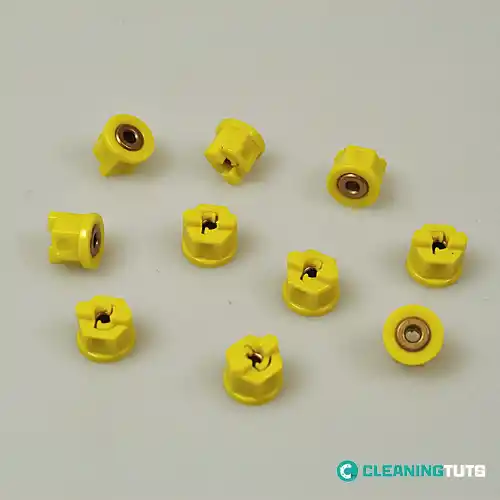
Worn brush roll bearings produce a grinding or squealing noise that intensifies as the brush rotates. In households with pets or long-haired individuals, hair wraps around the brush shaft and corrodes the bearing seal, introducing vibration and rotational noise.
To service brush bearings: pop out the brush roll from its housing clips, use a precision screwdriver to remove the end cap, and inspect the bearing surface for rust, pitting, or dried lubricant. Apply 2 to 3 drops of lightweight machine oil (ISO VG 15 to 32) to the bearing race, then rotate the brush manually for 30 seconds to distribute evenly.
Replace the brush roll if the bearings feel gritty after cleaning or if the brush bristles are worn below 0.25 inches. Most manufacturer replacement brush rolls cost $12 to $30 and should be replaced every 12 to 18 months in typical households.
6. Replace the Vacuum with a Low-Noise Model
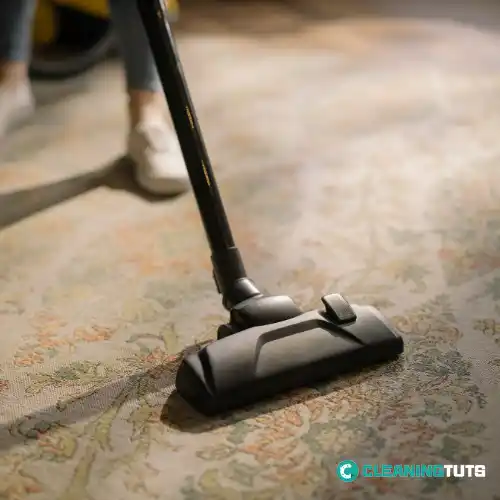
If maintenance no longer resolves the noise issue, replacing the vacuum eliminates the problem entirely. Current low-noise models use brushless DC motors and acoustic damping housings to achieve 55 to 65 dB—comparable to normal conversation levels.
When shopping for a quiet vacuum, prioritize these specifications:
- Noise level: 65 dB or below at maximum suction
- Motor type: Brushless DC (brushless motors produce 5 to 8 dB less noise than universal brush motors)
- HEPA filtration: HEPA 12 (99.5% efficiency) or HEPA 14 (99.995% efficiency) for allergen control
- Bagged design: Bagged vacuums are typically 3 to 5 dB quieter than bagless due to enclosed dust collection
The Miele Compact C1 uses a 1,200-watt Vortex motor and acoustic baffling to reach 64 dB at maximum power. The Electrolux Silent PerformerEco operates at 65 dB while consuming only 750 watts. Both models feature sealed HEPA filtration systems that trap 99.97 percent of particles down to 0.3 microns.
Quick Reference: Vacuum Noise Levels
| Vacuum Type | Typical Noise Level (dB) | HEPA Filter |
|---|---|---|
| Standard upright (budget) | 75–85 dB | Often missing or basic |
| Standard upright (premium) | 68–75 dB | HEPA 11–12 |
| Canister (standard) | 65–72 dB | HEPA 12 standard |
| Canister (quiet mode) | 55–65 dB | HEPA 12–14 |
| Robot vacuum | 55–68 dB | HEPA 11–12 |
| Handheld | 70–80 dB | Varies widely |
Frequently Asked Questions
How do you fix a loud vacuum motor?
To fix a loud vacuum motor, first check the drive belt for wear or improper tension—replace if cracked, stretched, or glazed. Next, clean or replace the dust bag and check both filters for obstruction. Remove any debris from the brush roll, hose, and intake passages. If the motor itself emits grinding or humming noise, the motor bearings are failing and the motor assembly requires replacement by a certified repair technician.
Is 70 dB loud for a vacuum?
Yes, 70 dB is moderately loud—equivalent to a garbage disposal or heavy traffic passing 15 feet away. Most manufacturers rate full-size vacuums between 65 and 85 dB. If you need a quieter option, look for models rated 65 dB or below, which typically use brushless motors and acoustic housing.
What type of vacuum motor is quietest?
Brushless DC motors are the quietest vacuum motor type. They eliminate the electromagnetic hum and friction noise produced by brushed universal motors. Brushless models typically operate 5 to 8 dB lower than equivalent-power brushed motors and have a lifespan of 2 to 3 times longer.
How often should vacuum filters be replaced?
Washable foam pre-filters should be cleaned every 3 to 4 weeks and replaced every 12 months. Pleated HEPA post-motor filters should be replaced every 6 to 12 months in typical households, or every 3 to 6 months in homes with pets, allergies, or daily vacuuming use.
Final Words
Vacuum noise is rarely a sign of catastrophic failure—most noise issues resolve through filter cleaning, clog removal, and bearing lubrication. These maintenance tasks cost under $20 in supplies and take 15 to 30 minutes per session.
Modern low-noise vacuums use brushless motors, acoustic damping materials, and optimized fan blade geometry to achieve 55 to 65 dB. If your vacuum is older than 8 to 10 years, the cumulative cost of repairs and elevated energy consumption often exceeds the price of a new quiet model.
For more maintenance guides, explore the Vacuum Troubleshooting Master Hub or browse the Cleaning Glossary for terminology definitions. For specific floor types, see the Hardwood Floor Hub or Tile & Grout Hub.
References
- U.S. Environmental Protection Agency. (EPA). (2024). Indoor Air Quality (IAQ): Vacuum Cleaners. EPA.gov.
- National Sanitation Foundation. (NSF International). (2024). Vacuum Cleaner Certification Programs. NSF.org.
- American Society of Heating, Refrigerating and Air-Conditioning Engineers. (ASHRAE). (2023). Filtration and Air Cleaning Standards. ASHRAE.org.
- Consumer Reports. (2024). Vacuum Cleaner Ratings & Buying Guide. ConsumerReports.org.


