
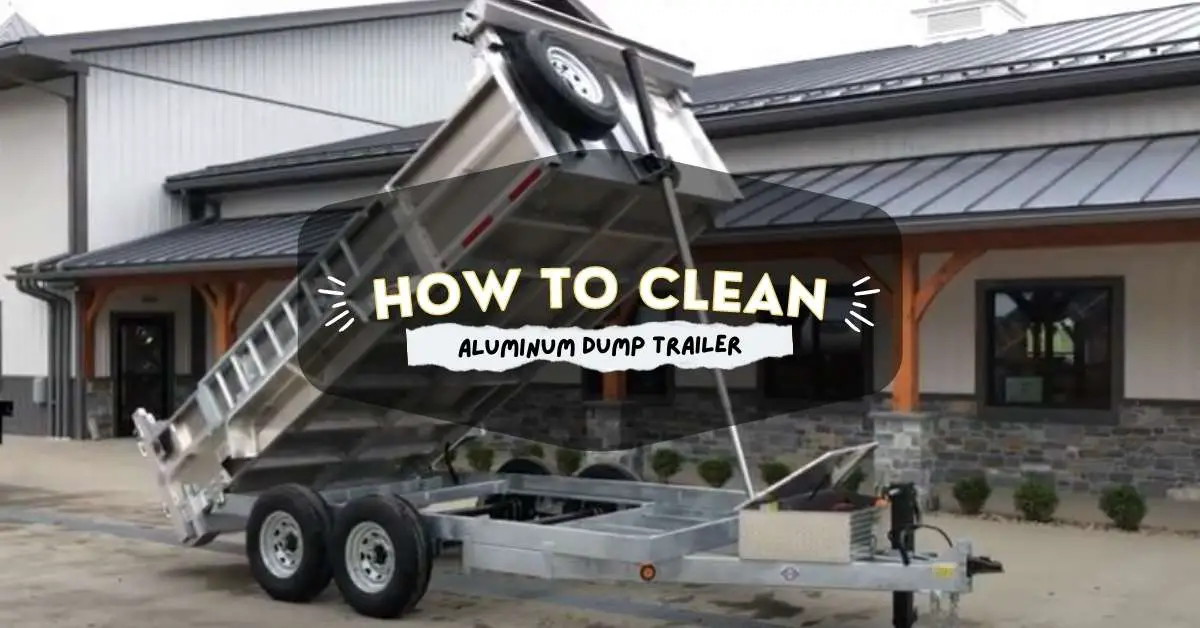
How to Clean Aluminum Dump Trailer

Aluminum dump trailers accumulate oxidation, road film, and caked debris that degrade both appearance and structural integrity. A consistent cleaning and protection routine extends trailer lifespan by preventing pitting and corrosion—aluminum oxide forms a 2–5 nanometer protective layer naturally, but environmental contaminants accelerate localized breakdown. This guide covers the complete cleaning process: debris removal, pressure washing, chemical deoxidation, and wax protection.
How to Clean an Aluminum Dump Trailer: Complete Step-by-Step Process
Cleaning an aluminum dump trailer involves four stages: dry debris removal, pressure washing, chemical deoxidation, and protective waxing. For heavily oxidized trailers, the acid bath step is essential to restore the bright aluminum finish.
Step 1: Remove Debris and Dirt with a Broom
Start with a stiff-bristle push broom to sweep loose debris, gravel, and organic matter from the trailer bed and undercarriage. Use a flat-head screwdriver or plastic scraper to dislodge compacted material bonded to the aluminum surface.
Thorough dry cleaning reveals oxidation spots that need targeted treatment and prevents pressure-washing large particles into drains or waterways.
Step 2: Wash the Trailer Using High-Pressure Water
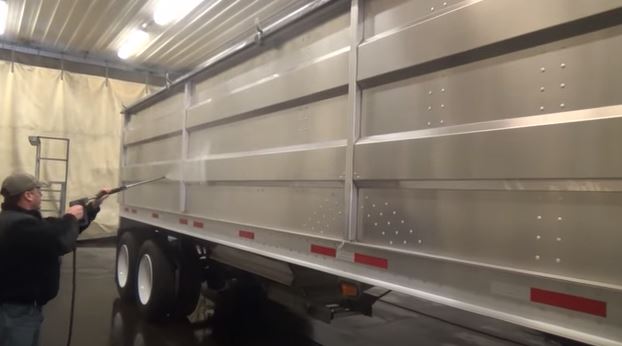
Switch to a pressure washer rated at 1,500–2,000 PSI with a 25-degree fan nozzle. Hold the wand 8–12 inches from the surface and work from top to bottom to prevent streaking.
Avoid directing high-pressure water at wooden bed boards, seals, or electrical connections—sustained moisture causes wood fiber breakdown and seal degradation within 48–72 hours.
Step 3: Prepare and Apply an Acid Bath to Remove Oxidation
Safety first: Wear chemical-resistant gloves (nitrile or neoprene), safety goggles, and a respirator rated for acid vapors. Work outdoors or in a well-ventilated area. Have baking soda and water readily available as a neutralizer in case of spills.
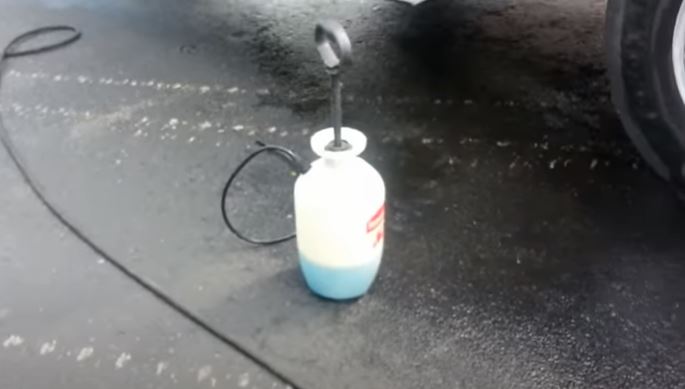
Fill a garden sprayer with a 10–15% phosphoric acid solution (pH 1.0–1.5). Phosphoric acid is the preferred agent for aluminum deoxidizing because it dissolves aluminum oxide without attacking the base metal aggressively. Apply the solution to oxidized areas and allow 3–5 minutes of dwell time—do not let it dry on the surface.
Scrub with a soft-bristle brush, then rinse thoroughly with clean water at 1,200+ PSI. Neutralize any residue by spraying a baking soda solution (2 tablespoons per gallon) across treated areas, followed by a final fresh-water rinse.
For light oxidation, aluminum-specific citrus-based cleaners (pH 3.0–4.5) are a lower-risk alternative that dissolve oxide films effectively on previously painted or polished surfaces.
Step 4: Polish and Protect the Trailer with Wax Coating
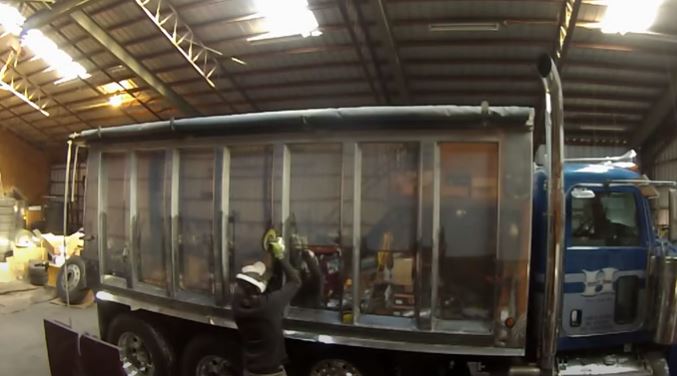
Apply a paste wax formulated for marine or aluminum use—carnauba-based waxes provide UV resistance, while polymer sealants (cross-linked polyethylene or SiO2-based) offer 6–12 months of durability. Use a foam applicator pad in circular motions, allow the wax to haze, then buff to a shine with a microfiber towel.
Waxing fills micro-pores in the aluminum surface, reducing the surface energy and creating a hydrophobic barrier that slows future oxidation by 60–80% compared to unprotected aluminum in field conditions.
What Is the Best Way to Clean an Aluminum Trailer?
The most effective routine combines regular pressure washing with periodic deoxidation and wax protection. Here is the recommended maintenance schedule:
| Maintenance Task | Frequency | Products / Tools |
|---|---|---|
| Rinse / debris removal | After every 3–5 loads | Garden hose, broom |
| Pressure wash | Weekly | Pressure washer (1,500+ PSI), 25° nozzle |
| Deoxidation acid bath | Monthly or as needed | Phosphoric acid 10–15%, pH 1.0–1.5 |
| Wax protection | Every 3–6 months | Carnauba paste wax or polymer sealant |
For painted aluminum trailers, use a pH-balanced car-wash soap (pH 7.0–7.5) to preserve the clear coat and paint gloss. Apply the soap with a long-handled scrubber, rinse at low pressure, and dry immediately with a chamois to prevent water-spot etching.
Stubborn caked mud responds to a detergent booster (oxygenated or citrus-based) injected through the pressure washer chemical injector at a 1:10 dilution ratio.
How to Remove Oxidation from an Aluminum Trailer
Aluminum oxidation occurs when aluminum reacts with oxygen and moisture to form aluminum oxide (Al₂O₃)—a white or gray powdery film that dulls the metal surface. Left untreated, pitting corrosion develops and compromises structural thickness over time.
To remove oxidation effectively:
- Prepare a phosphoric acid solution at pH 1.0–1.5 (10–15% concentration) or use a commercial aluminum deoxidizer.
- Spray directly onto oxidized regions and let stand for 3–5 minutes.
- Scrub with a nylon or soft-bristle brush to agitate the dissolved oxide.
- Rinse at high pressure and neutralize with a baking soda solution (2 tbsp/gal).
- Apply wax or sealant within 2 hours to prevent immediate re-oxidation.
Wear chemical-resistant gloves and safety goggles throughout the process. Never mix phosphoric acid with bleach or ammonia—doing so releases toxic chloramine vapors.
How to Restore Shine to an Aluminum Dump Bed
Asphalt transfer, road film, and oxidation collectively reduce the reflectivity of aluminum trailers. Removing asphalt requires a dedicated adhesive remover or diesel fuel bath followed by pressure rinsing—never use petroleum solvents on painted or coated aluminum.
For restoring uniform shine after cleaning, apply an aluminum polish compound (aluminum oxide abrasive in a paste carrier, 400–600 grit equivalent) using a random-orbit polisher at 1,200–1,800 RPM with a foam pad. Finish with a protective wax coat.
Consistent wax application every 3–6 months maintains the shine longer and reduces the frequency of intensive polishing sessions by up to 70%.
Related reading: How to Clean Asphalt Out of a Dump Truck
How to Clean a Black Aluminum Trailer
Black-finished aluminum trailers show road grime, brake-dust accumulation, and water-spotting more prominently than mill-finish aluminum. The cleaning approach for black trailers differs from bare aluminum.
Begin by rinsing the entire trailer to loosen surface contaminants. Apply a pH-neutral prewash foam (pH 7.0) and allow 3–4 minutes of dwell time. Rinse with a pressure washer at 1,200–1,500 PSI using a 40-degree fan nozzle to avoid stripping the black coating.
For stubborn dark stains or oxidation patterns, use a dedicated aluminum-safe degreaser applied with a soft-bristle brush. Rinse thoroughly and dry immediately to prevent water-spotting on the dark finish.
Protect the black coating every 4–6 months with a polymer sealant designed for painted or powder-coated aluminum surfaces.
Safety Precautions for Aluminum Acid Cleaning
- Personal protective equipment (PPE): Chemical-resistant nitrile or neoprene gloves, safety goggles (not glasses), acid-rated respirator mask, and an apron.
- Ventilation: Always work outdoors or in a space with cross-ventilation. Acid vapors accumulate in enclosed areas and cause respiratory irritation at concentrations as low as 5 ppm.
- Spill response: Keep baking soda and water nearby. Neutralize acid spills with baking soda before wiping—never wipe acid with a dry cloth, which spreads the contamination.
- Do not mix chemicals: Never combine phosphoric acid with bleach, ammonia, or sodium hydroxide—these mixtures produce toxic gas. Always rinse equipment between different chemical applications.
- Proper disposal: Neutralize rinse water to pH 6.0–8.0 before drainage. Check local regulations—some jurisdictions require collection and disposal through a hazardous waste facility.
Summary: Key Specifications at a Glance
| Parameter | Recommended Value |
|---|---|
| Pressure washer PSI | 1,500–2,000 PSI |
| Phosphoric acid concentration | 10–15% solution |
| Acid bath pH | 1.0–1.5 |
| Citrus cleaner pH (mild) | 3.0–4.5 |
| Acid dwell time | 3–5 minutes maximum |
| Neutralizer solution | 2 tbsp baking soda per gallon water |
| Wax reapplication interval | Every 3–6 months |
| Polymer sealant durability | 6–12 months |
Conclusion
Regular maintenance—debris removal, pressure washing, periodic deoxidation, and wax protection—keeps an aluminum dump trailer structurally sound and visually presentable. Use phosphoric acid (pH 1.0–1.5) for oxidation removal, wear appropriate PPE throughout the acid cleaning step, and reapply wax every 3–6 months to maintain a protective hydrophobic barrier. With this routine, oxidation-related pitting and corrosion are reduced by 60–80% compared to trailers that receive no protective treatment.
For related cleaning guides, explore the Cleaning Glossary, the Specialty Cleaning Hub, or the Cleaning Chemistry Hub for deeper dives into cleaning chemistry and specialized surface care.
References
- U.S. Environmental Protection Agency. (2024). Safer Choice Program — Approved Cleaning Products. EPA.
- NSF International. (2024). Surface Cleaning Efficacy Testing and Certification. NSF International.
- Centers for Disease Control and Prevention / National Institute for Occupational Safety and Health (NIOSH). (2023). Hazardous Materials — Acid Handling and Personal Protective Equipment Guidelines. NIOSH.
- American Society for Testing and Materials. (2022). ASTM B209 — Standard Specification for Aluminum and Aluminum-Alloy Sheet and Plate. ASTM International.

