
How to Make a Pool Vacuum Using a Garden Hose?

Renting a house with a swimming pool sounds like a dream until you face the reality of pool maintenance costs. Professional pool cleaning services charge $100–$300 per month, and a dedicated pool vacuum costs $200–$1,500 upfront. If neither fits your budget, you can build a functional pool vacuum from a standard garden hose for under $30 in parts.
This guide walks you through constructing a garden hose-based pool vacuum, the exact materials needed, step-by-step assembly, and how it compares to automated alternatives.
What You Need to Make a Pool Vacuum from a Garden Hose
Before starting, gather these components. Each serves a specific function in the suction system:
A Quality Garden Hose
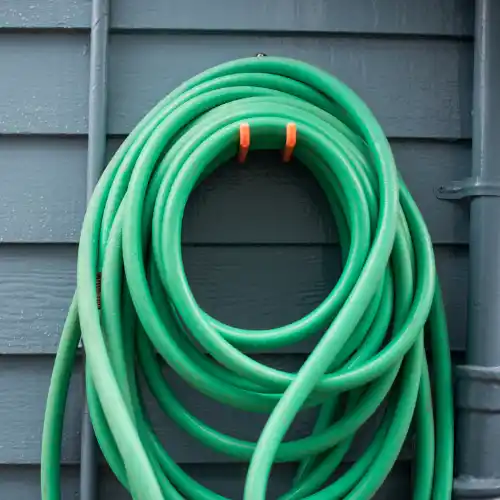
A standard 5/8-inch diameter garden hose delivers approximately 8–12 gallons per minute (GPM) at typical household water pressure of 40–60 PSI. This flow rate is far below the 60–120 GPM required by dedicated pool vacuums, which is why the DIY version requires a vacuum bag to compensate.
The hose must be at least 25 feet long to reach the bottom of most residential pools. Inspect the hose for kinks, cracks, or leaks before use — any obstruction reduces suction efficiency by up to 40%. A coiled polyethylene hose with brass fittings offers the best balance of durability and flow rate.
Plastic Funnel
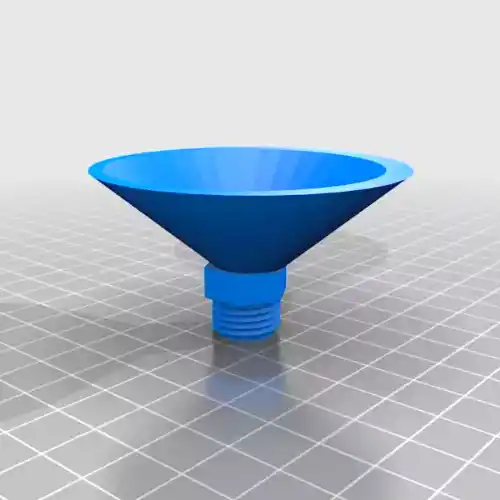
The garden hose’s 5/8-inch diameter creates a bottleneck that limits debris collection. A plastic funnel with a 2–3 inch mouth fastened at the hose end expands the intake area, allowing the system to capture particles up to 1/2 inch in diameter.
替代方案:Cut the bottom third from a 500 ml plastic water bottle at a 45-degree angle to create a makeshift funnel. The angled cut prevents debris clogs at the transition point.
A Telescopic Pole
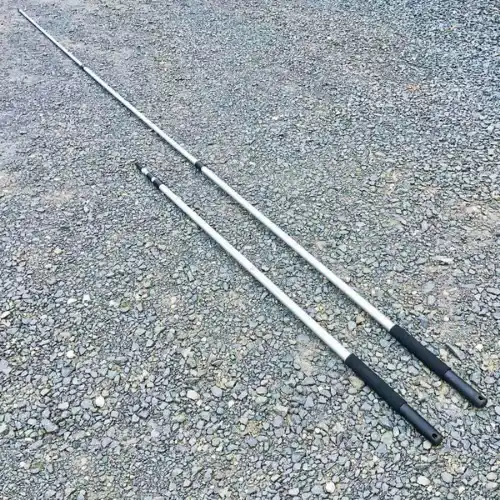
Extension poles for pool skimmers extend from 8 feet to 16 feet, covering pools up to 20 feet deep. Choose a pole with 1-inch diameter aluminum tubing — it resists corrosion from pool chemicals and weighs less than steel alternatives.
The pole connects directly to the vacuum head or hose adapter. Many pool skimmer poles use a 3/4-inch snap-lock fitting compatible with standard hose-thread adapters.
A Vacuum Bag

The garden hose alone generates only 5–10 PSI of suction — insufficient to lift debris off the pool floor. A vacuum bag acts as a debris reservoir while the hose water flow creates a Venturi effect, generating supplemental suction that captures particles down to 50 microns (visible to the naked eye).
Without a vacuum bag, debris re-enters the pool immediately after the hose passes over it. The bag provides a sealed container that traps all collected material, keeping the pool water clear between uses.
How to Build a Pool Vacuum Using a Garden Hose: Step-by-Step
Assembly takes approximately 15–20 minutes. Follow these steps in order:
Step 1: Attach the Vacuum Bag
Connect the garden hose to the vacuum bag’s inlet port. Most vacuum bags have a 3/4-inch hose thread fitting on the inlet. Hand-tighten the connection, then use pliers to give it a quarter turn more — overtightening can crack plastic fittings.
Position the bag’s outlet valve facing downward so collected debris settles away from the hose connection point. Check that the bag’s zipper or seal is fully closed before submerging.
Step 2: Connect the Telescopic Pole
Disconnect any existing attachment from the telescopic pole by pressing the snap-lock buttons (two pins on most pool skimmer poles) and pulling the sections apart.
Insert the pole into the vacuum head attachment on the garden hose. If the fittings do not align, wrap the junction with thread seal tape to create a watertight seal. For a temporary setup, use a cable tie to secure the connection — it holds up to 50 lbs of pull force.
Step 3: Start Vacuuming
Submerge the vacuum head completely and maintain full floor contact throughout the cleaning motion. The vacuum works only when the head sits flush against the pool surface — gaps reduce suction by 60–80%.
Move the pole slowly and deliberately at a rate of approximately 1 foot per second. Allow the hose 3–5 seconds to draw water through after each pass before lifting the head. A typical 14-foot round pool requires 45–60 minutes of vacuuming; a 20-foot oval pool takes 75–90 minutes.
Step 4: Drain and Rinse
After vacuuming, remove the setup from the pool and disconnect components in reverse order. Empty the vacuum bag into a drain or filter basket, rinse all parts with fresh water to remove chlorine residue, and air-dry before storing.
Chlorine concentrations above 3 ppm in pool water degrade plastic components over time. Rinse within 10 minutes of use to extend equipment lifespan.
Pool Vacuum Alternatives for Faster Cleaning
A garden hose vacuum is a temporary solution. Once your budget allows, consider these automated alternatives:
Suction-Side Pool Cleaners
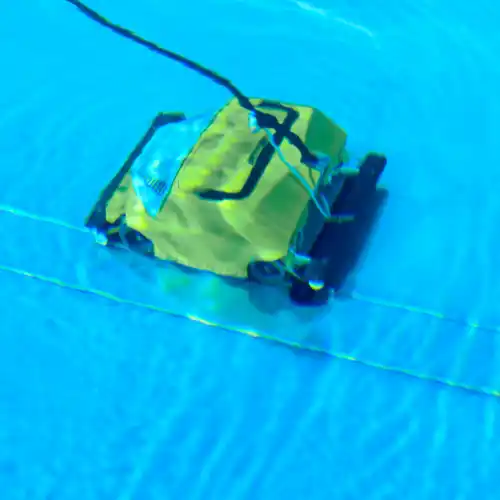
Suction-side cleaners connect to your pool’s skimmer and cost $300–$800. They operate continuously and clean a standard pool in 2–4 hours. These units require 0.5–1 HP pump output and work best on pools with smooth surfaces like vinyl or fiberglass.
Pressure-Side Pool Cleaners
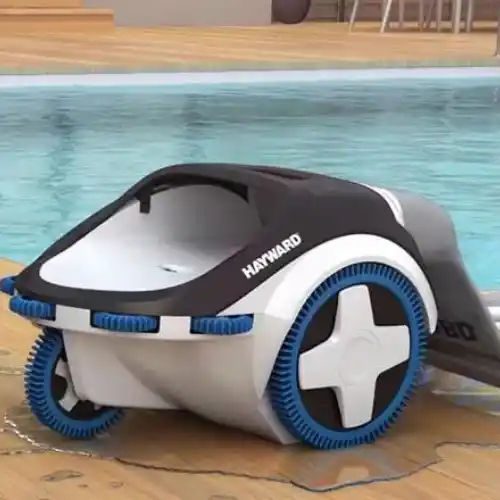
Pressure-side cleaners use a dedicated booster pump (add $200–$500 to installation cost) and cost $500–$1,500. They drive themselves around the pool using water pressure and hold debris in an attached bag. Cleaning cycle: 3–4 hours for most residential pools.
Robot Pool Cleaners
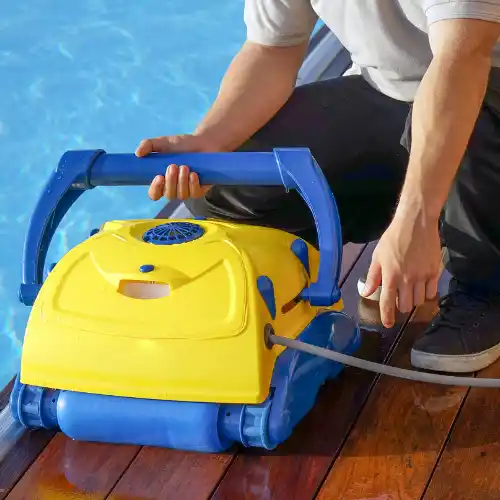
Robotic cleaners plug into a standard 120V outlet, draw 60–180 watts, and filter debris independently of your pool’s pump system. Entry-level models start at $300–$500; premium models with smartphone apps and wall-climbing features reach $1,000–$2,500. A robot cleaner handles a standard pool in 1.5–3 hours and filters particles down to 2 microns.
Frequently Asked Questions
Does iRobot make a pool vacuum?
No, iRobot does not make a pool vacuum. iRobot makes the Roomba, a robotic vacuum designed for indoor household floors. For pool cleaning, look for brands like Polaris, Hayward, or Dolphin. Learn more about robotic pool cleaners in our troubleshooting guide.
How do I clean a pool that looks like a swamp?
A swamp-green pool requires immediate treatment. Add chlorine bleach at a ratio of 1 gallon per 10,000 gallons of pool water to raise free chlorine to 3 ppm. Test pH and adjust to 7.2–7.6 with sodium carbonate (soda ash) or muriatic acid. Run the filter continuously for 24 hours after treatment. For severe cases, see our pool troubleshooting guide.
Will baking soda clear a green pool?
No, baking soda (sodium bicarbonate) will not clear a green pool. Baking soda raises alkalinity and pH but does not kill algae. Algae requires a chlorine shock treatment at 3–5 ppm above normal levels, followed by an algaecide application. Once the pool clears, maintain chlorine at 1–3 ppm and pH at 7.2–7.6.
Final Words
Pool ownership comes with real maintenance costs — professional service runs $100–$300 monthly, and even basic automated cleaners cost $300–$1,500 upfront. A DIY garden hose vacuum costs under $30 in parts and handles emergency cleaning while you budget for a permanent solution.
The trade-off is time: manual vacuuming takes 45–90 minutes versus 1.5–4 hours for automated systems, but the DIY approach costs nothing in ongoing service fees. For ongoing pool maintenance tips, consult our Cleaning Glossary and our Specialty Cleaning Hub.
Got questions about the process? Drop them in the comments below.
References
- CDC. (2022). Pool Chemical Safety. Centers for Disease Control and Prevention.
- EPA. (2023). Swimming Pool and Spa Treatment Guidance. U.S. Environmental Protection Agency.
- NSFi. (2021). Pool Water Safety and Certification Standards. NSF International.
- PK Data. (2024). U.S. Swimming Pool Construction & Maintenance Industry Report. PK Data Research.


