
How to Dry Wet Carpet Without Vacuum – 10 Easy Tips

Wet carpets develop mold within 24–48 hours if not dried properly. You can dry a soaking wet carpet without a vacuum using towels, carpet sweepers, dry compounds, and proper air circulation — even without professional equipment.
According to the CDC, keeping indoor humidity below 50% prevents mold growth in water-damaged spaces. This guide covers 10 proven methods to extract moisture from wet carpet using household items, with specific drying times, application rates, and safety precautions for each approach.
How to Dry Wet Carpet Without a Vacuum: 10 Proven Methods
Household vacuum cleaners lack the suction power to handle soaked carpet fibers — the motor can burn out or cause water damage to the appliance itself. These alternatives work without any vacuum at all.
1. Find and Stop the Water Source First
Always locate the water source before touching your carpet. Turning off the water, sealing a leak, or moving the carpet away from continued exposure prevents additional damage. Failing to stop the water source means your drying efforts will be wasted.
2. Move Furniture Immediately to Prevent Trapped Moisture Damage
Wet furniture legs stain and warp carpet beneath them. Lift or place aluminum foil pads under furniture legs within minutes of flooding to prevent permanent indentation. The faster you clear the area, the more carpet surface you can treat.
3. Extract Water with Towels Using Pressure and Absorption
The towel method works through repeated pressure application. Use the heaviest cotton towels available — lay a towel flat, press firmly with both hands, then lift and repeat on a dry section. Microfiber towels absorb up to 8 times their weight in water, making them more effective than standard cotton bath towels.
Switch to fresh dry towels when the first set becomes saturated. Expect to use 6–10 towels for a heavily saturated area. Each pressing cycle takes 30–60 seconds per towel section.
4. Use a Carpet Sweeper for Moisture Extraction from High-Pile Carpets
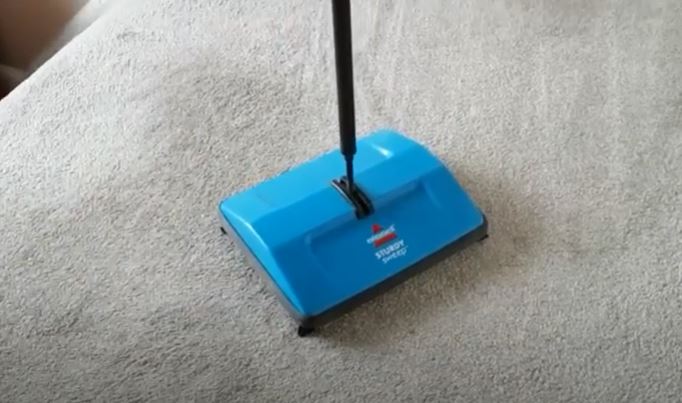
Carpet sweepers use rotating brushes to agitate fibers and pull moisture to the surface, where towels can then absorb it. They excel on high-pile and shag carpets where brush agitation reaches deeper into fibers than pressing alone.
After extracting surface moisture with a carpet sweeper, address any remaining dampness with enzyme-based carpet cleaners to prevent bacterial odor buildup in damp fibers.
5. Apply Dry Compound for Deep Moisture Absorption
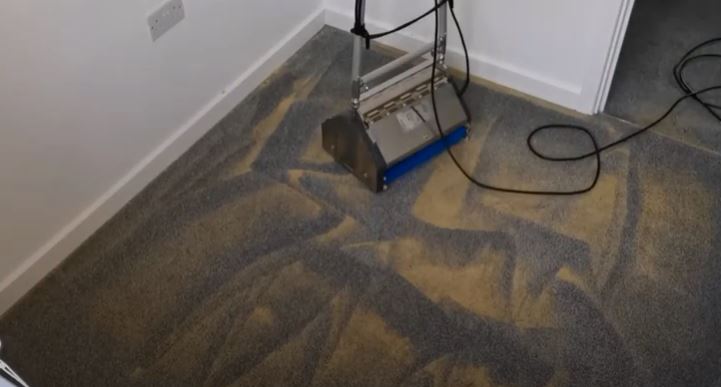
Dry compound cleaning agents (also called carpet drying crystals or absorbent granules) absorb significantly more moisture than towels — typically 3–4 times their weight. Common active ingredients include sodium bicarbonate (baking soda, pKa 6.34) and silica gel-based desiccants.
To apply: spread a ¼–½ inch thick layer over the wet carpet, wait 30–60 minutes, then vacuum or sweep residue. For severe saturation, repeat with fresh compound. Commercial restoration compounds work faster than household alternatives.
6. Air Dry Non-Attached Carpets Outdoors in Direct Sunlight
Removable carpets dry fastest outdoors on a clean, non-porous surface like concrete or a clothesline. Direct sunlight provides natural UV sanitization while heat accelerates evaporation. Place the carpet face-down to protect fibers from sun bleaching.
Do not bring a carpet back indoors until it reads completely dry — returning a damp carpet introduces excess moisture vapor into your home, raising indoor humidity and risking mold growth on other surfaces. Check the subfloor beneath where the carpet was laid; if it is damp, the carpet is not ready.
For persistent indoor drying, use a dehumidifier set to below 50% relative humidity — this aligns with CDC recommendations for preventing mold in water-damaged spaces. Running a dehumidifier in an enclosed room typically achieves this within 4–8 hours for a single room-sized carpet section.
7. Run a Dehumidifier or Air Conditioner to Control Indoor Humidity
A dehumidifier removes moisture vapor from the air, creating a gradient that pulls moisture from carpet fibers. Set output to 40–50% relative humidity for optimal mold prevention. A standard residential dehumidifier (30-pint capacity) processes approximately 10–15 pints of water per day in a sealed small-to-medium room.
Air conditioners assist by both cooling and dehumidifying — a window AC unit removes 1–3 pints of water per hour depending on model and ambient conditions. Pairing AC with a fan increases air turnover, speeding surface evaporation.
For comprehensive floor care guidance, see the Floor Cleaning Master Hub.
8. Use a Hairdryer for Targeted Spot Drying on Small Wet Areas
A hairdryer works only on small, localized wet spots — not whole-room saturation. Hold the dryer 6–8 inches from the carpet surface, move continuously in circular patterns, and maintain heat at medium setting. High heat can melt synthetic carpet fibers.
Test dryness by touching the carpet after it cools to room temperature — heated fibers feel dry even when still damp. Allow the carpet to rest 5 minutes after drying before testing to ensure moisture has fully evaporated.
9. Apply Baking Soda for Moisture Absorption and Odor Prevention
Baking soda (sodium bicarbonate, pKa 6.34) is mildly alkaline and safe for most carpet fibers. It absorbs residual moisture, neutralizes acid-based odors, and inhibits mold growth at the concentrations typically used in home cleaning. Unlike strong alkalis, baking soda does not damage synthetic or wool carpet fibers.
Apply a generous coating (approximately ½ cup per square yard) after surface water extraction, let stand 15–30 minutes, then vacuum thoroughly. For persistent dampness, reapply after the first application.
CAUTION: Sodium hydroxide (caustic soda, NaOH — pKb 0.0) is a strong base that causes severe chemical burns and blindness upon skin or eye contact. It is not the same compound as sodium bicarbonate. Never substitute caustic soda for baking soda in carpet cleaning. If someone ingests or gets caustic soda on their eyes, flush with water for 10–15 minutes and seek immediate medical attention. Learn more about why caustic soda damages floors and carpets.
10. Always Check and Dry the Subfloor Before Replacing Furniture
Carpet can feel dry on the surface while the subfloor beneath remains wet. Wet subflooring warps, rots, and breeds mold — all of which are costlier to remediate than the carpet itself.
Test by pressing a paper towel against the bare subfloor through a small separation between carpet edges for 10 seconds. Visible moisture on the paper towel means the subfloor is not ready. If the carpet is glued or stretched in place, use a moisture meter designed for water damage assessment to check readings below 17% wood moisture content before replacing furniture.
For stuck-on carpet sections, lift a corner carefully and place a fan beneath to accelerate subfloor drying. Never replace heavy furniture on a carpeted floor with subfloor moisture readings above 17% on a moisture meter.
How Long Does It Take for a Wet Carpet to Dry?
Drying time depends on saturation level, carpet material, room humidity, and method used:
| Method | Small Spot (1–2 sq ft) | Room-Size Section | Full-Room Carpet |
|---|---|---|---|
| Towels only | 2–4 hours | 8–12 hours | 15+ hours |
| Carpet sweeper + towels | 1–2 hours | 4–8 hours | 10–15 hours |
| Dry compound | 30–60 min | 2–4 hours | 6–10 hours |
| Dehumidifier + AC | 2–3 hours | 6–10 hours | 12–24 hours |
| Outdoor sun drying | 1–3 hours | 3–6 hours | 6–12 hours |
The CDC recommends completely drying water-damaged areas within 24–48 hours to prevent mold colonization. Patience is the single most important factor — rushing the process by placing furniture on a seemingly dry surface while the subfloor remains damp leads to odor, warping, and costly subfloor replacement.
Key Takeaways
- Stop the water source and move furniture immediately
- Extract surface water with towels or carpet sweeper first
- Apply dry compound or baking soda for deeper moisture absorption
- Run dehumidifier or AC to maintain indoor humidity below 50%
- Dry the subfloor to below 17% moisture before replacing furniture
- Complete all drying within 24–48 hours per CDC guidelines to prevent mold
- Never substitute caustic soda (NaOH) for baking soda — they are chemically different and caustic soda causes severe burns
References
- Centers for Disease Control and Prevention (CDC). (2024). Facts About Mold. https://www.cdc.gov/mold/pdfs/facts-about-mold-prevention-and-remediation.pdf
- Royal Society of Chemistry. (2024). Sodium — Element 11. https://rsc.org/periodic-table/element/11/sodium
- Royal Society of Chemistry. (2024). Sodium Bicarbonate — NaHCO₃. https://en.wikipedia.org/wiki/Sodium_bicarbonate
- Royal Society of Chemistry. (2024). Sodium Hydroxide — NaOH. https://en.wikipedia.org/wiki/Sodium_hydroxide


