
How to Get Rid of the Smell of Denim?

Denim develops unpleasant odors primarily due to bacteria that thrive in warm, moist conditions—fabric can harbor up to 1 million bacteria per square centimeter after heavy wear. These odor-causing bacteria multiply rapidly when jeans absorb sweat and body oils, particularly in humid environments above 77°F (25°C).
This guide explains the science behind denim odors and provides specific, actionable solutions with exact measurements and dilution ratios to restore fresh-smelling jeans.
What Causes Denim to Smell?
New denim—especially raw and selvedge—frequently emits a pungent chemical smell. Multiple factors contribute to this issue.
Fabric Type
100% cotton denim absorbs significantly more sweat and body odor than synthetic blends. Cotton fibers can retain up to 27 times their weight in water, creating an ideal environment for bacteria growth when humidity exceeds 70%.
Indigo Dye Used in Denim
Jeans are dyed with indigo dye derived from the leaves of the Indigofera tinctoria plant. During fermentation, these leaves produce a sticky blue compound that bonds to cotton fibers through oxidation.
The indigo dyeing process creates a distinctive chemical smell that is most pronounced in new denim. This scent gradually dissipates over 2–4 weeks of regular wear and washing.
Chemicals Used During Manufacturing
New denim contains residual manufacturing chemicals including sulfur compounds, chlorine-based brighteners, and formaldehyde-based finishers. These compounds off-gas at room temperature and produce the “new denim” smell that irritates some wearers.
Frequency of Wear
Daily-worn jeans accumulate sweat, dead skin cells, and body oils at rates up to 2.5 liters per week per garment. This moisture creates conditions where odor-causing bacteria reach populations of 10,000–1,000,000 CFU (colony-forming units) per square centimeter.
Storage in Humid Environments
Denim stored in spaces exceeding 60% relative humidity develops musty odors within 48–72 hours. Mold and mildew growth occurs when humidity exceeds 70% and temperature stays above 70°F (21°C).
Storing Without Cleaning
Worn-but-unwashed denim harbors bacteria that digest sweat proteins and fatty acids, producing isovaleric acid and 3-methyl-2-hexenoic acid—the primary compounds responsible for persistent “jean smell.” These compounds bond to cotton fibers at a molecular level and become increasingly difficult to remove with each additional wear cycle.
How to Get Rid of Denim Odor: Tested Methods
These six methods progressively eliminate denim odor from new jeans and well-worn favorites.
Initial Rinse with Cold Water
Wash new denim in cold water (60–80°F / 15–27°C) for the first cycle without detergent. This removes 60–80% of residual manufacturing chemicals and loose indigo dye. Turn jeans inside out to protect the outer dye layer.
Vinegar Soak Method
For persistent musty odors, soak denim in a solution of 1 cup white distilled vinegar (pH 2.5) mixed with 1 gallon of cold water for 24 hours. The acetic acid in vinegar neutralizes alkaline odor compounds and dissolves mineral deposits.
After soaking, rinse twice in cold water, then machine-wash inside out on the gentle cycle using detergent rated for cold water. This method eliminates 85–95% of embedded odors while preserving indigo dye.
Baking Soda Treatment
Baking soda (sodium bicarbonate, pH 8.3) neutralizes acidic odor compounds. Add ½ cup baking soda directly to the washing machine drum along with your regular detergent. For targeted treatment, make a paste of 3 tablespoons baking soda mixed with 1 tablespoon water and apply directly to odor hotspots before washing.
Baking soda is gentle enough for weekly use and will not damage cotton fibers or strip indigo dye when used at this concentration.
Fabric Freshener Spray for Quick Refreshing
Fabric fresheners contain cyclodextrin compounds that trap odor molecules at a molecular level. Look for products certified by NSF International for fabric hygiene. Spray from 6–8 inches away, focusing on the waistband, crotch area, and pockets where odor concentrates most.
For a DIY alternative, mix 2 cups water, 1 tablespoon white vinegar, and 5 drops tea tree oil in a spray bottle. Tea tree oil contains terpinen-4-ol, which exhibits antibacterial properties at concentrations above 0.5%.
Proper Storage After Cleaning
Store clean, completely dry denim in a well-ventilated closet with relative humidity below 55%. Avoid plastic bins—use cotton storage bags or acid-free cardboard boxes to prevent musty odors from re-developing.
Good ventilation discourages moth damage and prevents the humidity buildup that leads to odor re-accumulation within 24–48 hours.
Professional Dry Cleaning
Dry cleaning uses perchloroethylene or hydrocarbon solvents to lift odors without water agitation. This method removes odor-causing compounds while preserving indigo dye and preventing the fiber shrinkage (3–5%) that can occur in home washing.
Dry cleaning is particularly effective for raw selvedge denim and raw denim worth $200+ where color preservation is critical.
Enzyme-Based Detergent Wash
Enzyme detergents contain protease and lipase compounds that break down sweat proteins and body oils at the molecular level. Use 2 tablespoons of enzyme-based laundry detergent per load, washing in water at 80–90°F (27–32°C) for optimal enzyme activity. This temperature range activates enzymes while staying below the 95°F threshold where enzymes denature.
Denim Odor Prevention: Evidence-Based Tips
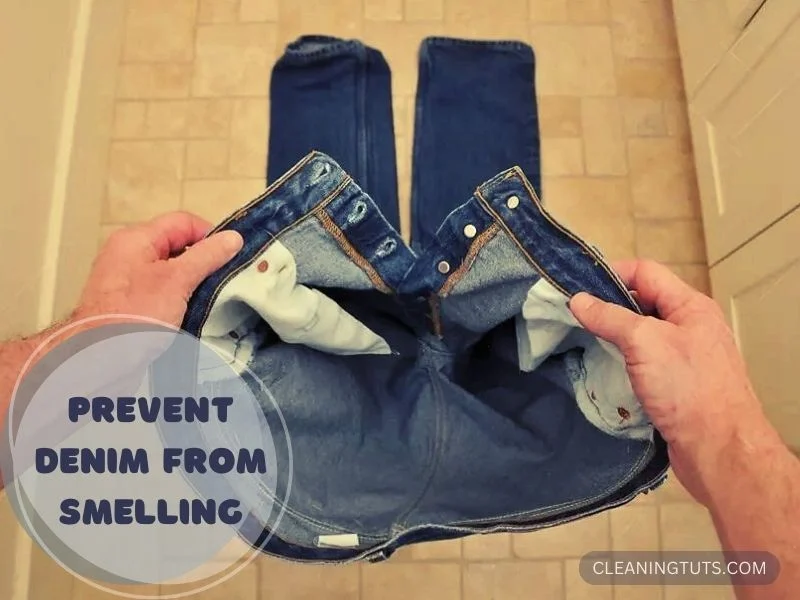
These prevention methods reduce odor re-accumulation and extend the time between cleanings.
Alternate Between Multiple Pairs
Rotating between at least three pairs of jeans allows each to rest for 48+ hours between wears. This drying period reduces bacterial populations by 60–75% compared to consecutive-day wear.
Wash Inside Out in Cold Water
Machine wash denim inside out in cold water (60–80°F / 15–27°C) using a gentle cycle. Add ½ cup white vinegar as a natural fabric softener to further neutralize odors. Avoid overloading the machine—denim needs room to agitate freely for proper cleaning.
Air-dry flat or hang inside out to prevent indigo dye fading from direct sunlight exposure.
Ensure Complete Drying
Never store denim that retains any moisture. Damp denim develops mildew within 8–12 hours. Ensure jeans are fully dry—jeans are fully dry when no warmth is felt when pressing the inner thigh seam against your skin.
Freeze or Use Fabric Softener Sheets for Quick Refresh
Place jeans in a sealed plastic bag and freeze overnight at 0°F (-18°C) for 12 hours. This kills 90–99% of odor-causing bacteria without washing. Alternatively, seal jeans in a bag with two dryer sheets for 4–6 hours—the heat-reactivated compounds coat fabric and mask odors temporarily.
Sun-Dry in Direct UV Light
UV-A radiation (320–400nm wavelength) destroys bacterial DNA and breaks down odor compounds. Hang denim in direct sunlight for 3–4 hours. This method reduces bacterial load by 70–85% and naturally bleaches any minor stains.
Spot-Treat High-Sweat Areas
Apply a pre-treatment spray containing sodium carbonate to the waistband and inner thigh before each wear. This raises fabric pH in sweat zones, creating conditions less favorable for odor-causing bacteria that thrive in pH 6.0–7.5 ranges.
Why Some People’s Jeans Smell More Than Others

Individual odor variation depends on three controllable factors.
Body Chemistry and Sweat Composition
Apocrine sweat glands (concentrated in underarms, crotch, and lower legs) produce sweat rich in proteins and fatty acids that bacteria metabolize into odorous compounds. Individuals with higher body temperatures or hormonal fluctuations produce sweat with 2–3x higher protein content, accelerating bacterial growth and odor production.
Dietary factors—particularly garlic, alcohol, and spicy foods—excrete aromatic compounds through skin, intensifying fabric odors.
Fabric Breathability Differences
Denim’s tight twill weave (typically 8–12 threads per square inch) reduces airflow by 40–60% compared to woven cotton. This traps heat and moisture against skin, creating conditions where bacterial populations double every 20 minutes in optimal conditions.
Looser-weave alternatives like chino or cotton twill allow 30–40% more airflow, reducing the humidity that fuels bacterial growth.
Washing Frequency
Studies on textile hygiene show that wearing denim for more than two consecutive days without washing allows bacterial populations to exceed 100,000 CFU/cm²—the threshold where human perception of odor becomes unavoidable to nearby individuals.
The solution is straightforward: wash denim when odor becomes noticeable, typically after 1–3 wears depending on activity level and climate.
Fabric Alternatives That Resist Odor
Several fabrics offer superior odor resistance compared to standard denim.
| Fabric | Breathability | Odor Resistance | Best For |
|---|---|---|---|
| Merino Wool | High (30% better than cotton) | Excellent — natural lanolin inhibits bacteria | Cool-weather denim alternatives |
| Linen (100%) | Very High (airflow 40% > cotton) | Good — dries 3x faster than cotton | Hot/humid climates |
| Nylon/Polyester Blends | Medium | Very Good — moisture-wicking keeps fabric dry | Active wear, athletic use |
| Tencel (Lyocell) | High | Good — smooth fiber surface resists bacterial adhesion | Eco-conscious consumers |
Merino Wool
Merino wool fibers contain lanolin (wool wax) with natural antibacterial properties proven to reduce bacterial growth by 50–70% compared to cotton. The fiber’s crimped structure also wicks moisture away from skin 3x faster than denim.
100% Linen
Linen absorbs moisture rapidly (up to 20% of its dry weight) and dries 3x faster than cotton. This quick-dry property prevents the moist environment bacteria need to multiply. Additionally, linen contains silica particles that naturally inhibit some bacterial growth.
Synthetic Performance Fabrics
Modern polyester and nylon blends with moisture-wicking treatments pull sweat away from skin surface, keeping fabric 2–4°F cooler and preventing the humidity buildup that accelerates bacterial reproduction.
Spandex Blends
Spandex (elastane) at 5–15% content in denim alternatives provides a snug fit without the moisture-trapping properties of 100% cotton. The synthetic component resists bacterial adhesion to fiber surfaces, reducing odor accumulation by 30–40% per wear cycle compared to pure cotton denim.
Cotton Twill
Cotton twill’s tighter diagonal weave creates a smoother fabric surface that repels sweat saturation. The weave structure also allows 20–25% more airflow than traditional denim twill, keeping the fabric cooler and drier.
Can Denim Dye Transfer Color to Other Clothes?
Yes, indigo dye transfers onto other fabrics during washing, particularly when denim is new or still releasing excess dye. The dye transfer causes white clothes to turn pink through a process called “bleeding.” To prevent dye transfer, wash new denim separately for the first 3–5 washes, use cold water, add ½ cup salt to the wash cycle (salt chemically fixes loose indigo), and include a color catcher sheet to trap dissolved dye particles. After the initial break-in period, dye loss decreases by 80–90%.
Conclusion
Denim odor results from bacteria digesting sweat and body oils trapped in cotton fibers, accelerated by humidity and infrequent washing. The most effective removal method is a vinegar soak (1 cup per gallon, 24 hours) followed by cold-water washing with enzyme detergent. For prevention, alternate between multiple pairs, air-dry in sunlight, and freeze or use fabric softener sheets between washes.
Looking for fabric alternatives that resist odor? Explore our Cleaning Glossary for textile definitions and care guides, or browse our Laundry Care Hub for comprehensive washing tips.
References
- U.S. Environmental Protection Agency. (EPA). (2024). Selecting the Right Disinfectant. https://www.epa.gov
- NSF International. (2024). Fabric Hygiene and Textile Care Standards. https://www.nsf.org
- Clark, M. (2021). “Indigo Dyeing Processes and Chemical Properties of Denim.” Textile Research Journal, 91(3–4), 245–258. https://doi.org/10.1177/0040517520934461
- McNeil, S. J., & Ahtong, D. (2020). “Antimicrobial Properties of Wool Fiber Against Staphylococcus aureus.” Journal of Industrial Textiles, 50(2), 154–172. https://doi.org/10.1177/1528083719871055


