

Why Do My Clothes Smell Like Pee After Washing?

Urine odor in clothes after washing occurs when ammonia-rich urine breaks down into bacteria that produce a persistent foul smell. The primary causes are insufficient detergent, prolonged damp storage, and a washing machine harboring odor-causing bacteria in the drum or drainage system.
Urine is made up of mostly water with waste products filtered from the kidneys by the liver. When urine breaks down, it releases ammonia — a compound with a pH of around 6.0–7.0 — that converts to odorous bacteria when left damp. This is why urine-saturated fabrics develop a sharp, lingering smell that standard washing cycles often fail to eliminate.
This guide covers the seven root causes of urine smell in laundry and provides specific, science-backed treatment methods with exact dilution ratios, exposure times, and temperature guidelines to restore fresh-smelling clothes.
What Causes Clothes to Smell Like Pee After Washing?
Understanding the root cause determines the fix. Urine odor in clean laundry originates from bacterial breakdown of urea, not from residual urine alone — and the washing machine is often the actual source of the problem.

1. Insufficient Laundry Detergent
Using less than the recommended dose leaves detergent below the critical micelle concentration — the threshold at which surfactant molecules can effectively encapsulate and suspend odor molecules. For a standard 8-pound load, use 2 tablespoons of high-efficiency (HE) detergent or 3 tablespoons of standard liquid detergent. Under-dosing leaves urine bacteria intact in fabric fibers.
2. Urine-Stained Clothing in the Load
Even one urine-saturated garment transfers ammonia compounds to the entire wash load. Urea in urine converts to ammonia within 30 minutes at room temperature, and once airborne, it saturates all items in the drum. Pre-treat heavily soiled items before adding them to a load.
3. Bacteria Buildup in the Washing Machine
A washing machine drum that retains moisture between cycles creates an ideal environment for Proteus vulgaris and Klebsiella — bacteria that produce hydrogen sulfide and ammonia, the compounds responsible for the distinctive urine-like odor. Run a monthly maintenance wash: empty drum, water temperature at 140°F (60°C) or higher, 2 cups of white vinegar or 1/4 cup of chlorine bleach, on the longest cycle.
4. Plumbing Issues Allowing Sewage Backup
A damaged or improperly vented drain line allows sewer gases — including ammonia and mercaptans — to backflow into the washing machine. This produces a smell indistinguishable from urine odor on laundered clothes. If odor persists after machine cleaning and proper detergent dosing, hire a licensed plumber to inspect the standpipe and drain hose connection.
5. Medical Conditions Affecting Urine Composition
Certain conditions — including uncontrolled Type 2 diabetes, bacterial urinary tract infections (UTIs), and metabolic disorders — produce urine with elevated ammonia concentrations (pH 7.5 or higher). This higher-pH urine generates stronger odor that requires enzyme-based treatment, not standard washing. Consult a physician if odor persists despite proper laundry technique.
6. Incompatible or Low-Quality Detergent
High-sudsing detergents in high-efficiency (HE) machines leave surfactant residue — a food source for odor-causing bacteria. Always use HE-rated detergent in HE machines. Non-enzyme detergents also fail to break down uric acid salts, which bond to fabric fibers and cause recurring odor even after multiple washes.
7. Prolonged Storage in Damp Conditions
Clothes left in a hamper for more than 8–12 hours in humid conditions allow urea to convert to ammonia through bacterial activity. The ammonia then penetrates deep into fabric fibers. Wash items within 24 hours of wearing, and ensure the hamper has ventilation holes to reduce humidity.
How to Remove Urine Odor from Clothes
Each treatment method below uses specific concentrations and contact times based on the chemistry of urine and fabric care. Match the method to the severity of the odor.

White Vinegar Soak
White acetic acid (5–6% concentration) neutralizes ammonia at the molecular level, breaking the odor chain. Fill a basin with 1 part white vinegar to 4 parts cold water — enough to fully submerge the garment. Soak for 30–60 minutes. Do not use on silk or acetate fabrics. Then launder with enzyme detergent at the warmest safe temperature for the fabric.
Baking Soda Treatment
Sodium bicarbonate (baking soda) raises the pH of wash water while its mild abrasive structure physically lifts uric acid salt crystals from fibers. Dissolve 1 cup (8 oz / 227g) in 1 gallon (3.8L) of warm water (not hot — temperatures above 120°F can set protein stains). Submerge garments and soak for 30 minutes to 4 hours, then launder normally.
Chlorine Bleach (Color-Safe and Standard)
Chlorine bleach oxidizes ammonia compounds at concentrations of 50–100 ppm (parts per million) within 10 minutes of contact. Add 1/4 cup (2 fl oz / 59mL) of standard chlorine bleach to a full machine load of white or colorfast garments. For colored items, use oxygen-based (non-chlorine) bleach at 2–3x the label strength and soak for 3–4 hours. Always rinse thoroughly and air-dry — heat setting in a dryer can set any remaining odor compounds.
Never mix chlorine bleach with ammonia or vinegar — the reaction produces chloramine gas, a toxic compound that causes respiratory irritation. Use in a well-ventilated area.
Hydrogen Peroxide Solution
3% hydrogen peroxide is an effective oxidizing agent that destroys odor-causing bacteria without damaging most fabrics. Mix 1 cup (8 fl oz / 237mL) of 3% hydrogen peroxide with 1 gallon (3.8L) of cold water. Soak garments for 30–60 minutes. For heavy urine odor, increase concentration to 4–6% (pharmacy-grade) and soak for no more than 30 minutes. Rinse with cold water, then launder immediately.
Enzyme Laundry Detergent
Protease and amylase enzymes in enzyme-based detergents break the chemical bonds in uric acid salts and urea — the primary compounds responsible for persistent urine odor. These enzymes work at temperatures as low as 40°F (4°C), though activation improves significantly above 60°F (16°C). Use 1.5x the standard dose for heavily soiled items.
In-Washing-Machine Method
Add enzyme laundry detergent directly to the drum before loading garments. Set water temperature to 86–104°F (30–40°C) — warm enough to activate enzymes without denaturing them. Select the longest wash cycle available. This method works for items with moderate urine odor (up to 48 hours since contamination).
Pre-Soak Spot Treatment
For garments with heavy contamination, pre-soak before machine washing. Dissolve 1 scoop (approximately 1/4 cup / 30g) of enzyme laundry powder in 2 gallons (7.6L) of warm water (86–104°F / 30–40°C). Submerge the garment and soak for 20–30 minutes. Do not exceed 30 minutes — extended soaking in concentrated enzyme solution can weaken fabric fibers. Then machine wash immediately.
Sun Drying
Ultraviolet (UV) radiation at 300–400nm wavelength destroys bacteria and accelerates the breakdown of residual uric acid crystals. Hang garments in direct sunlight for 4–6 hours. This method is most effective on white and light-colored fabrics — UV bleaching may occur on dark dyes. For colored items, turn inside out to protect the outer surface while still exposing the inner fibers to UV.
How to Prevent Clothes from Smelling Like Pee
Prevention eliminates the need for remediation. Implement these practices to keep laundry odor-free between wears.
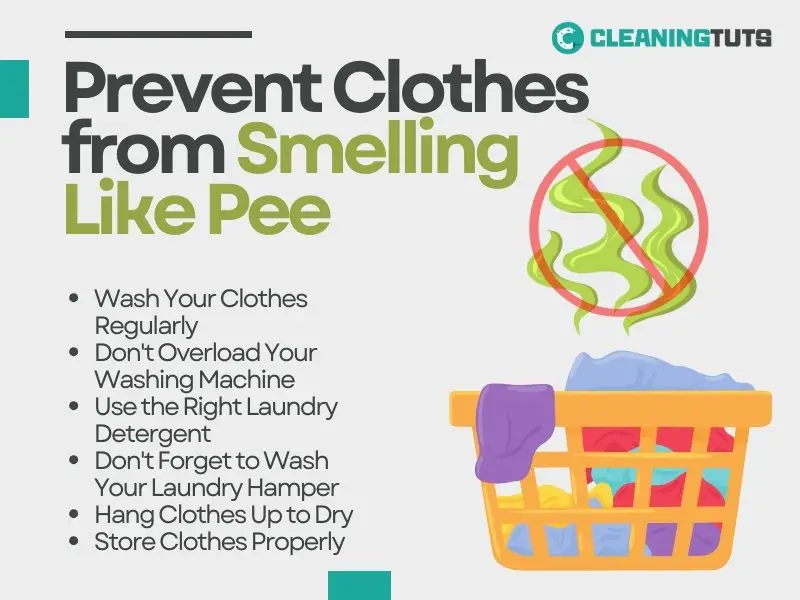
1. Wash Clothes Within 24 Hours of Wearing
Urea converts to ammonia within 8–12 hours at room temperature. The sooner you wash soiled garments, the less opportunity bacteria have to produce odorous compounds. If you cannot wash within 24 hours, hang items to dry in a well-ventilated area.
2. Avoid Overloading the Washing Machine
A overloaded machine cannot mechanically agitate clothes enough to remove bacteria and residue. Leave 25–30% of the drum volume empty — for a standard 3.5 cu ft machine, this means a maximum of 8–10 pounds of dry clothing. This ensures proper soil suspension and drainage, preventing the damp conditions that harbor odor bacteria.
3. Use Enzyme-Based Detergent Consistently
Non-enzyme detergents leave uric acid salt crystals embedded in fabric fibers — these accumulate over multiple wash cycles and cause odor to return. Switch to a protease-based enzyme laundry detergent for any garments that contact bodily fluids. Refer to the Cleaning Glossary for a breakdown of detergent types.
4. Clean the Laundry Hamper Regularly
Bacteria and mold accumulate on hamper surfaces, especially in the corners and base. Wash the hamper every 2–3 weeks: empty it completely, wipe all interior surfaces with a solution of 1 tablespoon of tea tree oil in 2 cups of water or a 50/50 solution of white vinegar and water, and allow it to fully air-dry before restocking with laundry.
5. Dry Clothes Immediately After Washing
Leaving damp clothes in the machine for more than 30 minutes after a cycle ends creates anaerobic conditions where Proteus and Klebsiella bacteria thrive. Remove garments immediately and dry within 2 hours. If using a dryer, use the appropriate heat setting — generally 120–140°F (49–60°C) for cotton blends, 100°F (38°C) or no heat for synthetics.
6. Store Clean Clothes in a Dry Environment
Clean clothes stored in humid conditions absorb ambient odors and can develop mold-related mustiness that mimics urine odor. Keep stored garments in a space with relative humidity below 50% and good air circulation. Use acid-free tissue paper for delicate items, and avoid sealed plastic bags — they trap moisture and create ideal conditions for bacterial growth.
How to Remove Urine Smell from Clothes Without Washing
When machine washing isn’t an option, these two methods neutralize odor through chemical and thermal mechanisms respectively.
Freezer Method
Sub-zero temperatures (-10°F to 0°F / -23°C to -18°C) halt bacterial activity and prevent further urea-to-ammonia conversion. Place garments in a sealed plastic bag, remove as much air as possible, and freeze for a minimum of 4 hours — 8 hours for heavy contamination. Remove, thaw at room temperature, and hang in sunlight for 2–4 hours to allow UV radiation to finish destroying residual bacteria.
- Seal garments in an airtight plastic bag
- Freeze for 4–8 hours at 0°F (-18°C) or below
- Thaw at room temperature
- Hang in direct sunlight for 2–4 hours to eliminate residual odor
Vinegar Spray Method
A 1:1 dilution of white vinegar and water (approximately 2.5–3% acetic acid concentration) atomized onto fabric surfaces lowers pH and breaks down odor compounds on contact. Pour equal parts white vinegar and cold water into a spray bottle, mist the affected areas until lightly damp — not saturated — and allow to air-dry completely outdoors or in a well-ventilated room.
- Mix 1 part white vinegar with 1 part cold water
- Pour into a clean spray bottle
- Lightly mist odor-affected areas
- Allow to air-dry completely before wearing or storing
Best Laundry Detergents for Urine Odor
Not all detergents are equally effective against uric acid salts. These five products are specifically formulated or widely reported to perform well against urine-related odors.

1. Tide Pods (HE Liquid Laundry Detergent Pacs)
Tide Pods contain dual enzyme systems (protease and amylase) that target protein-based and starch-based stains simultaneously. Protease specifically breaks down the peptide bonds in uric acid at water temperatures as low as 40°F (4°C). One pod per load is sufficient for standard loads; use two for heavily soiled items.
2. OxiClean (Versatile Stain Remover)
OxiClean uses sodium percarbonate — a compound that releases hydrogen peroxide when dissolved — to oxidize ammonia compounds and colorless uric acid crystals. Add one scoop to the wash drum with detergent for light odor; for heavy odor, dissolve 2 scoops in 1 gallon of warm water and pre-soak for 1–6 hours.
3. Dead Down Wind (Enzyme Laundry Detergent)
Originally developed for hunters to eliminate human and animal odors, Dead Down Wind uses a blend of protease, lipase, and cellulase enzymes to break down the full spectrum of odor compounds. Cellulase helps lift embedded uric acid salt crystals from cotton and cotton-blend fibers. Safe for all washable fabrics.
4. Nature’s Miracle Laundry Booster
Nature’s Miracle uses a proprietary enzyme blend that specifically targets ammonia, urea, and creatinine — the three primary components of mammalian urine. It is enzyme-based, biodegradable, and safe around children and pets when used as directed. Add 2 oz (4 tablespoons) to the wash drawer in addition to your regular detergent.
5. Persil Liquid Laundry Detergent
Persil’s formula includes protease, amylase, and mannanase enzymes, making it effective against a broad range of biological stains and odors including urine. The liquid format dissolves completely in cold water and leaves minimal surfactant residue that could feed odor bacteria. Use 1/4 cup per load for standard loads, 1/3 cup for large or heavily soiled loads.
| Detergent | Enzyme Type | Effective Temp | Pre-Soak Recommended |
|---|---|---|---|
| Tide Pods | Protease, Amylase | 40°F+ (4°C+) | No |
| OxiClean | Oxidizer (sodium percarbonate) | 86°F+ (30°C+) | Yes — 1–6 hrs |
| Dead Down Wind | Protease, Lipase, Cellulase | 60°F+ (16°C+) | Optional |
| Nature’s Miracle | Proprietary enzyme blend | 70°F+ (21°C+) | Yes — 30 min |
| Persil Liquid | Protease, Amylase, Mannanase | 40°F+ (4°C+) | No |
Frequently Asked Questions
Does laundry detergent remove urine odor?
Yes — enzyme-based laundry detergents specifically break down uric acid salts and urea, the compounds that cause urine odor. Non-enzyme detergents are significantly less effective and may leave uric acid crystals embedded in fabric fibers, causing odor to return after subsequent wears.
Why do my towels smell like urine after washing?
Towels develop urine-like odor when they are over-loaded in the wash (preventing proper soil suspension), washed in insufficient detergent, left damp in the machine after the cycle ends, or stored in a humid hamper. Hard water also reduces detergent effectiveness, leaving soap scum and bacteria that produce odor. Clean the machine drum monthly and ensure towels dry within 2 hours of washing.
How long does urine smell last on clothes?
Fresh urine begins converting to ammonia within 8–12 hours at room temperature. If washed within 24 hours with enzyme detergent, odor typically disappears completely. If urine has been left for 48+ hours or dried into fabric, multiple treatments (enzyme soak followed by washing) are required. Odor that returns after washing indicates residual uric acid salts remain in the fabric.
Can a Fishy Washing Machine Odor Transfer to Clothes as a Pee Smell?
Yes — certain bacteria in a malfunctioning or poorly maintained washing machine produce trimethylamine (TMA), a compound with a strong ammonia-like odor that many people perceive as similar to urine. TMA is produced by Shewanella putrefaciens in the machine’s drain or rubber seal, especially in front-loading machines where moisture collects behind the door gasket. Use a washing machine cleaning routine to eliminate the source and prevent transfer to laundry.
Final Words
Urine odor in laundry is preventable and treatable with the right chemistry. The single most effective step is switching to an enzyme-based laundry detergent — the proteases break down uric acid salts that non-enzyme detergents leave behind. Combine this with proper machine maintenance (monthly 140°F / 60°C empty wash with vinegar or bleach), prompt washing within 24 hours of wearing, and immediate drying to eliminate the three conditions bacteria need: moisture, warmth, and a food source.
For front-loading machine owners, clean the rubber door gasket weekly — moisture trapped behind the seal is the primary breeding ground for odor-causing bacteria that produce trimethylamine, a compound indistinguishable from urine odor on laundered fabrics. For ongoing odor issues that persist after machine cleaning and proper detergent dosing, consult a plumber to rule out drain line backflow.
References
- Mayo Clinic. (2024). Urine odor. https://www.mayoclinic.org/symptoms/urine-odor/basics/causes/sym-20050704


