
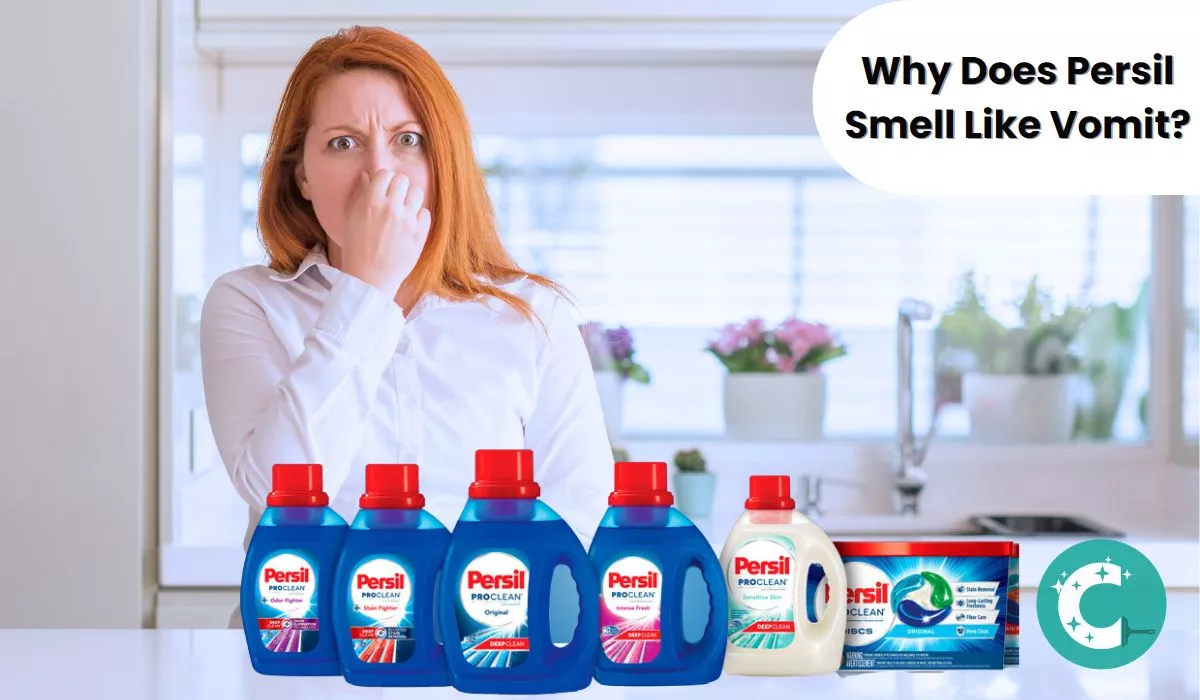
Why Does Persil Smell Like Vomit?

Fragrance chemicals in some laundry detergents—particularly oxidized limonene and linalool derivatives—produce sour, vomit-like odors that linger on clothing and inside washing machines. Persil NonBio is a fragrance-free alternative that eliminates these compounds entirely, making it the most effective choice for households dealing with detergent-related odor complaints.
Many detergents contain a blend of synthetic fragrances that cause nausea and headaches in sensitive individuals. These fragrances emit volatile organic compounds (VOCs) that can overwhelm indoor air quality, especially in small laundry rooms with limited ventilation.
The most common culprits are fragrance chemicals derived from citrus and floral compounds. When exposed to heat and oxygen during the wash cycle, limonene—a common scent chemical—oxidizes into smaller aldehydes and ketones that produce a sour, stomach-turning odor many people compare to vomit. These oxidation byproducts adhere strongly to fabric fibers and accumulate inside the washing machine drum and rubber gasket.
Why Does Persil Smell Like Vomit? Fragrance Chemistry Explained
Chemicals Used in Fabric Softeners and Fragrance Additives
Fabric softeners and scented detergents use chemicals such as limonene, linalool, alpha-pinene, and benzyl acetate to create pleasant floral and citrus notes. However, these same compounds oxidize rapidly when exposed to the warm, moist environment of a washing machine. Oxidized limonene produces acetone and formaldehyde precursors, while linalool breaks down into irriter aldehydes that cause both the unpleasant odor and potential respiratory irritation reported by the CDC’s environmental health division.
Detergent Buildup in Your Washing Machine
Standard detergents contain surfactants—typically linear alkylbenzene sulfonates (LAS) at concentrations of 15–30%—that can accumulate in the washing machine drum, particularly in front-load machines where water pools in the rubber gasket. This residue creates a breeding ground for odor-causing bacteria and traps fragrance residues that continue to off-gas.
The cleaning chemistry hub explains that surfactants work by reducing water’s surface tension, but excess surfactant not rinsed away during shorter cycles can redeposit onto fabrics as a grey residue—a common source of sour laundry smell.
Overloading Your Washing Machine Worsens Odor Problems
Overloading restricts water circulation, preventing adequate rinsing. When a machine runs at full capacity, detergent residues and body soils remain trapped in the fabric load rather than being flushed away. This causes a combination of bacterial growth and chemical buildup that produces persistent odor.
Follow manufacturer load guidelines: for a standard 7–8 kg front-load machine, use a maximum of 5–6 kg of laundry per cycle. This allows 20–30% void space for proper water penetration and rinse extraction.
How to Use Persil NonBio for Best Results
Persil NonBio is formulated without added fragrance, making it suitable for people with fragrance sensitivity, eczema, or allergic skin conditions. It contains a combination of anionic and nonionic surfactants (20–25% total), cellase and protease enzymes for stain breakdown, and Builders (sodium carbonate) to soften water and boost cleaning performance.
Persil NonBio works in all machine types—top-load, front-load, and high-efficiency. For front-load machines, add detergent to the drawer slot marked for the main wash (not the pre-wash slot) to ensure proper dilution before the wash cycle begins.
The recommended dose is 50 ml for a standard load (4–5 kg) in soft water areas, increasing to 75 ml for hard water or heavily soiled loads. Using more than the recommended dose does not improve cleaning and can increase residue buildup in the machine.
For sensitive skin, look for products with the NSF International certification mark, which verifies the product is free from fragrances and common skin allergens.
How to Remove Puke Smell from a Washing Machine
Clean the Lid, Door Gasket, and Drain Filter Monthly
Front-load washing machines trap moisture in the door gasket and drain filter, creating conditions for odor-causing bacteria to proliferate. Wipe the rubber door gasket after every use with a dry cloth, and clean it thoroughly once per month using 2 tablespoons of baking soda dissolved in 500 ml of warm water.
The drain filter should be cleaned every 4–6 weeks. Pull out the filter (place towels underneath—it will contain water), remove debris, rinse under hot running water, and wipe the housing with the same baking soda solution.
Run a Hot Vinegar Wash to Dissolve Residue
White vinegar (5–8% acetic acid) effectively dissolves detergent and mineral residue while deodorizing the drum. Pour 500 ml of white vinegar directly into the drum, then run a full hot water cycle at 60°C (140°F) with no laundry inside. Vinegar’s acidity (pH ~2.5) neutralizes alkaline detergent residues and kills odor-causing bacteria that cannot survive below pH 4.
Repeat this hot vinegar wash monthly, or every 40–50 cycles, to prevent buildup.
Deodorize with Baking Soda After the Vinegar Cycle
Baking soda (sodium bicarbonate) raises the wash water’s pH, creating an alkaline environment that emulsifies fatty residues and neutralizes acids. After running the vinegar cycle, run a second hot cycle with 250 g (approximately 1 cup) of baking soda added directly to the drum. This two-step approach—vinegar first, then baking soda—restores the drum to a neutral pH range of 7.0–7.5.
How to Remove Vomit Smell from Clothes After Washing

Pre-Treat with Diluted Ammonia Before Re-Washing
Ammonia (ammonium hydroxide, pH ~11) breaks down protein-based soils and odor compounds. Mix 1 tablespoon of household ammonia (3–5% concentration) with 250 ml of cool water. Apply directly to the affected area using a clean white cloth, and gently blot—do not rub, as rubbing drives the compound deeper into fabric fibers. Allow 5–10 minutes of contact time before re-washing.
Avoid mixing ammonia with chlorine bleach or detergent containing chlorine—combining these produces toxic chloramine gas. Always use ammonia in a well-ventilated space.
Soak Clothes in Borax Solution for Stubborn Odors
Borax (sodium borate) is effective at neutralizing acids and odors at concentrations of 50 g per litre of warm water. Dissolve 50 g of borax in 1 litre of warm water (40°C), fully submerge the garment, and soak for 30 minutes before running a normal wash cycle. Borax also acts as a laundry booster at doses of 25–50 g per load, enhancing enzyme activity and softening wash water.
Wash at 60°C with Baking Soda for Maximum Odor Removal
A 60°C (140°F) wash cycle provides sufficient heat to denature odor-causing proteins and activate baking soda’s deodorizing properties. Add 125 g (half a cup) of baking soda directly to the drum alongside your regular fragrance-free detergent. For particularly stubborn odors, increase to 250 g and select the longest wash cycle available.
Final Rinse with White Vinegar Removes Residue Traces
A white vinegar rinse (125 ml added to the fabric softener dispenser) acidifies the final rinse water, neutralizing any remaining alkaline residues from baking soda or hard water minerals. This step prevents the mineral buildup that causes fabric to stiffen and traps the odor compounds that produce the sour smell in subsequent wears.
Best Fragrance-Free Laundry Detergents: Top Recommendations
Fragrance-free detergents eliminate the primary source of the vomit-like odor complaints associated with conventional scented products. The following table compares the most widely available fragrance-free options based on formulation, enzyme content, and suitability for different machine types.
| Product | Form | Fragrance-Free | Enzymes | HE Compatible |
|---|---|---|---|---|
| Persil NonBio | Liquid | Yes | Protease, Amylase | Yes |
| Persil Non-Bio Capsules | Capsule | Yes | Protease, Lipase, Amylase | Yes |
| Dermatril Fragrance-Free | Liquid | Yes | Limited | Yes |
| All Free Clear | Liquid | Yes | Protease | Yes |
Persil NonBio remains the top choice for households dealing with persistent detergent-related odors. Its enzyme cocktail (protease for protein stains, amylase for starches, and lipase for fats) provides thorough cleaning without the fragrance compounds that cause oxidation and sour odors.
Does Persil Smell Better Than Tide? A Fragrance-Free Comparison
Persil NonBio contains no added fragrance, while standard Tide uses a proprietary fragrance blend that includes limonene, linalool, and coumarin. These compounds are among the most frequently reported fragrance allergens in the European Commission’s scientific review on cosmetic allergens. Tide’s fragrance profile is more complex and longer-lasting, which some users perceive as better-smelling—but this complexity also increases the risk of fragrance sensitivity reactions.
Both products use similar surfactant technology (anionic surfactants such as LAS combined with nonionic surfactants such as AE). The primary difference is Persil’s omission of synthetic fragrances, making it the preferred choice for households with members who have asthma, eczema, or chemical sensitivities.
Conclusion
The vomit-like odor associated with Persil and other scented detergents originates from oxidized fragrance chemicals—primarily limonene and linalool—that produce sour-smelling aldehydes and ketones during the wash cycle. Switching to a fragrance-free detergent like Persil NonBio eliminates this problem at the source. For existing odor issues, a monthly washing machine cleaning routine using white vinegar at 60°C followed by a baking soda wash restores the drum to neutral pH and removes residue buildup.
For odor removal from clothing, pre-treat with diluted ammonia, soak in a borax solution at 50 g per litre for 30 minutes, then wash at 60°C with baking soda added. A final vinegar rinse prevents residue from redepositing on fabrics.
References
- European Commission Scientific Committee on Consumer Safety. (2012). Opinion on Fragrance Allergens in Cosmetic Products. SCCS Opinion on Fragrance Allergens.
- National Institute of Environmental Health Sciences (NIEHS). (2021). Fragrance Sensitivity: A Review of the Literature. NIEHS Fragrance Sensitivity.
- American Academy of Dermatology Association. Contact Dermatitis: Fragrance Allergy Overview. AAD Contact Dermatitis.
- NSF International. Laundry Detergent Certification Standards for Fragrance-Free Claims. NSF International.


