
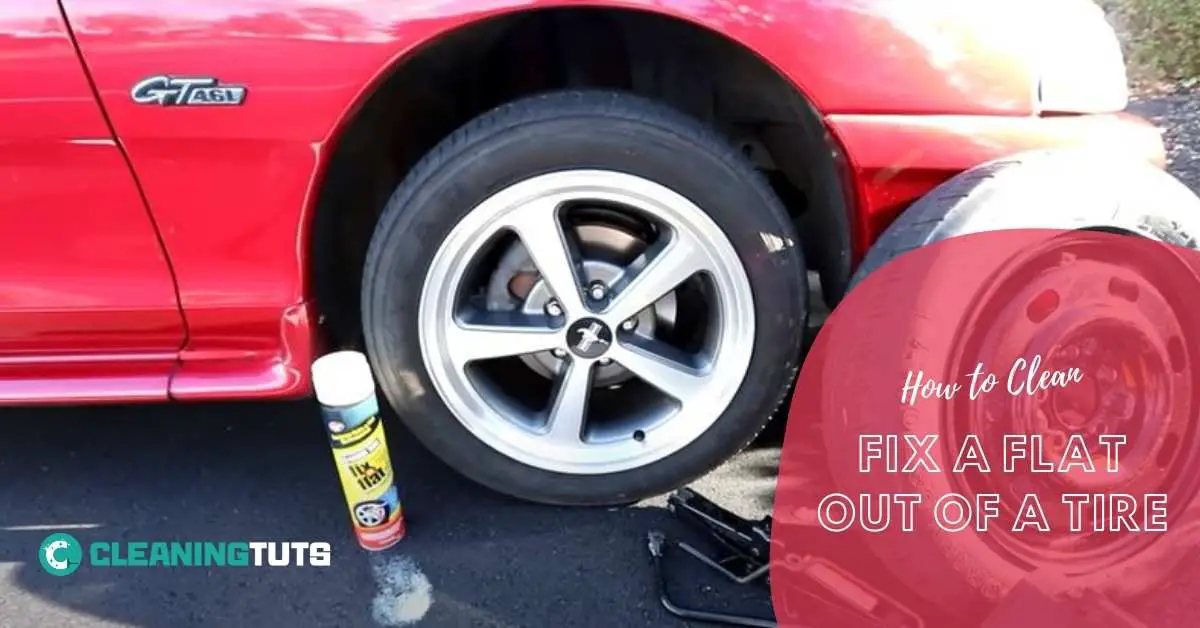
How to Clean Fix a Flat Out of a Tire?

Yes, you can clean Fix-a-Flat out of a tire. For liquid residue, soap and water dissolves the sealant within minutes. For dried Fix-a-Flat, odorless mineral spirits applied with a rag breaks down the hardened compound in 5–10 minutes of contact time.
Fix-a-Flat is a single-use canned tire inflator that seals punctures up to ¼ inch (6 mm) with a pressurized latex-based sealant and reinflates the tire with nitrogen gas. The compound remains in liquid form inside the tire due to glycol-based chemistry, but heat from vehicle operation gradually evaporates the liquid carrier, leaving a dried polymer residue that adheres to the tire interior.
Can You Remove Fix-a-Flat From a Tire?
Car tires experience continuous stress and pressure during operation, making punctures from road debris a common occurrence. Fix-a-Flat provides emergency inflation by injecting a liquid sealant that locates the puncture site and hardens to form a temporary seal while the pressurized gas reinflates the tire.
Removing Fix-a-Flat requires dismounting the tire from the vehicle and rim. The sealant cannot be purged while the tire remains mounted. According to the manufacturer, Fix-a-Flat provides temporary repair for up to 100 miles (160 km) or 3 days, whichever comes first. The can has a shelf life of 2 years unopened.
How to Clean Fix-a-Flat From a Tire
After using Fix-a-Flat on a flat tire, the sealant must be removed before a permanent repair can be completed. The cleaning method depends on whether the sealant remains liquid or has dried inside the tire.
Liquid Fix-a-Flat Removal
When Fix-a-Flat is still in liquid state, soap and water dissolves the compound effectively. Use warm water at 100°F–120°F (38°C–49°C) with dishwashing detergent at a 1:10 ratio. Apply with a cloth rag or paper towel, then rinse thoroughly with clean water. The glycol-based sealant breaks down on contact with surfactants within 2–3 minutes.
Dried Fix-a-Flat Removal
Once Fix-a-Flat has dried and hardened, soap and water are insufficient. Odorless mineral spirits (also called white spirits or Stoddard fluid) applied with a clean rag dissolves the dried polymer latex. Apply liberally and allow 5–10 minutes of contact time before wiping clean. Mineral spirits have a flash point of 104°F (40°C) — use in a well-ventilated area away from ignition sources.
Tire Sealant Removal Procedure
Tire sealants contain glycol and latex polymers that remain liquid due to the glycol component. Vehicle heat from operation causes the glycol to evaporate, leaving the latex to dry and adhere to tire interior surfaces. Regular sealant replenishment maintains effectiveness, but complete removal requires dismounting and mechanical or chemical cleaning.
For a complete tire sealant removal, follow these steps:
Step 1: Tire Removal
Dismount the tire from the vehicle and rim. This is the only way to access the interior sealant residue. If Fix-a-Flat has contacted the rim surface, clean the rim separately using the methods described in our guide to removing Fix-a-Flat from rims.
Step 2: Vacuum the Interior
Use a wet/dry shop vacuum to extract liquid sealant from the tire interior. Vacuuming loosens and removes the bulk of liquid residue before scrubbing begins. Work the vacuum nozzle along the tire’s inner sidewall and tread grooves systematically.
Step 3: Wipe the Tire Interior
Wipe the tire interior with a cloth dampened with mineral spirits for dried residue or soapy water for liquid residue. Ensure all dust, debris, and remaining sealant particles are removed. Allow the tire to air-dry completely before proceeding.
Step 4: Locate and Patch the Puncture
Inspect the tire tread for the puncture source — typically nails, screws, or road debris. Mark the puncture location, then apply a tire patch using a vulcanizing tire repair kit. Clean the punctured area with isopropyl alcohol (IPA) at 70% concentration before patch application for proper adhesion.
Step 5: Remove Residual Sealant Around Patch
Use 80-grit sandpaper to smooth and remove any dried sealant around the patched area without disturbing the patch bond. Work carefully to avoid damaging the repair. Wipe the sanded area clean with a damp cloth.
Air Pressure After Using Fix-a-Flat
After applying Fix-a-Flat, the tire requires immediate air pressure replenishment. Fix-a-Flat seals punctures up to ¼ inch (6 mm) and reinflates with nitrogen gas, but this provides only temporary pressure. Drive 2–4 miles (3–6 km) to the nearest gas station or tire service center and refill the tire to the manufacturer-specified pressure (typically 30–35 PSI for passenger vehicles).
Visit a professional tire mechanic within 3 days or 100 miles (160 km) of Fix-a-Flat application for a permanent tire repair or replacement. Prolonged Fix-a-Flat exposure causes the latex compound to polymerize irreversibly inside the tire, making removal increasingly difficult and potentially damaging the tire beyond repair.
Fix-a-Flat Lifespan and Limitations
Fix-a-Flat provides emergency tire inflation only. The sealant compounds begin degrading immediately upon contact with tire interior temperatures, which can reach 150°F–180°F (65°C–82°C) during highway driving. The glycol carrier evaporates at approximately 150°F (65°C), leaving the dried latex polymer adhered to tire internals.
| Specification | Value |
|---|---|
| Maximum puncture seal size | ¼ inch (6 mm) |
| Maximum travel distance after use | 100 miles (160 km) |
| Maximum time before removal | 3 days |
| Shelf life (unopened can) | 2 years |
| Operating temperature range | -20°F to 120°F (-29°C to 49°C) |
| Sealant pH | 7.0–8.5 (neutral to slightly alkaline) |
Wheel Center Caps and Tire Functionality
When performing tire repairs and maintenance, cleaning wheel center caps may seem secondary, but these components serve critical functions. Center caps protect wheel bearings from dirt, debris, and moisture ingress, and they maintain the aesthetic appearance of the wheel assembly.
Conclusion
Flat tires from road debris are common and unavoidable for most drivers. Fix-a-Flat offers emergency temporary repair by injecting a latex-based sealant that locates punctures and forms an immediate seal while reinflating the tire with pressurized nitrogen gas.
Fix-a-Flat removal requires tire dismounting, followed by vacuuming, chemical cleaning with mineral spirits, and a final wipe. The tire should then receive professional inspection for permanent repair. Always remove Fix-a-Flat within 3 days or 100 miles of application to prevent permanent tire damage from dried polymer residue. For complete tire maintenance guidance, refer to the Floor Cleaning Master Hub or explore our Cleaning Glossary for related terminology and procedures.
References
- National Highway Traffic Safety Administration (NHTSA). (2024). Tire Safety Guidelines and Maintenance Standards. U.S. Department of Transportation.
- American Automobile Association (AAA). (2023). Emergency Roadside Assistance — Tire Repair and Maintenance. AAA Publishing.
- U.S. Environmental Protection Agency (EPA). (2022). Household Hazardous Waste — Tire Care Products. EPA.
- Rubber Manufacturers Association. (2021). Tire Service Maintenance Guidelines. RMA.

