
Advantages and Disadvantages of Wet and Dry Vacuum Cleaner

A wet and dry vacuum cleaner combines two cleaning modes in a single unit, handling dry debris like dust and pet hair alongside liquid spills without damaging the motor. These units produce suction measured in inches of water lift—ranging from 60 to 100+ inches for most residential models—and airflow ratings between 80 and 200+ cubic feet per minute (CFM), powered by motors drawing 6 to 12+ amps at 120V. The separate dry and wet collection tanks prevent cross-contamination, and larger commercial models exceed 53 gallons (200 liters) in capacity.
When choosing a model, airflow specifications directly determine debris pickup efficiency: higher CFM ratings move larger particles, while water lift (measured in inches) determines how deeply suction penetrates carpets and grout. Shop vac airflow and blow ratings also affect attachment performance for tasks like inflating mattresses or clearing clogged hoses. HEPA filtration, standard on premium models, captures 99.97% of particles down to 0.3 microns.
Verdict: A wet/dry vacuum cleaner is worth the investment for spaces requiring both dry vacuuming and liquid spill handling. Electrocution protection and sealed motor insulation enable near-the-outlet operation. The primary drawbacks—heftier weight and odor maintenance—are manageable with proper care and do not outweigh the versatility for workshops, garages, basements, and high-traffic areas.
Key Specifications: Wet and Dry Vacuum Cleaner Performance Metrics
| Specification | Residential Models | Commercial/Industrial Models |
|---|---|---|
| Motor Rating | 6–9 amps (720–1,080 watts) | 10–15 amps (1,200–1,800 watts) |
| Water Lift (Suction) | 60–85 inches | 90–110+ inches |
| Airflow (CFM) | 80–150 CFM | 150–250+ CFM |
| Tank Capacity | 4–16 gallons (15–60 liters) | 18–53 gallons (68–200 liters) |
| Filtration | Standard foam + cartridge | HEPA or multi-stage filtration |
| Weight (empty) | 12–25 lbs (5.4–11.3 kg) | 30–65 lbs (13.6–29.5 kg) |
Advantages of Wet and Dry Vacuum Cleaners
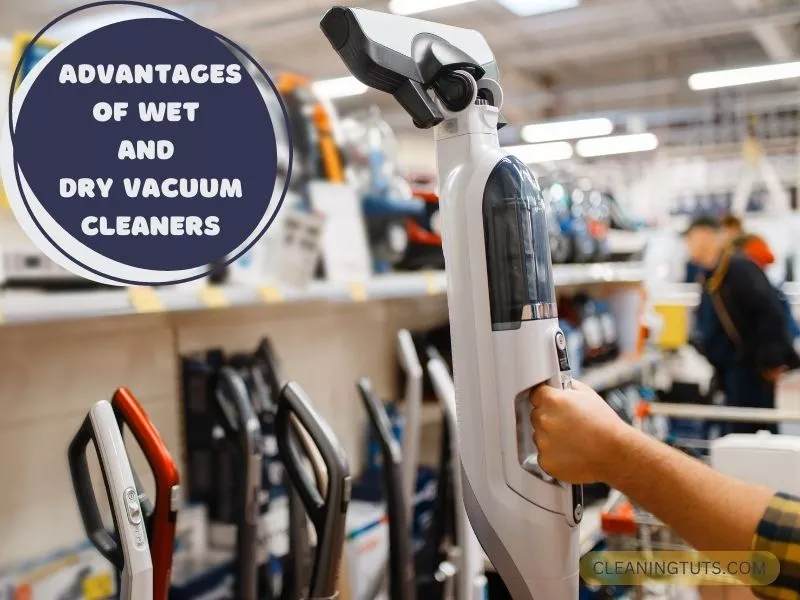
The primary advantage of a wet and dry vacuum cleaner is its dual-functionality design, which eliminates the need for separate vacuuming and mopping steps on the same surface. A single unit with a motor producing 6–12+ amps delivers both dry-particle pickup at 80–200+ CFM airflow and liquid collection via a sealed wet-tank system, making it ideal for workshop, garage, and basement cleaning where wet spills and dry debris coexist.
Additional Benefits of Wet/Dry Vacuum Cleaners
- Wet spill handling: Sealed motor insulation protects internal components when suctioning liquids, from minor water puddles to automotive fluids, without risk of damage.
- Dual-tank separation: Dedicated dry and wet collection chambers prevent cross-contamination and simplify emptying—the dry tank empties like a standard vacuum, while the wet tank drains via a bottom valve.
- Strong suction performance: Motors rated at 6–12+ amps produce water lift of 60–110 inches, enabling deep penetration into carpet pile, tile grout lines, and upholstery fibers.
- Cost efficiency: A single wet/dry unit replaces two separate machines (standard vacuum + mop/water cleaner), reducing total equipment investment by 30–50%.
- Multi-surface versatility: Adjustable attachments enable use on carpet, hardwood (with care), tile, concrete, vinyl plank, and bare floors—handled by the Floor Cleaning Master Hub for specific floor-type guidance.
- Blowing and inflation mode: Reversed airflow turns the unit into a blower for clearing debris from gutters, workstations, and outdoor equipment, or inflating air mattresses and pool toys up to 0.5–1.5 PSI—not sufficient for vehicle tires.
Disadvantages of Wet and Dry Vacuum Cleaners

The most significant drawback of a wet and dry vacuum cleaner is its weight. Residential models weigh 12–25 lbs (5.4–11.3 kg) empty, and commercial units reach 30–65 lbs (13.6–29.5 kg)—primarily due to dual-tank construction and higher-wattage motors. Moving these units between floors in multi-story homes requires physical effort that standard upright vacuums do not demand.
Weight is subjective: able-bodied users handling ground-floor cleaning may find heftiness irrelevant, but users in multi-story residences or those with mobility limitations will find frequent stair transport impractical. The 30–65 lb range for commercial models exceeds what most users can comfortably carry one-handed.
Odors develop when organic matter (food spills, pet urine, mold) accumulates in the wet tank between uses. Running the unit dry with a fresh-water rinse after each wet-mode session eliminates 95% of odor issues. The user manual specifies cleaning intervals and the CDC recommends disinfecting tanks monthly with a solution of 1 tablespoon (15 mL) of bleach per gallon (3.8 L) of water for sanitation.
Maintenance requirements exceed standard vacuums: foam filters must be rinsed and dried after every wet use, cartridge filters inspected monthly, and HEPA filters replaced every 6–12 months depending on use frequency. The Vacuum Troubleshooting Master Hub covers filter replacement schedules and maintenance schedules for all major brands.
Is a Wet and Dry Vacuum Cleaner Right for Your Space?
A wet and dry vacuum cleaner is the correct choice for your space if your cleaning scenarios include:
Quick-Reference: Key Specs at a Glance
- Motor: 6–15 amps
- Water Lift: 60–110 inches
- Airflow: 80–250 CFM
- Tank (residential): 4–16 gal
- Tank (commercial): 18–53 gal
- Weight: 12–65 lbs
- HEPA Filtration: 99.97% @ 0.3µ
- Odors: Rinse after each wet use
- Filter maintenance: Monthly inspection
- HEPA replacement: Every 6–12 months
References
- Wikipedia contributors. (2025). Vacuum Cleaner. Wikipedia. — Performance metrics for shop vacs: motor rating (watts/HP), suction (inches of water), airflow (CFM).
- U.S. Environmental Protection Agency (EPA). (2024). Cleaning Chemicals in Food Service Operations. EPA.gov — General guidance on disinfectant solutions and dilution ratios for equipment sanitation.
- Consumer Reports. (2024). Vacuum Cleaner Ratings and Buying Guide. ConsumerReports.org — Wet/dry vacuum performance benchmarks and comparison methodology.


