

Help! My Dyson Not Charging Flashing Blue Light (Fixed)

A flashing blue light on your Dyson vacuum means the battery has no charge and needs recharging. If the blue light persists after connecting to power, it indicates a charging failure caused by a damaged battery, blocked airways, a faulty power cord, a blown fuse, or improper dock connection. This guide covers all six root causes and their definitive fixes.
Usually, a flashing blue light on a Dyson indicates the battery needs charging. However, when the blue light persists after connecting to power, it signals a specific charging fault that requires diagnosis.
Six Root Causes of Dyson Not Charging with Flashing Blue Light
When a Dyson flashes a blue light after you connect the charging cable, the root cause lies in one of six areas: the battery, filter system, airways, power cord, charger fuse, or dock connection. Each requires a specific diagnostic and repair approach.
A full dust container also triggers a blue flash in some models, as a vacuum pressure imbalance disrupts the charging circuit. Empty the bin before troubleshooting.
Battery Replacement: The Most Common Culprit
Dyson lithium-ion batteries degrade after 3–5 years or approximately 500 full charge cycles, losing 20–30% of rated capacity. Newer models (V15, Gen5detect) use larger 3200mAh cells that extend runtime to 60–120 minutes under standard use.
A red flashing light specifically confirms a damaged or dead battery. If your vacuum runs for under 10 minutes on a full charge, the battery has exceeded its usable lifespan.
Batteries stored unused at full charge degrade 2–5% per month. Units that sit in stockrooms or garages for extended periods develop dead cells that never accept a charge. Regular monthly use prevents this gradual capacity loss.
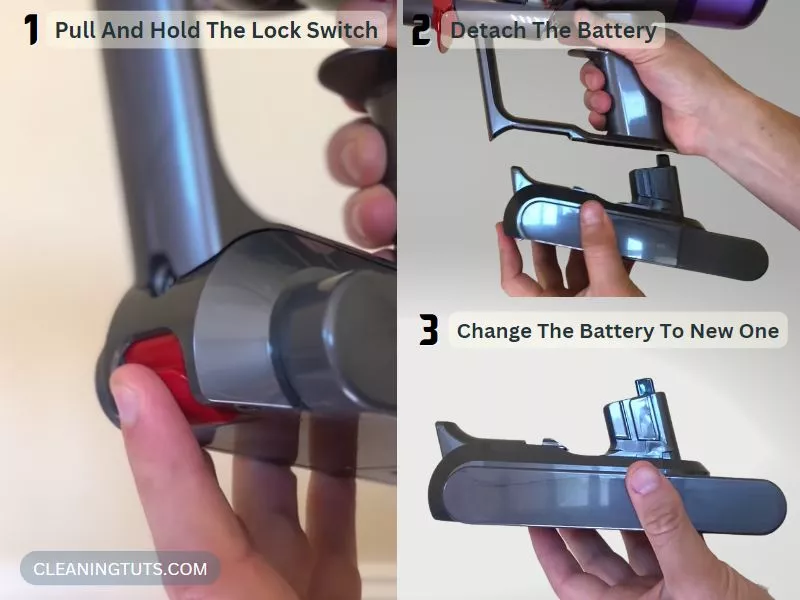
To replace the battery, contact Dyson directly or purchase an official replacement battery compatible with your model. The replacement process takes 15–30 minutes using the included hex key and screwdriver.
Most models house batteries in the handle. Pre-V10 models use removable slide-out packs. For other models, remove the outer shell with a screwdriver to access the battery compartment. Visible cracks in the battery casing indicate permanent damage requiring immediate replacement.
Blocked Airway: Filter and Passage Obstructions
Blocked airways trigger a protective shutdown that prevents charging. Debris lodged in the wand, hose, or dust canister creates backpressure that disrupts the electrical system.
Common blockages include household items sucked up accidentally—small toys, sock fragments, paper, and textile fibers that become wedged in narrow passages. Disassemble each section and flush with warm water to clear obstructions.
Neglected HEPA filters accumulate fine particulate that restricts airflow within 4–8 weeks of heavy use. Clogged filters force the motor to work harder, generating heat that triggers a safety shutdown and blocks charging until the filter is cleaned or replaced.
Clean washable filters monthly under running water (max 40°C/104°F) and allow 24 hours air-drying before reinstalling. Replace non-washable filters every 6–12 months depending on usage frequency.
Damaged Power Cord: Inspection and Replacement
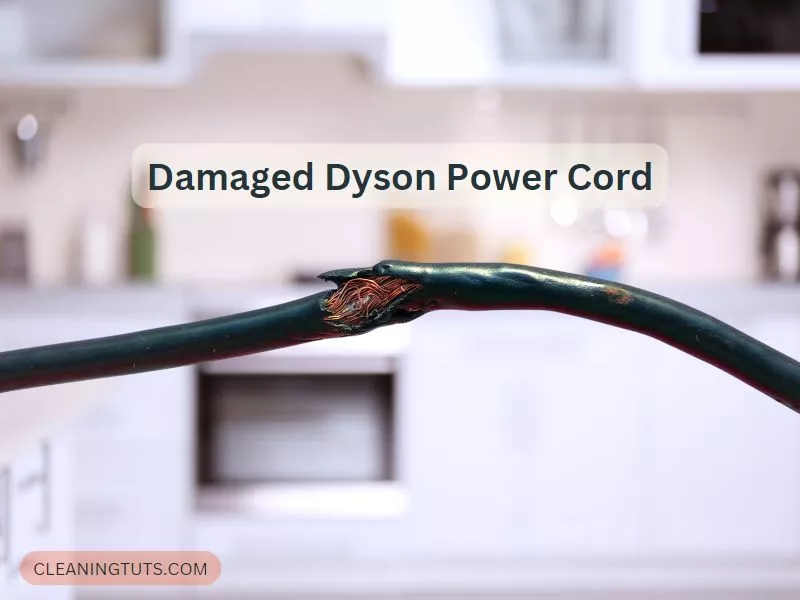
Frayed, cracked, or exposed power cords interrupt the charging circuit. Cords fail faster when run over by the vacuum, pulled aggressively from the wall, or chewed by pets. Replace damaged cords immediately—using a compromised cord risks short-circuiting the entire unit.
Inspect the full length of the cord including the connector ends. Inner wire breaks often occur near the strain relief points where the cord meets the plug or the charging pin connector.
Blown Charger Fuse: Diagnosis and Amp Rating Matching
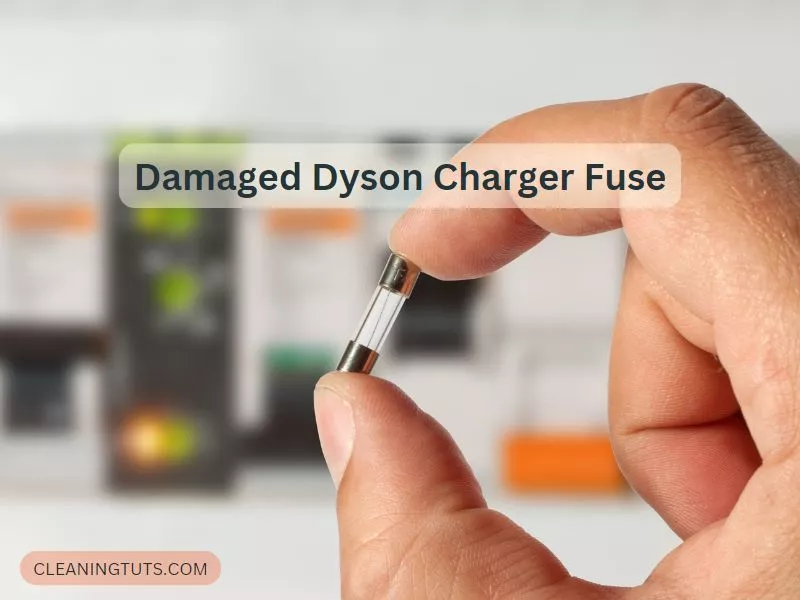
Power surges and excessive current from unstable electrical outlets blow the charger fuse. Locate the fuse in the plug’s tiny panel—pry it open with a flathead screwdriver and inspect the metal filament inside.
A visible break in the filament or blackened glass confirms a blown fuse. Check the original fuse for its amp rating (typically 1A, 2A, or 3.15A) printed on the metal cap and replace with an identical rating. Using the wrong amp rating creates a fire hazard.
Wall Mount Charging Station: Proper Positioning
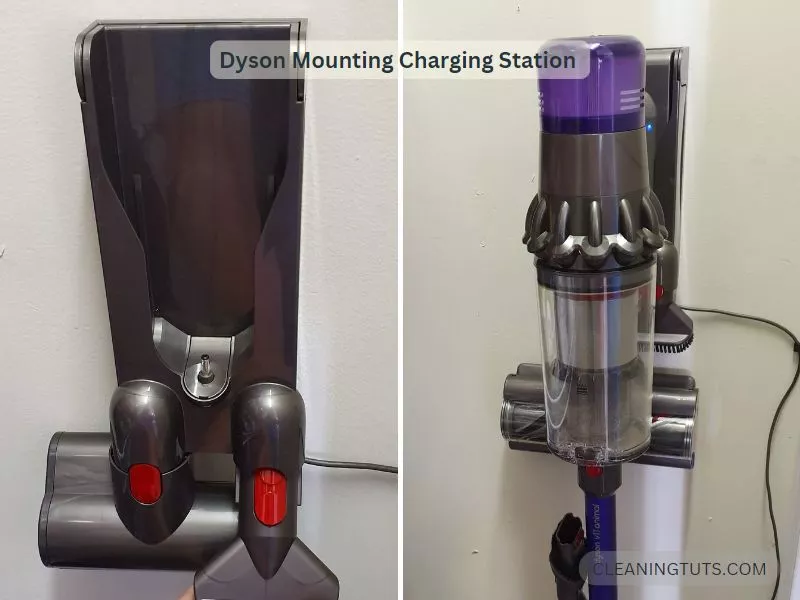
Wall-mounted docking stations require precise positioning. If the vacuum dock connector cannot reach the machine’s charging port due to distance or angle, the unit fails to charge even with a solid connection.
Overstretching the charging cable strains the internal connectors and eventually causes charging failure. Remount the dock at a height and position where the vacuum docks naturally without cable tension.
Dyson Flashing Blue Light: Quick Diagnostic Checklist
| Symptom | Most Likely Cause | Fix |
|---|---|---|
| Blue flash only when battery is low | Normal operation | Connect to charger |
| Blue flash persists on charger | Worn battery | Replace battery (3–5 year lifespan) |
| Blue flash + short runtime | Battery degradation | Battery replacement |
| Blue flash + overheating feel | Blocked filter/airway | Clean filters, clear blockages |
| Blue flash + frayed cord | Power cord damage | Replace cord immediately |
| Blue flash after power surge | Blown charger fuse | Replace fuse with matching amp rating |
When to Contact Dyson Support
If none of the above fixes resolve the flashing blue light issue, the fault lies in the internal charging circuitry or main board. These components require professional service—contact Dyson customer support at 1-866-693-9766 (US) or use live chat on the Dyson support page.
Keep your warranty intact by contacting Dyson before opening the main housing or attempting internal repairs. Your warranty covers manufacturing defects for the specified warranty period (typically 2 years for new units).
For more troubleshooting guides, explore the Vacuum Troubleshooting Master Hub or browse Dyson-specific solutions in our Cleaning Glossary.
References
- Dyson Support. (2024). Dyson Vacuum Troubleshooting and Support. Dyson. https://www.dyson.com/support


