
Help! My Dyson Keeps Turning Off (Solutions Included)

A Dyson cordless vacuum that keeps shutting off typically indicates one of seven issues: a depleted or degraded battery, faulty power outlet, dirty filter, airway blockage, problematic docking station, extended periods of inactivity, or improper charging connections. Each cause has a specific fix that takes 5 to 30 minutes to implement.
Seven common causes for a Dyson that keeps switching off: depleted battery, faulty power outlet, dirty filter, airway blockage, problematic docking station, prolonged inactivity, or damaged charging cable.
How to Fix a Dyson That Keeps Turning Off: Identify the Cause First
To fix a Dyson that keeps cutting out, you must identify the specific problem first. Common causes include insufficient charge, power outlet failure, filter contamination, airway blockages, docking station malfunction, battery degradation, or debris accumulation after periods of inactivity.
Quick fixes include: improving charging habits, testing with a different power outlet, using the 10-second trigger reset method, charging directly without the docking station, clearing blockages, cleaning or replacing the filter, or replacing the battery entirely.
Insufficient Battery Charge
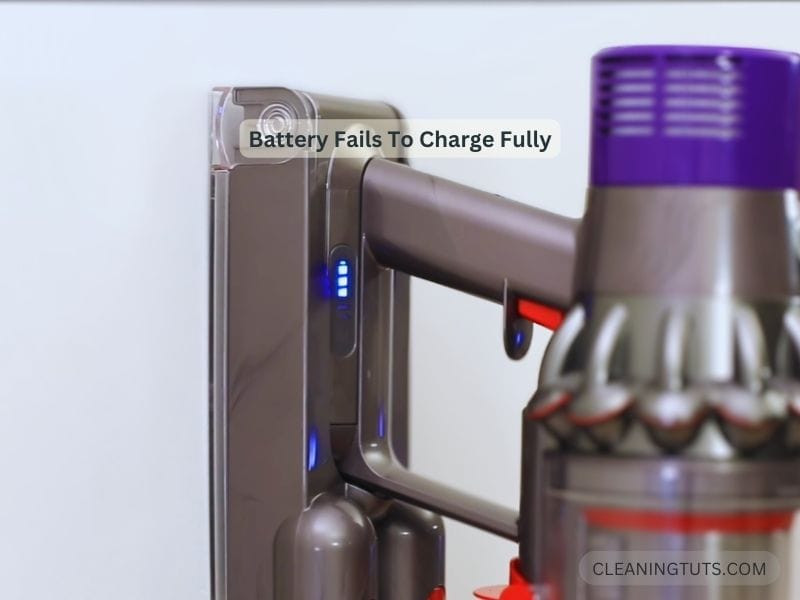
A Dyson vacuum not turning on with a flashing blue light indicates a charging issue. This typically stems from a loose charging cable connection, worn charging contacts, or depleted battery cells that no longer hold a full charge.
The charging cable may have wear and tear that disrupts the charging process, preventing the battery from reaching full capacity. Inspect the cable for visible damage, fraying, or bent connectors.
In some cases, the charging cable is not inserted fully into the port. Press the cable firmly into the charging port until it clicks into place. Verify the connection at both the vacuum end and the power outlet.
Frequent use of max or boost mode depletes the battery faster. In boost mode, most Dyson cordless vacuums run for approximately 6 minutes before requiring recharge. High-capacity modes draw significantly more power, which can trigger an automatic shutoff when battery voltage drops below the operating threshold.
Before turning the vacuum on, disconnect the charging cord. Most Dyson models do not operate while the charging cable is plugged in, as this can damage the battery cells and void the warranty.
Faulty Power Outlet
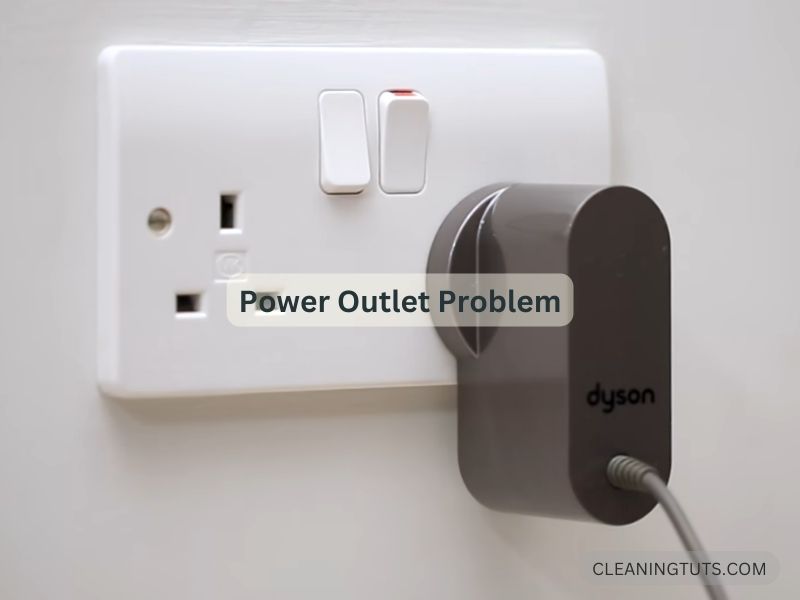
Test the power outlet by plugging in another device, such as a hair dryer set to high heat. If the hair dryer operates normally, the outlet is functioning. However, intermittent electrical faults may still affect vacuum performance.
To isolate the issue, plug the vacuum directly into a different outlet on a separate circuit. Allow the battery to charge for the full recommended duration, which ranges from 3.5 to 4.5 hours depending on the Dyson model.
After charging, press the trigger and observe the behavior. If the vacuum runs at full power, the original outlet has an electrical fault. Contact a licensed electrician to inspect and repair the faulty wiring. Do not continue using a potentially damaged outlet, as this poses a fire hazard.
Prolonged Inactivity: The 10-Second Reset Method
Vacuums stored for extended periods without use develop a protective discharge state in the battery. Lithium-ion cells self-discharge at approximately 5% per month when stored at room temperature, which can fall below the minimum voltage threshold needed to activate the vacuum.
To revive a dormant Dyson, perform the 10-second trigger reset:
If the vacuum activates after this procedure, the battery was simply in a deep discharge state. Recharge fully before next use.
Problematic Docking Station
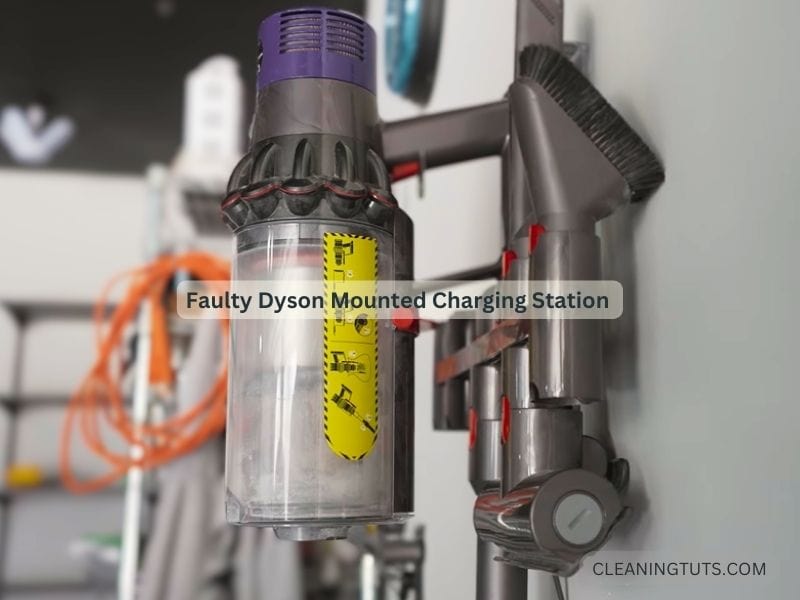
Dyson vacuums with dock charging stations may fail to charge properly when the dock’s electrical contacts become worn, misaligned, or covered in dust accumulation. The docking station convenience factor depends on reliable contact transfer between the dock pins and vacuum charging terminals.
To diagnose a faulty docking station, disconnect it and charge the vacuum directly:
If the vacuum operates normally after direct charging, the docking station requires replacement. Replacement docking stations cost between $8 and $25 depending on the Dyson model. Purchase only OEM or certified replacement parts to ensure proper voltage regulation and charging safety.
Dirty Filter and Airway Blockages
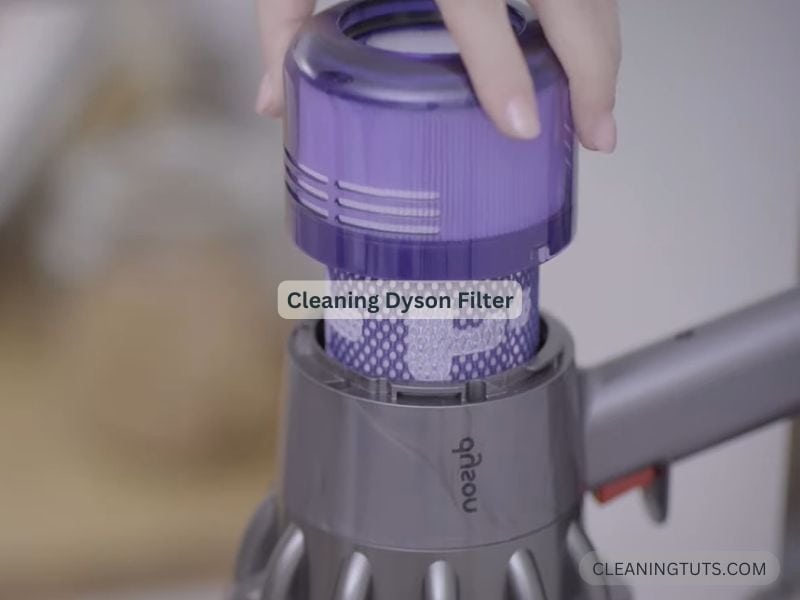
The two most common causes of Dyson vacuums shutting off prematurely are contaminated filters and airway blockages. Both trigger the vacuum’s built-in thermal protection circuit, which cuts power when internal temperatures exceed safe operating thresholds (typically above 140°F or 60°C).
To diagnose the issue, remove all attachments and operate the vacuum with only the main body. If it runs without shutting off, one of the attachments is blocked.
Check These Two Areas First
Common blockage items include pet fur, hair tangles, coins, paperclips, fine dust accumulations, and wet debris. The automatic shut-off activates within 10 to 30 seconds of detecting a restriction in airflow.
Common Blockage Items
Avoid vacuuming wet materials with your Dyson, as liquid exposure damages the motor and can cause short-circuiting. Hair accumulation around the brush roll also causes Dyson brush bar malfunctions.
8 Steps to Clear Blockages in a Dyson Vacuum
Allow the vacuum to cool completely before servicing. This prevents burns and allows thermal fuses to reset.
Empty the dust bin completely. Press the release latch over a trash bin and wipe the interior with a dry cloth.
Detach the cleaner head, crevice tool, and wand. Remove tangled hair and debris from brush bristles using scissors. Clear the wand interior by threading a flexible brush through it.
Hold the trigger and listen for motor pulsation. Rapid pulsing indicates remaining blockage; steady sound indicates successful clearing.
Inspect the cyclone shroud opening for obstructions. Use a flashlight to illuminate the interior chamber for better visibility.
Release the bin base over a trash can. Tap gently to dislodge compacted debris from the cyclone fins.
Reassemble all components in the correct order. Ensure each latch clicks securely into place before proceeding.
Press the trigger to start the vacuum. Run for 30 seconds to confirm proper operation before reassuming normal use.
How to Clean the Dyson Filter
A contaminated filter restricts airflow, causing the motor to overheat and trigger automatic shutoff at approximately 140°F (60°C). Dyson’s thermal protection system activates to prevent permanent motor damage.
To clean the filter:
Dyson vacuums include an automatic thermal shutoff that activates when the motor temperature exceeds safe operating limits. If your vacuum shuts off intermittently, the filter is likely saturated and restricting ventilation, causing the motor to overheat.
iFixit
Degraded Battery Requiring Replacement
Lithium-ion batteries in cordless vacuums degrade over time through charge cycles, heat exposure, and age. After approximately 500 full charge cycles, battery capacity typically falls to 80% of original specification, with runtime decreasing proportionally.
Battery degradation accelerates when using max or boost mode frequently, as this generates higher internal temperatures during charging and discharging. Other factors include the specific Dyson model and overall usage frequency.
A clear sign of battery failure is when the Dyson cordless vacuum stops holding a charge immediately after unplugging. This indicates the cells can no longer store sufficient energy for normal operation.
You may also notice the vacuum running for only seconds before shutting off, even with a full charge. This signals the battery has reached end-of-life and requires replacement.
The 6-Minute Battery Test
To determine if the battery needs replacement: fully charge the vacuum, set it to max mode, and measure runtime. A healthy battery delivers approximately 6 minutes of max mode operation. If runtime falls below 4 minutes, the battery requires immediate replacement. For reference, visit the Dyson battery replacement guide.
Summary: Quick Reference Troubleshooting Guide
| Symptom | Most Likely Cause | Quick Fix |
|---|---|---|
| Vacuum shuts off after seconds | Blockage or depleted battery | Clear airway; run 6-minute battery test |
| Won’t turn on at all | Dead battery or no power | Try different outlet; perform 10-second reset |
| Runs then shuts off randomly | Overheating from dirty filter | Clean filter; allow 24-hour dry time |
| Works only while plugged in | Failed battery cells | Replace battery (under 4-min max mode runtime) |
| Charging indicator won’t light | Faulty charger or dock | Try direct charging; replace dock if needed |
| Weak suction but no shutdown | Partial blockage or worn filter | Full system clear; replace filter if necessary |
When to Contact a Professional
If the troubleshooting steps above do not resolve the issue, contact Dyson’s customer service or an authorized service center. Unauthorized repairs void the warranty and may cause additional damage.
Review the warranty terms in your user manual before attempting any disassembly beyond filter and attachment removal. The warranty typically covers battery defects and motor failures for 2 years from purchase date for consumer models.
References
- iFixit. (n.d.). How to Fix a Dyson Vacuum That Keeps Shutting Off. Retrieved from https://www.ifixit.com/
- Dyson Technology Limited. (n.d.). Vacuum Troubleshooting and Support. Retrieved from https://www.dyson.com/support
For more troubleshooting guides, browse the Vacuum Troubleshooting Master Hub or explore the Dyson Vacuum Troubleshooting Hub for model-specific diagnostics.
Visit the Cleaning Glossary for definitions of terms like HEPA filtration, lithium-ion battery chemistry, and thermal protection circuits.


