
How to Clean Asphalt Out of a Dump Truck

Removing asphalt from a dump truck requires immediate action after unloading, high-pressure water at 2,000–3,000 PSI, and a citrus-based degreaser with a pH between 2.5 and 4.0 to dissolve hardened asphalt within 5–10 minutes of application.
Spray the truck bed with an Activate Citrus Degreaser at a 1:16 dilution ratio, allow 5–10 minutes for the pH-adjusted solution to break down the asphalt binders, then scrub with a stiff-bristle brush and rinse at 2,000+ PSI. Prevention using a silicone emulsion release agent extends truck bed life by reducing adhesion by up to 80%.
How to Clean Asphalt Out of a Dump Truck: Complete Step-by-Step Process
Asphalt hardens through a process called oxidative polymerization, which accelerates below 50°F (10°C) and becomes extremely difficult to remove after 24 hours. Clean immediately after unloading for optimal results.
Step 1: Clean Immediately After Unloading
Asphalt reaches full hardness within 4–6 hours of cooling, reducing solubility by approximately 60%. Waiting until the next shift can double cleaning time and labor costs. Always prepare your cleaning apparatus before the final unloading begins.
Residual asphalt buildup of just 1/4 inch reduces dump truck load capacity by up to 500 lbs and accelerates bed wear by abrasion during discharge.
Step 2: Lift Truck Bed and Apply High-Pressure Water Rinse
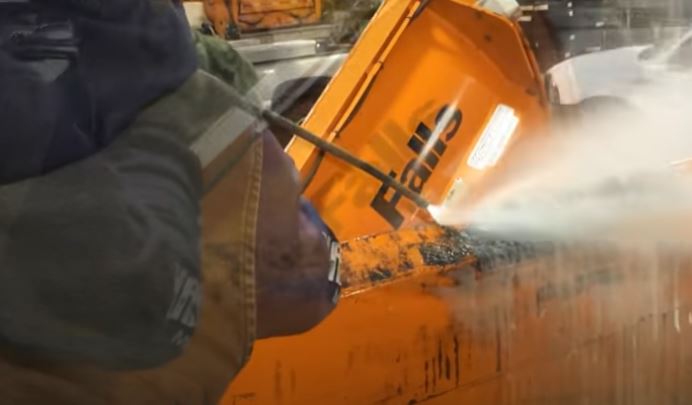
Lift the truck bed to a 45-degree angle using the driver control panel. Apply cold water at 2,000–3,000 PSI from a distance of 6–8 inches to pre-soak loose debris and cool surface asphalt to below 140°F (60°C), where adhesion decreases significantly.
High-pressure water alone removes approximately 40–60% of unheated asphalt buildup when temperature is below 50°F (10°C).
Step 3: Apply Citrus Degreaser Solution and Scrub
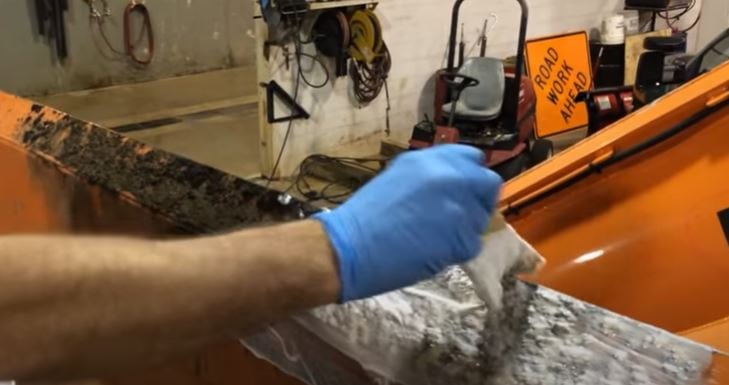
Connect Activate Citrus Degreaser to your hose-end sprayer at a 1:16 dilution (8 oz per gallon of water). Spray evenly across remaining asphalt deposits, maintaining a pH of 2.5–4.0 in the solution. Allow 5–10 minutes of dwell time—do not let the solution dry.
Citrus-based degreasers contain d-limonene (C10H16), which dissolves asphalt binders through hydro-carbon solubility. A 32 oz bottle covers approximately 320 sq ft at recommended dilution.
Scrub with a stiff-bristle poly scrubber brush in circular motions, then rinse thoroughly at 2,000+ PSI to prevent residue re-deposition.
Three Methods for Removing Asphalt from a Dump Truck
Choosing the right removal method depends on asphalt hardness, available materials, and environmental considerations. Each method varies in cost, effectiveness, and safety profile.
Using Diesel Fuel
Diesel fuel dissolves asphalt through hydrocarbon extraction, but it is not recommended for regular use. Diesel costs $4.50–$6.00 per gallon as of 2024, making full-bed cleaning expensive at $50–$150 per session. Additionally, diesel is classified as a flammable liquid (NFPA 704: Health 1, Fire 2, Reactivity 0) and requires special disposal under EPA hazardous waste regulations.
Use diesel only as an emergency measure when professional degreasers are unavailable. Apply with a rag, not spray, to minimize vapor inhalation risk.
Using Activate Citrus Degreaser
Citrus degreaser is the preferred method. A 32 oz bottle costs approximately $23 and dilutes to 16 gallons of working solution—covering 320 sq ft at less than $0.08 per sq ft. It is classified as a Biodegradable Cleaning Product per NSF International standards, with a pH of 2.5–4.0 that dissolves asphalt binders within 5–10 minutes.
| Method | Cost per Full Bed | Effective Temp Range | EPA Compliance | Safety Rating |
|---|---|---|---|---|
| Diesel Fuel | $50–$150 | Any | Requires disposal | Flammable |
| Citrus Degreaser (1:16) | $3–$5 | 40–100°F (4–38°C) | Biodegradable | Low toxicity |
| Kerosene | $20–$40 | Any | Requires disposal | Flammable |
Using Kerosene to Remove Asphalt
Kerosene is an effective asphalt solvent available for $3–$5 per gallon, but it presents fire and inhalation hazards. Kerosene has a flash point of 100–162°F (38–72°C) and produces harmful vapors at concentrations above 100 ppm. Like diesel, it requires hazardous waste disposal under EPA used oil regulations.
If using kerosene, apply in a well-ventilated area with respiratory protection (NIOSH-approved organic vapor respirator) and store away from ignition sources.
Preventing Asphalt from Sticking to Your Dump Truck
Prevention reduces cleaning time by up to 80% and extends truck bed service life. Silicone emulsion release agents form a hydrophobic barrier that prevents asphalt from bonding to steel surfaces.
Silicone Emulsion Release Agent Application
Apply a food-grade silicone emulsion (such as those meeting NSF H1 food-grade lubricant standards) at a rate of 1 gallon per 400–500 sq ft. Spray evenly onto clean, dry truck bed surfaces before loading. The emulsion cures in 15–30 minutes, forming a 0.5–2 mil thick release layer.
Reapplication frequency depends on haul frequency: daily haulers apply every 5–7 shifts, while occasional haulers apply before each major project. The coating becomes无效 (ineffective) after 3 cumulative loads without reapplication.
Silicone emulsion agents reduce asphalt adhesion by 75–85% and are preferred over petroleum-based release agents for environmental compliance.
Removing Asphalt Emulsion from a Dump Truck
Asphalt emulsion—the dark, tar-like residue that accumulates underneath the truck bed—requires a super degreaser with a pH above 12.0 for effective breakdown of the bituminous compounds.
Spray Nerta Active Diamond Foam or equivalent super degreaser onto the emulsion layer at full strength. Allow 8–12 minutes of dwell time, then rinse at 2,500–3,000 PSI. The foam’s clinging action maintains contact with vertical surfaces for improved dissolution.
Complete Dump Truck Cleaning Procedure
Dump trucks accumulate both asphalt and tar deposits. Tar requires a flat-head screwdriver to scrape solidified material before applying degreaser—skipping this step results in incomplete cleaning and surface damage from forced scraping.
- Scrape off solidified tar with a flat-head screwdriver before applying chemicals
- Spray Activate Citrus Degreaser at 1:16 dilution across all asphalt-affected areas
- Allow 5–10 minutes dwell time without letting solution dry
- Rinse at 2,000–3,000 PSI from top to bottom
- Apply silicone emulsion release agent before next load if operating daily
Are the Methods for Cleaning Rear Differential Cover Similar to Cleaning Asphalt Out of a Dump Truck?
When it comes to cleaning rear differential cover, the methods differ significantly from cleaning asphalt out of a dump truck. While dump truck bed cleaning uses heavy machinery and chemical solvents, rear differential cover maintenance requires degreasers rated for automotive mechanical parts and careful attention to lubricant compatibility. For detailed differential cleaning, refer to the specialty cleaning guide.
Temperature Effects on Asphalt Removal
Ambient temperature significantly impacts cleaning difficulty. Asphalt adhesion increases by approximately 25% for every 10°F drop below 50°F (10°C). The optimal cleaning window is between 60–85°F (15–29°C) when asphalt is in a semi-pliable state.
- Above 85°F (29°C): Asphalt becomes too soft and smears; clean in early morning
- 60–85°F (15–29°C): Optimal cleaning temperature range
- 40–60°F (4–15°C): Increased dwell time (10–15 minutes) required
- Below 40°F (4°C): Chemical reaction slows by 50%; consider heated water or heated degreaser
Rain and high humidity accelerate asphalt hardening by 30–40% through surface cooling and moisture oxidation. Never apply silicone release agents in rain or freezing conditions.
Verdict
The Activate Citrus Degreaser method at 1:16 dilution provides the best cost-to-effectiveness ratio at approximately $0.08 per sq ft, compared to $0.50–$1.50 per sq ft for diesel fuel. Apply within the 60–85°F temperature window for maximum efficiency.
For related cleaning procedures, see the guide on how to clean an aluminum dump trailer and the specialty cleaning hub for industrial equipment maintenance.
References
- U.S. Environmental Protection Agency. (2024). Hazardous Waste Management Standards. EPA.
- NSF International. (2024). Cleaning Product Certification Requirements. NSF.
- U.S. Environmental Protection Agency. (2024). Used Oil Management Regulations. EPA.
- NSF International. (2024). H1 Food-Grade Lubricant Standards for Silicone Release Agents. NSF.

