
How to Clean Ignition Lock Cylinder?

When your key sticks or fails to turn in the ignition lock cylinder, dirt, debris, and worn tumbler pins are the culprit. Cleaning the ignition lock cylinder with compressed air, a wire brush, and graphite lubricant restores smooth key operation in under 15 minutes without professional assistance.
To clean the ignition lock cylinder, wash the key with soap and water, blow out debris with 30–90 psi compressed air, and apply graphite lubricant to the key before inserting it 2–3 times. This removes debris from the cylinder and replenishes the tumbler pins that enable the key to turn.
Ignition lock cylinders operate using a 5-pin tumbler mechanism. Over time, dust and grime accumulate in the cylinder, causing the key to stick, bind, or fail to release. Regular cleaning and lubrication prevents these issues and extends the life of both the key and the lock cylinder.
How to Clean the Ignition Lock Cylinder
Follow these three steps to restore smooth operation to your ignition lock cylinder. Each step takes 2–5 minutes and requires only basic tools available at any auto parts store.
Step 1: Clean the Key
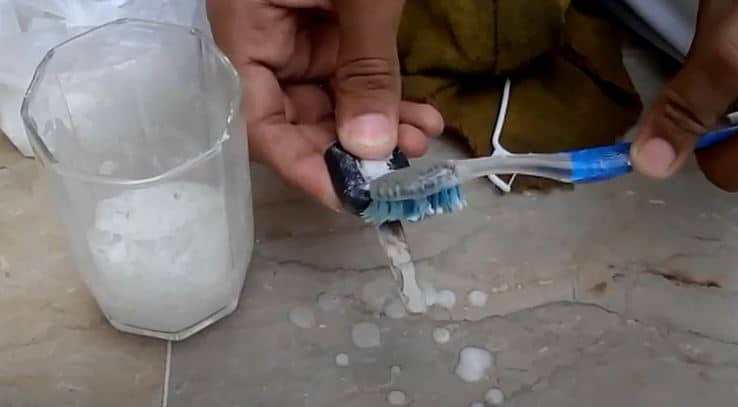
Dirt on the key transfers into the lock cylinder when you insert it. Soak the key in warm water with a drop of dishwashing liquid for 30 seconds. Use a wire brush to scrub the teeth and blade, focusing on crevices where debris collects.
Rinse the key with clean water and wipe it dry with a lint-free microfiber cloth. Allow the key to air-dry for 2 minutes before proceeding — moisture in the cylinder causes ignition problems in wet conditions.
Step 2: Clean the Ignition Cylinder With Compressed Air
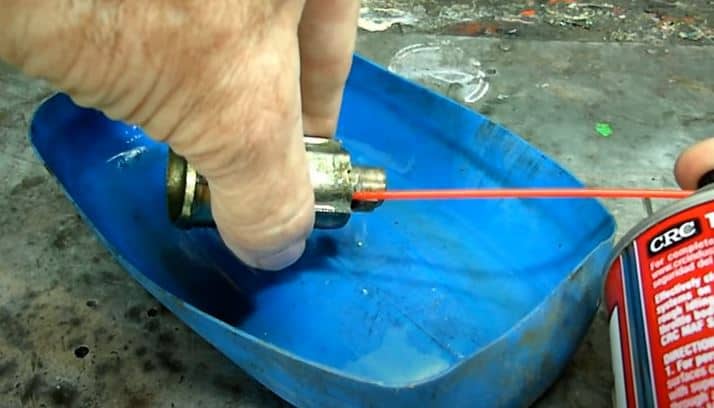
Insert the straw from a compressed air canister into the lock cylinder opening. Apply short bursts of air at 30–90 psi to dislodge dust and debris from the tumbler pins and cylinder bore. Hold the can upright to prevent propellant residue from entering the mechanism.
Do not exceed 100 psi — higher pressure can damage the delicate tumbler springs inside the cylinder. Total cleaning time should not exceed 10 seconds per application to avoid overcooling the metal components.
Compressed air at 30–90 psi removes debris from the 5-pin tumbler mechanism without damaging the springs or wafers that allow the correct key to rotate the cylinder.
Step 3: Lubricate the Ignition Cylinder
Apply a thin coat of graphite lubricant to both sides of the key blade. Graphite is the preferred lubricant for lock cylinders because it does not attract dust or debris, operates across a temperature range of -40°F to 500°F, and does not gum up the tumbler mechanism.
Insert the key into the cylinder and turn it to the unlocked position. Remove and reinsert the key 2–3 times, moving it left and right with each insertion. This distributes graphite powder along the cylinder walls and onto each tumbler pin.
Wipe any excess graphite from the key with a dry cloth before regular use.
Additional Ways to Check if the Problem Persists
After completing all three steps, the key should turn smoothly through a 25–30 degree rotation. If the key still sticks or fails to turn, the issue lies elsewhere in the ignition system.
Test With a Spare Key
Keys wear down at the molecular level from daily use. The teeth shear off micro-layer by micro-layer, changing the precise heights that align with the cylinder’s tumbler pins. If you have a spare key, test it in the ignition to determine whether the original key is worn.
If the spare key operates smoothly, have a locksmith cut a new copy from the original blank. Do not attempt to file down the worn key yourself — incorrect alteration damages the cylinder.
Inspect the Ignition Switch
If both keys fail to operate the cylinder smoothly, the ignition switch itself may be faulty. Symptoms of a failing ignition switch include the engine stalling unexpectedly, electrical accessories losing power, or the dashboard flickering when the key is in the ON position. Replace the ignition switch or consult a certified mechanic.
Is WD-40 Safe for Ignition Lock Cylinders?
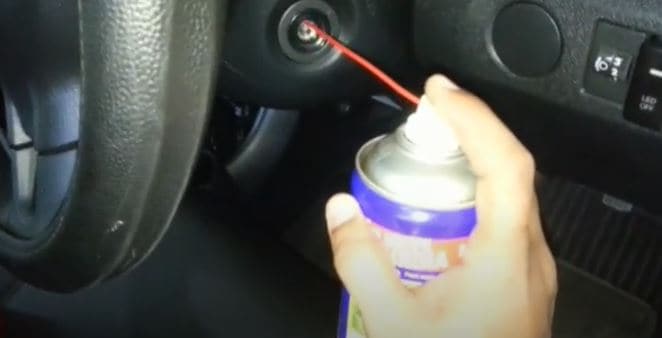
WD-40 is a water-displacement spray, not a long-term lubricant. Use it only to displace moisture from a wet ignition switch or to loosen corroded parts before cleaning. WD-40 contains propane as a propellant and leaves a light oil residue that attracts dust, which gums up tumbler pins over time.
For wet ignition switches caused by rain or car washing, WD-40 displaces water within 2–3 minutes, allowing the engine to start. However, follow WD-40 application with graphite lubricant applied to the key and cylinder for lasting results.
Do not use WD-40 on a misfiring engine — the propane propellant ignites from combustion chamber heat, creating a fire hazard.
Best Lubricants for Ignition Lock Cylinders
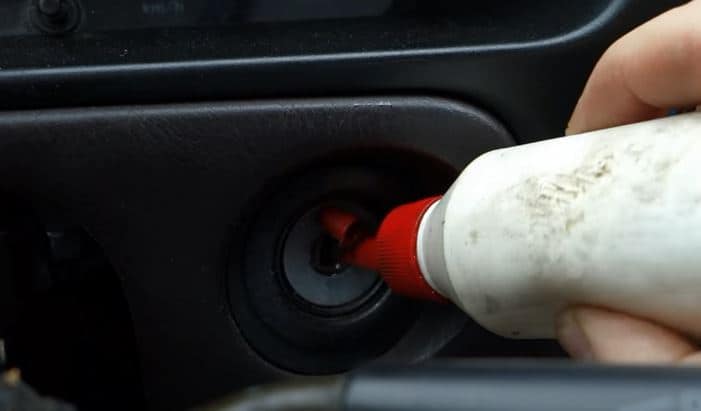
Choose the right lubricant based on your climate, usage frequency, and the severity of the sticking problem.
| Lubricant | Best Use | Temperature Range | Drawbacks |
|---|---|---|---|
| Graphite Powder | Long-term lubrication, all climates | -40°F to 500°F | Messy application; requires key insertion to distribute |
| Silicone Spray | Moisture protection, light lubrication | -40°F to 400°F | Attracts dust over time |
| WD-40 | Moisture displacement, loosening corroded parts | N/A (short-term) | Not a lubricant; attracts dust; flammable propellant |
| Lock-Ease (graphite + petroleum) | Quick fixes, rusty cylinders | -20°F to 400°F | Petroleum component attracts more dust than pure graphite |
Master Lock 2300D and 2305 lubricants are specifically formulated for pin tumbler locks and work well in automotive ignition cylinders. Apply a small amount to the key and insert it 3–4 times to distribute.
How to Fix a Sticky Ignition
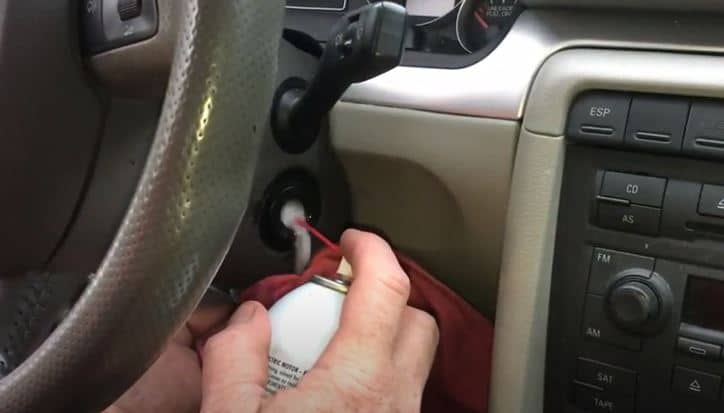
Modern vehicles use remote key fobs, but older cars with mechanical ignition switches commonly develop sticky keys. The steering wheel lock (column lock) can also mimic ignition failure. Diagnose and fix a sticky ignition with these steps.
Disengage the Steering Wheel Lock First
Every vehicle has a steering wheel locking mechanism that engages when the ignition is in the OFF position. When the wheels are turned to one side after parking, the column lock engages and prevents the steering wheel from turning — which feels identical to a stuck ignition key.
To disengage: Hold the steering wheel in the direction the tires are already turned while gently turning the key in the ignition. The column lock releases with 5–15 lbs of rotational pressure on the steering wheel.
Clean and Lubricate the Lock Cylinder
Dust and grime cause the 5-pin tumbler mechanism inside the key cylinder to stick. Spray 2–3 bursts of compressed air (30–90 psi) into the cylinder opening, then apply graphite lubricant to the key and insert it 3–4 times.
For severely corroded cylinders, apply a small amount of isopropyl alcohol (pH 7) to a lint-free cloth and wipe the key blade before lubricating. Isopropyl alcohol dissolves corrosion without damaging the cylinder’s metal components.
Loosen a Stuck Key With Light Tapping
If the key is lodged in the cylinder and will not turn, place a wooden dowel against the key head and tap it gently with a rubber mallet. This breaks the corrosion bond between the key and tumbler pins without damaging the cylinder.
Do not use excessive force or metal hammers — striking the key head damages both the key and the cylinder’s internal components.
When to Call a Mechanic
If cleaning and lubrication do not restore smooth operation, the ignition switch itself may be worn or the cylinder may require replacement. Visit a certified mechanic for diagnosis. Do not force the key — forcing a stuck key shards the metal and requires cylinder replacement.
Frequently Asked Questions
What is the most common engine problem?
The most common engine problem is, without a doubt, the intercooler failure. That’s why, a sure fire way to improve your car’s performance is cleaning the top Mount Intercooler.
How do you unlock an ignition cylinder?
Insert the key into the cylinder. Turn it to the unlock position. Then, pull the key out of the cylinder. If the key will not turn or if it is difficult to remove, you may need to use a lock-pick tool or consult a professional locksmith.
How do I know if I have a bad ignition switch?
A failing ignition switch produces these symptoms: the engine stalls unexpectedly while driving, electrical accessories lose power intermittently, the dashboard flickers when the key is turned to ON, or the key will not return to the OFF position. Replace the ignition switch immediately when these symptoms appear to avoid being stranded.
What is the relation between ignition switch and ignition coil
The ignition switch sends 12-volt power to the ignition coil, which converts it to 20,000+ volts and creates a spark that ignites the fuel-air mixture in each cylinder. Regular maintenance of ignition switch contacts ensures consistent spark timing and engine performance.
Can the same method be used to clean both the ignition lock cylinder and a rusty adjustable wrench?
No. An ignition lock cylinder contains precision 5-pin tumbler mechanisms that require specific lubricants and compressed air cleaning. A rusty adjustable wrench is best treated with rust dissolver solutions or vinegar soaking, which would damage the machined tolerances inside an ignition lock cylinder. Use only graphite lubricant, isopropyl alcohol, and 30–90 psi compressed air on lock cylinders.
Final Thoughts
A sticky ignition key usually stems from debris in the cylinder or worn tumbler pins — both fixed by cleaning and lubrication in under 15 minutes. Use graphite lubricant for lasting results; use WD-40 only to displace moisture from a wet ignition. If both keys fail to operate the cylinder, replace the ignition switch immediately to avoid being stranded.
Always consult your vehicle owner’s manual for lubricant compatibility with your specific ignition system. When the cylinder requires replacement, visit a brand-authorized service center for proper installation and key coding.
References
- AutoZone. (n.d.). How to Lubricate a Sticking Ignition. AutoZone DIY Guide. https://www.autozone.com/diy-information/diy-article/how-to-lubricate-a-sticking-ignition
- Master Lock. (n.d.). Lock Lubrication Guide: 2300D & 2305 Products. Master Lock. https://www.masterlock.com
- WD-40 Company. (n.d.). Technical Data Sheet: WD-40 Specialist Fast Release. WD-40. https://www.wd40.com

