
How to Clean Vomit from Microfiber Couch

When vomit lands on a microfiber couch, fast action and the right technique prevent permanent staining and odor. Microfiber’s tightly woven polyester fibers trap proteins and bacteria from vomit quickly — delay allows stomach acid to degrade the fabric’s finish. This guide covers the complete 6-step process professional cleaners use to restore microfiber upholstery after bio-contamination.
Whether the source is a sick child, a cat with a hairball, or a dog that got into something it shouldn’t have, the cleaning chemistry is identical. Stomach acid averages pH 1.5–3.5, making it highly corrosive to microfiber finishes if left untreated for more than 10–15 minutes.
How to Clean Vomit from Microfiber Couch: Step-by-Step Process
Step 1: Soak Up the Vomit Immediately
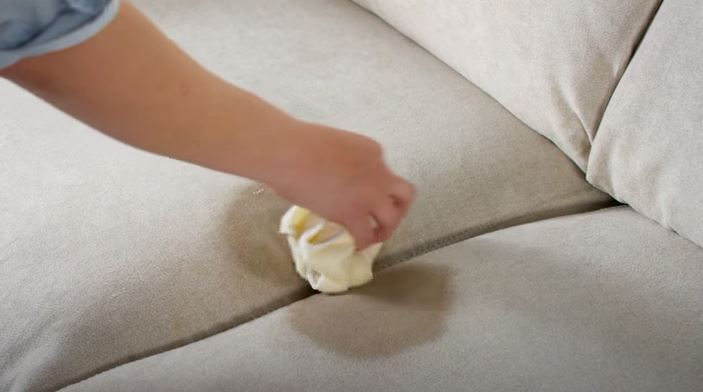
Blot — do not rub — with paper towels or a clean microfiber cloth. Press firmly and work from the outside of the stain inward to prevent spreading. Replace towels as they become saturated.
Remove all solid chunks with a plastic scraper or the edge of a credit card. Continue blotting until no more liquid transfers to the towels. This step should take no more than 2–3 minutes — vomit proteins begin bonding to microfiber fibers within 10–15 minutes of contact.
Do not skip this step even if the mess seems minor. Residual stomach acid at pH 1.5–3.5 breaks down microfiber’s protective finish, causing permanent dulling if not removed before cleaning agents are applied.
Step 2: Apply Rubbing Alcohol or Vinegar Solution
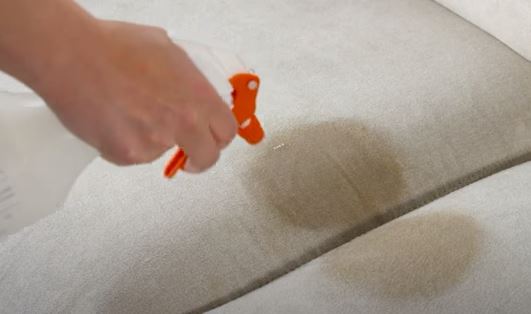
Spray the stained area with a 70% isopropyl alcohol solution (rubbing alcohol). The 70% concentration is the industry standard for cleaning — it contains enough water (approximately 30%) to denature proteins and penetrate cell membranes, unlike 90%+ alcohol which evaporates too quickly to be effective. Leave it to soak for 3–5 minutes.
Alternatively, for a gentler approach using a W-code fabric (water-safe), mix:
- ½ cup warm water (100–110°F / 38–43°C)
- ½ cup distilled white vinegar (5% acetic acid, pH 2.5–3)
- 1 teaspoon Castile soap or mild dish soap
White vinegar’s acetic acid at pH 2.5–3 dissolves dried vomit proteins and kills most odor-causing bacteria on direct contact. Apply the solution, let it work for 3–5 minutes, then blot with a clean cloth.
After the solids dissolve, press clean paper towels or rags into the deepest part of the stain and swap them out until the spot reads dry. Do not scrub — blot only.
Step 3: Break Down Remaining Vomit Stains
Mix ¼ teaspoon of mild dish soap with ½ cup warm water. Working the soap into a clean white cloth (to avoid dye transfer), gently blot the remaining stain in circular motions from the outside in. Avoid oversaturating — excess liquid damages the foam beneath microfiber.
Rinse the cloth in clean water and repeat until the stain lifts. The foam underneath microfiber cushions can retain moisture for 24–48 hours, so use a minimal-water approach.
Step 4: Deodorize with Baking Soda
Generously sprinkle baking soda (sodium bicarbonate, pH 8.3) over the entire affected area. Baking soda absorbs odor molecules chemically rather than masking them — it converts acidic odor compounds through a mild acid-base reaction. Leave it for 2–4 hours, or overnight for severe odors.
For stubborn odors, add 2–3 drops of lemon essential oil to the baking soda before applying. Lemon oil’s d-limonene content (approximately 70–95%) acts as a natural degreaser and leaves a fresh scent.
Step 5: Vacuum All Residue
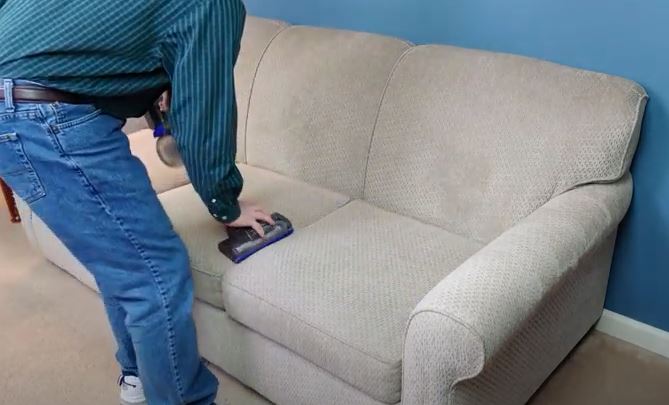
Use a vacuum with an upholstery attachment. Run it over the entire cushion surface using slow, overlapping strokes. This removes dried baking soda residue, any remaining vomit particles, and freshens the fabric pile.
Pay special attention to seams and crevices where particles accumulate. A crevice tool attachment works well for these areas.
Step 6: Wash Removable Covers and Cushions
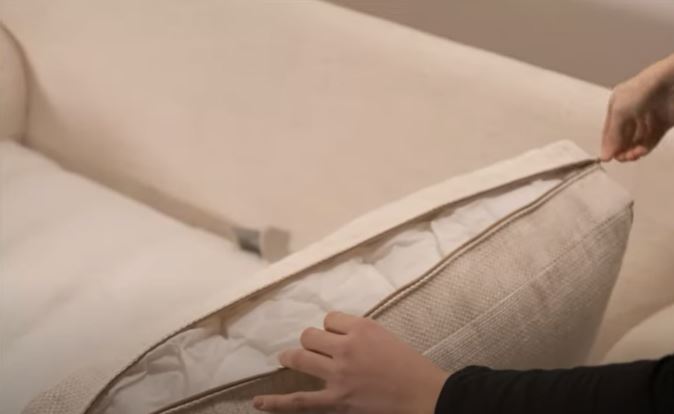
If the couch has removable covers or cushion cores, check the care label first. Then:
- W-code (water-safe): Machine wash on cold gentle cycle with a mild, enzyme-based detergent. Air dry completely — heat from a dryer can shrink microfiber.
- S or WS-code: Take to a professional upholstery cleaner who uses solvent-based (dry cleaning) methods.
- X-code: Vacuum only. Do not use water or solvents — this indicates leather, ultrasuede, or delicate fabric.
Air-dry covers for a minimum of 24 hours before reinstalling to prevent mold growth in retained moisture.
Microfiber Couch Care Label Codes
Before using any cleaning method, always check the care label sewn into the cushion or frame. These codes are standardized under ASTM D3136:
| Code | Meaning | Cleaning Method |
|---|---|---|
| W | Water-based cleaners safe | Use water, vinegar solution, or mild soap and water |
| S | Solvent-based cleaners only | Use dry cleaning solvent or professional dry clean |
| WS | Water or solvent safe | Either water-based or solvent-based methods |
| X | Vacuum only | No liquid cleaners — professional cleaning only |
Frequently Asked Questions
Can you use glass cleaner on a microfiber couch?
Glass cleaner is acceptable only on WS-code microfiber couches and only as a last resort. It lacks the pH-adjusted formula needed to safely break down protein-based vomit stains. Always check the care label first and test on an inconspicuous area.
How long does vomit smell last in a couch if not cleaned properly?
Untreated vomit odors can linger for weeks to months because stomach acid (pH 1.5–3.5) penetrates deep into microfiber and foam, feeding odor-causing bacteria. The bacteria multiply in the warm, moist fabric environment. Complete removal following this 6-step process eliminates the odor source, not just the smell.
How can I restore an old microfiber couch to look new?
Vacuum thoroughly to remove all surface debris. Then mix ¼ teaspoon mild dish soap with ½ cup warm water. Using a white microfiber cloth, gently scrub in circular motions. For stains, apply a 70% isopropyl alcohol solution and blot. To restore the fabric pile, brush with a soft-bristle brush or a clean toothbrush in one direction only. Test all products on an inconspicuous area first.
References
- Bob Vila. (2024). How to Clean a Microfiber Couch.
- ASTM International. (n.d.). ASTM D3136 Standard Specification for Care Labels for Textile Floor Covering and Upholstery. ASTM International.
- Centers for Disease Control and Prevention. (2022). Cleaning and Disinfecting Surfaces. U.S. Department of Health and Human Services.
- National Sanitation Foundation. (2024). How to Clean Upholstered Furniture. NSF International.
- U.S. Environmental Protection Agency. (2023). List G: EPA Registered Disinfectants Effective Against Norovirus. EPA.
Can the Same Cleaning Methods for Couches Apply to Down Jackets?
Most of the cleaning agents in this guide — baking soda, mild dish soap, and 70% isopropyl alcohol — are safe for down jacket outer fabric when tested first. Spot-treat stains using the same blotting technique, then machine wash on cold with a down-specific detergent. Air-dry completely to preserve the down fill’s loft and prevent mildew.
For a complete guide, see our article on removing smell from down jackets.
Finish Strong: Protecting Your Microfiber Couch Going Forward
After restoring your couch, apply a microfiber fabric protector spray (available at most home goods stores) to create a hydrophobic barrier against future spills. Reapply every 6–12 months depending on use.
Keep a microfiber cleaning kit — plastic scraper, white microfiber cloths, small bottle of 70% isopropyl alcohol, and a box of baking soda — in a kitchen drawer or under the couch for fast response to the next accident. Speed is the single most important factor in stain removal success.
For other high-touch cleaning challenges, browse our complete guide to stain removal or explore the cleaning glossary for chemistry breakdowns of common cleaning agents.


