
How to Clean and Remove Grout from Tile?

Grout—the porous material sealed between tiles—absorbs dirt, oil, and moisture at a molecular level, causing discoloration that mopping alone cannot reverse. Cleaning tile grout requires either oxygenated bleach (sodium percarbonate) at a 1:16 dilution ratio with warm water, or a 3:1 baking soda-to-water paste followed by white vinegar, which produces measurable effervescence that lifts embedded soil. For grout that has reached a gray or yellowed state beyond surface cleaning, mechanical removal and re-grouting is the only definitive solution.
You can clean with the best tile vacuum and mop your tiles all you want, but if you have discolored grout, your floor will still look dirty. The grout between floor tiles collects soil at a rate 3–5× higher than vertical wall tile grout due to foot traffic, shoe debris, and gravity-driven moisture penetration. But the same cleaning principles apply across all tile types—porcelain, ceramic, natural stone—with dosage adjusted for stone’s sensitivity to acidic cleaners.
Tile and Grout Cleaning: Methods and Materials
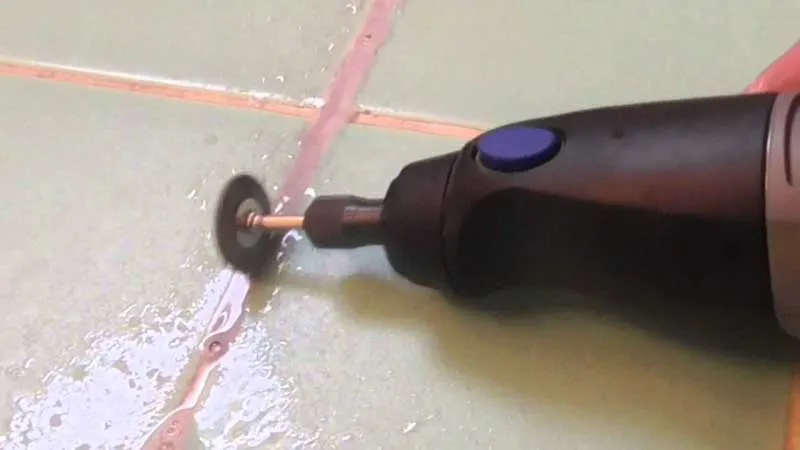
The durability of your tiles and the materials they are made from determine which cleaning method is safe and effective. Acid-sensitive stone tiles—such as marble, travertine, and limestone—suffer permanent etching when exposed to vinegar or acidic grout cleaners. Always confirm your tile material before selecting a cleaning agent.
Oxygenated Bleach (Sodium Percarbonate) for Grout Cleaning
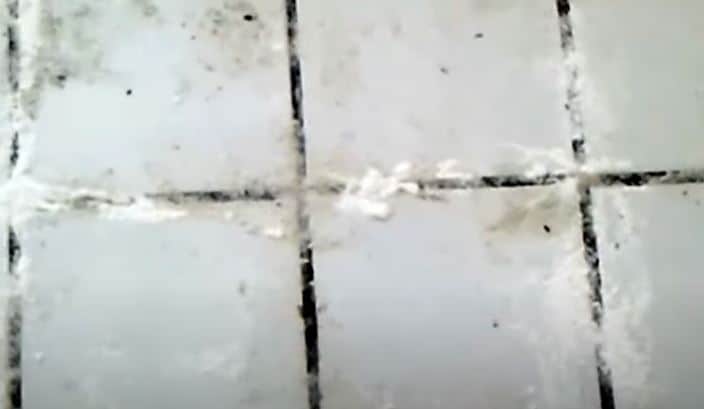
Oxygenated bleach (sodium percarbonate) generates hydrogen peroxide when dissolved in water, reaching a pH of 10–11 in solution—alkaline enough to emulsify oil and break down organic stains without the oxidative damage that chlorine bleach causes to colored grout or natural stone.
| Parameter | Specification |
|---|---|
| Active ingredient | Sodium percarbonate (Na₂CO₃·1.5H₂O₂) |
| Dilution ratio | 2 tablespoons per 2 cups warm water (~1:16 by volume) |
| Water temperature | 140–160°F (60–71°C) for maximum dissolution |
| Solution pH | 10–11 (alkaline) |
| Contact time | 5–10 minutes before scrubbing |
| Stone tile compatibility | Safe for porcelain, ceramic, and stone tiles |
| Colored grout warning | May lighten or bleach colored grout—test in an inconspicuous area first |
- Mix 2 tablespoons of oxygenated bleach powder with 2 cups of warm water (140–160°F) in a bowl or bucket. Stir until fully dissolved—undissolved particles can scratch grout surfaces.
- Use a thin, stiff nylon-bristled brush to work the solution into grout lines. Apply only to small sections at a time—flooding large areas reduces contact effectiveness.
- Allow a 5–10-minute dwell time before scrubbing. Reapply solution between scrubbing passes to maintain alkaline cleaning strength.
- After scrubbing the entire grouted area, rinse thoroughly with cool plain water to remove all residue. A wet vac or clean mop works best for large floor areas.
- Dry the surface with a microfiber rag and inspect each grout line for remaining discoloration. Repeat the process for stubborn staining.
Vinegar and Baking Soda for Grout Cleaning
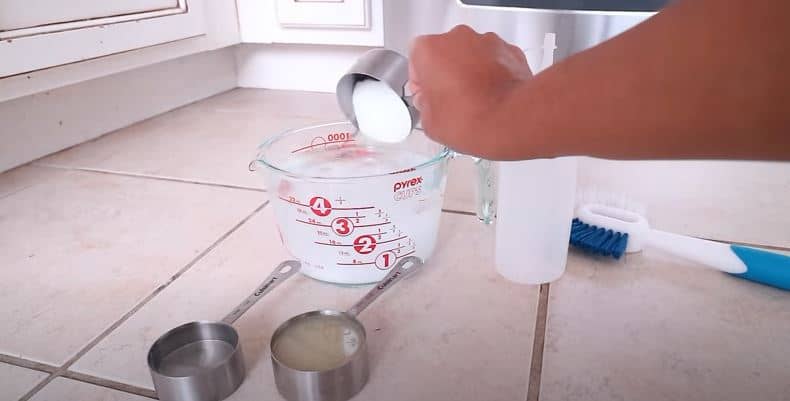
This two-step chemical reaction method uses baking soda’s mild alkalinity (pH 8.3 in solution) combined with white vinegar (acetic acid, pH 2.5–3.0) to produce effervescent carbon dioxide bubbles that physically lift embedded soil from grout pores. The reaction is purely physical—not oxidative like bleach—and therefore safe for colored grout.
- Mix 3 parts baking soda with 1 part plain water to form a thick paste. Apply directly to grout lines using gloved fingers or a grout brush.
- Fill a spray bottle with equal parts white vinegar and water. Spray the vinegar solution over the baking soda paste on the grout lines.
- Allow the fizzing reaction to proceed for 60–120 seconds. The carbon dioxide bubbles (CO₂) generated mechanically agitate and loosen soil from within grout pores.
- Scrub with a stiff-bristled plastic or nylon brush. The cleaning agents work through the chemical reaction, not elbow grease—vigorous scrubbing is not required.
- Rinse thoroughly with plain water and dry with a cotton rag. For pool tile cleaning, a pressure washer on a low-pressure fan setting may be used as a final rinse.
Important: This method causes etching on natural stone tiles including marble, travertine, limestone, and granite. Use only on porcelain, ceramic, and non-stone quarry tiles. For stone tile grout cleaning, refer to the Tile & Grout Hub for stone-specific procedures.
How to Remove and Replace Old Grout
When grout has reached a state of deep discoloration—gray, yellow, or black staining that penetrates the grout matrix—surface cleaning cannot restore it. In these cases, complete grout removal and re-grouting is the only solution that produces a clean, uniform result.
- Use a grout saw, oscillating multi-tool with grout removal blade, or carbide-tipped grout rake to cut along the center of each grout line. Work at a consistent depth of 1/8–1/4 inch to avoid damaging the tile edges.
- Hold the tool at a flat angle, parallel to the tile face. Applying downward pressure or angling the blade risks chipping the tile corners—which are the most vulnerable points on any tiled surface.
- Clear loosened grout debris with a soft brush. Vacuum the joints thoroughly before applying new grout to ensure proper adhesion.
- Clean the exposed tile edges with a damp sponge. The surface must be free of dust and old grout residue for new grout to bond correctly.
- Apply new grout with a rubber float, working diagonally across the tiles at a 45° angle. Remove excess with a damp sponge before it sets, typically within 24–72 hours depending on grout type.
Deep Cleaning Solutions When Mopping Is Not Enough
When standard mopping fails to restore tile grout, the soil has penetrated below the surface level. At this point, mechanical agitation with a specialized grout brush or an electric cleaning tool is required.
For DIY cleaning beyond mopping, try these alternatives:
- Hydrogen peroxide (3–6% concentration): Apply directly to stained grout, allow 5–10 minutes of dwell time, then scrub and rinse. Safe for most grout colors but test on a hidden area first.
- Pine oil disinfectant (1–2 oz per gallon of water): Provides antimicrobial cleaning while cutting grease. Do not use on wax-coated or oil-finished tiles.
- Commercial grout cleaners (phosphoric acid or lactic acid based): Designed for cementitious grout. Follow manufacturer’s dilution instructions precisely and rinse thoroughly.
For persistent staining on porous unglazed tile or cement grout, professional steam cleaning or acidic chemical treatments may be required. Consult a tile restoration professional to avoid permanent surface damage.
Prevent future grout discoloration by applying a penetrating tile and grout sealer after every cleaning cycle. Sealed grout repels moisture and oil at the surface, reducing re-soiling rate by up to 80% according to manufacturer data.
Conclusion
Two cleaning methods—oxygenated bleach and the vinegar-baking soda reaction—address 90% of residential tile grout cleaning needs. Oxygenated bleach works through alkaline emulsification and is safe for natural stone tiles when used at the correct dilution. The baking soda and vinegar reaction provides physical soil-lifting through controlled effervescence and is safe for colored grout but not stone tiles.
For grout that is too deeply stained to clean, mechanical removal using a grout saw or oscillating tool, followed by re-grouting and sealing, restores the tiled surface to a like-new condition. Clean grout lines monthly and reseal annually to prevent re-soiling and extend the life of both the grout and the tiles.
Regular maintenance—weekly mopping with a pH-neutral cleaner and monthly grout attention—keeps tile surfaces looking clean between deep cleans. For a full floor care routine, see the Floor Cleaning Master Hub. For product recommendations, consult our Cleaning Chemistry Guide to match cleaners to your tile and grout type.
References
- NSF International. Cleaning Product Certification and Standards. Retrieved from nsf.org
- U.S. Environmental Protection Agency. Registered Antimicrobial Products for Disinfectants. Retrieved from epa.gov
- Centers for Disease Control and Prevention. Cleaning and Disinfection Guidance. Retrieved from cdc.gov


