
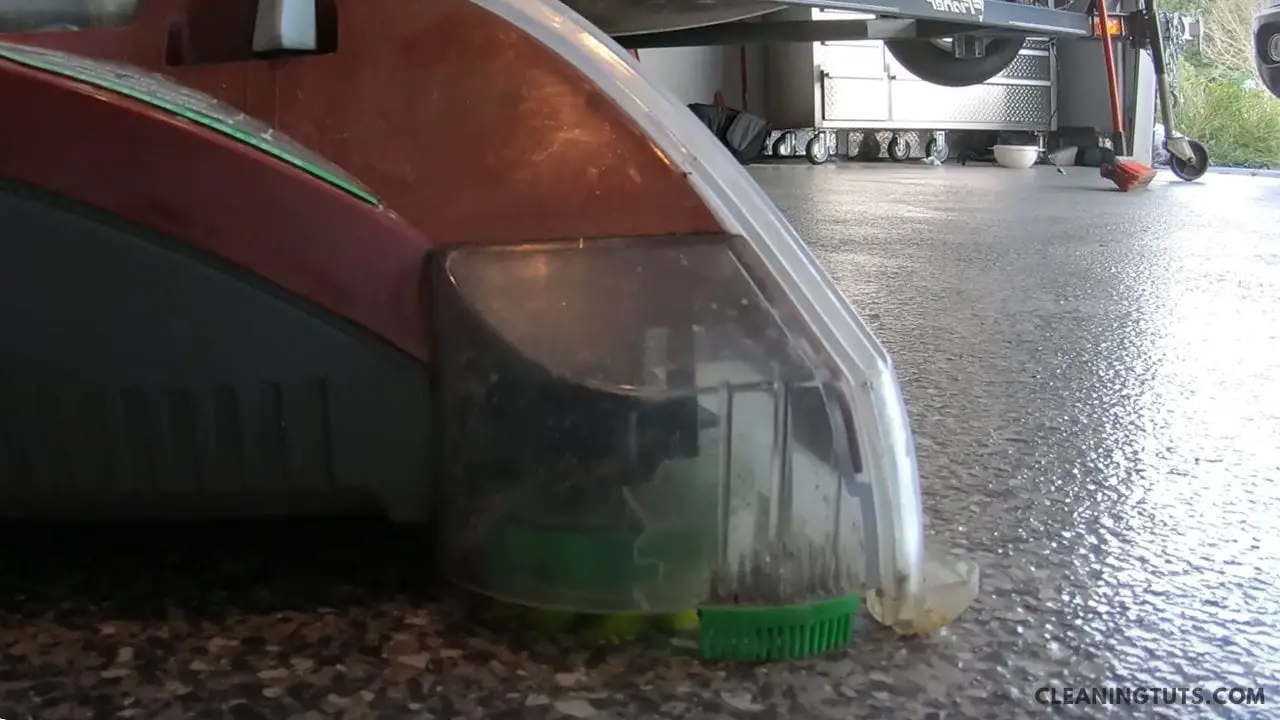
How to Clean Polyaspartic Floors? – Maximize the Lifespan of Your Floor

Polyaspartic coatings—derived from reacting polyisocyanate with polyaspartic acid—cure in 2–4 hours and resist temperatures from -30°F to 140°F. Unlike standard epoxy coatings that last 5–10 years, a properly maintained polyaspartic floor coating endures for 15–20 years or more. Use a pH-neutral cleaner (pH 6–8), sweep regularly, and mop monthly with a solution of 5 oz ammonia per gallon of warm water to preserve the coating’s shine and integrity.
For cleaning your polyaspartic floors, sweep or vacuum daily to remove dirt and debris. Use a pH-neutral cleaner (pH 6–8) and a soft microfiber mop for general cleaning. Deep clean monthly with a solution of 5 oz ammonia per gallon of warm water.
How to Clean and Maintain Your Polyaspartic Floor Coating
Three methods clean and maintain polyaspartic floor coatings effectively: dry cleaning for daily upkeep, wet cleaning with a pH-neutral solution for weekly maintenance, and automatic scrubbing for large areas.
- Dry cleaning: use a vacuum with a soft brush attachment or a soft-bristle broom to remove loose debris and dust daily in high-traffic areas such as garage floors, or 2–3 times per week in lower-traffic spaces.
- Wet cleaning: mix 5 oz of ammonia per gallon of warm water (below 140°F to protect the coating’s temperature threshold) with a pH-neutral floor cleaner, dip a microfiber mop, and mop the floor systematically before rinsing with clean water.
- Automatic scrubbing: fill the scrubber tank with a pH-neutral (pH 6–8) cleaning solution, operate with soft microfiber pads, and ensure complete coverage across the entire floor surface.
Allow the polyaspartic coating to dry completely—typically 45–60 minutes—before foot traffic resumes.
Three Methods for Cleaning Polyaspartic Floors
Dry cleaning handles daily loose dirt removal to prevent abrasive particles from scratching the coating. Wet cleaning with a pH-neutral solution removes stains, oil marks, and embedded grime. Automatic scrubbing covers large floor areas with minimal effort.
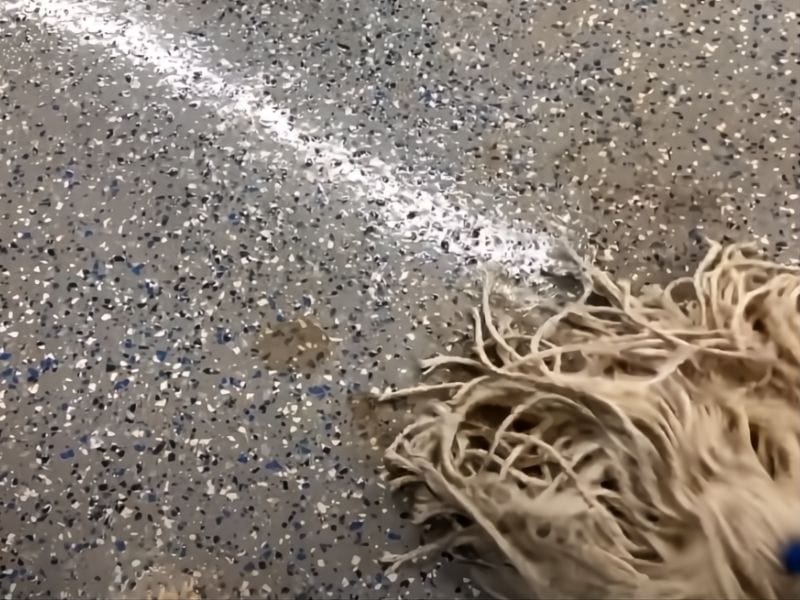
Regular Dusting and Sweeping
Dry Cleaning — Sweeping Away Dirt and Debris
Use a soft-bristle broom or a dust mop to sweep away dirt, dust, and debris from the surface. Dry clean high-traffic garage floors daily. For lower-traffic areas, dry cleaning 2–3 times per week prevents abrasive particle buildup that causes micro-scratches on the coating.
Thorough Cleaning — Vacuuming for a Deeper Clean
Use a vacuum cleaner with a soft brush attachment to remove dust and fine debris from the floor surface, edges, and corners. This step prepares the floor for wet cleaning by eliminating particles that a mop might push across the coating.
Efficient Sweeping Technique — Farthest Corner to the Door
Start from the farthest corner of the area and sweep toward the door. This directional method collects dirt into a single collection point rather than redistributing debris across already-cleaned sections.
Using a Cleaning Solution
Monthly Mopping — Protecting and Maintaining the Polyaspartic Floor
Mop the polyaspartic floor at least once per month to prevent dirt buildup and surface degradation. Fill a bucket with warm water (below 140°F) and a pH-neutral floor cleaner formulated for polyaspartic or epoxy coatings. Never use hydrochloric acid, caustic soda, lacquer thinner, or undiluted bleach—these chemicals cause permanent etching and coating delamination.
DIY Ammonia Solution — Safe and Effective Cleaning
Combine 5 oz of clear household ammonia (NH₃, typically 5–10% concentration) with 1 gallon of hot water in a bucket. The warm water emulsifies oils and lifts grime effectively without exceeding the polyaspartic coating’s 140°F temperature resistance limit. Polyaspartic coatings resist weak alkalis including diluted ammonia solutions with a pH of approximately 11–12 in concentrated form, but the 5 oz/gallon dilution brings the working solution well within safe cleaning parameters.
Mopping Technique — Systematic Cleaning and Final Rinse
Dip a microfiber mop into the cleaning solution, wring it to damp dryness, and mop the floor in overlapping parallel strokes. Rinse the mop frequently to avoid redistributing dirt. After mopping the entire surface, rinse the floor with clean cool water to remove all chemical residue.
Cleaning Large Floors with an Automatic Scrubber
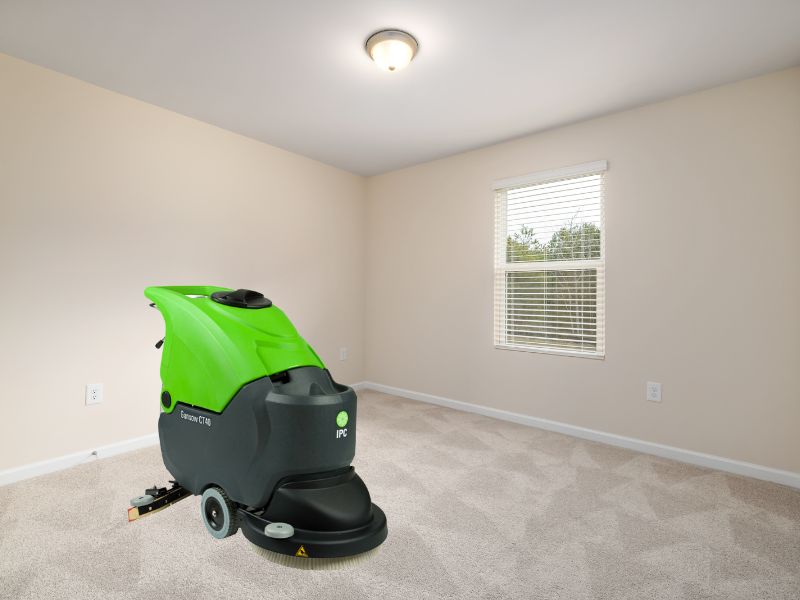
Selecting the Right Scrubber — Non-Abrasive Pads for Safe Cleaning
Choose a floor scrubber equipped with soft microfiber pads or non-abrasive nylon pads (red or blue grade). These pads clean effectively without scratching the polyaspartic coating’s surface. Never use abrasive black or green pads—these strip the coating’s finish.
Preparing the Cleaning Solution — pH-Neutral and Non-Toxic
Fill the scrubber tank with warm water (below 140°F) and a pH-neutral (pH 6–8) non-toxic floor cleaner specifically formulated for coated concrete surfaces. Follow the manufacturer’s dilution ratio—typically 1–2 oz of concentrate per gallon of water.
Thorough Scrubbing — Ensuring Complete Coverage
Operate the automatic scrubber in overlapping parallel passes to ensure full floor coverage. Maintain a consistent walking pace of approximately 3–4 feet per second. Pay special attention to edges, corners, and areas near expansion joints where debris accumulates.
Cleaning Tips for Polyaspartic Floor Coatings to Prevent Damage
Protect the coating’s finish and longevity by following these proven cleaning practices:
Protecting Your Polyaspartic Floor Between Cleanings
Regular maintenance preserves the coating’s shine and extends its 15–20 year lifespan. Implement these protective measures between cleaning sessions:
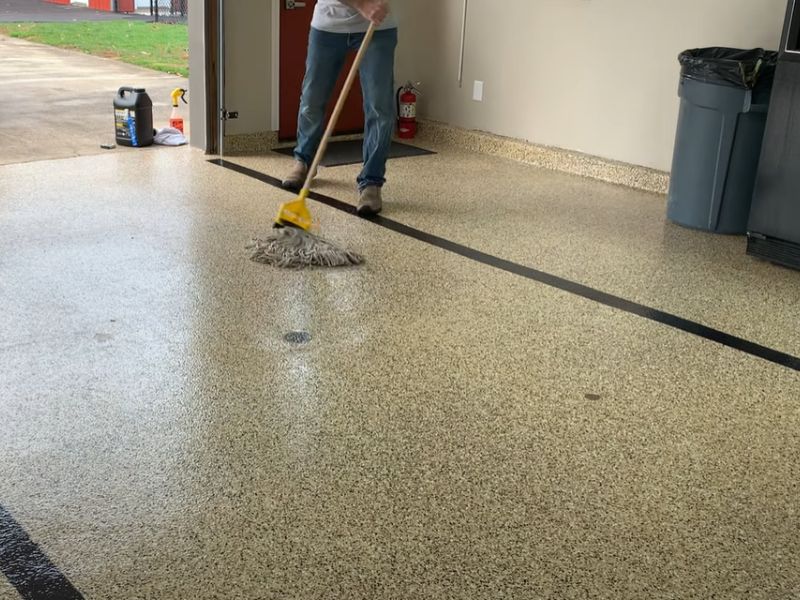
Follow the Proper Maintenance Methods
Deep clean the floor periodically to remove built-up dirt and grime that daily sweeping misses. Use a floor buffer equipped with a soft microfiber pad or soft nylon brush attachment. Apply a cleaning solution of warm water and pH-neutral cleaner, scrub the surface in overlapping passes, then mop up the spent solution and rinse with clean water.
Select a Chemically Compatible Cleaner
Polyaspartic coatings resist weak acids and alkalis but degrade rapidly when exposed to concentrated chemicals. Avoid the following entirely:
- Concentrated acids (hydrochloric acid, phosphoric acid, muriatic acid) — cause immediate surface etching and coating delamination within minutes of exposure.
- Strong alkalis (caustic soda/sodium hydroxide, potassium hydroxide) — saponify the coating at concentrations above 5%, creating a hazy, permanently damaged surface.
- Abrasive scrubbers (steel wool, scotch-brite green/blue pads, stiff-bristle brushes) — create micro-scratches that accumulate into visible wear patterns over repeated use.
- Solvent-based cleaners (lacquer thinner, acetone, xylene) — dissolve the polyaspartic polymer at full strength; even diluted applications cause surface softening.
For a complete reference of floor coating terminology and technical definitions, see the Cleaning Glossary.
Advantages of Regularly Cleaning and Maintaining Polyaspartic Floor Coatings
Consistent maintenance of polyaspartic floor coatings delivers measurable benefits across longevity, appearance, and safety:
Frequently Asked Questions
Aren’t concrete floors already strong and durable?
Concrete floors provide a strong, load-bearing substrate, but polyaspartic coatings add a protective layer that resists wear, chemical staining, moisture intrusion, and UV fading. Without a coating, bare concrete in garage or workshop environments develops surface abrasion, oil discoloration, and moisture-related cracking within 3–5 years. A polyaspartic coating extends the floor’s functional lifespan to 15–20 years while enhancing its appearance.
What causes bubbles and pinholes to appear on epoxy floors?
Bubbles and pinholes in epoxy and polyaspartic coatings result from three primary causes: (1) outgassing from moisture-saturated concrete during cure, (2) improper mixing that entraps air in the catalyzed resin, and (3) moisture vapor transmission through the slab that delaminates the coating from below. Applying a moisture-mitigating primer before the topcoat and maintaining proper substrate conditions (relative humidity below 75%) prevents these defects.
How long does a polyaspartic floor coating last?
A polyaspartic floor coating lasts 15–20 years or more with proper care and maintenance, outperforming traditional epoxy coatings which typically require reapplication every 5–10 years in the same environment. Polyaspartic coatings cure to full hardness in 2–4 hours at 70°F versus 12–24 hours for epoxy, and they maintain flexibility across a temperature range of -30°F to 140°F without cracking or delaminating.
Can the Cleaning Method for French Oak Floors Also Be Used for Polyaspartic Floors?
Yes, you can clean your oak floors using the same gentle approach on polyaspartic floors. Both types of flooring benefit from a soft microfiber mop, regular sweeping, and pH-neutral cleaning solutions. However, polyaspartic coatings tolerate a wider pH range (pH 6–8) and higher temperatures than wood finishes, so the same method is safe for polyaspartic but not necessarily interchangeable in the reverse direction.
Quick-Reference: Polyaspartic vs. Epoxy Floor Coating Specifications
| Specification | Polyaspartic Coating | Standard Epoxy Coating |
|---|---|---|
| Cure time (full hardness) | 2–4 hours at 70°F (21°C) | 12–24 hours at 70°F (21°C) |
| Lifespan (garage environment) | 15–20 years | 5–10 years |
| Temperature resistance | -30°F to 140°F (-34°C to 60°C) | 0°F to 120°F (-18°C to 49°C) |
| Safe cleaner pH range | pH 6–8 (neutral) | pH 5–9 (mildly acidic to mildly alkaline) |
| Abrasion resistance (Taber CS-17 wheel) | 20–30 mg loss after 1,000 cycles | 40–80 mg loss after 1,000 cycles |
Wrapping Up
Polyaspartic floor coatings deliver 15–20 years of durable, high-gloss protection when cleaned with the right methods and products. Daily dry cleaning removes abrasive particles, monthly wet mopping with a pH-neutral solution (5 oz ammonia per gallon of warm water) maintains the finish, and automatic scrubbing handles large garage or warehouse areas efficiently. Avoid concentrated acids, strong alkalis, abrasive pads, and solvent-based cleaners to prevent permanent coating damage. For related floor care guides, explore the Floor Cleaning Master Hub or the Laminate and Vinyl Floor Care Guide.


