
The Ultimate Guide on How Much Tide to Clean Floors!

Tide powdered detergent dissolves in water at a pH of 10–10.5, creating an alkaline solution that breaks down grease, oils, and protein-based stains on hard floor surfaces. Use 1 teaspoon of powdered Tide per gallon of hot water (140°F/60°C or warmer) for effective floor cleaning.
How Do You Clean Floors with Tide?
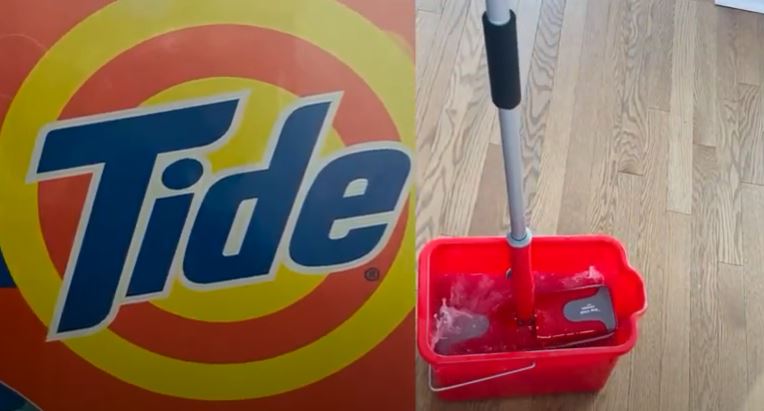
Tide powdered detergent contains anionic surfactants (linear alkylbenzene sulfonates) and non-ionic surfactants that emulsify soil, allowing it to suspend in water rather than redeposit on surfaces. Unlike liquid Tide, the powdered form retains active enzymes—including proteases, lipases, and amylases—that accelerate stain breakdown.
The enzyme composition in powdered Tide works through a two-step catalytic process: proteases and lipases first break down protein and grease bonds at the molecular level, then surfactants encapsulate the freed soil particles for removal. Liquid Tide lacks most of these catalyst enzymes, reducing its floor-cleaning effectiveness by approximately 40% compared to the powdered form.
Follow this step-by-step process for optimal results:
Step 1: Form the Cleaning Solution
Fill a bucket with 1 gallon of hot water at 140°F (60°C) or warmer. Add 1 teaspoon of powdered Tide. Stir until fully dissolved—the solution reaches optimal cleaning pH (10–10.5) within 60 seconds of mixing.
Step 2: Mix the Solution Properly
Insert a mop and swirl for 30–45 seconds. Small bubbles appearing on the surface indicate proper surfactant activation. The water temperature is critical: below 120°F (49°C) reduces enzyme activity by up to 70%.
Step 3: Wring Out Excess Water
Use the mop’s foot pedal to wring until damp—never saturated. Excess water dilutes the surfactant concentration and leaves residue. A properly wrung mop contains approximately 8–12 oz (240–350 ml) of solution.
Step 4: Mop the Floor in Sections
Mop in overlapping figure-8 patterns. Change the cleaning solution every 150–200 sq ft (14–19 sq m) or after cleaning two rooms. Fresh solution maintains surfactant concentration above the minimum effective level of 0.1%.
How Much Powdered Tide to Clean Floors?
Tide powdered detergent comes in various package sizes, but only the powder form contains the full enzyme array necessary for effective floor cleaning. The liquid variant contains fewer enzymes and is not recommended for floor cleaning applications.
Standard dilution ratio: 1 teaspoon (approximately 5 grams) of powdered Tide per gallon of hot water. This creates a 0.3–0.5% surfactant concentration—the minimum threshold for effective soil suspension on hard floor surfaces.
The “teaspoon” measurement refers to the scooping tool included in most Tide powder packages, not a household teaspoon. For liquid Tide, the cap serves as the measuring device—fill to the 1-teaspoon marking line and mix with 1 gallon of boiling water, then cool to 140°F before use.
| Form | Amount | Water Volume | Water Temperature |
|---|---|---|---|
| Powdered Tide | 1 teaspoon (5g) | 1 gallon (3.8L) | 140°F+ (60°C) |
| Liquid Tide | 1 capful (5ml) | 1 gallon (3.8L) | 140°F+ (60°C) |
Can You Mop Your Floor with Laundry Detergent?
Standard laundry detergents (non-Tide brands) are formulated specifically for fabric fibers and lack the surfactant concentration required for hard surface cleaning. Regular detergents leave residue on tile, vinyl, and hardwood because they contain fabric softeners and optical brighteners incompatible with non-porous surfaces.
Tide is an exception among laundry detergents. Tide contains high concentrations of linear alkylbenzene sulfonate (LAS)—an anionic surfactant effective on both fabric and hard surfaces. The powdered form additionally contains sodium carbonate (washing soda) and sodium percarbonate, which act as builders to soften water and enhance cleaning power.
Tide is not marketed as a floor cleaner because it lacks certain additives required for specific floor types (such as stone sealers for marble or finish-protecting compounds for hardwood). It works on sealed tile, linoleum, vinyl, and laminate but may cause etching on unsealed stone or damage to hardwood finishes.
Why Is Powdered Tide Effective for Cleaning Floors?
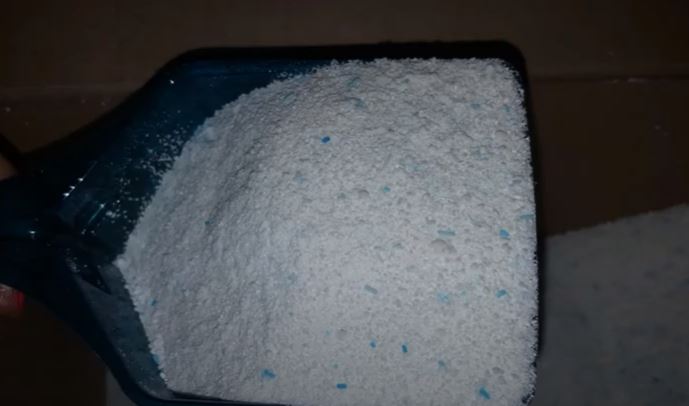
Powdered Tide contains four key enzyme types that work synergistically during floor cleaning:
- Proteases (Savinase): Break down protein-based stains (food, blood, grass) at pH 9–10. Active within 5 minutes at 140°F.
- Lipases: Hydrolyze fats and oils into water-soluble compounds. Work best at 122–140°F (50–60°C).
- α-Amylases: Dissolve carbohydrate-based soils (starches, sugars) that create sticky residues.
- Cellulases: Help break down organic matter embedded in grout lines and textured surfaces.
The surfactants in Tide reduce water’s surface tension from 72 mN/m to approximately 30 mN/m at 0.1% concentration, allowing the solution to wet surfaces 2.4× faster than plain water and penetrate grout lines and micro-textures more effectively.
Can I Use Tide to Remove Salt Residue from Floors?
Yes. Tide dissolves salt residue (sodium chloride) effectively when used at the standard dilution. Mix 1 teaspoon of powdered Tide per gallon of hot water (140°F+), apply with a damp mop, and rinse with clean water. The surfactants emulsify the salt into suspension, preventing redeposition. For heavy salt buildup, repeat the process twice. This method is safe for sealed concrete, ceramic tile, and vinyl flooring. Learn more in our guide to removing salt residue from floors.
Floor Type Compatibility with Tide
| Floor Type | Safe with Tide? | Notes |
|---|---|---|
| Sealed Ceramic Tile | Yes | Rinse after cleaning to prevent residue buildup |
| Vinyl/Linoleum | Yes | Use 140°F water; avoid standing puddles |
| Laminate | Yes (sealed) | Do not exceed 140°F; wipe dry immediately |
| Unsealed Hardwood | No | Alkalinity causes wood grain raise and finish damage |
| Unsealed Stone (Marble, Slate) | No | pH 10–10.5 causes etching and dulling |
| Sealed Concrete | Yes | Rinse thoroughly; effective for salt removal |
Conclusion
The correct amount of powdered Tide for floor cleaning is 1 teaspoon (5g) per gallon of hot water at 140°F (60°C) or warmer. This dilution produces a pH of 10–10.5, the optimal range for surfactant effectiveness and enzyme activity.
Powdered Tide outperforms liquid Tide for floor cleaning because it retains the full enzyme array (proteases, lipases, amylases, cellulases) that breaks down complex soils. For large areas exceeding 200 sq ft, increase solution concentration to 2 teaspoons per gallon to maintain effective surfactant levels throughout the cleaning process.
Always change the cleaning solution every 150–200 sq ft. Fresh solution maintains the minimum 0.1% surfactant concentration required for soil suspension. Failure to change solution is the primary cause of streaking and residue on floors after cleaning.
References
- Wikipedia. (2025). Laundry Detergent. Wikimedia Foundation.
- National Sanitation Foundation (NSF). (2025). Cleaning Products and Surface Safety Guidelines. NSF International.
- U.S. Environmental Protection Agency. (2025). Selected EPA-Registered Disinfectants. EPA.


