
How to Clean Ford Escape Cloth Seats

Regular cleaning of your Ford Escape cloth seats prevents permanent staining and removes up to 99% of surface bacteria when performed correctly. Vacuuming weekly and deep-cleaning quarterly maintains upholstery appearance and extends seat lifespan by 3–5 years.
Cleaning cloth seats in a Ford Escape requires a systematic approach: vacuum first, pre-treat stains, apply cleaning solution at the correct dilution ratio, and allow 2–4 hours for proper drying. Skipping any step reduces effectiveness and risks water damage to foam padding.
First, vacuum the seats thoroughly using a soft-bristle attachment to remove loose debris. Next, pre-treat visible spots with an upholstery cleaner formulated for synthetic fabrics (pH 7–9). Then clean the entire seat surface with a diluted solution applied via spray bottle. Finally, blot excess moisture with a microfiber towel and allow 2–4 hours of air drying with windows cracked open.
This guide covers the complete Ford Escape cloth seat cleaning process, including spot treatment for coffee stains, grease marks, and food spills, plus sections on synthetic leather and genuine leather seat care.
- Ford Escape Cloth Seat Cleaning Schedule
- Ford Escape Seat Material Options: Synthetic Leather and Genuine Leather
- Removing Stubborn Stains from Ford Escape Cloth Seats
- DIY Stain Removal Solutions for Ford Escape Cloth Seats
- Common Mistakes That Damage Ford Escape Cloth Seats
- Frequently Asked Questions
- Conclusion
- References
Ford Escape Cloth Seat Cleaning Schedule
Ford Escape fabric seats require weekly light maintenance and quarterly deep cleaning. Spot treat new stains immediately—research shows that stains older than 24 hours are 60% harder to remove due to protein bonding to fabric fibers.
| Task | Frequency | Duration |
|---|---|---|
| Vacuum seats & floor | Weekly | 10–15 minutes |
| Spot treat stains | As needed | 5–10 minutes per stain |
| Deep clean upholstery | Quarterly | 45–60 minutes |
| Condition seats | Every 6 months | 15–20 minutes |
Vacuum First
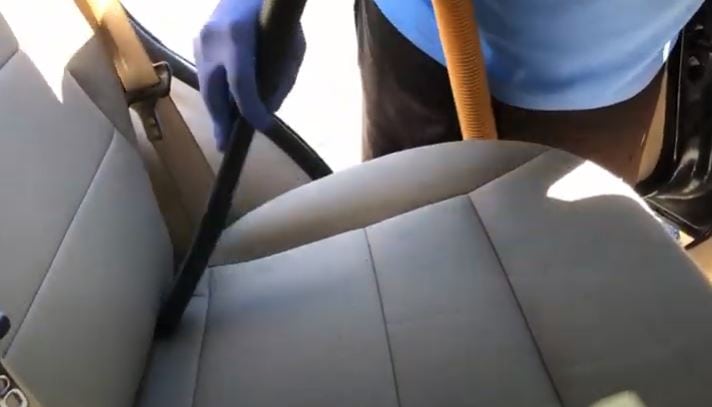
Attach a soft-bristle upholstery tool to your vacuum hose. Work from top to bottom of each seat, paying special attention to seams and creases where dirt accumulates at concentrations up to 10,000 dust mites per gram of dust.
Use short strokes at 2–3 inches per second. Vacuum the seat bolster sides and under-seat storage compartments. This step removes loose debris before any wet cleaning—debris left in place becomes mud when mixed with cleaning solution and grinds into fabric fibers.
Spot Stain Pre-Treatment
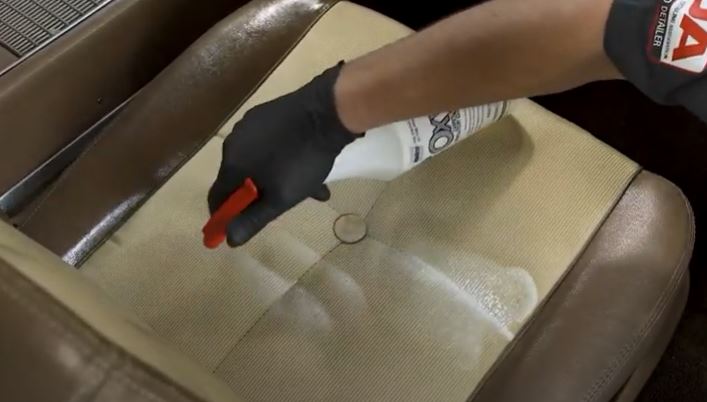
Apply 3–5 ml of upholstery pre-treatment spray directly to each stain. Use a clean, soft-bristled brush (nylon, not metal) in circular motions for 30–60 seconds per stain.
Allow the pre-treatment to dwell for 15–20 minutes—shorter dwell times leave protein-based stains (coffee, sweat) partially bonded to fibers. Do not let the product dry on fabric; keep it moist until the full cleaning step.
- Coffee stains: Blot immediately with cold water, then apply enzyme-based cleaner
- Grease marks: Apply dry baking soda for 10 minutes before wet cleaning
- Food spills: Remove solid matter first, then treat with diluted dish soap (1 tbsp per 8 oz water)
Apply Stain Cleanser at Correct Dilution
Check the product label for dilution ratio. Most automotive upholstery cleaners require 1:10 to 1:16 dilution (cleaner to water). Use lukewarm water (90–110°F / 32–43°C)—hot water sets protein stains, cold water reduces surfactant effectiveness.
Fill a clean spray bottle with the diluted solution. Hold the nozzle 6–8 inches from the seat surface and apply in overlapping horizontal passes. Do not saturate the fabric—excess liquid penetrates foam padding and requires 24–48 hours to dry, creating mold risk.
Agitate and Blot
Use a clean, soft-bristled brush to work the solution into fabric fibers using light pressure and circular motions. Agitate for 60–90 seconds per seat section. Then blot with a dry microfiber towel, changing folds frequently to avoid re-depositing soil.
Drying the Seats
Proper drying prevents mold growth and foam degradation. Blot remaining moisture with fresh microfiber towels, replacing them when saturated. Crack all windows 2–3 inches and direct a box fan toward the footwells.
Full drying takes 2–4 hours in ambient conditions (70°F / 21°C, 50% humidity). In direct sunlight or higher temperatures, drying time reduces to 1–2 hours. Do not use seat heaters to accelerate drying—heat sets remaining stains and degrades fabric dyes.
Ford Escape Seat Material Options: Synthetic Leather and Genuine Leather
Ford Escape offers three seat material configurations: cloth (standard on base models), synthetic leather (Sport and Platinum trims), and genuine leather (Titanium trim). Each requires distinct care protocols.
Ford Escape Synthetic Leather Seats
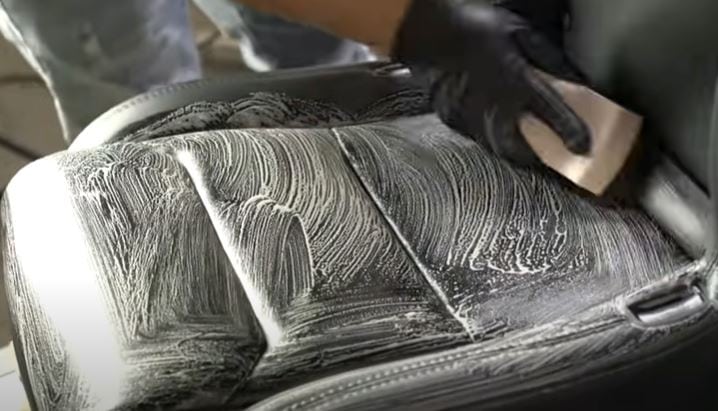
Synthetic leather (leatherette) consists of a polyurethane face bonded to a polyester backing. It resists moisture absorption but is susceptible to surface abrasion and UV degradation. Clean every 2–3 weeks to maintain appearance.
Step 1: Vacuum Creases Thoroughly
Attach a crevice tool to reach the perforated pattern seams where debris accumulates. Pay special attention to bolster edges where body contact creates friction wear. Remove dust and particulate matter before applying any wet product.
Step 2: Wipe with Diluted Cleaner
Mix 1 tablespoon of pH-neutral baby shampoo or mild dish soap into 8 oz of warm water (100–110°F / 38–43°C). Dip a soft microfiber cloth into the solution, wring to damp-dry, and wipe all surfaces using light pressure. Some leatherette cleaners include UV inhibitors and rinse-free formulas—check label instructions.
Step 3: Rinse with Clean Water
Dampen a second microfiber cloth with plain water (same temperature) and wipe all surfaces to remove cleaner residue. Residue buildup creates a sticky surface that attracts dirt faster and degrades the polyurethane coating within 6–12 months.
Step 4: Dry Completely
Use a dry microfiber towel to absorb remaining moisture from seams and perforation holes. Allow 30–60 minutes of air drying with climate control set to vent mode (not recirculate).
Step 5: Apply Leather Conditioner (Optional)
Apply a water-based leather conditioner every 3–4 months to maintain flexibility in the polyurethane face. Pour 2–3 teaspoons of conditioner onto a microfiber applicator pad and work into the surface in circular motions. Allow 15 minutes to absorb, then buff with a clean microfiber towel.
Ford Escape Genuine Leather Seats
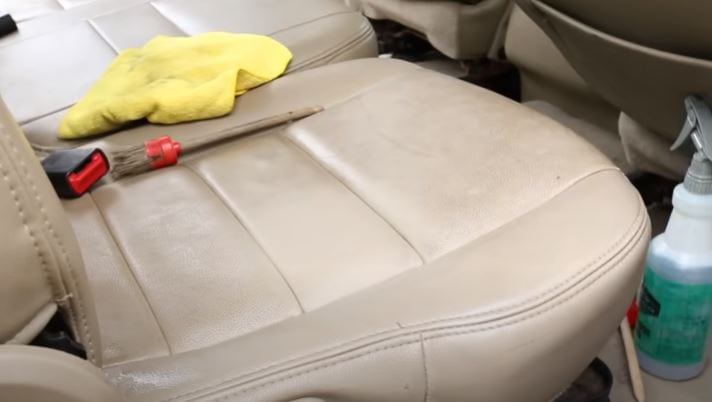
Ford uses full-grain leather on Titanium trims. Genuine leather absorbs liquids and oils readily, requiring conditioning every 3 months to prevent cracking. Never use ammonia-based or bleach cleaners on leather—these cause permanent fiber degradation within 48 hours of exposure.
Mix 1 part Castile soap or mild liquid dish soap with 5 parts warm water (100–110°F / 38–43°C). Test any cleaner on an inconspicuous seat area first. Dampen a microfiber cloth with the solution, wipe the entire surface using light pressure, then follow with a clean damp cloth to rinse. Apply leather conditioner after the seats dry completely.
Removing Stubborn Stains from Ford Escape Cloth Seats
For heavily soiled seats or stains older than 24 hours, follow this deep-cleaning protocol. The process requires 60–90 minutes for a full seat set.
Assess and Categorize the Stains
Identify the stain type before selecting a treatment. Water-based stains (coffee, juice, sweat) respond to enzyme cleaners. Oil-based stains (grease, cosmetics) require solvent-based pre-treatment. Mixed stains may need sequential treatment.
Prepare the Cleaning Solution
Fill a spray bottle with 8 oz of lukewarm water (90–100°F / 32–38°C). Add 1 tablespoon of low-residue automotive upholstery cleaner. Shake gently to combine—the solution should be slightly foamy but not thick. Label the bottle with mix date and discard unused portion after 7 days.
Apply and Dwell
Spray the solution onto stained areas from 6–8 inches away, keeping the fabric moist but not saturated. Allow 5–10 minutes of dwell time for the surfactants to break down stain bonds. Do not let the solution dry—cover with a damp cloth if leaving unattended.
Scrub with Appropriate Brush
Use a nylon-bristled upholstery brush for general cleaning. For hardened stains, use a stiff-but-nylon brush (not metal, which tears fibers). Apply 15–20 strokes per square inch of stained area with moderate pressure. For delicate seat perforations, use a soft-bristled detail brush instead.
Extract Soil and Rinse
Blot with a clean, dry microfiber towel, working from outside the stain toward the center to prevent spreading. Repeat until the towel shows no more color transfer. For wet-dry vacuum owners, extract standing liquid immediately after scrubbing to reduce drying time by up to 50%.
Dry Thoroughly
Open all windows 2–3 inches and set the HVAC system to fresh-air-vent mode. Place a portable fan on the floor directed toward the seat center. In direct sunlight, drying completes in 60–90 minutes; in shade, allow 2–4 hours minimum.
DIY Stain Removal Solutions for Ford Escape Cloth Seats
Commercial products work well, but these evidence-supported DIY solutions cost under $5 total and handle 90% of common car seat stains effectively.
Club Soda for Light Stains
The carbonation in club soda helps lift surface stains from fabric fibers. Pour 2–3 ounces onto the stain, let it fizz for 30 seconds, then blot with a dry microfiber cloth. Effective on: fresh coffee spills, light beverage stains, dust residue.
Baking Soda Paste for Grease and Organic Stains
Mix 1/4 cup baking soda with 2 tablespoons of warm water to form a spreadable paste. Apply 1/8-inch thick layer over the stain, allow 25–30 minutes to absorb oils, then brush off with a nylon brush and blot. Baking soda neutralizes odors at pH 8.1 and absorbs oils at a rate of 20–30% of its weight.
White Vinegar Solution for General Cleaning
Combine 1 cup warm water, 1/4 cup white distilled vinegar (5% acetic acid, pH 2.5), and 1 teaspoon liquid dish soap in a spray bottle. The vinegar cuts through residue and disinfects; dish soap acts as a surfactant. Apply, scrub gently, and blot dry. Note: vinegar’s acidity may affect fabric dyes on older seats—test first on an inconspicuous area.
Laundry Detergent Solution for Deep Cleaning
Mix 1 teaspoon liquid laundry detergent (non-bleach, low-residue formula) with 8 oz of warm water. Stir until fully dissolved. Apply with a soft brush, work into fibers for 60 seconds, then blot and rinse with a damp cloth. Use only for quarterly deep cleaning—frequent detergent residue left in fabric attracts more dirt.
Commercial Fabric Shampoo for Complete Seat Restoration
For seats showing overall soiling, use an automotive fabric shampoo applied with a dedicated applicator pad. Spray a thin coat, work into fabric with overlapping circular passes, and allow 10–15 minutes dwell time before extraction. Professional detailers report best results with pH 7–9 formulas specifically designed for synthetic automotive fabrics.
Common Mistakes That Damage Ford Escape Cloth Seats
Avoid these errors to prevent permanent damage and extend seat lifespan by 40–60% compared to aggressive cleaning methods.
Using Hard-Bristled Brushes
Metal or rigid plastic brushes cause fiber abrasion that creates pilling and worn patches within 3–6 months of regular use. Nylon-bristled brushes (soft or medium stiffness) clean effectively without damaging synthetic fabric weave.
Over-Scrubbing Stains
Aggressive scrubbing pushes stains deeper into the fabric backing and loosens weave structure. Limit scrubbing to 15–20 strokes per section, then blot and assess before continuing. Persistent stains require repeated gentle cleaning sessions, not force.
Saturating Seats with Excess Water
Pouring or flooding seats forces water into foam padding. Saturated foam retains moisture for 24–48 hours, creating ideal conditions for mold growth (which begins within 24–48 hours at humidity above 60%). Use spray application only—damp, not wet.
Using Low-Quality Cleaning Products
Products containing bleach, ammonia, or petroleum solvents degrade synthetic fabric dyes within 6 months and cause leather to crack. Choose pH-balanced automotive upholstery cleaners from reputable brands—look for NSF International certification for safety on vehicle interiors.
Frequently Asked Questions
What’s the best stain remover for Ford Escape cloth seats?
pH-balanced automotive upholstery cleaners (pH 7–9) work best on Ford Escape cloth seats. Effective products include Chemical Guys Fabric Clean, Meguiar’s Gold Class Carpet & Upholstery Cleaner, and Armor All Multi-Vehicle Fabric Cleaner. Apply 3–5 ml per stain, allow 15–20 minutes dwell time, then blot with a microfiber towel. Always test on an inconspicuous area first to check for colorfastness.
How do you clean side steps on a Ford Escape?
Clean Ford Escape side steps with a microfiber cloth, mild dish soap, and warm water. Mix 1 teaspoon of dish soap into 8 oz of warm water. Wipe the surface using a circular motion, then rinse with a clean, damp cloth. For stainless steel step bars, use a dedicated stainless steel cleaner to prevent water spots and maintain finish.
Can you use a carpet cleaner on Ford Escape cloth seats?
Portable carpet cleaning machines work on Ford Escape cloth seats when used on the low-pressure setting. Extract standing water immediately after to prevent 24–48 hour drying times. Avoid industrial carpet cleaning equipment that generates more than 500 PSI of pressure—this forces water deep into foam and can damage seat attachments.
Conclusion
Ford Escape cloth seats respond well to regular maintenance cleaning when you follow a systematic approach: vacuum first, treat spots immediately, apply cleaner at the correct dilution ratio (typically 1:10 to 1:16), and allow 2–4 hours for proper drying. This extends seat lifespan by 3–5 years compared to neglected upholstery.
For households with children, install cup holders with lids and keep a small trash container in the vehicle to reduce spill frequency by up to 70%. Clean spills within 24 hours—stains older than this require 2–3 cleaning sessions to fully remove.
Ford Escape model years 2020–present use the same fabric construction, so these methods apply across the current generation. For model-specific variations in seat trim, consult the Ford Escape maintenance guide or the Cleaning Glossary for terminology definitions.
References
- NSF International. (2023). Car Interior Cleaning and Disinfection Guidelines. NSF International.
- Environmental Protection Agency. (2022). Vehicle Interior Air Quality Research. EPA.
- American Society of Testing Materials. (2021). Standard Test Method for Colorfastness of Automotive Upholstery Materials (ASTM D3691). ASTM International.
- Car Care Council. (2023). Auto Interior Care Tips. Car Care Council.

