
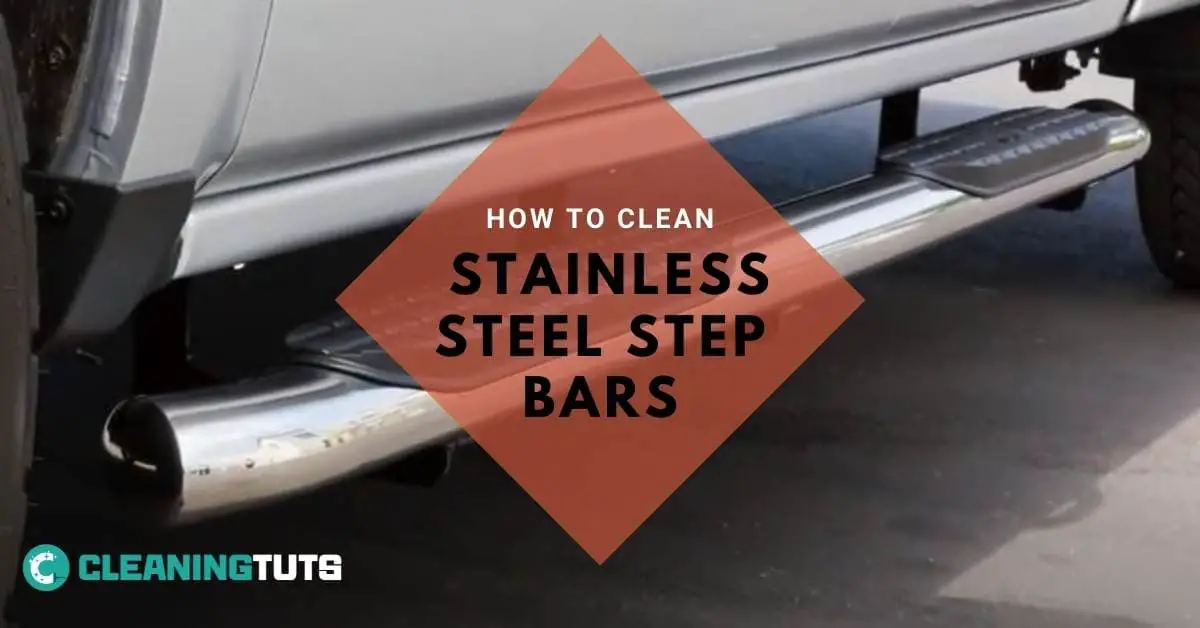
How to Clean Stainless Steel Step Bars

Clean stainless steel step bars on vehicles using a baking soda solution (1 tablespoon per 2 cups warm water at 120–140°F) or a vinegar dilution (1 part vinegar to 3 parts water). These methods dissolve road grime at pH 3–4, remove rust oxidation, and restore finish without damaging the stainless steel surface.
Materials Checklist
- 2 cups warm water (120–140°F / 49–60°C)
- 1 tablespoon baking soda (for baking soda solution)
- 1 part white vinegar to 3 parts water (for vinegar solution)
- Mild pH-neutral detergent (pH 6–8)
- Microfiber cloths (non-abrasive, 300+ GSM)
- Soft-bristle brush or nylon scrubber
- Clean towel or chamois
- Stainless steel polish (non-waxy type)
How to Clean Stainless Steel Step Bars: Step-by-Step Process
Stainless steel step bars on vehicles accumulate road grime, mud, and environmental contaminants during regular use. Follow this systematic cleaning process to maintain finish and prevent corrosion.
Step 1: Clear Loose Debris
Remove all loose dirt and debris from the step bars using a dry microfiber cloth or soft brush. This prevents scratching during the wet cleaning phase. Pay special attention to crevices where debris collects.
Step 2: Apply Cleaning Solution
Dissolve 1 tablespoon of baking soda in 2 cups of warm water (120–140°F / 49–60°C) to create a cleaning solution with a pH of approximately 8.5–9. This alkaline solution breaks down acidic road grime and removes light rust oxidation. Alternatively, mix a 1:3 vinegar-to-water solution (pH 2.5–3.5) for heavier deposits.
Apply the solution with a microfiber cloth, working from top to bottom. Allow it to dwell for 2–3 minutes without drying.
Step 3: Scrub Gently
Scrub the surface using a soft-bristle brush or nylon scrubber in the direction of the grain. Avoid steel wool, abrasive pads, or anything with a grit rating above 400, as these scratch stainless steel and accelerate corrosion. Rinse the scrubber frequently to prevent re-depositing contaminants.
Step 4: Rinse Thoroughly
Rinse the bars with clean water to remove all residue. Residual cleaning solution left on the surface can cause water spots or, with alkaline solutions, surface etching over time. Use a low-pressure hose or damp microfiber cloth.
Step 5: Dry Completely
Dry the bars immediately with a clean, dry microfiber towel or chamois. Water left to air-dry causes mineral deposits (hard water staining) that require additional cleaning to remove.
Step 6: Apply Polish (Optional)
Restore shine by applying a non-waxy stainless steel polish with a clean microfiber cloth. Waxy polishes (like furniture wax or silicone sprays) attract dust and create a sticky buildup that damages the finish long-term.
How to Clean Stainless Steel NERF Bars: Specialized Methods
NERF (Nerf bars / non-erratic flex bars) are tubular steel step bars common on off-road vehicles. They accumulate mud, clay, and organic material that requires more thorough cleaning than standard step bars.
SOS Pads Method
SOS pads (or equivalent non-metal scrubbers) remove baked-on mud and clay effectively. Soak the pad in warm water and gently scrub in a circular motion. Avoid pressing hard—let the pad’s mild abrasive action do the work. Rinse frequently to prevent mud from acting as an abrasive.
Paint Cleaner Method
Automotive paint cleaner (also called pre-wax cleaner) safely removes oxidation, road film, and minor scratches from stainless steel NERF bars. Apply a small amount to a microfiber pad, work in small sections, and buff to reveal the original finish.
How to Clean Stainless Steel Without Damage: Critical Rules
Stainless steel corrodes when exposed to chlorides, suffers surface etching from harsh acids or excessive alkalines, and scratches from abrasive tools. Follow these rules to preserve your step bars through their expected 10–15 year service life.
Avoid These Materials
| Material | Damage Type | Why It Happens |
|---|---|---|
| Steel wool | Iron transfer, rust seeding | Leaves microscopic iron particles that oxidize |
| Bleach / chlorine bleach | Pitting corrosion, passivation breakdown | Chlorides destroy the chromium oxide layer at pH below 4 |
| Muriatic acid | Severe etching, surface damage | pH 0–1 dissolves the protective layer |
| Razor blades / scrapers | Deep scratches, finish removal | Creates stress concentrations that accelerate corrosion |
| Abrasive pads (>400 grit) | Surface scratches, matte finish | Removes the reflective surface layer |
Safe Scrubbing Practices
Scrub only with the grain on polished surfaces. Use a soft-bristle brush or microfiber cloth for regular cleaning. For stuck-on debris, apply a warmer cleaning solution and allow 5–10 minutes of dwell time before scrubbing gently. Excessive force transfers energy to the metal, causing micro-deformation that weakens corrosion resistance.
Why Alcohol Damages Stainless Steel
Isopropyl alcohol and other solvents dissolve the lubricants used in some stainless steel manufacturing and finishing processes. Over time, this strips protective compounds and dries out the surface, making it more susceptible to water spot damage and oxidation. Use only water-based cleaners on step bars.
Never Use Blades or Knives
Razor blades, putty knives, and similar tools score the stainless steel surface. These scratches create sites where moisture and road salt collect, accelerating galvanic corrosion. The initial time savings from scraping is lost within months as rust forms in the scratches.
Best Cleaning Products for Stainless Steel Step Bars
These cleaning agents are ranked by effectiveness for common step bar contaminants: road film, mud, oxidation, and water spots.
Baking Soda Solution
Mix 1 tablespoon of baking soda per 2 cups of warm water. This creates a mildly alkaline solution (pH 8.5–9) that saponifies fats, breaks down organic acids from bird droppings and bug residue, and lifts light rust oxidation without damaging the chromium oxide passivation layer. Apply warm for best results; heat accelerates the cleaning reaction by approximately 2× for every 18°F (10°C) increase.
White Vinegar Solution
A dilution of 1 part white distilled vinegar (5% acetic acid, pH 2.5) to 3 parts water produces a solution with pH of approximately 3–4. This acidity dissolves hard water deposits (calcium carbonate), light rust (iron oxide), and mineral film from road splash. Do not use on damaged or already-corroded surfaces, as the acid can worsen pitting.
Mild pH-Neutral Detergent
pH-neutral detergents (pH 6–8) contain surfactants that lift and suspend contaminants without altering surface chemistry. They are the safest daily-cleaning option and work well for routine maintenance washing. Look for products labeled “stainless steel safe” or “automotive body wash.”
Microfiber Cloths Only
Microfiber cloths (300+ GSM rating) trap dirt particles within their fibers rather than dragging them across the surface. This reduces scratch risk by up to 95% compared to cotton rags. Use separate cloths for washing and drying to prevent cross-contamination.
How to Make Stainless Steel Shine Like New
Stainless steel maintains its shine through a phenomenon called passivation—a invisible chromium oxide layer that forms naturally on clean surfaces. Cleaning removes contaminants; polishing restores the mirror reflection by smoothing micro-scratches.
Non-Waxy Steel Polish
Choose a polish specifically formulated for stainless steel, labeled “non-waxy” or “no silicone.” Waxy polishes create a temporary shine that attracts dust and requires frequent reapplication. Apply a pea-sized amount to a microfiber cloth, work in the direction of the grain, and buff to a reflection with a clean microfiber pad.
Stainless Steel Step Bar Care and Maintenance Schedule
Regular maintenance extends step bar service life to 10–15 years in temperate climates, and 5–8 years in coastal or winter road salt exposure areas.
Maintenance Checklist
- After every wash: Dry completely with microfiber towel
- Weekly (winter / coastal): Rinse with clean water to remove salt deposits
- Monthly: Full cleaning with baking soda or vinegar solution
- Quarterly: Apply stainless steel polish
- Annually: Inspect for rust, pitting, or mounting hardware corrosion
Quick-Reference Cleaning Guide
| Contaminant | Best Solution | Dilution | Dwell Time |
|---|---|---|---|
| Road film / dust | Warm water + pH-neutral detergent | Per bottle instructions | 2–3 minutes |
| Light mud / clay | Baking soda solution | 1 tbsp per 2 cups water | 3–5 minutes |
| Hard water spots | Vinegar solution | 1:3 vinegar to water | 2–3 minutes |
| Rust oxidation | Baking soda paste | 1 tbsp per 1/2 cup water | 5–10 minutes |
| Baked-on mud (NERF bars) | SOS pad + warm water | Undiluted | Scrub immediately |
Related Cleaning Guides
Expand your cleaning knowledge with these related guides from CleaningTuts:
- Cleaning Glossary — Definitions for terms like passivation, pH, and surfactant
- Kitchen Cleaning Guide — Stainless steel sink and appliance care
- Specialty Cleaning Guide — Automotive accessories and hard-to-clean surfaces
- Cleaning Chemistry Guide — How cleaning agents work (pH, surfactants, reactions)
Conclusion
Stainless steel step bars require regular cleaning with pH-appropriate solutions (baking soda for alkaline cleaning, vinegar for acidic deposits) and non-abrasive tools. Avoid chlorine bleach, steel wool, and razor blades—these damage the chromium oxide layer that protects against corrosion. Clean monthly, dry after every wash, and apply polish quarterly to maintain appearance and extend service life to 10–15 years.
Following this step-by-step process ensures your stainless steel step bars remain rust-free, structurally sound, and visually appealing throughout the life of your vehicle.

