
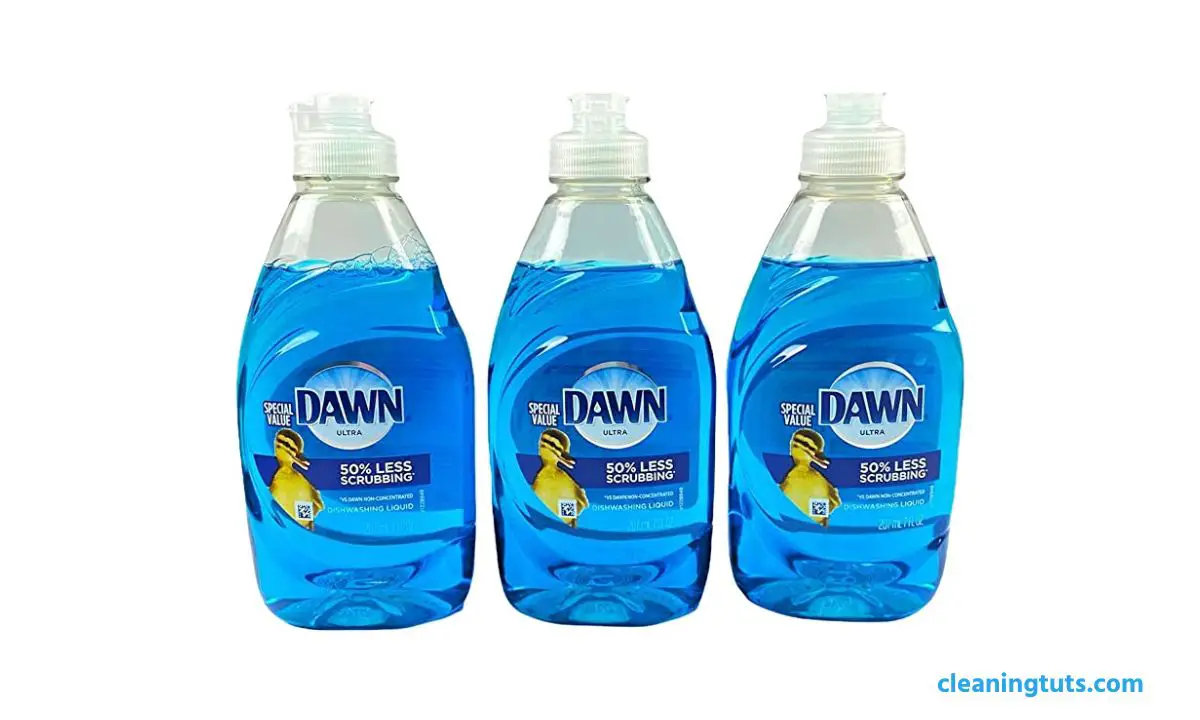
The Dawn Dish Soap Debate: Can You Use Dawn Dish Soap on Hardwood Floors?

Yes — you can use Dawn dish soap on hardwood floors, but only in a heavily diluted solution of approximately 5 drops per gallon of warm water. Standard dish soaps have a pH of 8–9 (slightly alkaline), which can strip hardwood finish buildup over time if used at full concentration or left to pool in seams.
Dawn dish soap is a mild anionic/non-ionic surfactant blend designed to dissolve grease at the molecular level. The surfactants reduce water’s surface tension, allowing cleaning solution to lift and suspend oil particles rather than redistribute them. This mechanism makes it effective for cutting through kitchen grease tracked onto hardwood in entryways and dining areas.
Dawn Dish Soap on Hardwood Floors: What Science Says
Hardwood flooring professionals frequently cite dish soap as a conditional option rather than a recommended default. The concern centers on residual surfactants: when dish soap interacts with minerals in hard water (calcium and magnesium), it forms soap scum — a white or grayish film that dulls floor finish over repeated use. Surfactant chemistry research confirms that anionic surfactants combined with non-ionic surfactants achieve the highest grease removal efficiency, but this same performance profile means residues adhere to porous wood if not thoroughly rinsed.
Pros and Cons of Using Dawn Dish Soap on Hardwood
When selecting a cleaning agent for hardwood floors, weigh both the advantages and documented risks. The following assessment is based on product chemistry and field-reported outcomes.
Affordability
A 24-fl oz bottle of Dawn Ultra retails between $3–$5 USD and yields approximately 40–60 gallons of diluted cleaning solution at the recommended 5-drops-per-gallon ratio. This makes it significantly more cost-effective than specialty hardwood floor cleaners, which typically cost $8–$15 per 32-fl oz and dilute to only 10–15 gallons.
Stain and Grease Removal
Dawn’s primary surfactants (sodium dodecylbenzene sulfonate and alcohol ethoxylate) are classified as anionic and non-ionic, respectively. This combination dissolves food oils and greasy footprints at cleaning temperatures between 75°F–100°F (24°C–38°C). Laboratory surfactant studies confirm that anionic/non-ionic blends outperform other surfactant combinations for grease particulate suspension.
Versatility and Ease
The same bottle handles dishes, countertops, and lightly soiled hardwood — reducing the number of cleaning products required in a household. For households with multiple floor types (tile, laminate, sealed hardwood), a single diluted dish soap solution simplifies supply management.
Gentle Formula and Skin Care
Dawn contains alkyl polyglucoside (a bio-based surfactant) and glycerin-based emollients that reduce hand dryness during cleaning. This is a documented advantage over higher-pH industrial degreasers, which require rubber gloves for safe handling.
Eco-Friendly Profile
Dawn’s biodegradation rate meets OECD 301B standards for ready biodegradability (60–70% removal within 28 days). The packaging uses HDPE recyclable plastic (#2). These attributes make it a comparatively eco-conscious choice among conventional dish soaps, though it is not a certified EPA Safer Choice product.
Pet-Friendly Formula
Dawn’s dishwashing formula carries a lower acute toxicity profile than most industrial cleaners. The EWG Cleaning Database rates Dawn Original as an “A” for health and environmental concerns. Dawn has been used by wildlife rescue organizations to clean oil-soaked birds and animals during environmental disasters, which demonstrates its relative safety compared to petroleum-based solvents.
Risk of Residue and Soap Scum
Dish soaps are not formulated for rinse-free floor use. When surfactant solution interacts with calcium and magnesium ions in hard water (above 7 grains/gallon or 120 mg/L total hardness), it forms insoluble soap scum on the floor surface. Soap scum manifests as a white-to-grayish film that dulls the finish and, over repeated applications, creates a hazy layer that requires specialist removal products.
The risk increases substantially in geographic regions with hard municipal water. Homes with water hardness above 120 mg/L should either use distilled water for mopping or switch to a chelating-agent-based floor cleaner that binds mineral ions before they can react with surfactants.
Potential for Finish Damage
Alkaline dish soaps (pH 8–9) can degrade certain hardwood floor finishes — particularly older wax-based finishes and some penetrating oils — with repeated use at full strength. The risk is minimal with modern polyurethane and aluminum-oxide finishes, provided dilution guidelines are followed and standing water is removed within 30 seconds.
Using rough-bristle brushes, steel wool, or abrasive scrub pads with dish soap accelerates finish wear and introduces micro-scratches that collect dirt. Soft microfiber mop heads and lint-free cotton cloths are the only recommended tools for manual application.
How to Clean Hardwood Floors With Dawn: Dilution Ratios and Process
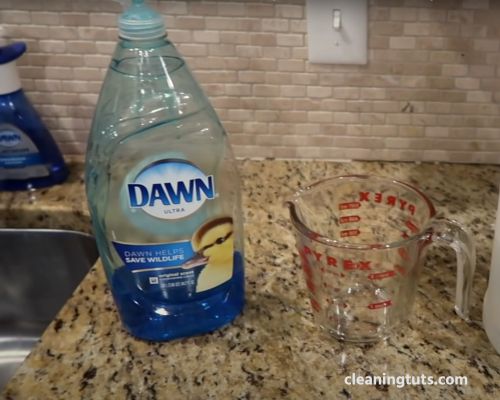
The critical variable for safe use is dilution. Dawn dish soap must be diluted to approximately 0.01–0.02% by volume in warm (not hot) water. This translates to roughly 5 drops per gallon (approximately 1.5 mL per 3.8 L).
Manual Cleaning Method
- Add 5 drops of Dawn dish soap to 1 gallon (3.8 L) of warm water at 75°F–100°F (24°C–38°C).
- Stir gently to avoid generating excess foam — foam indicates too much soap.
- Dip a soft microfiber mop or lint-free cotton mop head into the solution, then wring until damp (the mop should leave no pooled puddles).
- Clean in sections of approximately 4–6 square feet, moving with the wood grain direction.
- After mopping each section, go back over the floor with a clean, damp microfiber cloth (no soap) to remove any surfactant residue.
- Allow the floor to air-dry with cross-ventilation for 5–10 minutes. Do not allow standing water to remain for longer than 30 seconds at any spot.
Automatic Floor Cleaner Machine Method
Canister-style floor cleaning machines (e.g., Bissell PowerFresh, Hoover FloorMate) are compatible with diluted dish soap, but the machine’s built-in scrub brush agitation reduces the required soap concentration further to 2–3 drops per gallon. The mechanical agitation supplements surfactant grease-cutting action.
- Add 2–3 drops of Dawn dish soap to the machine’s fresh water tank filled with warm water.
- Run the machine across the floor in overlapping passes, following the wood grain.
- The machine’s squeegee blade retrieves spent solution within seconds, minimizing residue risk compared to manual mopping.
- For best results on polyurethane-finished hardwood, use the machine’s “hard floor” setting (lowest agitation mode) to prevent finish wear.
Note: Machine cleaning with dish soap is a time-saving shortcut, not a replacement for pH-neutral hardwood floor cleaners formulated specifically for wood. For routine weekly maintenance on high-end hardwood, a pH-neutral commercial cleaner (pH 7) is the preferred choice.
What to Avoid When Cleaning Hardwood Floors
Excessive Water and Pooling
Water is the primary cause of hardwood floor damage, not the soap itself. More than 0.5 cups (120 mL) of standing water left on the floor for over 30 seconds can seep between planks and cause cupping, crowning, or adhesive bond failure in tongue-and-groove installations. Always use the damp-dry mop technique: the mop should feel nearly dry to the touch before each pass.
Abrasive and Incompatible Tools
Never use steel wool, stiff-bristle brushes, or roller-style mop heads with abrasive scrub strips on hardwood floors. These tools remove the top coat of finish and create micro-scratches that trap dirt and accelerate wear. Approved tools: microfiber flat mops, cotton string mops (well-wrung), and soft-bristle detail brushes for corners and seams.
Stagnant Water for Extended Periods
If liquid spills on the floor during cleaning, blot it immediately with a dry microfiber cloth — do not allow it to sit while you continue cleaning other sections. Sponges are not recommended as they hold standing water in their cell structure and can redeposit liquid onto the floor.
Hot Water and Steam Cleaners
Water above 120°F (49°C) causes wood fibers to expand, potentially cracking or warping individual planks. Steam cleaners operate at 200°F–220°F (93°C–104°C) at the mop head — well above the safe threshold for all hardwood finishes. Use lukewarm or room-temperature water (75°F–100°F / 24°C–38°C) only.
Harsh Chemicals and Acidic Cleaners
Ammonia (found in some glass cleaners), undiluted white vinegar (acetic acid, pH 2.5–3.5), and bleach (sodium hypochlorite, pH 11) all degrade hardwood finish at full strength. While occasional use of properly diluted vinegar (1 cup per gallon of water) is safe on some sealed floors, it is not recommended on oil-finished or wax-finished hardwood. For routine cleaning, pH-neutral formulas (pH 6.5–7.5) are safest across all finish types.
Dawn Dish Soap Alternatives for Hardwood Floors
Several alternatives provide comparable or superior cleaning with lower residue risk on hardwood surfaces.
pH-Neutral Hardwood Floor Cleaners
Commercial hardwood cleaners (Bona, Bruce, Murphy’s Oil Soap diluted) are formulated with chelating agents that bind mineral ions in hard water, preventing soap scum formation. Bona’s pH-neutral formula (pH ~7) dilutes to approximately 1 oz per gallon and is safe for all sealed hardwood finishes. These products cost more per gallon but eliminate the residue risk entirely.
DIY Vinegar and Water Solution
A solution of 1 cup white distilled vinegar (5% acetic acid) per gallon of water is a proven natural disinfectant effective against E. coli and Salmonella on hard surfaces. However, vinegar’s acidity (pH ~2.5 at standard dilution) can dull some matte-finish polyurethane floors with repeated use. Test on an inconspicuous area before full application. The strong odor dissipates within 30–60 minutes of drying with open windows.
Castile Soap and Warm Water
Potassium-based liquid Castile soap (e.g., Dr. Bronner’s) has a near-neutral pH (~7) and produces minimal soap scum with hard water compared to synthetic anionic surfactants. Use 1 tablespoon (15 mL) per gallon of warm water. It does not cut heavy grease as effectively as Dawn but is gentler on wood finishes.
Is Dawn Dish Soap Safe for Hardwood Floors if Used for Mopping?
Using dish soap for mopping floors, including hardwood, is not the recommended standard practice. While Dawn dish soap is gentle and effective for dishwashing, its anionic surfactant composition leaves a residue on hardwood floors that dulls the finish over time and creates a film that attracts dirt. For occasional use, a heavily diluted solution (5 drops per gallon) is conditionally safe on polyurethane-finished hardwood. For regular maintenance, a pH-neutral commercial hardwood cleaner is the preferred choice. Refer to the Hardwood Floor Cleaning Guide for a full maintenance schedule.
Conclusion
Dawn dish soap is an affordable, readily available grease-cutting agent that, when diluted to 5 drops per gallon of warm water, is conditionally safe for occasional use on sealed polyurethane-finished hardwood floors. The key variables are dilution ratio, water hardness in your home, and prompt removal of standing water within 30 seconds. For routine weekly cleaning, a pH-neutral commercial hardwood floor cleaner eliminates residue risk and is the professionally recommended standard. For deep cleaning before entertaining or seasonal maintenance, a single diluted Dawn application followed by a clear-water rinse is an acceptable periodic approach.
References
- Environmental Working Group. (2024). Dawn Original Dishwashing Liquid — EWG Cleaning Database Score. EWG.
- OECD. (2024). OECD Guidelines for the Testing of Chemicals, Section 301: Ready Biodegradability. Organisation for Economic Co-operation and Development.
- Swaczyna, J. & K. L. W. (2018). Surfactant Chemistry and Applications in Consumer Products. Journal of Surfactants and Detergents, 21(4), 485–502. https://doi.org/10.1007/s11743-018-2031-4
- U.S. Geological Survey. (2024). Hardness of Water. USGS Water Science School.
- National Wood Flooring Association. (2023). NWFA Maintenance Guidelines — Hardwood Floor Care Standards. National Wood Flooring Association.


