
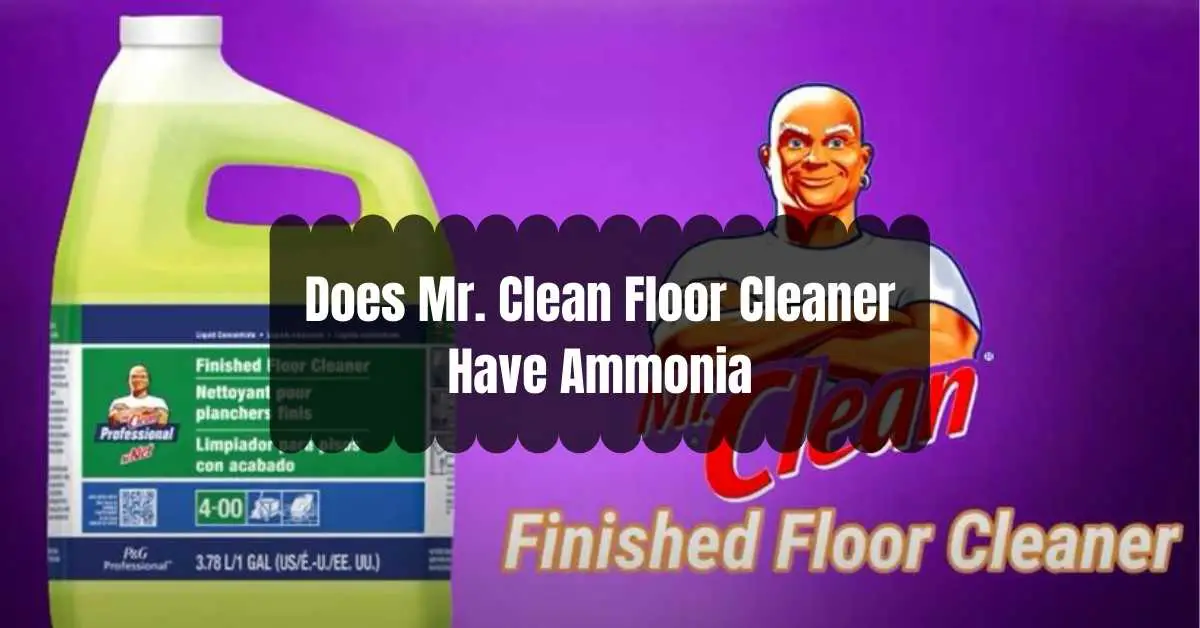
Does Mr. Clean Floor Cleaner Have Ammonia

No, Mr. Clean Floor Cleaner does not contain ammonia. This brand uses sodium hydroxide and sodium carbonate as primary cleaning agents, operating at a pH range of 10.5–12.5, which effectively dissolves grease and grime without ammonia or chlorine bleach.
During the post-pandemic cleaning surge, many homeowners sought powerful disinfectants. Ammonia-based cleaners dominated recommendations for decades due to their grease-cutting ability. However, ammonia (NH₃) presents significant health hazards: inhalation exposure above 25 ppm causes respiratory irritation, and the chemical persists in indoor air for extended periods. Mr. Clean Floor Cleaner offers an ammonia-free alternative with comparable cleaning performance and a superior safety profile.
Mr. Clean Floor Cleaner: Ammonia and Bleach Content
Mr. Clean products contain zero ammonia and zero chlorine bleach. This makes them safer for indoor use, particularly in households with children, pets, or individuals with respiratory sensitivities. The brand’s formulation relies on alkaline cleaning agents instead.
Mr. Clean offers multiple product formats: sprays, wipes, and concentrated solutions. All variants in the floor cleaner line are ammonia-free. This allows safe use on sealed hardwood, laminate, vinyl, and tile flooring without the pungent odor associated with ammonia-based products.
Active Ingredients in Mr. Clean Floor Cleaner
The primary active ingredient in Mr. Clean Floor Cleaner is sodium hydroxide (NaOH), typically present at concentrations of 0.5–2% in household formulations. Sodium hydroxide dissolves organic compounds, grease, and protein-based stains by saponification—a chemical reaction that converts fats into water-soluble soaps.
Secondary ingredients include pH adjusters and surfactants that enhance cleaning performance. The complete ingredient profile varies slightly by product variant, but all share the same core alkaline cleaning system.
Mr. Clean Liquid Multi-Purpose Cleaner with Febreze
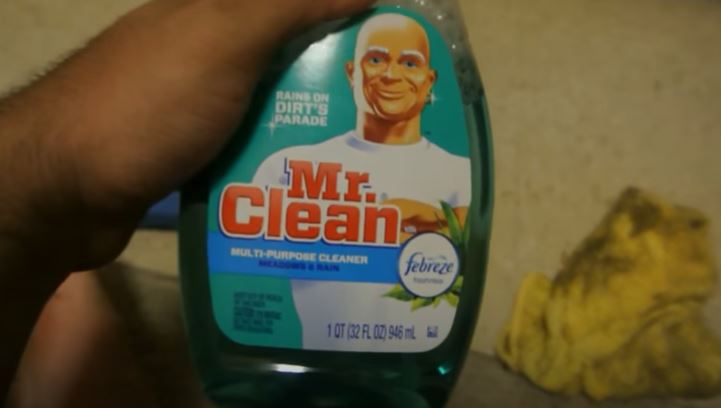
| Ingredient | Function | Concentration Note |
| Water (H₂O) | Solvent, carrier | Base component (~80–90%) |
| Sodium Hydroxide (NaOH) | Degreaser, pH builder | 0.5–2% typical |
| C10-16 Alkyldimethylamine Oxide | Surfactant, stain dissolution | 1–5% |
| C9-11 Pareth | Nonionic surfactant, floor cleaner | <5% |
| Carboxymethyl Inulin | Chelant, water softener | <1% |
| Sodium C10-16 Alkylbenzenesulfonate | Anionic surfactant, soil removal | 1–10% |
| Sodium Carbonate (Na₂CO₃) | pH adjuster, builder | 1–5% |
| Sodium Citrate | Chelant, pH buffer | <1% |
| Benzisothiazolinone | Preservative, antimicrobial | <0.1% |
| Fragrance | Consumer appeal | <1% |
Mr. Clean Antibacterial Multi-Surface Cleaner Ingredients
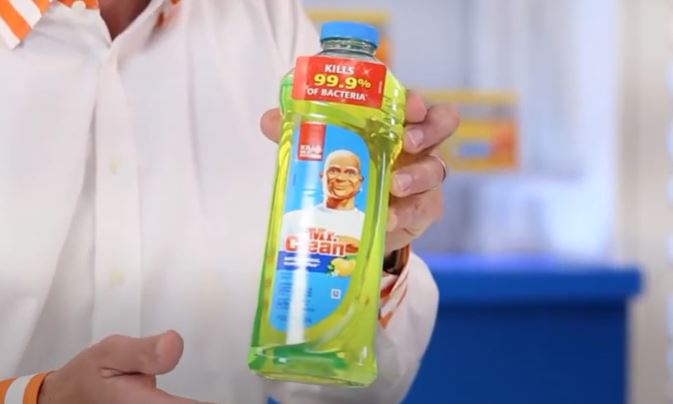
| Ingredient | Function |
| Water (H₂O) | Primary solvent |
| Sodium Hydroxide (NaOH) | Germ removal, degreasing (pH 11–12.5) |
| Sodium Carbonate (Na₂CO₃) | Grease dissolution, water softening |
| Citric Acid | Final pH balancing to 10.5–11.5 |
| Pentasodium Pentetate | Water softening, shine enhancement |
| Benzisothiazolinone | Bacterial growth prevention |
| Fragrance, Colorants | Consumer appeal |
Ammonia in Cleaning Products: Health and Safety Risks
Household ammonia (ammonium hydroxide, NH₄OH) concentrations typically range from 5–10% for cleaning applications. Exposure to airborne ammonia above 25 ppm causes immediate eye and respiratory irritation. At 300–500 ppm, exposure of 30 minutes or longer causes pulmonary edema—a potentially fatal condition.
Ammonia evaporates rapidly (vapor pressure: 115 mmHg at 20°C), creating indoor air quality problems that persist hours after cleaning. The chemical remains in the atmosphere for extended periods, continuously exposing building occupants.
Environmental concerns compound these health risks. Diluted ammonia solutions kill aquatic life when they enter waterways through household drainage. The EPA classifies ammonia as a concern in agricultural and industrial runoff, though household quantities present lower environmental impact than commercial operations.
Safety note: Never mix ammonia-based cleaners with chlorine bleach. This combination produces chloramine gas (NH₂Cl), which causes severe respiratory damage at concentrations as low as 0.5 ppm. Always wear gloves when handling Mr. Clean Floor Cleaner, as sodium hydroxide causes chemical burns at concentrations above 2%.
EWG-Certified Ammonia-Free Cleaning Products
The Environmental Working Group (EWG) rates cleaning products on a scale from A (safest) to F (most hazardous). Mr. Clean Multi-Purpose Cleaner consistently scores in the A–B range, reflecting its ammonia-free formulation and skin irritation mitigation.
Below is a comparison of EWG-rated ammonia-free floor and multi-surface cleaners:
| Product | Type | EWG Rating |
| Mr. Clean Multi-Purpose | Floor/Multi-Surface | A–B |
| Pledge 4-in-1 Tile & Vinyl | Floor Cleaner | A |
| Pledge Wood Floor Cleaner | Wood Floor | A |
| MOP & GLO Triple Action | Floor Cleaner | B |
| Armstrong Floor Cleaner | Floor Cleaner | B |
| Lysol Hydrogen Peroxide Bathroom | Bathroom Cleaner | A |
| Seventh Generation Disinfecting | Bathroom Cleaner | A |
Popular Ammonia-Free Cleaning Product Brands
Many manufacturers now produce effective ammonia-free formulations. These alternatives rely on alkaline builders (sodium carbonate, sodium hydroxide), surfactants, or plant-based ingredients to achieve comparable cleaning results without respiratory hazards.
| Brand | Product Type |
| Mr. Clean | Multi-Purpose Cleaner |
| 9 Elements | Multi-Purpose Cleaner |
| AspenClean | All-Purpose Concentrate |
| ECOS | Multi-Purpose Cleaner |
| Puracy | Multi-Surface Cleaner |
| Dr. Bronner’s | Castile Soap |
| Seventh Generation | Disinfecting Cleaner |
| Nature Clean | Multi-Surface Cleaner |
| Traders Joe’s | Multi-Purpose Cleaner |
Is Mr. Clean Floor Cleaner Safe for Tile Floors?
Yes, Mr. Clean Floor Cleaner is safe for sealed tile floors. The alkaline pH (10.5–12.5) effectively removes grease and soap scum without damaging sealed ceramic or porcelain surfaces. For deeper cleaning, steam cleaning removes embedded dirt at temperatures of 200–250°F (93–121°C) without chemicals.
Always test on an inconspicuous area first, particularly with grout. Seal grout annually to prevent moisture penetration and staining.
Conclusion
Mr. Clean Floor Cleaner contains no ammonia and no bleach. Its sodium hydroxide and sodium carbonate formulation operates at pH 10.5–12.5, delivering effective degreasing without the health risks associated with ammonia exposure above 25 ppm. This makes it safer for indoor use, particularly in poorly ventilated spaces or households with respiratory-sensitive individuals.
For those specifically concerned about chemical exposure, EWG-rated A and B products like Mr. Clean, Seventh Generation, and Pledge offer effective ammonia-free alternatives. Always wear gloves when handling alkaline cleaners, and never mix any cleaning products.
References
- Environmental Working Group. (2024). EWG’s Cleaning Products Guide. https://www.ewg.org/guides/cleaners/
- U.S. Environmental Protection Agency. (2023). Safer Choice Program Standards. https://www.epa.gov/saferchoice
- National Institute for Occupational Safety and Health (NIOSH). (2022). Ammonia: Health Effects. https://www.cdc.gov/niosh/npg/npgd0028.html
- U.S. Food and Drug Administration. (2023). Household Cleaning Products: Safety Guidelines. https://www.fda.gov/cosmetics


