
How to Clean Pebble Shower Floor? – Explanation and Details

Pebble showers add a spa-like aesthetic to any bathroom, but cleaning them requires pH-neutral cleaners to avoid damaging the stones and grout. Harsh chemicals strip natural color from pebbles and can degrade the grout lines between them.
Regular maintenance prevents soap scum, mold, and mildew buildup on pebble surfaces. The irregular surfaces trap moisture in crevices, creating conditions where mold thrives when left unchecked.
Cleaning Preparation
A shower pebble floor requires proper cleaning preparation to keep it looking its best. The uneven surface creates more crevices than standard tile, which means more areas for grime to accumulate.
First, ensure the bathroom is well-ventilated by opening windows and turning on the exhaust fan. This prevents stale moisture from settling into the grout lines. For areas under 10 square feet (roughly 3 ft. x 3 ft.), homeowners can typically handle cleanup themselves using detergent and water, according to the EPA.
Remove debris like hair and accumulated dust from the shower floor before applying any cleaning solution. Hair clogs the drain, making it harder to rinse away dirty water during cleaning.
Required Cleaning Tools
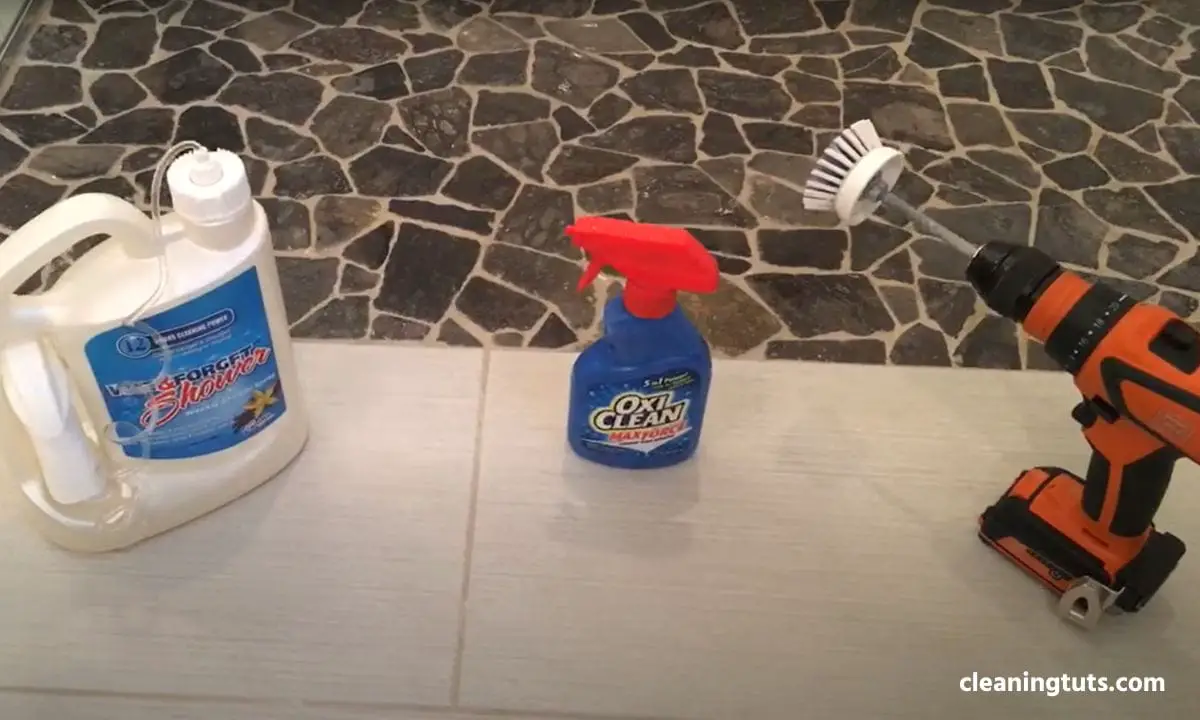
- pH-neutral stone cleaner or mild dishwashing soap
- White vinegar (5% acetic acid solution)
- Baking soda
- Spray bottle
- Soft-bristle scrubbing brush or old toothbrush
- Microfiber mop or sponge
- Warm water (not hot)
Option #1: Steam Cleaning Techniques
A handheld steam cleaner on medium setting effectively removes grime from pebble surfaces without chemicals. Keep the steam cleaner 6 to 12 inches away from the floor to avoid excessive heat exposure.
Excessive heat causes pebbles to expand and contract, which loosens them from the grout over time. After steaming, wipe the floor with a microfiber mop and allow it to dry completely.
Option #2: DIY Vinegar Solution
A vinegar solution works well for regular maintenance cleaning. Mix 1 tablespoon of white vinegar with 16 to 18 tablespoons of warm water in a spray bottle. Shake thoroughly before applying.
Spray the solution onto the dirty areas and allow it to sit for 10 to 15 minutes before scrubbing. Vinegar’s acidity (pH 2.5) dissolves soap scum and mineral deposits without damaging stone surfaces when diluted properly. Rinse with warm water afterward.
Option #3: Stone Cleaner Technique
Commercial stone cleaners are formulated specifically for natural stone surfaces like pebbles. Apply the cleaner and let it sit for 2 to 3 minutes, then scrub gently with a soft-bristle brush.
Rinse the floor thoroughly at least three times to remove all residue. Residual stone cleaner left on the surface causes skin irritation and leaves a film on the pebbles that attracts more dirt.
Option #4: Mild Detergent Solution
Mix 1 cup of mild dishwashing detergent with 2 cups of warm water for an effective everyday cleaning solution. This mild alkaline mixture (pH 8 to 9) cuts through soap scum without etching natural stone.
Deep Cleaning Methods for Pebble Shower Floors
Method #1: Bleach Solution
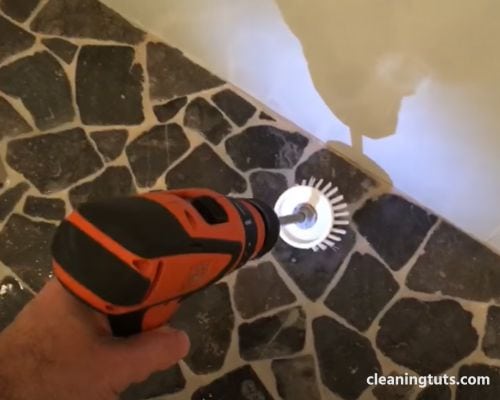
Bleach effectively removes mold and disinfects stone surfaces. For heavy mold removal, mix 1 part bleach with 10 parts water (a 1:10 ratio). Apply to the pebble surface and scrub with a bristle brush within 5 minutes of application to prevent surface degradation.
The bleach solution disinfects the shower and kills bacteria and viruses that cause odors and potential skin irritation. Always rinse thoroughly with clean water after using bleach on natural stone.
Method #2: Toothbrush Detail Cleaning
A toothbrush reaches the crevices between pebbles where grime accumulates. Pair it with a grout cleaner for best results on stubborn mold in hard-to-reach spots.
The small brush head targets individual gaps between pebbles without damaging the stone surfaces. This method works especially well for the grout lines where mold commonly grows.
Method #3: Baking Soda Paste
Baking soda (pH 8.3) is mildly alkaline and acts as a gentle abrasive for scrubbing pebble surfaces. Mix 1 cup of baking soda with enough water to form a thick paste.
- Apply the paste onto the pebble surface with a soft brush
- Scrub gently in a circular motion to avoid scratching the stones
- Let the paste sit for 10 to 15 minutes
- Rinse thoroughly with clean warm water
Method #4: Vinegar Solution for Soap Scum
Vinegar dissolves hard water deposits and soap scum effectively on pebble floors. Mix equal parts white vinegar and water in a spray bottle for regular maintenance.
- Spray the solution onto the pebble floor and let it sit for 10 to 15 minutes
- Scrub the pebbles while the solution is still wet to loosen grime faster
- Rinse with warm water to remove all residue
Method #5: Commercial Grout Cleaner
Commercial tile and grout cleaners are formulated specifically for shower environments. Apply the cleaner, let it sit for 2 to 3 minutes, then scrub with a soft nylon brush and rinse thoroughly.
Tips for Maintaining a Pebble Shower Floor
Always Use pH-Neutral Cleaners
Never use acidic or highly alkaline cleaners on pebble showers. Acids (pH below 4) cause etching on calcium-based stones like marble and travertine. Strong alkalis (pH above 10) strip sealants and discolor the grout. pH-neutral cleaners (pH 7) are safest for natural stone.
Dry the Floor After Each Use
Use a squeegee or towel to remove excess water from the pebble surface after each shower. This prevents water from pooling in the crevices and reduces the humidity that mold and mildew need to grow.
Inspect and Reseal Grout Annually
Inspect grout lines between pebbles every 6 to 12 months for signs of wear. Reseal grout with a quality grout sealer to prevent moisture from penetrating and causing mold growth beneath the surface.
Steam Cleaner Safety for Pebble Shower Floors
Steam cleaners effectively clean pebble showers without chemicals, but excessive heat causes pebbles to crack and loosen from the grout. Keep the steam cleaner 6 to 12 inches away from the floor and use the medium heat setting.
Steam cleaning works like a soapy cleaning liquid without the soap residue that can cause pebble discoloration over time. Rinse the floor with clean water after steaming to remove any dislodged grime.
Preventing Mold and Mildew on Pebble Shower Floors
Keep the Bathroom Ventilated
Turn on the exhaust fan during showers and leave it running for 20 to 30 minutes afterward. Open bathroom windows when possible to increase air circulation and reduce humidity below the 60% relative humidity threshold that mold needs to grow.
Clean Weekly to Prevent Buildup
Weekly cleaning with a pH-neutral stone cleaner prevents soap scum and mold from accumulating. Letting grime build up over weeks requires harsher cleaning methods that increase the risk of surface damage.
Seal Grout Lines
Apply a quality grout sealer to the lines between pebbles at least once per year. Sealing prevents water from penetrating the grout, which is where most mold growth occurs in pebble showers.
Use Shower Mats Strategically
Place water-resistant shower mats outside the shower to reduce splashing onto the pebble floor. This extends the time between cleanings and protects high-traffic areas from excess moisture exposure.
Frequently Asked Questions
Do pebble shower floors require regular sealing?
Yes, most pebble shower floors require annual resealing to protect the grout lines and prevent water penetration. Some naturally dense pebbles (like river rocks) resist water absorption better and may need sealing only every 2 to 3 years. Check with the manufacturer for specific recommendations for your pebble type.
What pH cleaner is safe for pebble shower floors?
pH-neutral cleaners (pH 7) are safest for pebble shower floors. Stone-specific cleaners typically range from pH 6 to pH 8. Avoid acidic cleaners with pH below 4, as these etch calcium-based stones. Vinegar diluted 1:16 with water (pH approximately 3) is safe for occasional use on silica-based pebbles but should not be used on marble or travertine.
How often should I clean my pebble shower floor?
Perform a quick rinse and squeegee dry after each use. Do a thorough cleaning with soap or stone cleaner once per week. Conduct a deep clean with vinegar or baking soda paste once per month to address mineral deposits and soap scum buildup.
Can I use bleach on pebble shower floors?
Yes, but only in a 1:10 bleach-to-water ratio and with limited exposure time. Apply the diluted solution, scrub immediately, and rinse thoroughly within 5 minutes. Never use undiluted bleach, as it degrades grout and can discolor natural stone over repeated use.
Will the Cleaning Method for Pebble Shower Floors Also Work for Protecting Bathroom Floors from Urine?
When it comes to protecting bathroom floors from urine, the cleaning method for pebble shower floors is not directly applicable. Use a waterproof sealant specifically designed to protect bathroom floor from urine. Regular sealing and pH-neutral cleaners help prevent damage and odors from urine on bathroom floors.
References
- U.S. Environmental Protection Agency. (n.d.). Mold Cleanup in Your Home. epa.gov/mold/mold-cleanup-your-home
Many homeowners opt for pebble showers because they add a spa-like aesthetic and are relatively easy to maintain with the right cleaning approach. Using pH-neutral cleaners, maintaining proper ventilation, and resealing grout annually keeps a pebble shower floor looking fresh for years. Whether using a steam cleaner, vinegar solution, or commercial stone cleaner, the key is consistency—regular maintenance prevents the buildup that requires harsher cleaning methods.
The right tools and techniques make all the difference when cleaning pebble shower floors. From mild detergent solutions for everyday cleaning to baking soda pastes for stubborn grime, multiple effective methods exist to keep your shower spotless without damaging the natural stone.


